Army.ca's Fallen Comrades

They shall grow not old, as we that are left grow old


The Royal New Brunswick Regiment
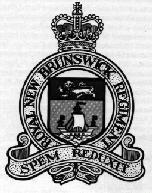

Armorial Description

Superimposed on the centre of a circular scroll bearing the designation ROYAL NEW BRUNSWICK REGIMENT, the arms of the Province of New Brunswick (i.e.: or, an ancient galley, or lymphad, the sails unfurled, oars in action on the sea all proper, the flags and pennant gules; on a chief gules; a lion passant guardant, or) over the base of the circular scroll a second scroll inscribed with the motto SPEM REDUXIT; the whole surmounted by the Crown.


Official Abbreviation: RNBR

Motto: Spem Reduxit (Hope Restored)


Battle Honours (70)

Early History

    SOUTH AFRICA, 1899-1900, 1902
First World War
    YPRES, 1915,'17
    Scarpe, 1917,'18
    FESTUBERT, 1915
    HILL 70
    Mount Sorrel
    PASSCHENDAELE
    SOMME, 1916,'18
    AMIENS
    Flers-Courcelette
    Drocourt-Queant
    Thiepval
    HINDENBURG LINE
    Ancre Heights
    Canal du Nord
    Ancre, 1916
    CAMBRAI, 1918
    ARRAS, 1917,'18 Valenciennes
    VIMY, 1917
    France and Flanders, 1915-18
    Arleux
Second World War
    LANDING IN SICILY
    Falaise
    Valguarnera
    Falaise Road
    Sicily, 1943
    Quesnay Wood
    LANDING AT REGGIO
    The Laison
    Gambatesa
    Chambois
    The Sangro
    The Seine, 1944
    The Gully
    Moerbrugge
    POINT 59
    BOULOGNE, 1944
    Cassino II
    Calais, 1944
    Gustav Line
    Moerkerke
    Liri Valley
    THE SCHELDT
    HITLER LINE
    Breskens Pocket
    Melfa Crossing
    The Lower Maas
    Gothic Line
    Kepelsche Veer
    Lamone Crossing
    The Rhineland
    Rimini Line
    Waal Flats
    San Fortunato
    The Hockwald
    NAVIGLIO CANAL
    THE RHINE
    Italy, 1943-45
    Emmerich - Hoch Elten
    NORMANDY LANDING
    Zutphen
    Caen
    Apeldoorn
    CARPIQUET
    Kusten Canal
    Bourguebus Ridge
    Bad Zwischenahn
    Faubourg de Vaucelles
    North-West Europe, 1944-45

Order of Precedence: 23
Go back to the Infantry Regiments page.
Go back to the Army home page.
Military Word Of The Day
CAT 3- OC
:
CDS Action Team 3 - Operational Capabilities


» Download the iPhone/iPad Military Terms app! «


Today in Military History

February 27


1814:

Whilst British troops under Lieutenant-General Hope beseiged Bayonne, Wellington led his main force against the main French field forces in the south of France, commanded by Marshal Soult. Wellington launched his attack with 44,000 men against Soult's 36,000 men drawn up on a ridgeline at Orthes. Sir Rowland Hill led the right wing in a diversionary attack, whilst Sir William Beresford and Sir Thomas Picton led the main assaults on the left and in the centre. After initial successes, both Beresford and Picton's attacks stalled, but Wellington spotted an opening in the disjointed French lines, and himself led three battalions to exploit the weakness. The French defeat was completed by Hill, who had managed to get behind Soult and force him to run for a bridge before his escape route was totally cut. Wellington's victory secured the British presence on French soil, and opened up routes to Bordeaux, which promptly surrendered, and Toulouse.


1881:

During an action with Boers, Lance Corporal Farmer, a medical orderly, stood exposed to enemy fire, holding a white flag over a group of wounded men, in an effort to spare them further attack. The Boers kept up their fire, and Farmer was badly wounded in the arm holding in the flag. However, he rose again to his feet, and continued to hold high the flag with his other arm, until he was shot in that limb as well. His efforts to protect the men, at great personal risk, was recognised with the award of the Victoria Cross.


1900:

Nineteen years later, during the Boer War, troops from the West Yorkshire Regiment attacked up the northern slope of Terrace Hill, near Tugela in Natal. Their advance was met with a barrage of fire, and faltered. Captain Mansel-Jones braved the enemy fire to remuster his men, and, despite suffering a very serious wound, led them once more up the hill in a charge which took the Boer position. He received the Victoria Cross.


1900:

Surrender of Cronje at Paardeburg


1942:

OPERATION BITING - BRUNEVAL - No. 12 Commando


1942:

Start of the Battle of the Java Sea; 13 US warships sunk, 2 Japanese.


1943:

British commandos raid heavy-water plant in Norway


1951:

Canada posts army officer to staff of Supreme Allied Commander; first step in providing Canadian ground troops in Europe for NATO


» Download the iPhone/iPad Military History app! «


Advertising