• Thanks for stopping by. Logging in to a registered account will remove all generic ads. Please reach out with any questions or concerns.

Obama plans Guantanamo deadline - BBC News

Yrys

Army.ca Veteran
Subscriber
Reaction score
22
Points
460
Obama plans Guantanamo deadline

Barack Obama has said he aims to close the Guantanamo Bay
detention centre and put a clear end to torture in the US within
two years of becoming president.

The president-elect told Time magazine he aims to restore
the balance between US security needs and the Constitution.
Outgoing Vice-president Dick Cheney has said he does not see
how the Guantanamo facility can be responsibly closed until the
"war on terror" was over. He also justified using water-boarding
on some detainees during interrogation. He said the technique,
which simulates drowning, was an appropriate means of getting
information out of suspects such as Khalid Sheikh Mohammed,
the alleged mastermind of the 11 September attacks on the US.

'Clear end to torture'

US President-elect Obama was speaking to Time having been
named its Person of the Year for having what the magazine called
"the confidence to sketch an ambitious future in a gloomy hour".
Asked how voters would know whether his administration was
succeeding in two years, Mr Obama listed a series of benchmarks
his team had set during his presidential campaign.

"On foreign policy, have we closed down Guantanamo in a responsible way,
put a clear end to torture and restored a balance between the demands of
our security and our constitution?" he said.

Mr Obama listed among his other priorities:

    * Withdrawing US troops from Iraq
    * Strengthening the US position in Afghanistan - militarily, diplomatically and in terms of development
    * Reinvigorating international institutions to deal with transnational threats such as climate change

He also said he wanted Americans to feel his government was
accountable, transparent, and working for them.

'Pretty good team'

Speaking to ABC News a month before the Bush administration
leaves office, Mr Cheney defended the use of waterboarding and
opposed the closure of the military facility on Cuba. Asked when
the US could responsibly close the Guantanamo centre, Mr Cheney
said: "I think that that would come with the end of the war on terror".

He was referring to the war launched by President George W Bush
after the 9/11 attacks, but added that no-one knew when its end
would be. The outgoing vice-president also praised Mr Obama's
national security nominations, calling them "a pretty good team".

Earlier this month, Mr Obama picked his former White House rival
Hillary Clinton as secretary of state and retired General James Jones
as national security adviser, while saying he would retain Robert Gates
as defence secretary.
 
Guantanamo closure plan ordered, BBC News

US Defense Secretary Robert Gates has ordered plans to be drafted
for the closure of the Guantanamo Bay detention centre, the Pentagon
says.

A team was looking at moving inmates from the facility in a way that
continued to protect the American people, a spokesman said. About
250 detainees remain in the controversial camp in Cuba.

US President-elect Barack Obama says closing the camp "in a
responsible way" is one of his top priorities. Mr Obama takes
office on 20 January.

Pentagon spokesman Geoff Morrell said Mr Gates - who is to
retain his position in the new administration - had wanted to be
prepared in case Mr Obama wished to tackle the issue "early in
his tenure".

"He has asked his team for a proposal on how to shut it down, what
will be required specifically to close it and move the detainees from
that facility, and at the same time protect the American people from
dangerous terrorists," he said.

The Guantanamo Bay prison opened shortly after the attacks of 11
September 2001. Hundreds of men suspected of links to terrorism
or al-Qaeda were held without trial as "unlawful enemy combatants".
Many are now challenging their detention in civilian courts, after the
Supreme Court ruled in June that they could.

Some officials have warned that closing the camp will be an extremely
complicated process. But earlier this week, Mr Obama said he aimed
to shut the facility within two years.
 
European Countries May Take Detainees, Washington Post
Under Bush, Nations Refused to Resettle Guantanamo Prisoners

European nations have begun intensive discussions both within and among
their governments on whether to resettle detainees from the U.S. military
prison at Guantanamo Bay, Cuba, as a significant overture to the incoming
Obama administration, according to senior European officials and U.S.
diplomats.

The willingness to consider accepting prisoners who cannot be returned to
their home countries, because of fears they may be tortured there, represents
a major change in attitude on the part of European governments. Repeated
requests from the Bush administration that European allies accept some
Guantanamo Bay detainees received only refusals.

The Bush administration "produced the problem," Karsten Voigt, coordinator
of German-American cooperation at the German Foreign Ministry, said in a
telephone interview. "With Obama, the difference is that he tries to solve it."
At least half a dozen countries are considering resettlement, with only Germany
and Portugal acknowledging it publicly thus far.

German Foreign Minister Frank-Walter Steinmeier has instructed officials to look
into political, legal and logistical aspects of the matter, a ministry spokesman said
yesterday. A discussion paper on the issue has been circulating among ministries
in Berlin for weeks, German officials said.

European officials put out tentative feelers to Barack Obama's team to see whether
it was willing to discuss the issue, but the incoming administration has rejected
holding even informal talks until after the Jan. 20 inauguration, according to
European and U.S. officials aware of the outreach.

"President-elect Obama has repeatedly said that he intends to close Guantanamo, and
he will follow through on those commitments as president. There is one president at a
time, and we intend to respect that," said Brooke Anderson, chief national security
spokeswoman for the Obama transition team.

The Portuguese government pushed what had been private discussions in Europe into
the open this month when Foreign Minister Luís Amado brought up the issue in a letter
to his counterparts in other countries. "The time has come for the European Union to
step forward," he wrote. "As a matter of principle and coherence, we should send a
clear signal of our willingness to help the U.S. government in that regard, namely
through the resettlement of detainees. As far as the Portuguese government is
concerned, we will be available to participate."

Amado said yesterday in a phone interview that he plans to raise the issue at a
meeting of E.U. foreign ministers in late January. It will also be discussed at an
E.U. General Affairs and External Relations Council meeting on Jan. 26, he added.
"I believe the new administration will have the conditions to create a new dynamic
of cooperation," Amado said. He noted that when he first raised the issue of
Guantanamo Bay at a meeting of E.U. foreign ministers about seven months
ago, some countries resisted assisting the Bush administration.

"I assume the new administration will have someone on a plane to Europe within
minutes of Obama being sworn in," said Sarah E. Mendelson, director of the Human
Rights and Security Initiative at the Center for Strategic and International Studies
and the author of a report on closing Guantanamo Bay.

European officials, who spoke on the condition of anonymity because their
governments have not yet formulated a public stance on the issue, said they
expect the Obama administration to take steps to secure European cooperation,
some of which appear to be under serious discussion by the transition team.

The Europeans want a clear commitment to close Guantanamo Bay and an
acceptance of common legal principles in the fight against terrorism, including
those regarding the treatment of suspects, European officials said. A series of
meetings between the United States and the European Union on a legal framework
for combating terrorism has considerably narrowed differences on the application
of human rights law, refugee law and humanitarian law, said Amado and John B.
Bellinger III, a legal adviser at the State Department.

The Europeans also want Obama to agree to transfer a small number of detainees
to the United States before they attempt to sell a resettlement program to their
own citizens. "I believe that will happen," Amado said.

One group likely to be settled here is 17 Chinese Uighurs who have been held for
years at Guantanamo Bay. The Bush administration has acknowledged that the
Uighurs are not enemy combatants, and in October a federal judge ordered them
released into the United States.

In interagency discussions, the State Department has argued that the Uighurs be
brought to the United States to help persuade Europe to resettle other detainees.
But a State Department official, who spoke on the condition of anonymity because
of the sensitivity of the issue, said the departments of Homeland Security and Justice,
as well as White House officials, considered resettlement in the United States a
"red-line" issue.

The Justice Department has appealed the judge's order that the Uighurs be released.

"Secretary [Condoleezza] Rice and others at State argued for resettlement in the U.S.
as a deal-maker," one U.S. official said. "But it's clear this administration is not going
to reconsider the issue of resettlement."

Guantanamo Bay currently has about 250 prisoners, according to the Pentagon. And
some European officials said a number of governments are considering the logistics of
resettling a majority of the 60 prisoners already cleared for release by U.S. authorities.

The Pentagon has not identified the 60, but a study released by the Brookings Institution
last week found that as well as the Chinese Uighurs, the group includes detainees from
Yemen, Tunisia, Algeria, Uzbekistan, Iraq, Saudi Arabia, Egypt, Libya and the Palestinian
territories. The Brookings study found that these prisoners "concentrate at the less
dangerous end of the spectrum."

The U.S. military no longer holds any European citizens at Guantanamo Bay.

Thomas Steg, a German government spokesman, said yesterday that the United States
will not be able to place any conditions on the handling of transferred detainees if they
are accepted in Europe. "One thing is clear: The Americans cannot ask for any special
terms -- no other agreements, swaps or other strings attached," he told reporters in
Berlin.

He also said all 27 members of the European Union will have to discuss the matter.
Countries such as Denmark have already signaled that they will not accept any detainees,
arguing that they are the sole responsibility of the United States. "Why should they be
taken into the much smaller Danish society?" Per Stig Moller, the country's foreign minister,
said last month. "None of these prisoners has anything whatsoever to do with Denmark."

Some general agreement among E.U. members is required because of the freedom of
travel within the union, but that prerequisite is not expected to block a resettlement deal
because of the general desire in Europe "to please Obama," as one German official put
it in an interview.

The Bush administration shopped lists of detainees to a number of European countries,
including late last year when European officials were asked to take 16 of the 17 Uighurs,
four Uzbeks, an Egyptian, a Palestinian and a Somali, according to U.S. diplomats and
human rights groups.

"There was a big push last year," said Bellinger, the State Department legal adviser, who
said that the administration has cabled approximately 100 countries seeking help with
clearing out Guantanamo Bay. "Some countries were willing to consider it, but as part
of a group. But no lead country emerged."

A number of civil liberties and human rights groups have also been holding talks with
European governments with the quiet approval of the State Department, U.S. officials
said. "We have been saying to them that if you want Guantanamo to close, the [Obama]
administration cannot do it without European assistance," said Joanne Mariner, terrorism
and counterterrorism program director at Human Rights Watch, who has talked with
government officials in European capitals.

Mariner declined to identify the governments she spoke with, but she said there has
been "a clear change in attitude" since Obama was elected. "Before, they said, 'Why
should we clean up Bush's mess?' But now they are asking deeper questions about
the detainees and how they might integrate them," she said.
 
I think China should be asked to resettle these detainees, the Chinese Government should be able to fins suitable accommodations [read ditches] for these people.

Problem solver for everyone.  Gitmo turned back to what it was, US no longer has any detainees, China gets a bit of money;  and the world becomes a safer place  ;D
 
'Struggle' to close Guantanamo Bay, 21 January

_45397162_006748712-1.jpg


US President Barack Obama is expected to sign an executive order to start the process
of closing down the Guantanamo Bay detention camp within days.

But the experience of one senior Bush administration official suggests that this will be
easier said than done. In an exclusive interview with the BBC, John Bellinger, who was
Condoleezza Rice's legal advisor, spoke about the political battles that took place over
its future.

_45397189_002485249-1.jpg


For the last four years, Mr Bellinger had the unenviable task of defending America's
treatment of terrorist suspects, while behind closed doors trying to bring an end to
Guantanamo. Without the burdens of office, he confesses that the prison camp has
damaged America's reputation around the world. "It's certainly been a huge blackeye
for the United States - an albatross round our neck."

It is easy to say it was a mistake in hindsight, he adds, though at the time he argues
setting up Guantanamo was "perfectly logical"What he considers to be the greater
"tragedy" was that over time, when it became apparent it was such a problem, the
Bush administration was unable to "pivot" to get it closed.

He says that despite his, Condoleezza Rice's and more recently Defence Secretary
Robert Gates' best efforts, there were those who had "strongly-held views" who
were still opposed.

I ask who? He replies "obviously the Vice President" (Dick Cheney), along with figures
in the Department of Justice and the intelligence agencies. "The real sadness," he says,
"[was that] despite the endless debate about what to do - and a recognition by many
that it was causing us real damage - we could simply not evolve into a position to close
it down."

No solutions

During his time in office, Mr Bellinger put forward proposals to empty Guantanamo.
These included transferring most detainees to other countries and sending the remainder
- the most dangerous - to a military base on the US mainland.

It is likely that an Obama administration is now contemplating a similar plan. But Mr
Bellinger warns that will not be easy. He points out that nearly all of the 254 detainees
still being held at Guantanamo come from countries with poor human rights records. And
until now, few European countries have offered to take them instead.

Mr Bellinger says that as he travelled the world looking for countries to help he "secretly
agreed" with many of their criticisms, but there was never any suggestion as how to close
Guantanamo down. "Not one" offered a solution, he adds, clearly frustrated.

He hopes that the new administration will have better luck. But he still thinks that it
"will have a devil of a time" trying to close the camp. He predicts "a political battle royal"
if Mr Obama tries to transfer the most dangerous detainees to a US federal prison or
military camp on the mainland. He says there are too many politicians and members of
the public who will say "not in my backyard".

And then there is the question of how to try them. Mr Bellinger was a critic of the special
military commissions set up at Guantanamo. He says he gnashed his teeth as officials went
"behind my back" to set them in process. Now though, he argues that after the intervention
of the US Congress, the military commissions have become more workable.

Given the criticism, he says he would understand if Mr Obama felt the need to start all over again.

Greatest mistake

But there is still the thorny issue of what evidence would be admissible in a federal court.
Namely the "enhanced" interrogations used to extract information by the CIA.

Mr Bellinger is clearly uneasy talking about torture. But he says it was "very unfortunate" that
techniques like waterboarding - simulated drowning - were ever used. In hindsight, he says
the Bush administration's greatest mistake was going it alone.

Now out of office, he plans to continue a dialogue with other countries about how best to deal
with and detain terrorist suspects. He is clearly a man with a conscience. But his experience
shows that Barack Obama's job will not be easy.
 
Obama orders Guantanamo closure

_45277324_9867069a-3383-4d75-b052-9b4d5a03595a.jpg


US President Barack Obama has ordered the closure of the Guantanamo Bay prison camp
as well as all overseas CIA detention centres for terror suspects. Signing the orders,
Mr Obama said the US would continue to fight terror, but maintain "our values and our ideals".
He also ordered a review of military trials for terror suspects and a ban on harsh interrogation
methods. Continuing a flurry of announcements, he named his envoys to the Middle East,
and to Afghanistan and Pakistan.

At Mr Obama's request, military judges have suspended several of the trials of suspects at
Guantanamo so that the legal process can be reviewed.

'Ongoing struggle'

Mr Obama signed the three executive orders on Thursday, further distancing his new
administration from the policies of his predecessor, George W Bush. He said the Guantanamo
prison "will be closed no later than one year from now." The US would continue to fight terror,
he said, but maintain American values while doing so.

"The United States intends to prosecute the ongoing struggle against violence and terrorism,"
he said. "We are going to do so vigilantly, we are going to do so effectively, and we are going
to do so in a manner that is consistent with our values and our ideals."

Mr Obama believed Americans will be safer with the prison closed, White House spokesman
Robert Gibbs said in his first media briefing. Mr Obama has repeatedly promised to close the
Guantanamo Bay prison, where some 250 inmates accused of having links to terrorism remain
and 21 cases are pending.

The legal process for these prisoners has been widely criticised because the US military acts as
jailer, judge and jury, the BBC's Jonathan Beale reports from Guantanamo. However, closing
the prison will not be easy, he says.

Questions remain over where those charged will be tried and where those freed can be safely
sent. Secret CIA "black site" prisons around the world are also to be closed, although the time
frame for this is unclear. The rendition - or transfer - of terror suspects to these prisons was
widely criticised after they came to light in the wake of the invasion of Iraq in 2003.

Mr Obama has also limited the methods investigators can use to question terrorism suspects.
Threats, coercion, physical abuse and waterboarding are now all banned.

Clinton cheered

Continuing a day focused on national security and diplomacy, Mr Obama said veteran politician
and deal-maker George Mitchell would head to the Middle East as soon as possible, in an effort
to pursue a two-state solution to the Israeli-Palestinian conflict. Mr Mitchell is a former senator
who under former president Bill Clinton chaired the talks that led to the Good Friday Agreement
in Northern Ireland.

Long-serving diplomat Richard Holbrooke was appointed US envoy to Pakistan and Afghanistan
and charged with leading "our effort to forge and implement a sustainable approach to this
critical region", Mr Obama said.

The announcements were made at by Secretary of State Hillary Clinton, flanked by Mr Obama
and his Vice-President Joe Biden. Mrs Clinton had earlier arrived at the state department for
her first day on the job, where she was welcomed by applause and cheers from staff members.

She said it was a new era for America.

"President Obama set the tone with his inaugural address, and the work of the Obama-Biden
administration is committed to advancing America's national security, furthering America's
interests, and respecting and exemplifying America's values around the world."

Earlier on Thursday, the Senate Finance Committee approved the nomination of Timothy Geithner
as Treasury Secretary, despite questions over his late payment of taxes earlier this decade. The
full Senate next votes on Mr Obama's choice to be the point man in steering America through its
sharpest economic downturn in decades.
 
Q&A: Closing Guantanamo

US President Barack Obama has signed an executive order which will see the closure
of the prison camp at Guantanamo Bay in Cuba within a year. The detention centre
was set up in January 2002 by the previous Bush administration to hold men it
deemed "enemy combatants".

It once held some 775 inmates who were accused of links to al-Qaeda or the
Taleban but many have since been freed or transferred to foreign governments,
leaving some 245 men still in custody.

What are President Obama's plans for Guantanamo?

According to a draft executive order, which Mr Obama is due to sign on Thursday,
the detention facilities at Guantanamo "shall be closed as soon as practicable"
and within a year.

He is also ordering a review of the current conditions at Guantanamo to ensure
that the men are being held in conditions that meet the Geneva Convention.
Separate orders are also expected to direct the CIA to shut its remaining network
of secret prisons around the world and ban abusive interrogation techniques.

What difficulties are there in closing Guantanamo?

Several - political, diplomatic and, above all, legal.

First of all, the US attorney-general, together with the secretaries of state, defence
and other departments, must review the cases of the remaining detainees. They will
determine who can be sent back to their country of origin, who should be sent to a
third country, perhaps because their home country has a bad human rights record,
and who should be taken to the US mainland to be held and tried there.

How many are likely to be released and where would they go?

It is thought about 50 or so might face trial - so far only 21 have actually been charged.

There are also a number who are in limbo, with not enough presentable evidence against
them nor confidence that they would not take up violence if they were released. Some 60
detainees have already been cleared for release. However, many come from countries
with poor human rights records and so the Obama administration would need to find
third countries willing to accept them.

Several European nations, including Portugal, France, Ireland, Sweden and Germany,
have said they recognise the need to take some men who cannot return to their home
countries because of the risk of mistreatment.

Albania is the only country to have so far accepted Guantanamo detainees, taking in five
members of China's Uighur ethnic minority on humanitarian grounds in 2006.

Where would those not released be taken?

This is another thorny issue. They would be transferred to facilities on the US mainland.
Three military prisons - at Fort Leavenworth in Kansas, Camp Pendleton in California,
and Charleston in South Carolina - are among some of the possible locations, according
to administration officials.

There could well be local opposition wherever the detainees are transferred. Some critics
have said dangerous suspects could be brought to the US and it is possible they could be
freed in court challenges.

How would these detainees be tried?

Again a difficult issue, as much of the evidence against those seen as the "hard core"
of al-Qaeda fighters may not stand up in civilian courts.

It might have been obtained either through coercion, or even torture, or from foreign
agencies which have used similar methods, or based on intelligence material that would
not be admissible in court. The Obama administration must decide whether the detainees
should be prosecuted in federal court, military courts martial, a revised system of military
commissions or a hybrid system of civilian courts and courts martial.

But if such a system did not distance itself from the military tribunals, it would attract criticism
that Guantanamo Bay had simply been transposed to the United States. A new system would
also come under the close scrutiny of the US courts and a case against it would probably go
right up to the Supreme Court to test its constitutionality.

There is also likely to be political and legal opposition to the establishment of any new system
for so few cases.

What is the current situation at Guantanamo?

The trials taking place under the military commissions system were suspended on 21 January
for 120 days pending a review. This halted the trials of the five suspected plotters of the 9/11
attacks, including Khalid Sheikh Mohammed, as well as a Canadian national, Omar Khadr, who
is accused of killing a US soldier in Afghanistan.

Why were military commissions criticised?

They were set up in 2006 to try terror suspects under separate rules from regular civilian or
military courts. They are made up of between five and 12 US military officers. A conviction
requires two-thirds of the commission members to be in favour. For a death sentence, all
12 commission members must agree.

Hearsay evidence and evidence obtained under coercion is allowed if it is deemed to have
"probative value". The interrogation technique of "waterboarding" or simulated drowning
was not classified as torture by the Bush administration.

Eric Holder, Mr Obama's choice for attorney general, has said categorically that waterboarding
is torture. The Obama team has repeatedly questioned the legitimacy of the military commissions
system.

How have the reports of Guantanamo's planned closure been received?

Some relatives of the 11 September victims are opposed to the camp's closure, believing that
it is a secure location to try terrorism suspects. Human rights groups have broadly welcomed
the move. However, some activists and lawyers have expressed concern that it could take as
long as a year to close Guantanamo.
 
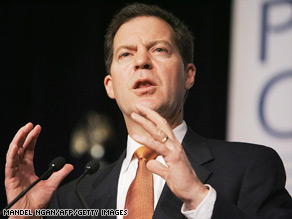
Commentary: Don't rush to close Guantanamo, by Sen. Sam Brownback, Republican from Kansas.

art.sam.brownback.gi.jpg


WASHINGTON (CNN) -- The most important responsibility for any president is the safety
and security of the American people.

By issuing Thursday's executive orders, President Obama has ensured that his success
or failure in matters of national security policy will be defined in part by what he does
with detainees. It amounts to a test of whether the promises of the campaign trail can
be reconciled with the fundamental responsibility of protecting all Americans.

I disagree with setting a date for closing Guantanamo Bay's detention facility because
I believe that adhering to a schedule is less important than preserving our security.
Now that the administration has committed itself to this course, however, it is
imperative that it implement these executive orders transparently, comprehensively
and with the cooperation of Congress.

Changes in detainee policy must be open and transparent to be credible. While reviews
of individual cases must remain secret because they involve sensitive information,
decisions about how detainees are processed and where they might be located should
be discussed as openly as possible.

It is not enough to argue, as many have, that closing Guantanamo Bay will improve
America's image or insist that it is simply the right thing to do.  The president must
convince the American people that releasing detainees or placing them in other facilities
will improve the level of security they enjoyed under pre-existing policies. That is no
small task, but it is the challenge he has set for himself.

The Obama administration also must review all detainee policies comprehensively. I
was pleased to hear that the administration intends to examine all of the legal, logistical
and security issues associated with a detainee transfer. I am disappointed, however,
that the order did not specify those issues in any greater detail.

These legal, logistical and security matters are enormously complicated and will require
more than a cursory review of statutes and facilities. Interagency task forces, such as
the one Obama has called for, can be effective policy instruments -- or they can reach
the conclusions the president already prefers. I hope the task force's work will be made
public to the greatest extent possible, so that the American people can be sure it truly
accomplishes its tasks and does not put a rubber stamp on a predetermined outcome.

Even before the new executive orders were issued, I introduced legislation in the Senate
that would require a report to Congress outlining conclusions on specific, practical security
matters. These range from the space available to transfer detainees, to the adequacy of
facilities and security measures necessary to protect the public as well as the types of
facilities in the United States and abroad that should be considered before final decisions
are made. I call on the administration's interagency task force to address the provisions
of this legislation as part of its review.

Finally, the administration must be open to input from Congress. Though congressional
debate over detainee policy is sure to be contentious, the administration will not be able
to transfer all detainees out of Guantanamo Bay without statutory relief from Congress.
Existing laws, for example, prohibit the co-mingling of detainees with other types of prisoners
-- civilian or military.

Moreover, members of Congress, in close contact with their constituents, will have insights
otherwise unavailable to administration officials. I have found, for example, that there is a
popular misconception, even among Beltway experts, that Leavenworth, Kansas, can handle
detainees because it is a prison town.

The reality is quite different. Fort Leavenworth's military prison is primarily a medium security
facility; the base does not have a perimeter fence. A train frequently runs through the middle
of the post, and civilian houses are within a few feet of the existing facility. Moreover, the
installation's primary mission is hosting the Army's staff college, which trains future Army
leaders. In short, placing detainees there would create an attractive terrorist target. I assume
other potential detainee destinations have similar concerns.

Detainee policy is a potent political issue, but concerns over public safety cannot be glossed
over out of political expediency. Congress cannot be expected to adhere to an administration
timetable for closing the Guantanamo Bay facility if it is not involved in considering how the
United States will handle detainees in the future.

A year from now, we may find Guantanamo Bay has no more detainees. Or we may decide
adequate facilities are not available elsewhere and leave some detainees at Guantanamo Bay
for a longer period of time. It is more important that we get it right than get it done by a date
certain. For the new administration, getting it right means being able to look the American
people in the eye and declare them safer than they are today. Only a transparent and
comprehensive look at detainee issues can make that outcome possible.
 
A new Pentagon report may complicate Obama's plans for Gitmo, by Michael Isikoff | NEWSWEEK

The Pentagon is preparing to declassify portions of a secret report on Guantanamo
detainees that could further complicate President Obama's plans to shut down the
detention facility.

The report, which could be released within the next few days, will provide fresh details
about 62 detainees who have been released from Guantanamo and are believed by U.S.
intelligence officials to have returned to terrorist activities, according to two Pentagon
officials who asked not to be identified talking about a document that is not yet public.
One such example, involving a Saudi detainee named Said Ali Al-Shihri, who was
released in 2007, received widespread attention Friday when Pentagon officials publicly
confirmed that he has recently reemerged as a deputy commander of Al Qaeda in Yemen.
Al-Shihri, once known publicly only as Guantanamo detainee No. 372, is suspected of
involvement in a thwarted attack on the U.S. embassy in Yemen last September.

The decision to release additional case studies from the report is in effect a warning
shot to the new president from officials at the Pentagon and U.S. intelligence agencies
who are skeptical about some of his plans. Some Pentagon officials, including ones
sympathetic to Obama's goals, note the political outcry would be deafening should
another example like Al-Shihri become public six months from now—and it turns out
be a Guantanamo detainee released under Obama's watch rather than by the Bush
administration. "The last thing Obama wants is for one of these guys [at Guantanamo]
to get released and return to killing Americans," said one senior Defense Department
official who asked not to be identified because of the political sensitivities.

Some counter-terrorism experts have raised questions about the significance of the
Pentagon's figures, noting that the number of so-called "recidivist" detainees represents
only a small portion, about 12 percent, of the approximately 520 detainees who have
been released from Guantanamo since the detention facility was opened in January 2002.
This compares with recidivism rates of as high as 67 percent in state prisons in the United
States, according to Justice Department figures. There have also been concerns that Bush
administration holdovers were deliberately playing up the cases in recent weeks in an effort
to undercut Obama. One former senior U.S. counter-terrorism official noted to NEWSWEEK
that the Pentagon waited until the day after Obama signed his executive order mandating
the closure of Guantanamo to confirm Al-Shihri's renewed Al Qaeda ties.

Still, a few top Obama administration officials have privately acknowledged that the
problem of still dangerous detainees at Guantanamo is more worrisome than some
of president's campaign statements might suggest. In May 2008, when the Defense
Intelligence Agency (DIA) last prepared a report on released Gitmo detainees who
had returned to terrorist activities, it counted the number of recidivists at 37. Among
the examples: Mohammed Ismail, one of the "juveniles" at Guantanamo who, upon
his release in 2004, had praised his treatment by Americans, saying at a press
conference, "They gave me a good time at Cuba." He was recaptured four months
later, participating in an attack on U.S. forces near Kandahar, Afghanistan.

As Pentagon press secretary Geoffrey Morrell disclosed two weeks ago, by mid-January
of this year, 24 new detainees had been added to the DIA recidivist tally. The recent
confirmation of Al Shihri bumped the overall number to 62, 18 of whom are alleged
to have directly participated in terror attacks.

This does not necessarily mean that Guantanamo detainees released in the later part
of 2008 were responsible for the increase. There is often a lengthy lag time between
the time a detainee is freed and when U.S. intelligence officials learn of the individual's
terrorist involvement. Still, the spike in the recidivist rate is not surprising, defense
officials say. "The easy ones were released first," said a senior Pentagon official.
"As time goes on, the releases become harder and harder. These are increasingly
more difficult cases."

As of now, about 240 detainees remain at Guantanamo. Human rights groups and
defense lawyers insist there is little or no evidence of terrorist involvement against
scores of them. Some federal judges agree, having ordered the Pentagon in recent
weeks to release some of them. The Obama administration, which has given itself
a one-year deadline to shut down the facility, is hoping that European countries,
like Portugal, Spain and Germany, will agree to take some of these detainees. The
administration is also trying to get the government of Yemen to take about 100
of its nationals—the largest single group of prisoners at the facility. But even these
assumptions are shaky. The Pentagon has been trying for months to hammer out
an agreement with the Yemeni government to monitor released Guantanamo
detainees with little success.

The hardest chunk involves a core number, estimated by some officials to be about
50 or 60, who are deemed to be highly dangerous but who, for a variety of reasons
—including the fact that they may have been subjected to waterboarding or other
"enhanced" interrogation techniques—may be impossible to try in any federal or
military court. The Obama administration is likely to have no choice but to move
them to another facility inside the United States, such as the U.S. naval brig in
Charleston, S.C., or the military prison in Fort Leavenworth, Kan., and hold them
indefinitely without trial, thereby risking worldwide criticism that it is simply
creating a "Guantanamo, South Carolina" or a "Guantanamo, Kansas."
Quantcast

While the Obama administration may create some sort of system for periodic
judicial review of these cases, the one thing it won't do is release these
detainees, said one senior Obama adviser who asked not to be identified talking
about the White House's internal thinking on the matter. Asked about the prospect
that some of these detainees might be let go, the adviser brushed the thought aside.
"That's not going to happen," he said.

 
Guantanamo inmate 'released soon', BBC News, 21 February 2009

A British resident held at Guantanamo Bay is to be released "as soon as practical arrangements can be made",
the Foreign Office has said. Binyam Mohamed, 30, will return to the UK after more than four years at the
controversial US military base in Cuba.

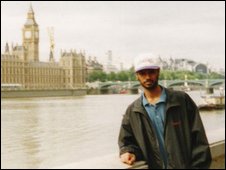
_45497747_binman.jpg

Mr Mohamed lived in London before his
arrest in 2002

Foreign Secretary David Miliband said agreement had been reached between the UK and US governments on
his transfer. Mr Mohamed's lawyers say he poses no risk to the UK, but it is not clear if he will be allowed to
stay in Britain.

BBC world affairs correspondent Allan Little said that although Mr Mohamed's legal team did not expect him
to be arrested or detained by British authorities, his immigration status in the UK remained "very much under
review".

'Huge relief'

The Ethiopian-born detainee has been held at Guantanamo since September 2004 after his arrest in Pakistan.
The US accused him of involvement in a plot to detonate a "dirty bomb" in America, but all charges against him
were dropped. Mr Mohamed claims he was tortured into falsely confessing to terrorism and alleges MI5 officers
were complicit in his abuse. The attorney general is consulting the director of public prosecutions over whether
to order a criminal investigation into Mr Mohamed's torture claims. He alleges he was secretly flown from
Pakistan to Morocco and tortured before being moved to Afghanistan and on to Guantanamo Bay.

Earlier this year he went on hunger strike for more than a month, and was described by his legal team as "close
to starvation". However, last weekend he was declared well enough to travel back to the UK by a team of British
officials who had visited him.

Former Guantanamo detainee Moazzam Begg told the BBC Radio 4's Today programme there were no procedures
in place to help people readjust to normal life. "There is no rehabilitation programme, nothing as far as the
government is concerned, which helps to reintroduce this person into normal society after, in the case of Binyam,
... seven years without charge or trial," he said. "Binyam has been tortured terribly we believe. So those sorts of
conditions, for the strongest of us, are very difficult to deal with, and in the case of somebody who returns to this
country, where he has no family members, it's going to be doubly difficult."

The US Department of Justice declined to comment on the individual case of Mr Mohamed and said it was policy
not to do so until a transfer had actually happened.

'Long overdue'

Meanwhile, the BBC has learned the UK government will not press for the remaining UK Guantanamo detainee
Shaker Aamer to be freed. The US government has previously refused requests to release Mr Aamer and a
Foreign Office spokesman said Britain is "no longer in active discussions" for his release.

However, campaigners disputed this, saying Mr Aamer's lawyers had confirmation in writing from the Foreign
Office that the government was still calling for his return.

Amnesty International said the release of Mr Mohamed would be a "huge relief" but called for other prisoners
to also be immediately freed or allowed fair trials.

UK director Kate Allen said: "It's nothing short of a disgrace that Binyam has been held in harsh conditions for
all these years, having to resort to a hunger strike to raise awareness of his plight."

Campaign group Reprieve also welcomed the news. Director Clive Stafford Smith said: "This is truly wonderful
news for Binyam Mohamed, who wants nothing more than to return to normal life in Britain."

Liberal Democrat foreign affairs spokesman Edward Davey said the release was "long overdue". "With Mr Mohamed
back in the UK, the government will have to come clean over any British role in his alleged rendition and torture,"
he said. "The attorney general has a huge responsibility on her shoulders. There can be no political influence into
the direction of this investigation."

Mr Mohamed's allegations of torture have been at the centre of a legal row involving two High Court judges. They
have complained that Mr Miliband blocked them from making public information relating to the case, for national
security reasons.

Shadow foreign secretary William Hague said the decision to release Mr Mohamed should now pave the way for
this information to be released. "There is [now] no reason for the government not to ask the US to allow the
controversial paragraphs related to his case to be published," he said.
 
Back
Top