• Thanks for stopping by. Logging in to a registered account will remove all generic ads. Please reach out with any questions or concerns.

Global Warming/Climate Change Super Thread

Status
Not open for further replies.
Calgary expected to hit 37deg today. Will it break past records?

36.7°C – August 10, 2018
36.2°C – June 29, 2021
36.1°C – July 1, 2021
36.1°C – July 25, 1933
36.1°C – July 15, 1919
36°C – June 30, 2021
35.6°C – July 22, 1936
35.6°C – August 3, 1914
35.3°C – July 26, 1984
35°C – August 5, 1971

EXTREME! Years ago we used to call it summer. Several of those are recent, which is proof of an global boiling emergency!

On a global scale however, we hit 13 straight months for heat records. Weather patterns and events will only get worse, hold onto your hats people, mother nature is trying to fend off this virus called humanity.
 
Since 100 years is a mere quark in time for this planet... I'd like to see the pattern of fluctuations for at least the last 100,000 years before getting too alarmed.
 
We're on the rebound...

Post-glacial rebound​


The uplift has taken place in two distinct stages. The initial uplift following deglaciation was almost immediate due to the elastic response of the crust as the ice load was removed. After this elastic phase, uplift proceeded by slow viscous flow at an exponentially decreasing rate.[citation needed] Today, typical uplift rates are of the order of 1 cm/year or less. In northern Europe, this is clearly shown by the GPS data obtained by the BIFROST GPS network;[3] for example in Finland, the total area of the country is growing by about seven square kilometers per year.[4][5] Studies suggest that rebound will continue for at least another 10,000 years. The total uplift from the end of deglaciation depends on the local ice load and could be several hundred metres near the centre of rebound.

Watts up with That has an article out recently on this very issue re: North America. Seems that the west coast is on the rebound whilst areas of the east coast are subsiding. Plus there is the additional issue of
Calgary expected to hit 37deg today. Will it break past records?

36.7°C – August 10, 2018
36.2°C – June 29, 2021
36.1°C – July 1, 2021
36.1°C – July 25, 1933
36.1°C – July 15, 1919
36°C – June 30, 2021
35.6°C – July 22, 1936
35.6°C – August 3, 1914
35.3°C – July 26, 1984
35°C – August 5, 1971

EXTREME! Years ago we used to call it summer. Several of those are recent, which is proof of an global boiling emergency!

On a global scale however, we hit 13 straight months for heat records. Weather patterns and events will only get worse, hold onto your hats people, mother nature is trying to fend off this virus called humanity.

Carbon dioxide and a warming climate are not problems​

https://onlinelibrary.wiley.com/doi/10.1111/ajes.12579
(from the abstract)
the IPCC claims that extreme weather events are worse now than in the past, however observations do not support this. Some extreme weather events, such as the land area under extreme drought (Lomborg, 2020), is decreasing, not increasing. Globally the incidence of hurricanes shows no significant trend (IPCC, 2013, p. 216; Lomborg, 2020).

Observations show no increase in damage or any danger to humanity today due to extreme weather or global warming (Crok & May, 2023, pp. 140–161; Scafetta, 2024). Climate change mitigation, according to AR6, means curtailing the use of fossil fuels, even though fossil fuels are still abundant and inexpensive. Since the current climate is arguably better than the pre-industrial climate and we have observed no increase in extreme weather or climate mortality, we conclude that we can plan to adapt to any future changes.

Every time I hear the doom and gloom about global warming I remember that it is people like our prime minister who are pushing it and I figure nah, if they say its true it must be because saying so supplies they and their friends a very solid economic future. They are also the ones investing in waterfront property. With backers like that it has to be a lie and I don't feel bad at all.
 
Watts up with That has an article out recently on this very issue re: North America. Seems that the west coast is on the rebound whilst areas of the east coast are subsiding. Plus there is the additional issue of

Carbon dioxide and a warming climate are not problems​

https://onlinelibrary.wiley.com/doi/10.1111/ajes.12579
(from the abstract)
the IPCC claims that extreme weather events are worse now than in the past, however observations do not support this. Some extreme weather events, such as the land area under extreme drought (Lomborg, 2020), is decreasing, not increasing. Globally the incidence of hurricanes shows no significant trend (IPCC, 2013, p. 216; Lomborg, 2020).

Observations show no increase in damage or any danger to humanity today due to extreme weather or global warming (Crok & May, 2023, pp. 140–161; Scafetta, 2024). Climate change mitigation, according to AR6, means curtailing the use of fossil fuels, even though fossil fuels are still abundant and inexpensive. Since the current climate is arguably better than the pre-industrial climate and we have observed no increase in extreme weather or climate mortality, we conclude that we can plan to adapt to any future changes.

Every time I hear the doom and gloom about global warming I remember that it is people like our prime minister who are pushing it and I figure nah, if they say its true it must be because saying so supplies they and their friends a very solid economic future. They are also the ones investing in waterfront property. With backers like that it has to be a lie and I don't feel bad at all.

And then there's the whole 'Global Cooling' thing that you'll never hear much about. More proof that it's a complex issue made 'simple' by those with hidden, or not so hidden, agendas....

We’ve been accidentally cooling the planet — and it’s about to stop​

Humans’ fossil fuel burning has cooled the planet while warming it — presenting problems for the future.

It is widely accepted that humans have been heating up the planet for over a century by burning coal, oil and gas. Earth has already warmed by almost 1.2 degrees Celsius (2.2 degrees Fahrenheit) since preindustrial times, and the planet is poised to race past the hoped-for limit of 1.5 degrees Celsius of warming.

But fewer people know that burning fossil fuels doesn’t just cause global warming — it also causes global cooling. It is one of the great ironies of climate change that air pollution, which has killed tens of millions, has also curbed some of the worst effects of a warming planet.
Tiny particles from the combustion of coal, oil and gas can reflect sunlight and spur the formation of clouds, shading the planet from the sun’s rays. Since the 1980s, those particles have offset between 40 and 80 percent of the warming caused by greenhouse gases.


And then there's the whole 'Global Cooling' thing that you'll never hear much about. More proof that it's a complex issue made 'simple' by those with hidden, or not so hidden, agendas....

We’ve been accidentally cooling the planet — and it’s about to stop​

Humans’ fossil fuel burning has cooled the planet while warming it — presenting problems for the future.

It is widely accepted that humans have been heating up the planet for over a century by burning coal, oil and gas. Earth has already warmed by almost 1.2 degrees Celsius (2.2 degrees Fahrenheit) since preindustrial times, and the planet is poised to race past the hoped-for limit of 1.5 degrees Celsius of warming.

But fewer people know that burning fossil fuels doesn’t just cause global warming — it also causes global cooling. It is one of the great ironies of climate change that air pollution, which has killed tens of millions, has also curbed some of the worst effects of a warming planet.
Tiny particles from the combustion of coal, oil and gas can reflect sunlight and spur the formation of clouds, shading the planet from the sun’s rays. Since the 1980s, those particles have offset between 40 and 80 percent of the warming caused by greenhouse gases.


Aerosols haven't been a secret. We've been investigating their impact for decades. The reduction in aerosols was known to have an impact on temperature increases. We lost a dedicated satellite to aerosol tracking in one of the shuttle disasters. The solar cycle is for cooling right now as are the cumulative Milankovitch cycles
 
And then there's the whole 'Global Cooling' thing that you'll never hear much about. More proof that it's a complex issue made 'simple' by those with hidden, or not so hidden, agendas....

We’ve been accidentally cooling the planet — and it’s about to stop​

Humans’ fossil fuel burning has cooled the planet while warming it — presenting problems for the future.

It is widely accepted that humans have been heating up the planet for over a century by burning coal, oil and gas. Earth has already warmed by almost 1.2 degrees Celsius (2.2 degrees Fahrenheit) since preindustrial times, and the planet is poised to race past the hoped-for limit of 1.5 degrees Celsius of warming.

But fewer people know that burning fossil fuels doesn’t just cause global warming — it also causes global cooling. It is one of the great ironies of climate change that air pollution, which has killed tens of millions, has also curbed some of the worst effects of a warming planet.
Tiny particles from the combustion of coal, oil and gas can reflect sunlight and spur the formation of clouds, shading the planet from the sun’s rays. Since the 1980s, those particles have offset between 40 and 80 percent of the warming caused by greenhouse gases.


Talk about covering your ass. Burning fossil fuel causes global warming. Burning fossil fuel causes global cooling. Burning fossil fuel causes the sea to rise. Burning fossil fuel causes (fill in the blank). Well here is the truth and remember you read it first from YZT580. Burning fossil fuel has enabled us to have leisure time to watch football, hockey, baseball and watch our kids grow up rather than putting them out to work at 12. It lights our houses, increases our food output and allows us to fish for pleasure instead of survival. There is no down side to burning fossil fuel that having access to fossil fuel can't give us the time to resolve.
 
Talk about covering your ass. Burning fossil fuel causes global warming. Burning fossil fuel causes global cooling. Burning fossil fuel causes the sea to rise. Burning fossil fuel causes (fill in the blank). Well here is the truth and remember you read it first from YZT580. Burning fossil fuel has enabled us to have leisure time to watch football, hockey, baseball and watch our kids grow up rather than putting them out to work at 12. It lights our houses, increases our food output and allows us to fish for pleasure instead of survival. There is no down side to burning fossil fuel that having access to fossil fuel can't give us the time to resolve.

Meanwhile, I'm feeling attacked by the privileged few in Ottawa...

... ironically about 95% of the constituents in her riding - Saanich-Gulf Islands - are Boomers ;)


That's OK though, just following in the footsteps of this one. Hello pot, this is kettle ;)

 
Last edited:
One person's "f*cked the planet" is another person's "used technology and resources to make massive improvements in delivering calories, health care, and other QoL improvements to many of the world's most desperately impoverished people".
 
One person's "f*cked the planet" is another person's "used technology and resources to make massive improvements in delivering calories, health care, and other QoL improvements to many of the world's most desperately impoverished people".

Amen to that...


How the Boomers Saved Everything​

Yes, we’re spoiled rotten. We’re self-absorbed. And it seems like we’ll never shut up. But the boomers made a better world for everyone else. You’re welcome​

by P.J. O'Rourke, AARP The Magazine

 
She would know…she is one. Hypocrisy knows no bounds…

And she's abiding in a glass house too, it seems ;)

It’s ‘obvious’ Justin Trudeau should step down, Elizabeth May says — so why won’t she listen to her own critics?​

Following a press conference where May’s unofficial co-leader resigned, the long-time Green party leader was confronted by questions about her own leadership.

 
And she's abiding in a glass house too, it seems ;)

It’s ‘obvious’ Justin Trudeau should step down, Elizabeth May says — so why won’t she listen to her own critics?​

Following a press conference where May’s unofficial co-leader resigned, the long-time Green party leader was confronted by questions about her own leadership.

My take is that the Greens have so little chance of making a political impact that her job is relatively “safe” - whether she stays on or not, most Canadian voters won’t care because they won’t vote for them anyway.
 
Meanwhile, I'm feeling attacked by the privileged few in Ottawa...

... ironically about 95% of the constituents in her riding - Saanich-Gulf Islands - are Boomers ;)


That's OK though, just following in the footsteps of this one. Hello pot, this is kettle ;)


Coming after our houses now. When he sells all his huge private properties and moves into a single wide mobile, perhaps I'll give it some thought. This guy never knows when to STFU.
 
I can’t believe I have never seen the “Sell the houses to who, Ben?” Meme before.

Starts at 3:11 (or when the link starts)


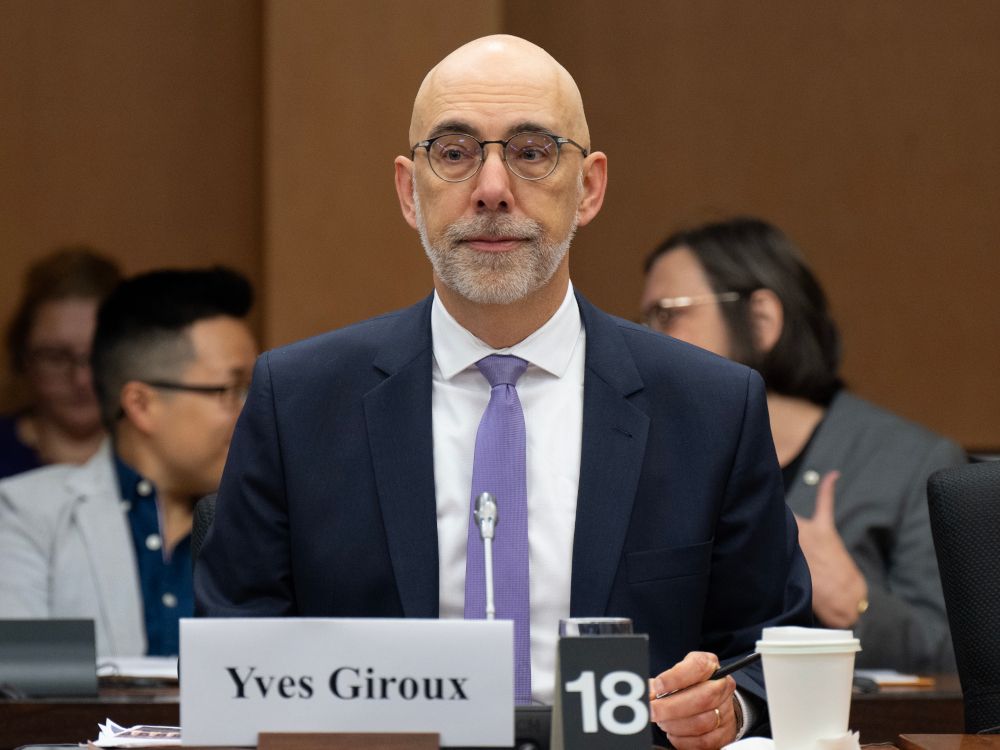
OTTAWA — The Parliamentary Budget Officer’s corrected analysis of the carbon tax has confirmed most Canadians are getting back more in rebates than they pay in carbon taxes but that the policy will make most Canadians worse off financially.

Parliamentary Budget Officer Yves Giroux corrected a mistake he made in two previous reports, but it came to the same broad conclusion. Those previous reports counted both the fuel tax that average consumers pay and the tax on heavy emitters, which they don’t.

Meanwhile - the democratic will of the US voter

It just doesn't matter...


1. An "all of the above" approach to energy policy has by far the most voter support and shows remarkable stability and common support across voter groups.

When presented with a choice among three options—a rapid green energy transition, an “all of the above” energy policy, and emphasizing fossil fuels—American voters across demographics and partisanship strongly prefer an “all of the above” approach to energy policy including oil, gas, renewables, and nuclear. Less than a quarter support a rapid transition to renewables, which drops to under a fifth for working-class (noncollege) voters. Even among Democrats, support for a rapid transition is only a little over a third.

2. On extreme weather events, most voters have not accepted the apocalyptic reporting found in the media and pushed by climate activists.

Most people hold views of trends in extreme weather events that are consistent with the most recent assessment of the Intergovernmental Panel on Climate Change (IPCC). They do not say they have personally observed an increase in hurricanes, floods, drought, or tornadoes which is consistent with the current state of scientific understandings. The exception is heat waves where, consistent with the IPCC, a majority report that they have observed an increase in such events.

3. American voters are reluctant to pay even a small amount to support climate action and this willingness drops quickly as the proposed small costs increase.

When asked if they would support just a $1 monthly fee on their electricity bill to fight climate change, only 47 percent say they would while almost as many (43 percent) are opposed. Even at this level, opposition is greater than support among working-class voters. When the proposed fee is increased to $20, overall voter support plummets to 26 percent with 60 percent opposed. At $40, it is 19 percent support to 69 percent opposition; at $75 it is 15 percent vs. 72 percent; and at $100 it is 7:1 against (77 percent to 11 percent) paying such a fee to combat climate change.

4. Voters expect an energy transition away from fossil fuels to lead to unexpected problems.

About two-thirds think problems are likely. A follow-up question indicates that voters are most worried about the impact on the prices of energy and everyday goods and about the impact on the reliability of the electrical grid. Voters are most positive about the impact of an energy transition on job opportunities in the energy sector and on air and water quality.

5. Overall, the public is much more favorable on both solar and natural gas than on wind, suggesting that the concept of "renewables" masks some important differences.

Solar energy tests the best among five energy sources that voters were asked to rank. Thirty-eight percent of voters ranked solar first. Natural gas did the second best, picked first by 26 percent of voters. Nuclear energy came third (15 percent ranked it first) followed by wind (10 percent) and coal (6 percent). Coal is clearly the least preferred energy source with 38 percent ranking it dead last among options. Wind and nuclear also have strong opposition with, respectively, 19 percent and 29 percent ranking the technology their least favorite option.

Share

6. In terms of the energy they consume, cost and reliability are way, way more important to voters than possible effects on the climate.

Given four choices, 37 percent of voters said the cost of the energy they use was most important to them and 36 percent said the availability of power when they need it was most important. Just 19 percent thought the effect on climate of their energy consumption was most important and 6 percent selected the effect on U.S. energy security.

7. In terms of proposals to mitigate the effects of climate change, getting to “net zero” as quickly as possible is relatively unimportant to voters.

Asked to consider proposals to reduce the effects of global climate change, voters were least likely to say “getting the U.S. to net zero carbon emissions as quickly as possible” was very important to them personally (29 percent), fewer than said “limiting the burden of regulations on business” was very important (32 percent). Voters were most likely by far to say keeping consumer costs low (66 percent) and increasing jobs and economic growth (60 percent) were very important aspects of climate mitigation proposals. The split was wider among working-class voters: 71 percent thought keeping consumer costs low was very important, compared to 26 percent who thought rapidly getting to net zero was very important.

8. Climate change as an issue has very low salience to voters.

Voters were asked to evaluate a list of 18 issue areas and rate their priority for the president and Congress to address in the coming year. As a “top priority,” dealing with global climate change ranked 15th out of these 18 areas, well behind strengthening the national economy, fighting inflation, defending the country from terrorist attacks, and keeping Social Security financially sound—and also behind reducing health care costs, dealing with immigration, improving the educational system, keeping energy costs low, reducing the budget deficit, reducing crime, improving how the political system works, improving the job situation, strengthening the military, and dealing with the problems of poor people. The climate issue only ranked above global trade, drug addiction, and issues around race.

9. Voters support increased domestic production of fossil fuels, but they are unaware fossil fuel production has actually increased in the last several years.

By 22 points (56-34), voters favor more domestic production of fossil fuels—oil and gas. Working-class voters felt even more strongly, endorsing the idea by 30 points. But only 17 percent of voters are aware that the Biden administration has increased oil production on federal lands. However, when informed that the U.S. has, in fact, increased domestic production of oil and gas in the last several years, they are delighted. Almost seven in ten (69 percent) said “this is a positive development, which brings good jobs for U.S. workers, ensures our energy supply and helps the U.S. support our allies who need similar resources” compared to 31 percent who thought “this is a negative development, which brings more pollution, climate change, and continued reliance on fossil fuels.”

10. Voter interest in electric heat pumps, hot water heaters and stoves, as well as electric vehicles, is weak.

Asked whether they had given serious thought to making certain “green” changes in their home within the past 12 months, 75 percent of voters said they either had not given serious thought to installing an electric heat pump or that that device was not relevant to them; 67 percent said the same thing about an electric water heater as did 61 percent about an electric stove or induction system.

Voters by 17 points (52-35) say they are opposed to phasing out new gasoline cars and trucks by 2035 and many more voters are upset (48 percent) than excited (21 percent) by the idea of phasing out production of gas-powered cars and trucks. By 18 points (59-41), voters say they are not likely to even consider purchasing an electric vehicle as their next car. Just 10 percent say they now own an electric vehicle and two-thirds of those are hybrid rather than fully electric.
 
Included here because, IMO, the Climate Crisis is a creature of the Club of Rome and the determination that there are limits.

I grew up knowing there are no limits. I have spent my adult life being told I am wrong. I have reverted to my childhood.

My canon: Heinlein; Clarke; Pournelle; Dickson; Asimov; Niven; Norton.

No limits.


The only acceptable product of the Apollo program was the photo of Earth from the Moon, an inward-looking image used to justify environmental programs that, along the lines of the Club Of Rome, were aimed at shrinking civilizational horizons, not expanding them.

...the New Left hated Apollo. There were several reasons. First, the New Left was largely a revolt against the Old Left – they hated LBJ from early on, and the other old-style Democratic liberals like Hubert Humphrey. They were delighted to cost LBJ reelection, though less so with the results.

Second, Apollo was, as Norman Mailer wrote in A Fire on the Moon, the “triumph of the squares.” While all the long-haired countercultural types talked about changing the world with music, tie-dye, and psychedelics, a bunch of crew- cutted engineers in their short-sleeve dress shirts, pocket protectors, and skinny ties actually went and did it. They weren’t “cool,” but they did something that had never been done before, and that had scarcely even been imagined.

This was unforgivable, and NASA had to be neutered, and was.

Worse yet, a space program was expansionary. If Western Civilization in general, and the United States of America in particular, was evil, then anything that led to the expansion of either must be evil too. The only acceptable product of the Apollo program was the photo of Earth from the Moon, an inward-looking image used to justify environmental programs that, along the lines of the Club Of Rome, were aimed at shrinking civilizational horizons, not expanding them.

(This is also the reason for all the hate aimed at Columbus. His sin wasn’t anything that happened to the “indigenous” peoples of the Americas. It was that his voyages led to the expansion – quite possibly the survival -- of Western Civilization, and the eventual creation of the United States of America. In traditional United States usage, Columbus was a hero because he made the United States of America possible. To the left, that made him a villain of the first order.)

So of course they hate Elon Musk, who’s doing the same kind of thing,
 
Included here because, IMO, the Climate Crisis is a creature of the Club of Rome and the determination that there are limits.
There are limits, but if we attain the capability of harvesting even only our rarest minerals from other bodies in the solar system, those limits are a long way off. If we attain the capability of moving cargo around the solar system at will, I'd place much higher odds on political miscalculations creating approximately all of our crises (as is currently the case) than any environment miscalculation (unless someone jumps into "climate engineering" armed only with current knowledge).
 
When you look at EVs, solar and wind power, this is probably a pretty big looming problem, especially with a lot of the critical metals involved in their production; especially if you've seen how massive the wind turbine blades are.

In a related note, the NBCC code is being updated to include looking at 'low carbon alternatives' for building material, which generally means alternatives to concrete. May not be the best idea in some areas with higher wildfire risks, but is generally challenging for all kinds of reasons when you look at why we use concrete for building anyway.

These busted solar panels are an early example of a looming problem — and an opportunity​

More renewable energy key to emissions targets but will create new waste stream, says think-tank​


Paula Duhatschek · CBC News · Posted: Oct 16, 2024 4:00 AM EDT | Last Updated: 25 minutes ago
A man in a blue polo shirt stands inside an industrial warehouse filled with damaged solar panels.

Dan Carocci, president of Sunset Renewable Asset Management, stands amid the stacks of damaged solar panels he's stockpiled in Brooks, Alta. (Paula Duhatschek/CBC)

In a sprawling industrial building in Brooks, Alta., about two hours east of Calgary, is a former pheasant hatchery that's now stacked waist-high with thousands of dusty, damaged solar panels.

Dan Carrocci, who's worked in renewable energy construction for more than a decade, has long been troubled by the lack of end-of-life options for this infrastructure and is stockpiling the old panels in hopes of developing a commercially viable means of recycling them.

He's now built up a stash of nearly 10,000 panels that have been damaged during manufacturing, pummelled by hail or banged up during installation.

"I call it the 'big green elephant' of renewable energy — is the waste material," said Carrocci, president of Sunset Renewable Asset Management.

Installation of solar and wind power is on the rise, but according to a 2021 report from the University of Ottawa think-tank the Smart Prosperity Institute, decommissioned solar panels and wind turbine blades often end up sitting in storage or being sent to landfill.

Much of the wind and solar infrastructure in this country is fairly new, but by 2050 the Smart Prosperity Institute said conservative estimates suggest Canada could see a cumulative 365,000 to 470,000 tonnes of expired solar panel waste and 4.5 million tonnes of wind turbine waste, though the institute said the total will be much higher if the country plans to hit its net-zero targets.

"Just producing that much waste, landfilling it going forward, it's not really a sustainable solution," said Geoff McCarney, the institute's senior research director.

While it's critical to keep ramping up use of renewables, he said, there's concern "we're creating other environmental problems while trying to address the climate problem."

A man wearing a suit and glasses stands outside an office building in Calgary, Alta.

Evan Wilson, a vice-president with the Canadian Renewable Energy Association, says there's opportunity for businesses that are developing solutions for decommissioned wind turbine blades and solar panels. (Paula Duhatschek/CBC)
Some businesses are looking at this looming source of waste with dollar signs in their eyes, and experts say there could be a big opportunity for companies working now to develop systems to dismantle and recycle panels and turbines at the end of their lifespan.

"I think companies that are thinking about recycling now … are really going to be in boom times in 20 years or so," said Evan Wilson, a vice-president with the Canadian Renewable Energy Association (CanREA).

Recyclable – but not getting recycled

Both solar panels and wind turbines are between 85 and 90 per cent recyclable, according to CanREA, but that doesn't mean it's an easy process.

"They're recyclable for sure, or at least most of the materials are recyclable," said Warren Mabee, director of the Institute for Energy and Environmental Policy at Queen's University. "But it's challenging and it might cost more than you get back in the value of the material that you're recycling."

The Alberta Recycling Management Authority got an early taste at how tricky these materials can be when, in 2020, it started accepting solar panels as electronics waste through a pilot project.

"We soon realized it's a very difficult material to recycle," said Ed Gugenheimer, the authority's CEO.

During the pilot, they refurbished as many panels as possible. Those that couldn't be reused were ultimately set aside until they could send a truckload down to the United States, where facilities were already in place to manage the material.

"I think shipping to the U.S. is probably not an optimal solution," said Gugenheimer, who said the authority is now working with the province on a more "homegrown" system.

A sign that says pheasant rearing complex.

The Sunset Renewables centre is on the site of a former pheasant hatchery. (Paula Duhatschek/CBC)
Carocci, with Sunset Renewables, is hoping to fill part of that gap. His company said it's developed a proprietary mobile deconstruction unit to strip the panels for parts, which can then be sent for recycling.

"Some of the metals can go directly to industrial metal recycling, like we don't want to reinvent the wheel there," said Carrocci.

"Some of the materials like the plastics and the glass and even the silicon, we feel that we can develop new products of value," like concrete or asphalt, he said.

WATCH | Why the Netherlands has four times more solar capacity than Canada:


default.jpg

What the Netherlands can teach Canada about solar power​


3 months ago
Duration 4:46
Although it has half the population, the Netherlands has four times more solar capacity than Canada, and that’s not by accident. CBC’s international climate correspondent Susan Ormiston explains how the Dutch became solar superstars and what Canadians could learn.
As for wind turbines, the major barrier to recycling is the blades. These are sometimes repurposed — say, as park benches — but they're made of composite material that can be difficult to break down and recycle.

"It's a very challenging process because of the robust nature of the composites," said Osayuki Osazuwa, CEO of the Jeosal Materials Research Corporation in Kingston, Ont.

This is not just a problem with wind turbines, but with boat hulls, he said, about 43,000 of which reach the end of their lifespan every year.

"It's becoming a burden for the environment and there's a need to find solutions," said Osazuwa, whose company is working to recycle fibreglass and turn it into fibre-reinforced concrete.

wind turbines

The blades on wind turbines, like these, are more difficult to recycle than solar panels, say experts. The blades are made of composite metal, which can be difficult to break down. (Sandra Fillion/Radio-Canada)
Montreal-based FibeCycle is also trying to tackle the problem of what to do with old wind turbines.

The company says it's developed a method of breaking down the composite material in the blades to make new fibre-reinforced polymers, which can be used in a range of applications from construction to 3D printing.

The idea, said executive director Andrew Csinger, is that by using recovered glass fibres instead of new glass fibres to make this material, they can reduce its environmental impact.

"We can do car parts, we can do iPhone cases, we can do furniture, we can do construction materials, there's all kinds of applications," said Csinger, who founded the business while an entrepreneur-in-residence at McGill University.

"It's a huge market."

Provinces consider solutions

A stack of damaged solar panels is pictured at the Sunset Renewables site in Brooks.

Carocci believes roughly five per cent of solar panels in Alberta are damaged ahead of their full lifespan due to manufacturer defects, improper handling, damage during transportation or catastrophic weather. (Paula Duhatschek/CBC)
Beyond the plans of individual businesses, McCarney, with the Smart Prosperity Institute, said there are questions that need to be answered to come up with a coherent recycling system:

  • How do we build reverse supply chains to get old materials out of rural and remote communities?
  • Should municipalities ultimately shoulder the responsibility for disposal, or should there be an upfront fee for producers and distributors?
These questions are particularly important, he said, as both solar panels and turbines can contain critical minerals that shouldn't go to waste.

"If we're not developing plans to actively recover, reuse, repurpose those materials, we're foregoing a potential source for them, and we're amplifying the material supply challenges we're going to have," McCarney said.

Some provinces have started to think about solutions. B.C. is in the process of adding solar panels to its recycling regulation, and Alberta is building on its previous e-waste pilot program to develop a permanent system of recycling solar panels as well as wind turbines.

On the other end of the spectrum, Warren Mabee, with Queen's University, said he also hopes to see more companies consider what will happen at the end of a product's lifespan when they design it in the first place.

"The more we can design for recyclability upfront, the easier it will be for those people 25 years down the road who have to have this conversation and try to figure out what to do with the stuff," he said.


 
Status
Not open for further replies.
Back
Top