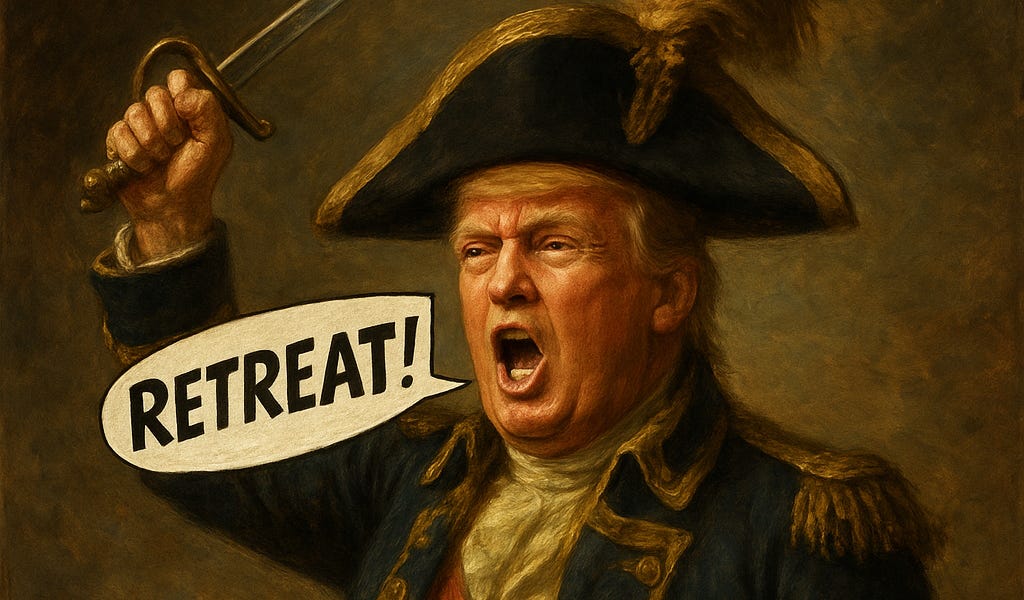
It has been a week—which means Donald Trump has already moved on to new outrages—but one of his decisions from his recent trip to Asia is going to stick. After meeting with China’s President Xi Jinping, Trump announced he would pull back from the trade war he launched shortly after taking office in January.
In doing so, Trump walked away from a worthwhile goal: pushing back against China’s decades-long assault on global manufacturing. Thanks to massive subsidies, Chinese industries now dominate world trade. Chinese factories produce one-third of all globally traded goods—more than the U.S., Germany, and Japan combined—while hollowing out manufacturing jobs at home and abroad.
Put simply, China doesn’t play fair. Its state-backed companies flood markets with cheap products to undercut competition. Presidents from George W. Bush to Joe Biden have tried to counter this with targeted tariffs. Trump initially implemented a broader but still rational tariff strategy, which Biden even kept in place. But in his return to office, Trump escalated that strategy into a chaotic trade war driven by personal impulse, not policy. He forgot that China had a powerful weapon of its own—and was more than willing to use it.
China controls the global control of rare earth minerals—critical components for high-tech manufacturing (worth noting, the US
possesses plenty of these minerals, but mining restrictions and regulations have prevented access good or bad). Most importantly, it produces 98 percent of the world’s rare earth magnets, essential for everything from missiles to smartphones. On September 9, China imposed restrictions on rare earth exports, sending shockwaves through the tech industry. Trump’s trade representative, Jamieson Greer, put it bluntly: “This will give China control over basically the entire global economy and the technology supply chain.”
Outmaneuvered, the Trump administration quickly agreed to a deal that included:
- A 50% reduction in U.S. tariffs on certain Chinese products
- A drop in overall tariffs on Chinese goods, from 57% to 47%
- A one-year pause on export controls for high-tech U.S. products like semiconductor equipment, which to this point had been restricted due to the AI race. This gives China a win, and a leg up in the race.
- A similar pause on port fees for Chinese-built, owned, or flagged cargo ships
And what did the U.S. get in return? China agreed to suspend retaliatory tariffs on American agricultural products and buy 12 million metric tons of soybeans-
EXACTLY what they were purchasing
BEFORE. It also agreed to resume sales of rare earth metals and magnets.
The rare earth issue may have forced Trump’s retreat, but let’s be clear: long before that, his 125% tariffs on Chinese imports were already hurting Americans. Consumers paid higher prices for clothing, furniture, toys, electronics, and more. There is still no evidence that even a single American manufacturing job was created as a result. Meanwhile, China continues to dominate the booming market for solar panels and wind turbines, and it’s rapidly closing the gap with the U.S. in artificial intelligence and information technology.
So how did Trump respond to China’s growing strength? He canceled federal programs that supported renewable energy production in the U.S. He even proposed cutting a program that helps build domestic semiconductor manufacturing—the very technology that powers AI and keeps America competitive.
When it comes to China, Trump is missing intelligence in more ways than one. He doesn’t even understand who pays the price for his tariffs. Just weeks ago, Goldman Sachs released a report showing who actually bears the cost: American consumers pay 55%, U.S. companies pay 22%, and exporters in China and elsewhere pay just 18%.
Trump and his allies keep insisting that America is “winning.” If that’s true, then why are we the ones retreating?