• Thanks for stopping by. Logging in to a registered account will remove all generic ads. Please reach out with any questions or concerns.

2025 U.S. - Venezuela conflict

China stops buying US soy…again…in 3, 2, 1…

From what I understand, the shipments are still considerably down.

Trump presented the resumption of some Chinese soy buying as a win, but the reality is most of what has been promised hasn't happened yet. The actual purchases will be far below pre- trade war levels.
 
From what I understand, the shipments are still considerably down.

Trump presented the resumption of some Chinese soy buying as a win, but the reality is most of what has been promised hasn't happened yet. The actual purchases will be far below pre- trade war levels.
I’m thinking that China will both explicitly cancel all US soy purchases, and cancel the agreement to supply critical metals to the US… 🍿
 
900,000 BPD from Venezuela by sea to any country


4,100,000 BPD from Alberta in October
3,500,000 BPD exported from Alberta, primarily to the US
800,000 BPD shipped by sea from Burnaby but mosy of that is still going to the US.
Alternate buyers for the Burnaby oil are China, India, South Korea, Japan and some small quantities to Europe.

LNG is pricing itself out of the market and countries are stepping back from climate concerns tomorrow in favour of cheap energy today.
Climate concerns forced coal to the bottom of the market. China benefited from cheap coal and no environmental laws to worry about.
BC and Australia benefited from supplying coal to China at cut rate prices.
India and Indonesia have also been big coal consumers.
Coincidentally China, India and Indonesia have benefited from a modern steam powered industrial revolutin while Europe retired.

LNG makes no economic sense because it makes no thermodynamic sense.
Our world operates at STP - Standard Temperature and Pressure - one Atmosphere and Room Temperature - 1 Bar and 25C.
At STP Natural Gas is a gas, Oil is a liquid and Coal is a solid.
Drop a chunk of coal on the ground and itstays there. It doesn't move.
Oil needs to be contained but a simple bucket will get the job done. All the better if it has a lid to stop the oil evaporating and the dust and water out.
Natural Gas needs an airtight container.

Everything gets transported in containers and the critical factor is the size of the container. Not mass so much as the volume.

Stipulating a standard container of a 1 m3 tote that can be managed by a forklift.

A 1 m3 tote of Natural Gas at STP can supply 35 to 40 MJ of energy.
The same tote filled with WCS Oil can supply 43,000 MJ of energy
Filled with BC Coal that tote can supply 26,000 to 31,000 MJ of energy dependiing on how big the chunks of coal are.

Those packing differences are the reason ffor the popularity of oil and why natural gas was flared off as a waste when it couldn't be used locally.
Alberta is a great place to use Natural Gas because we are sitting on top of it and it naturally seeps to the surface in any event.
Shipping it to Japan takes energy to transport it and the heavy container to contain it and the insulation to keep it cool and the refrigeration plant. it also requires energy to compress and cool the gas in the first place and more energy to build the machinery and high containers and pipes to make all this happen.

Coal is easier to handle than oil but it takes up more space. For the price of a lid on your tote, a lid you need to control dust in any case, you can deliver a full m3 of energy and not 60 to 70% of one.

If the climate crisis is behind us....
Then oil will become the preferred means of moving energy over distances and especially over oceans.
Coal will sell at a relative discount based on bulk density
Natural Gas will be used locally where available or replaced by Methane generated from imported oil and coal.
Add some local end of pipe carbon capture to feed greenhouses and make graphite and you have a cleaner, and steady, supply of energy.

And there is still the promise of Uranium and Thorium and Small Modular Reactors.

The village is a useful scalar.
A city can be seen as a conglomeration of villages.
If a village can be seen as sharing a common hearth with one chimney then that village can share the power and the heat generated by that hearth, use it to incinerate their waste, afford the cost of harvesting their ashes and flue gases and selling them as raw materials.

The US has lots of Carbon and while Venezuela is a great carbon source I don't think that Donald really needs it. He may want it but I suspect his interest is more Monrovian than commercial. He just doesn't want competitors in his backyard.

 
Last edited:
Things may not be what everyone wanted to be.

I'm not agreeing or disagreeing with anything in the article. Just posting another MSM story regarding the incident.

Pete Hegseth didn’t order killing of survivors of September boat strike, according to new report​

The New York Times, citing five US officials, reported Tuesday that Hegseth’s initial order to destroy the boat, its alleged drug cargo and anyone on board did not specify what should happen if survivors remained.

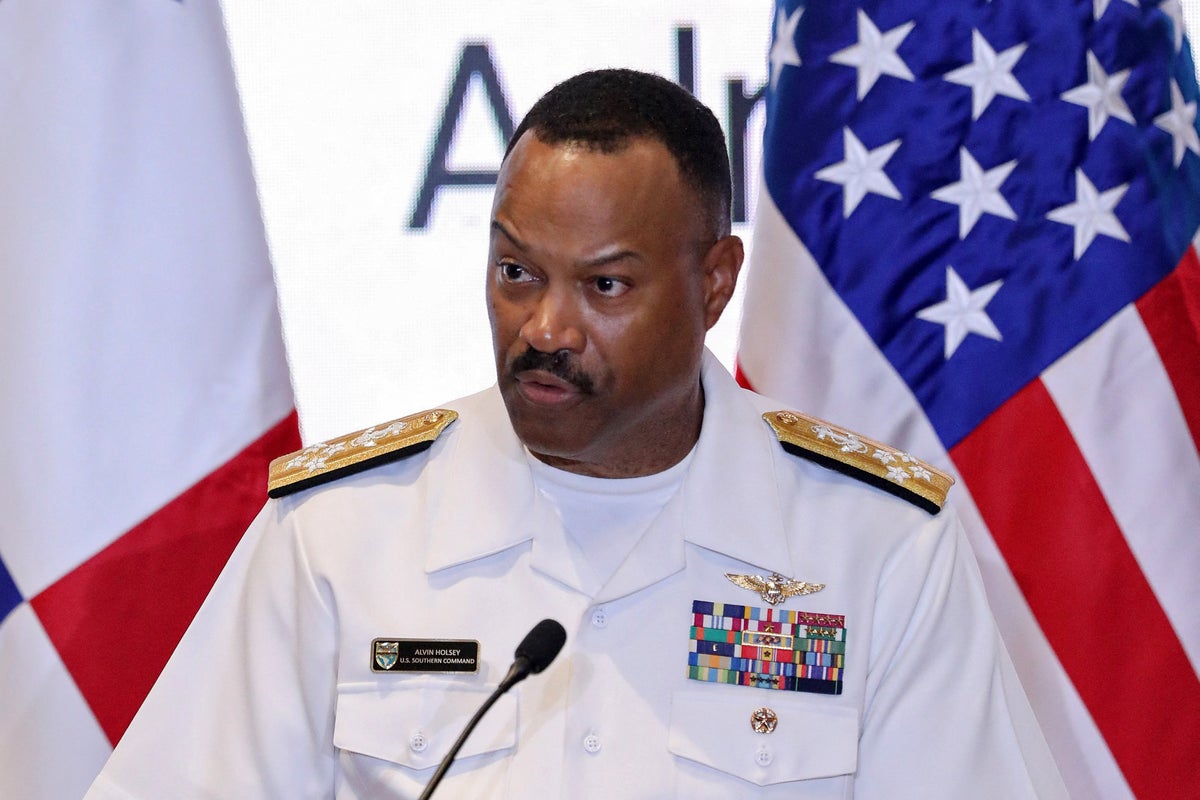
Adm. Frank Bradley, the head of US Special Operations Command, ultimately signed off on both the initial strike and several follow-up strikes that killed 11 people

 
Bradley appeared today in front of a closed hearing.

 
As far as I'm concerned, somebody committed a crime WRT the subsequent strike; the White House, the Admiral, or a sailor.

The WH has declared war, but it doesn't have the authority to do that, it's that simple.
 
As far as I'm concerned, somebody committed a crime WRT the subsequent strike; the White House, the Admiral, or a sailor.

The WH has declared war, but it doesn't have the authority to do that, it's that simple.

Justice Department tells Congress Trump doesn’t need its approval for military strikes on alleged drug boats
(CNN) — A senior Justice Department official has told Congress that the Trump administration can continue lethal military strikes on alleged drug traffickers without congressional approval and that the administration is not bound by a decades-old war powers law, two congressional sources familiar with the matter told CNN.

More -

Presidents and Instances of Bombings Without Congressional Approval

The U.S. Constitution grants Congress the power to declare war (Article I, Section 8), but presidents, as Commanders-in-Chief (Article II), have often initiated military actions, including bombings, without explicit congressional approval. The War Powers Resolution of 1973 aims to limit such actions by requiring notification to Congress within 48 hours and withdrawal of forces after 60 days without congressional authorization, but presidents have frequently bypassed or interpreted this flexibly, citing national security, existing Authorizations for Use of Military Force (AUMFs), or their Article II powers. Below is a list of U.S. presidents since World War II who have ordered bombings without explicit congressional approval for specific actions, based on historical examples and the provided context.

  1. Harry S. Truman (1945–1953)
    • Korea (1950–1953): Truman authorized bombing campaigns during the Korean War under UN Security Council resolutions, bypassing a formal congressional declaration of war. Critics argue this set a precedent for unilateral executive action.
  2. Dwight D. Eisenhower (1953–1961)
    • Guatemala (1954): Eisenhower ordered CIA-led airstrikes to support a coup against the Guatemalan government. No specific congressional approval was sought for these covert operations.
  3. John F. Kennedy (1961–1963)
    • Cuba (1961): Kennedy authorized the Bay of Pigs invasion, which included airstrikes, without explicit congressional approval.
    • Vietnam (early 1960s): Limited bombing operations began under Kennedy’s escalation in Vietnam, relying on executive authority rather than specific congressional authorization.
  4. Lyndon B. Johnson (1963–1969)
    • Vietnam (1964–1969): Johnson expanded bombing campaigns (e.g., Operation Rolling Thunder) based on the Gulf of Tonkin Resolution (1964), a broad authorization critics argue did not constitute specific approval for the scale of operations.
  5. Richard Nixon (1969–1974)
    • Cambodia (1969–1970): Nixon ordered secret bombings of Cambodia (Operation Menu) without notifying Congress, later revealed by leaks, prompting significant backlash and contributing to the War Powers Resolution.
    • Vietnam and Laos: Expanded bombing campaigns relied on existing authorizations or executive authority, often without specific congressional approval.
  6. Gerald R. Ford (1974–1977)
    • Cambodia (1975): Ford ordered airstrikes during the Mayaguez incident, citing the need to rescue U.S. personnel. This was reported to Congress under the War Powers Resolution but lacked prior approval.
  7. Jimmy Carter (1977–1981)
    • Limited evidence exists of Carter ordering significant bombing campaigns without approval. Some sources suggest he avoided large-scale airstrikes, but small-scale operations may have occurred under executive authority.
  8. Ronald Reagan (1981–1989)
    • Libya (1986): Reagan ordered airstrikes on Libya (Operation El Dorado Canyon) in response to terrorist attacks, citing self-defense under Article II powers, without seeking congressional approval.
    • Lebanon and Grenada (1983): Air support was used in both interventions without specific congressional authorization.
  9. George H.W. Bush (1989–1993)
    • Panama (1989): Bush ordered Operation Just Cause, including airstrikes, without specific congressional approval, citing protection of U.S. citizens and interests.
    • Iraq (1991): While Congress authorized the Gulf War, some initial airstrikes and deployments were justified by Bush under executive authority before the resolution was passed.
  10. Bill Clinton (1993–2001)
    • Somalia (1993): Airstrikes supported U.S. operations without specific congressional approval.
    • Bosnia (1993–1995): Clinton ordered airstrikes as part of NATO operations without explicit congressional authorization.
    • Kosovo (1999): Clinton authorized NATO-led airstrikes in Serbia/Kosovo, continuing beyond the War Powers Resolution’s 60-day limit, arguing implicit congressional approval through funding. Critics challenged this as unconstitutional.
    • Iraq (1998): Operation Desert Fox involved airstrikes without specific congressional approval, relying on prior AUMFs.
    • Sudan and Afghanistan (1998): Airstrikes on al-Qaeda targets followed embassy bombings, justified under executive authority.
  11. George W. Bush (2001–2009)
    • Afghanistan (2001): Airstrikes followed the 9/11 attacks under the 2001 AUMF, which broadly authorized force against al-Qaeda but was not specific to all targets bombed.
    • Iraq (2003): While Congress passed the 2002 AUMF, some argue the extensive bombing campaign exceeded the scope without further specific approval.
    • Pakistan, Yemen, Somalia: Drone strikes and airstrikes targeted terrorists, often without specific congressional authorization, relying on the 2001 AUMF.
  12. Barack Obama (2009–2017)
    • Libya (2011): Obama ordered airstrikes as part of a NATO campaign without congressional approval, arguing the actions didn’t constitute “hostilities” under the War Powers Resolution. This was highly controversial.
    • Syria (2014–2017): Airstrikes against ISIS relied on the 2001 and 2002 AUMFs, despite debate over their applicability, without new congressional approval.
    • Iraq (2014–2017): Renewed airstrikes against ISIS used existing AUMFs.
    • Yemen, Somalia, Pakistan: Extensive drone strikes targeted militants, justified under executive authority and the 2001 AUMF, with no specific congressional approval. In 2016, the U.S. dropped 26,171 bombs, mostly in Syria and Iraq.
    • Afghanistan: Continued airstrikes, with a 40% increase in 2016, relied on prior authorizations.
  13. Donald J. Trump (2017–2021, 2025–present)
    • Syria (2017): Trump ordered missile strikes in response to chemical attacks, citing Article II powers and the 2002 AUMF, without specific congressional approval.
    • Yemen (2017–2025): Airstrikes against Houthi targets, including in 2025, were conducted without congressional authorization, prompting bipartisan criticism.
    • Iran (2020, 2025): The 2020 drone strike killing Qassem Soleimani and the 2025 airstrikes on Iranian nuclear facilities (Fordow, Natanz, Isfahan) were ordered without congressional approval, justified as defensive actions under Article II. These actions sparked significant debate, with some lawmakers calling them unconstitutional.
    • Afghanistan, Somalia, Iraq: Continued drone strikes and airstrikes relied on existing AUMFs.
  14. Joe Biden (2021–2025)
    • Syria (2021): Biden ordered airstrikes on Iranian-backed militias without specific congressional approval, citing self-defense and existing AUMFs.
    • Yemen (2024): Airstrikes on Houthi targets in response to Red Sea attacks lacked specific congressional authorization, drawing criticism from lawmakers.
    • Afghanistan, Somalia: Limited airstrikes continued under prior AUMFs.
 
Justice Department tells Congress Trump doesn’t need its approval for military strikes on alleged drug boats
(CNN) — A senior Justice Department official has told Congress that the Trump administration can continue lethal military strikes on alleged drug traffickers without congressional approval and that the administration is not bound by a decades-old war powers law, two congressional sources familiar with the matter told CNN.

More -

Presidents and Instances of Bombings Without Congressional Approval

The U.S. Constitution grants Congress the power to declare war (Article I, Section 8), but presidents, as Commanders-in-Chief (Article II), have often initiated military actions, including bombings, without explicit congressional approval. The War Powers Resolution of 1973 aims to limit such actions by requiring notification to Congress within 48 hours and withdrawal of forces after 60 days without congressional authorization, but presidents have frequently bypassed or interpreted this flexibly, citing national security, existing Authorizations for Use of Military Force (AUMFs), or their Article II powers. Below is a list of U.S. presidents since World War II who have ordered bombings without explicit congressional approval for specific actions, based on historical examples and the provided context.

  1. Harry S. Truman (1945–1953)
    • Korea (1950–1953): Truman authorized bombing campaigns during the Korean War under UN Security Council resolutions, bypassing a formal congressional declaration of war. Critics argue this set a precedent for unilateral executive action.
  2. Dwight D. Eisenhower (1953–1961)
    • Guatemala (1954): Eisenhower ordered CIA-led airstrikes to support a coup against the Guatemalan government. No specific congressional approval was sought for these covert operations.
  3. John F. Kennedy (1961–1963)
    • Cuba (1961): Kennedy authorized the Bay of Pigs invasion, which included airstrikes, without explicit congressional approval.
    • Vietnam (early 1960s): Limited bombing operations began under Kennedy’s escalation in Vietnam, relying on executive authority rather than specific congressional authorization.
  4. Lyndon B. Johnson (1963–1969)
    • Vietnam (1964–1969): Johnson expanded bombing campaigns (e.g., Operation Rolling Thunder) based on the Gulf of Tonkin Resolution (1964), a broad authorization critics argue did not constitute specific approval for the scale of operations.
  5. Richard Nixon (1969–1974)
    • Cambodia (1969–1970): Nixon ordered secret bombings of Cambodia (Operation Menu) without notifying Congress, later revealed by leaks, prompting significant backlash and contributing to the War Powers Resolution.
    • Vietnam and Laos: Expanded bombing campaigns relied on existing authorizations or executive authority, often without specific congressional approval.
  6. Gerald R. Ford (1974–1977)
    • Cambodia (1975): Ford ordered airstrikes during the Mayaguez incident, citing the need to rescue U.S. personnel. This was reported to Congress under the War Powers Resolution but lacked prior approval.
  7. Jimmy Carter (1977–1981)
    • Limited evidence exists of Carter ordering significant bombing campaigns without approval. Some sources suggest he avoided large-scale airstrikes, but small-scale operations may have occurred under executive authority.
  8. Ronald Reagan (1981–1989)
    • Libya (1986): Reagan ordered airstrikes on Libya (Operation El Dorado Canyon) in response to terrorist attacks, citing self-defense under Article II powers, without seeking congressional approval.
    • Lebanon and Grenada (1983): Air support was used in both interventions without specific congressional authorization.
  9. George H.W. Bush (1989–1993)
    • Panama (1989): Bush ordered Operation Just Cause, including airstrikes, without specific congressional approval, citing protection of U.S. citizens and interests.
    • Iraq (1991): While Congress authorized the Gulf War, some initial airstrikes and deployments were justified by Bush under executive authority before the resolution was passed.
  10. Bill Clinton (1993–2001)
    • Somalia (1993): Airstrikes supported U.S. operations without specific congressional approval.
    • Bosnia (1993–1995): Clinton ordered airstrikes as part of NATO operations without explicit congressional authorization.
    • Kosovo (1999): Clinton authorized NATO-led airstrikes in Serbia/Kosovo, continuing beyond the War Powers Resolution’s 60-day limit, arguing implicit congressional approval through funding. Critics challenged this as unconstitutional.
    • Iraq (1998): Operation Desert Fox involved airstrikes without specific congressional approval, relying on prior AUMFs.
    • Sudan and Afghanistan (1998): Airstrikes on al-Qaeda targets followed embassy bombings, justified under executive authority.
  11. George W. Bush (2001–2009)
    • Afghanistan (2001): Airstrikes followed the 9/11 attacks under the 2001 AUMF, which broadly authorized force against al-Qaeda but was not specific to all targets bombed.
    • Iraq (2003): While Congress passed the 2002 AUMF, some argue the extensive bombing campaign exceeded the scope without further specific approval.
    • Pakistan, Yemen, Somalia: Drone strikes and airstrikes targeted terrorists, often without specific congressional authorization, relying on the 2001 AUMF.
  12. Barack Obama (2009–2017)
    • Libya (2011): Obama ordered airstrikes as part of a NATO campaign without congressional approval, arguing the actions didn’t constitute “hostilities” under the War Powers Resolution. This was highly controversial.
    • Syria (2014–2017): Airstrikes against ISIS relied on the 2001 and 2002 AUMFs, despite debate over their applicability, without new congressional approval.
    • Iraq (2014–2017): Renewed airstrikes against ISIS used existing AUMFs.
    • Yemen, Somalia, Pakistan: Extensive drone strikes targeted militants, justified under executive authority and the 2001 AUMF, with no specific congressional approval. In 2016, the U.S. dropped 26,171 bombs, mostly in Syria and Iraq.
    • Afghanistan: Continued airstrikes, with a 40% increase in 2016, relied on prior authorizations.
  13. Donald J. Trump (2017–2021, 2025–present)
    • Syria (2017): Trump ordered missile strikes in response to chemical attacks, citing Article II powers and the 2002 AUMF, without specific congressional approval.
    • Yemen (2017–2025): Airstrikes against Houthi targets, including in 2025, were conducted without congressional authorization, prompting bipartisan criticism.
    • Iran (2020, 2025): The 2020 drone strike killing Qassem Soleimani and the 2025 airstrikes on Iranian nuclear facilities (Fordow, Natanz, Isfahan) were ordered without congressional approval, justified as defensive actions under Article II. These actions sparked significant debate, with some lawmakers calling them unconstitutional.
    • Afghanistan, Somalia, Iraq: Continued drone strikes and airstrikes relied on existing AUMFs.
  14. Joe Biden (2021–2025)
    • Syria (2021): Biden ordered airstrikes on Iranian-backed militias without specific congressional approval, citing self-defense and existing AUMFs.
    • Yemen (2024): Airstrikes on Houthi targets in response to Red Sea attacks lacked specific congressional authorization, drawing criticism from lawmakers.
    • Afghanistan, Somalia: Limited airstrikes continued under prior AUMFs.
Well sure, of course Trump’s executive branch is going to tell Congress that Trump’s executive branch doesn’t need the approval of the legislative branch. Maybe the matter will end up with the judicial branch.
 
Well sure, of course Trump’s executive branch is going to tell Congress that Trump’s executive branch doesn’t need the approval of the legislative branch. Maybe the matter will end up with the judicial branch.

Well, how about one of the lawyers that helped craft the 2001 Authorization for Use of Military Force (AUMF).

"However, a legal scholar who helped to craft the 2001 Authorization for Use of Military Force (AUMF), which authorized the usage of the U.S. armed forces to engage with the entities that then-President George W. Bush believed were behind the Sept. 11, 2001 terror attack in New York City, argued that there was a difference between Congress’ constitutional authority to declare war and the president’s authority to use force abroad.

"The position we took then, I think, is the same one that Trump should take now," John Yoo told Fox News Digital. "As a legal matter, the president doesn't need the permission of Congress to engage in hostilities abroad. But as a political matter, it's very important for the president to go to Congress and present the united front to our enemies."


Full article: Trump 'doesn't need permission' from Congress to strike Iran, expert says.

The previous article you are poo poohing, was a CNN article reported by a CBS affiliate.
 
Last edited:
Well, how about one of the lawyers that helped craft the 2001 Authorization for Use of Military Force (AUMF).

"However, a legal scholar who helped to craft the 2001 Authorization for Use of Military Force (AUMF), which authorized the usage of the U.S. armed forces to engage with the entities that then-President George W. Bush believed were behind the Sept. 11, 2001 terror attack in New York City, argued that there was a difference between Congress’ constitutional authority to declare war and the president’s authority to use force abroad.

"The position we took then, I think, is the same one that Trump should take now," John Yoo told Fox News Digital. "As a legal matter, the president doesn't need the permission of Congress to engage in hostilities abroad. But as a political matter, it's very important for the president to go to Congress and present the united front to our enemies."

Full article: Trump 'doesn't need permission' from Congress to strike Iran, expert says
Sure, that remains in line with what I just said. The executive pushes the agenda of the executive.

The difference between the cases will probably be argued as rather pronounced; pushing to argue normal drug traffickers as a threat justifying lethal military strikes is an escalation in claimed unilateral executive powers.
 
Normal drug traffickers? I consider the loser on the corner pushing dime bags as a normal drug trafficker. Hauling a ton of drugs in a five engined off shore speed boat, not so much.

If someone from the middle east brought in enough poison intending to kill a city, would he be a terrorist or an amateur pharmaceutical consultant?

After all, the amount of lives lost on 9/11 is probably less than what the cartels have murdered with fentanyl.
 
Back
Top