Possibly. I can summarize my position in two sentences. The second statement is pre-eminent.^^
I do believe we're talking past each other.
Is that not already the case? You need justification for a warrant or wiretap. Reasonable grounds for arrest. Protection from unreasonable search and seizure. Rules on proportionality. Restrictions on entrapment. Obligations on disclosure.Possibly. I can summarize my position in two sentences. The second statement is pre-eminent.
ICE should not behave the way it is currently behaving.
The way ICE behaves does not derogate from the administration's authority to enforce.
Then a question is whether those who agree with the first statement also agree with the pre-eminence of the second, or are they hoping/contending that failure to meet the first condition de-legitimizes enforcement? That would mean that any enforcement of any law could be de-legitimized simply by forcing authorities to escalate past some threshold.
As a rhetorical flourish, sure; practically, it just means they're subject to challenge in courts, like every other abuse of the past decades.Is that not already the case? You need justification for a warrant or wiretap. Reasonable grounds for arrest. Protection from unreasonable search and seizure. Rules on proportionality. Restrictions on entrapment. Obligations on disclosure.
All of these are designed to prevent the State from using unreasonable force or methods against its citizens in their enforcement of the law. If the authorities escalate past these thresholds the enforcement actions are as you say "de-legitimized".
Possibly. I can summarize my position in two sentences. The second statement is pre-eminent.
ICE should not behave the way it is currently behaving.
The way ICE behaves does not derogate from the administration's authority to enforce.
Then a question is whether those who agree with the first statement also agree with the pre-eminence of the second, or are they hoping/contending that failure to meet the first condition de-legitimizes enforcement? That would mean that any enforcement of any law could be de-legitimized simply by forcing authorities to escalate past some threshold.
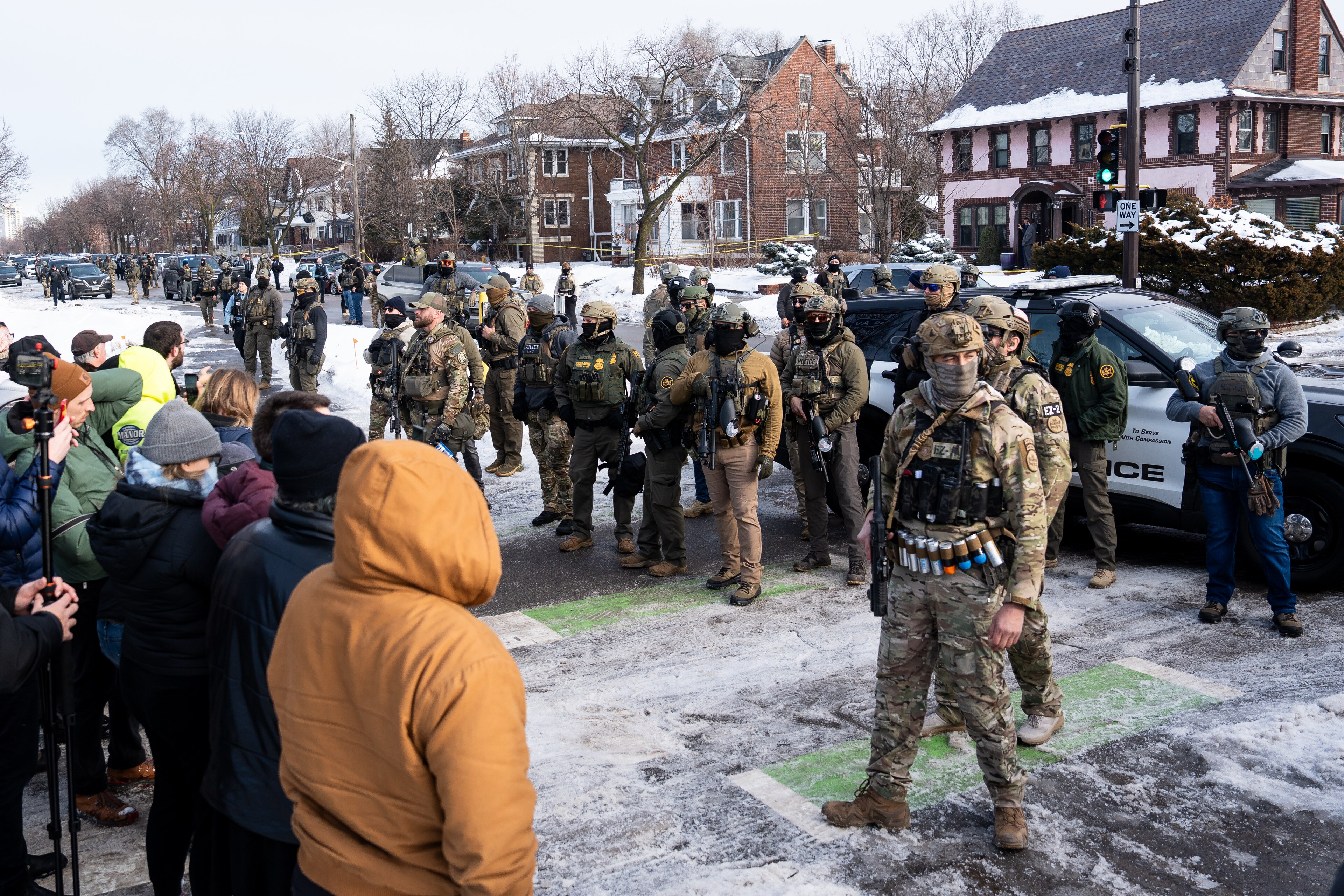
I would argue the kind of aggression being seen from ICE is performative and tantamount to intimidation rather than mission focused on deportations.
People forget. Obama hired Hohman, the same guy, to ramp up deportations. Obama was called "Deporter-in-Chief" by most of the left and some Republicans and deported more than Trump's first term. But how many clashes did ICE have back then with the average citizen?

A factor to consider is the Trump affect. When Obama was deporting loads of people with ICE, media was generally friendly about it. Today with Trump, the media will largely be very hostile. You're seeing the difference on TV.
Agree; if you believe the administration is not completely stupid then it's reasonable to assume one of their early aims was to slow border crossing attempts to a trickle. An uncompromising out-of-the-gates attitude would do that, and border crossing attempts have slowed to a trickle. It is the converse of the "message" sent by early Biden administration policies that triggered a massive migration wave.I would argue the kind of aggression being seen from ICE is performative and tantamount to intimidation rather than mission focused on deportations.
Out of all attempts, some are immediately turned back before they can enter the US and fill criteria which entitle them to "due process". Of those not turned back, some (typically most) are intercepted and (theoretically) begin their legal journey to determine whether they may remain or not, and the remainder are "gotaways". Of the intercepts, some will show up for their hearings, and some of those will be deported.People forget. Obama hired Hohman, the same guy, to ramp up deportations. Obama was called "Deporter-in-Chief" by most of the left and some Republicans and deported more than Trump's first term. But how many clashes did ICE have back then with the average citizen?