• Thanks for stopping by. Logging in to a registered account will remove all generic ads. Please reach out with any questions or concerns.

GBAD - The return of 'FOBS'

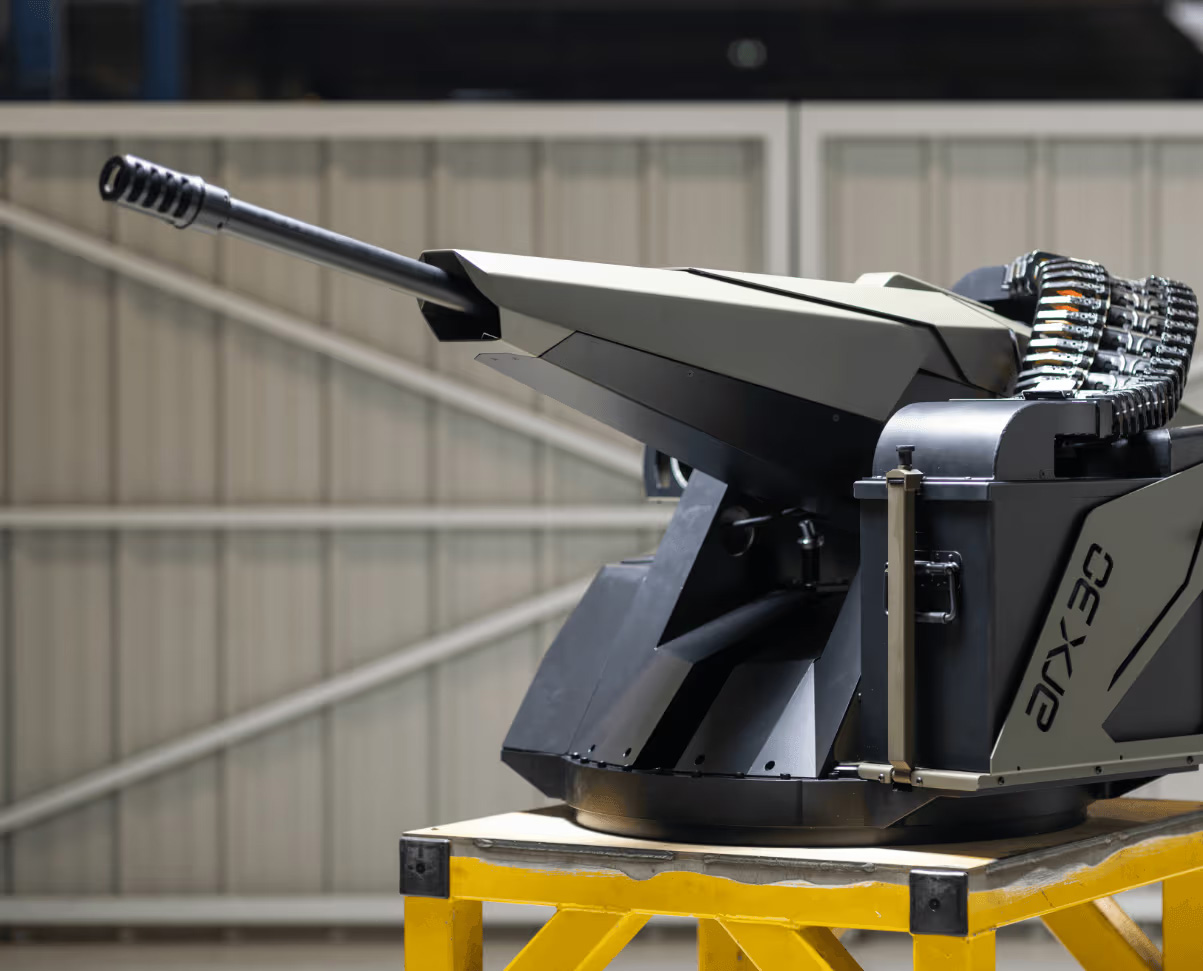
I come from the infantry, currently work in digital stuff, and my experience with the artillery corps is mostly limited to firing 2 illum rounds out of a 60mm in the middle of the day in August. But in the world where we face a threat of constant ISTAR and attack from potentially autonomous flying 40mm grenades to SRBMs en masse we need to appreciate and embrace the fact that every single person from the co-driver of an MSVS to the actual AD gunners are all sensor-shooters in the air defence battle. Under the coordination of the appropriate experts certainly, but tying back to the future armour thread I'm a firm believer we need to look at all future vehicles as having a C-UAS role at a minimum and go to 35-40mm guns that switch over to airburst and engage drones as needed. I see it as no different than putting ATGMs onto IFVs and other vehicles, they may not be hunting tanks as a role but I think it's pretty irresponsible and potentially deadly to deny them the ability to engage a major threat when it comes at them or they stumble onto it.

If we have auto plants being shutdown, we should think about converting one over to our own Shahed-esque production. Complexity wise they don't seem much more (actually seem less?) complex than a modern economy car. Excepting possible payloads, how cheap could we make them if we built them Honda Civic style at a thousand+ a day.

Yes - where would we ever store them all, or pay for it (sales? Poland and the Baltics might want some) I'd vote start shipping direct to Ukraine, maybe split some off to the US if it'll help with trade negotiations.

EDIT: Turns out France is doing something along those lines, Chorus loitering munitions, looks roughly 3x the length and wingspan of the Shahed. A lot larger and presumably larger payload/range. 600 a month to be built by Renault.
When I was in, we had every vehicle on a tactical move manned with a air sentry, The C2 was the main weapon of choice.
 
When I was in, we had every vehicle on a tactical move manned with a air sentry, The C2 was the main weapon of choice.
You and I were in at the same time. We all knew that the air sentries were really of little use but to throw up a flimsy wall of lead to make the odd commie pilot flying nape of the earth a bit nervous and to give warning of approaching aircraft so that we could scurry under cover.

Once we obtained Blowpipe, we were able to create proper air defence bubbles to defend localities or routes. With that came tight airspace control.

At the end of the day, the degree to which we acquired and deploy AD and CUAS will depend entirely on a number of factors: the cost involved; the degree of integration with other AD resources; the complexity of equipment and the ability to train individuals in its use; the command and control system for it; the ability to maintain it; etc etc.

AD is part of a layered system of systems. Even the lowliest CUAS system must be figured into the totality of the system so that it doesn't become a threat to our own UAS.

We're only getting started and have a long way to go. The sum total of resources for this is a battery at 4th Regt (GS), and some folks at the RCAS and DLR. It needs to get a lot bigger. A lot.

🍻
 
10-15 km bubbles based on the OtoMelara 76/62 SR


Countering emerging threats in an increasingly complex global scenario and protecting critical infrastructure, sensitive urban areas, territories and assets of national and European interest, through a modular, open, scalable and multi-domain solution: this is the objective of “Michelangelo - The Security Dome”, Leonardo's advanced integrated defence system.

Michelangelo Dome is not a single system, but a complete architecture integrating next-generation land, naval, airborne and space sensors, cyber-defence platforms, command-and-control systems, artificial intelligence and coordinated effectors. The platform creates a dynamic security dome capable of detecting, tracking and neutralising threats even in the event of large-scale attacks, across all operational domains: aerial and missile threats - including hypersonic missiles and drone swarms - surface and subsurface attacks at sea, and hostile ground forces.


Greek navy solution for Drone Swarms. Built on experience with the Houthis.

...

The crew’s proven methodology relies on a seamless integration of electronic warfare and traditional naval guns. Operating the Greece-built Centaur (Kentavros) system, the sailors use focused radio-frequency jamming to interfere with the link between an Iranian-designed drone and its operator, disrupting the swarm at the mere cost of electricity.

When electronic interference is not enough, this shield is backed by a highly effective “hard kill” approach. During a crucial July 7, 2024, engagement against four attacking drones, the Psara demonstrated this exact one-two punch. After the Centaur system interfered with the swarm, the crew utilized the ship’s 127mm Mk 45 main gun to achieve gunning down the drones, successfully downing two of the enemy UAVs. By firing proximity-fused shells that cost between $2,000 and $5,000 per engagement, the warship can physically destroy hundreds of incoming drones for the exact same price as a single high-tier interceptor missile.

...

I wonder how many rounds they fired to achieve those two kills?
 

Air Defence options

High tech fighters with high tech missiles
High tech fighters with low tech missiles
High tech fighters with guns

Helicopters with high tech missiles
Helicopters with low tech missiles
Helicopters with guns

Ships with high tech missiles
Ships with low tech missiles
Ships with guns

Trucks with high tech missiles
Trucks with low tech missiles
Trucks with guns

Looking at the munitions first

The high tech stuff gives you range but costs a lot and is in short supply. Against low cost swarms their use is unsustainable.
Low tech missiles save you money but cost you range. You either have to wait until the swarm reaches you or you have to close with the swarm. Your platform now becomes an issue.
Guns are even cheaper but more range critical.

Platforms

Trucks are cheap but realistically they are a last ditch point defence capability. The problem is that you need a truck for every potential target and you may need many trucks if the swarm is large. Add lots of ammunition for misses and the necessary crews and you are driving the cost upwards. And there is no guarantee that any given point defended will be attacked.

Ships, in this context are big trucks. They can relocate to defend a vital point but the do so slowly. They have big magazines and so are a lot like a battery of trucks but there aren't many of them and they are expensive. And theit area defence capability based on loger ranged missiles are particularly expensive.

The magic of fighters is in their ability to rapidly relocate to the threat as it is developing. With the speed and range of the fighter you don't need one fighter for every vital point. One fighter can lift a lot of low cost missiles and bullets and close with the threat and protect multiple potential vital points. But it costs alot to get a pilot and his fighter into the air and keep it there. And there aren't that many fighters that aren't worn out. These low cost drones are just wearing them out faster.

Helicopters are available. They can contribute with low cost missiles and bullets. They are intermediate between trucks and fighters. Like trucks they can launch from any ground. Like fighters they have speed and range to check to the threat and cover a large number of vital points. But they are helicopters. They have to work hard to stay in the air. If the stop working they fall out of the sky. There is no glide. The wings they don't have don't help keeping them in the air. For a while there quadcopters were all the rage but given limited battery life and the desire for range and endurance wings seem to be making a comeback even among the small drone community.

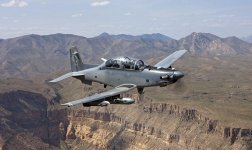
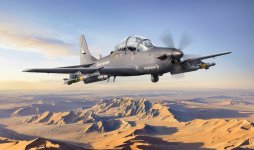
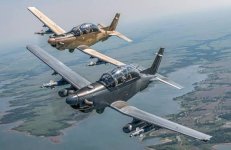
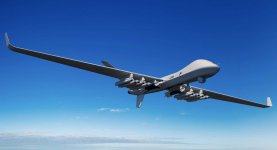
Which brings us back to these.

1773593178854.jpeg
1773593238859.jpeg
1773593388970.jpeg

They supply cover in the manner of the helicopters and jets. They can launch from local airfields and rough strips making them almost as ubiquitous as helicopters. They are faster than most drones. They are cheaper to buy and operate than either helicopters or jets.

And they are necessary parts of the training curriculum to develop pilots.

...

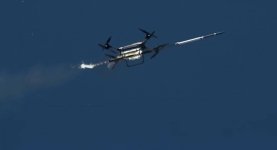
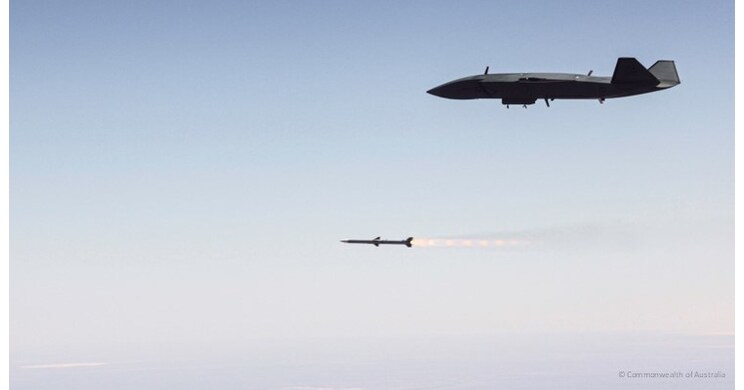
The only cheaper solution would be something like this

1773593826242.jpeg

APKWS II launched from a Malloy UAV

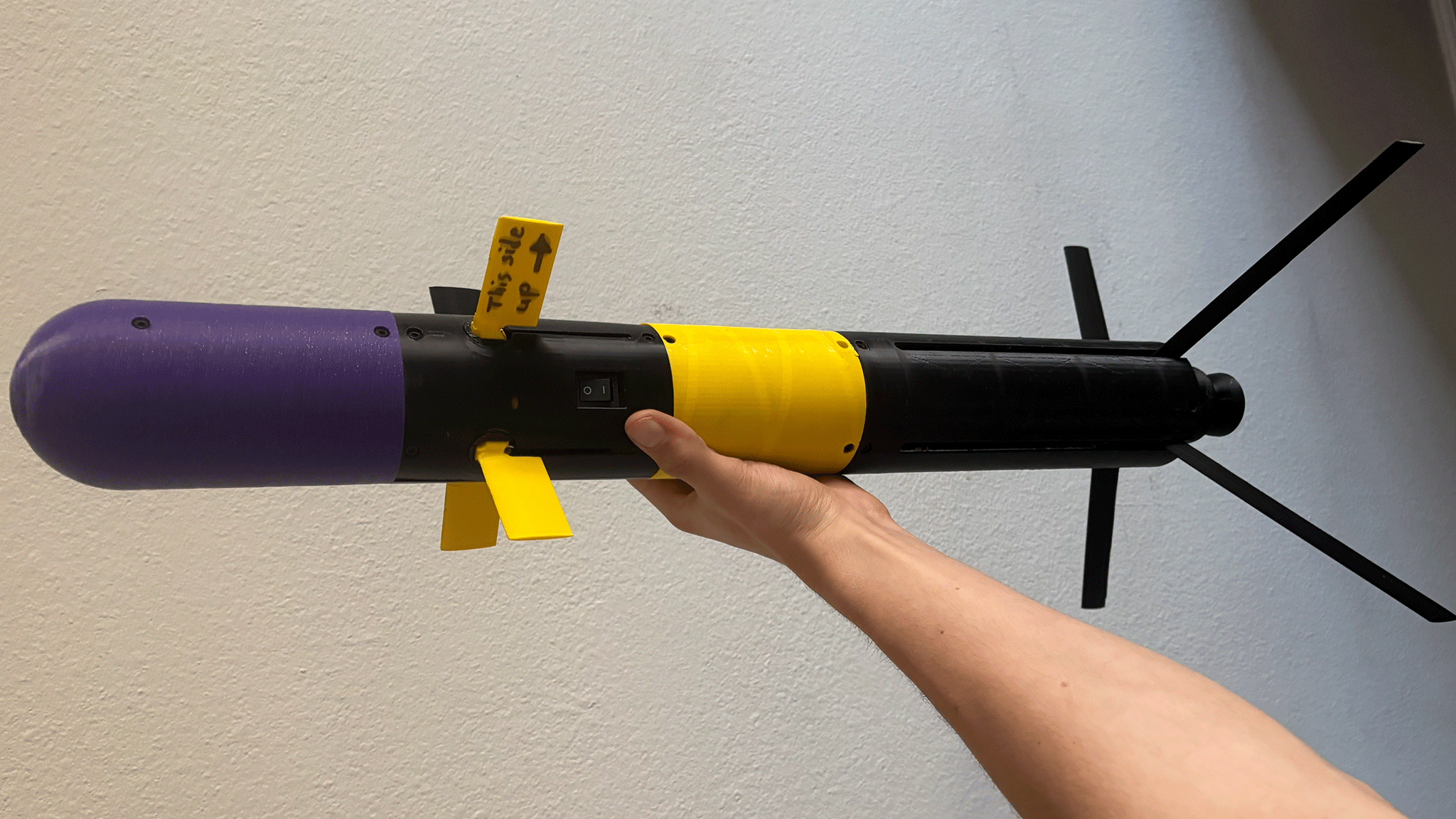
Next step, surely is this

1773593941123.jpeg

But with APKWS II pods on those Brimstone hardpoints

....

Add in some EW effects, larger bursting warheads and an EMP warhead?

 
Further to....


Air Defence options

High tech fighters with high tech missiles
High tech fighters with low tech missiles
High tech fighters with guns

Helicopters with high tech missiles
Helicopters with low tech missiles
Helicopters with guns

Ships with high tech missiles
Ships with low tech missiles
Ships with guns

Trucks with high tech missiles
Trucks with low tech missiles
Trucks with guns

Looking at the munitions first

The high tech stuff gives you range but costs a lot and is in short supply. Against low cost swarms their use is unsustainable.
Low tech missiles save you money but cost you range. You either have to wait until the swarm reaches you or you have to close with the swarm. Your platform now becomes an issue.
Guns are even cheaper but more range critical.

Platforms

Trucks are cheap but realistically they are a last ditch point defence capability. The problem is that you need a truck for every potential target and you may need many trucks if the swarm is large. Add lots of ammunition for misses and the necessary crews and you are driving the cost upwards. And there is no guarantee that any given point defended will be attacked.

Ships, in this context are big trucks. They can relocate to defend a vital point but the do so slowly. They have big magazines and so are a lot like a battery of trucks but there aren't many of them and they are expensive. And theit area defence capability based on loger ranged missiles are particularly expensive.

The magic of fighters is in their ability to rapidly relocate to the threat as it is developing. With the speed and range of the fighter you don't need one fighter for every vital point. One fighter can lift a lot of low cost missiles and bullets and close with the threat and protect multiple potential vital points. But it costs alot to get a pilot and his fighter into the air and keep it there. And there aren't that many fighters that aren't worn out. These low cost drones are just wearing them out faster.

Helicopters are available. They can contribute with low cost missiles and bullets. They are intermediate between trucks and fighters. Like trucks they can launch from any ground. Like fighters they have speed and range to check to the threat and cover a large number of vital points. But they are helicopters. They have to work hard to stay in the air. If the stop working they fall out of the sky. There is no glide. The wings they don't have don't help keeping them in the air. For a while there quadcopters were all the rage but given limited battery life and the desire for range and endurance wings seem to be making a comeback even among the small drone community.

Which brings us back to these.

View attachment 98977
View attachment 98978
View attachment 98979

They supply cover in the manner of the helicopters and jets. They can launch from local airfields and rough strips making them almost as ubiquitous as helicopters. They are faster than most drones. They are cheaper to buy and operate than either helicopters or jets.

And they are necessary parts of the training curriculum to develop pilots.

...

The only cheaper solution would be something like this

View attachment 98980

APKWS II launched from a Malloy UAV

Next step, surely is this

View attachment 98981

But with APKWS II pods on those Brimstone hardpoints

....

Add in some EW effects, larger bursting warheads and an EMP warhead?

Keep mind though that not every threat is a Shaheed-type UAV. Your low-cost platforms and munitions are useless against ballistic missiles, hypersonics and many cruise missiles.

I'm all for guns, rockets and other low-cost systems but they have to be part of a high-low mix. Horses for Courses.
 
Also, it's important to keep in mind the most likely threats that Canada is likely to face. Our mix will be different than other nations and our expeditionary forces will likely require a different mix than we will need for home defence.
 
Back
Top