• Thanks for stopping by. Logging in to a registered account will remove all generic ads. Please reach out with any questions or concerns.

The Arctic

Gleaming stuff from the comments, they seemed to have surmised that the government would give them what they wanted, regardless of the local opposition and then spent heavily on that assumption, with it now coming back to bite them. They also have another project in the works, but now no capital to see it through. Sounds a bit like poor senior management decision making.
The lender and investors seems to be particularly naive in this project as well. They aren’t getting their money back either.
 
The world, including Canada, is peppered with ghost or struggling communities that were founded resource sites - the so-called 'one industry town'. The day a mine shift is christened, its shut-down clock starts. A few, very few, like Sudbury and Timmins, are rich enough to be stable over a long-term. Expecting a durable, economically viable community based on a single mine is folly.

Admittedly, the rules regarding what constitutes and justifies a community in the high arctic are different, but the Inuit have fairly recent memory of being relocated for the greater good. Maybe Milne Point is a better location than Pond Inlet ~130km away. Dunno.

 
The world, including Canada, is peppered with ghost or struggling communities that were founded resource sites - the so-called 'one industry town'. The day a mine shift is christened, its shut-down clock starts. A few, very few, like Sudbury and Timmins, are rich enough to be stable over a long-term. Expecting a durable, economically viable community based on a single mine is folly.

Admittedly, the rules regarding what constitutes and justifies a community in the high arctic are different, but the Inuit have fairly recent memory of being relocated for the greater good. Maybe Milne Point is a better location than Pond Inlet ~130km away. Dunno.
Wasn't the intent of the change in access infrastructure to provide for a longer shipping season? Hard for a mine to be profitable if its access route is shut down for 5 or more months a year. On a side note, with 14 Liberal MPs signing a letter criticizing Carney's position on the Alberta pipeline it would seem that there is opposition within government to any form of development that would push against the first nation rights to preserve things exactly as they are: provided we pay for new wells and other infrastructure: things that are needed and overdue but that cause lots of people to put them in the same category as the chap with the dog and the guitar on the street corner. And this viewpoint would appear to be supported by the courts.
 
The world, including Canada, is peppered with ghost or struggling communities that were founded resource sites - the so-called 'one industry town'. The day a mine shift is christened, its shut-down clock starts. A few, very few, like Sudbury and Timmins, are rich enough to be stable over a long-term. Expecting a durable, economically viable community based on a single mine is folly.

Admittedly, the rules regarding what constitutes and justifies a community in the high arctic are different, but the Inuit have fairly recent memory of being relocated for the greater good. Maybe Milne Point is a better location than Pond Inlet ~130km away. Dunno.


Historically many modern cities started off as single purpose "colonies" - mines, trading posts, military forts...

Many of them died off, as you say. Some of them established secondary communities that served the primary one and found a way to become self-supporting.

My homeland is replete with Casters and Chesters, Wichs and Burghs that all started as spots on a road.
 
Gleaming stuff from the comments, they seemed to have surmised that the government would give them what they wanted, regardless of the local opposition and then spent heavily on that assumption, with it now coming back to bite them. They also have another project in the works, but now no capital to see it through. Sounds a bit like poor senior management decision making.
The mine has been in operation since 2014. The ore itself is the purest in the World. It does not need to be refined and their are no tailing ponds so it can be taken right out of the ground and shipped as is.

The success of the project is entirely dependent on getting the supply chain sorted though. The Company had to spend the $$$ because the lead times on the equipment they are acquiring to make a go of this are significant. A simple example is new locomotive builds. Company bought 8 new locomotives. Locomotives from GE have a 2 year lead time on them from initial purchase to acquisition of the asset.

It's not as simple as just turning the tap on and off at will.
 
Not sure if this is posted elsewhere. Interesting to see the US is part of it.

Joint Statement on Arctic Security from the Arctic Allies: Canada, the Kingdom of Denmark including Greenland and the Faroe Islands, Finland, Iceland, Norway, Sweden, and the United States of America​


And this:

Minister McGuinty announces $816 million investment to strengthen Canada’s maritime security​

Press Releases + Noah Note​


🍻
 
Not sure if this is posted elsewhere. Interesting to see the US is part of it.


And this:


🍻
unless they are changing the coast guard mandate, that is a whole lot of 1.5% and a big fat zero on the 2 to 3.5 scale.. They still can't seem to connect guns with defense.
 
Historically many modern cities started off as single purpose "colonies" - mines, trading posts, military forts...

Many of them died off, as you say. Some of them established secondary communities that served the primary one and found a way to become self-supporting.

My homeland is replete with Casters and Chesters, Wichs and Burghs that all started as spots on a road.
Really. You mean to tell us that London hasn't been 9Mn people all along? Who knew.
 
Not sure if this is posted elsewhere. Interesting to see the US is part of it.


And this:


🍻
Ok, so 816m over 7yrs. That breaks down at about 115m/yr.
That 115m is spread across the West Coast, the East Coast, the Great Lakes, the St Lawrence and finally the Arctic.
Let’s see, that translates to be 10m/yr for the East Coast and 10m for the West Coast and 10m for the Great Lakes and 10m for the St Lawrence. That leaves 75m for the whole of the Arctic, per yr for the next 7yrs.
Put it another way, each Canadian just ponied up a large Tim’s coffee and a plain bagel with butter, each year for the next 7yrs to improve ‘Arctic’ security delivered by the CCG.
 
Ok, so 816m over 7yrs. That breaks down at about 115m/yr.
That 115m is spread across the West Coast, the East Coast, the Great Lakes, the St Lawrence and finally the Arctic.
Let’s see, that translates to be 10m/yr for the East Coast and 10m for the West Coast and 10m for the Great Lakes and 10m for the St Lawrence. That leaves 75m for the whole of the Arctic, per yr for the next 7yrs.
Put it another way, each Canadian just ponied up a large Tim’s coffee and a plain bagel with butter, each year for the next 7yrs to improve ‘Arctic’ security delivered by the CCG.
$75m divided by 41m Canadians is about $1.83.

It's been a while since I have visited Tim's but I don't think that would even get you a large coffee, never mind the bagel.
 
$75m divided by 41m Canadians is about $1.83.

It's been a while since I have visited Tim's but I don't think that would even get you a large coffee, never mind the bagel.
I was basing it off the 115m/yr
 
unless they are changing the coast guard mandate, that is a whole lot of 1.5% and a big fat zero on the 2 to 3.5 scale.. They still can't seem to connect guns with defense.
The key to engaging enemies is knowing where they are, that doesn't take an armed system outside of open war. Adding CCG sensors to the CAF/GoC MDA is a massive step towards defending our maritime approaches. This is the unsexy work done by staff in Ottawa that gets dismissed by people who don't know enough to know what they don't know.

As an example, at this time a CCG ship getting a radar or AIS hit on a random ship in the arctic doesn't necessarily get looked at past the bridge crew of that CCG ship. With the planned improvements, that data gets sent via a data link to a Maritime Security Operations Centre (MSOC) to be analyzed by Int folks from the CAF, and OGDs. That data helps build the overall picture of what is happening our waters(MDA), and drives the decisions to send guns or not.
 
The key to engaging enemies is knowing where they are, that doesn't take an armed system outside of open war. Adding CCG sensors to the CAF/GoC MDA is a massive step towards defending our maritime approaches. This is the unsexy work done by staff in Ottawa that gets dismissed by people who don't know enough to know what they don't know.

As an example, at this time a CCG ship getting a radar or AIS hit on a random ship in the arctic doesn't necessarily get looked at past the bridge crew of that CCG ship. With the planned improvements, that data gets sent via a data link to a Maritime Security Operations Centre (MSOC) to be analyzed by Int folks from the CAF, and OGDs. That data helps build the overall picture of what is happening our waters(MDA), and drives the decisions to send guns or not.
Sorry for being a little petulant but my immediate reaction to your post would be "if we only had the guns to send". War of 1812 on Lake Ontario the British had launched and were sailing HMS St. Lawrence from Kingston. That ended the sea war on Lake Ontario because the Americans didn't have anything that could even come close to matching her. 112 guns, 800 crew, larger than the Victory and finished in less than a year. The Americans had the New Orleans under construction in Sackets harbour but she would never be launched. It is wonderful that the coast guard is getting all this gear but so what? With the timetable posted, the ordered equipment will be suffering from rust out before we have any suitable response that can put to sea. So back to my original posting: although this is great stuff it seems that we are doing better at the double duty stuff and not so great on the weapons front.
 
unless they are changing the coast guard mandate, that is a whole lot of 1.5% and a big fat zero on the 2 to 3.5 scale.. They still can't seem to connect guns with defense.

One thing that has changed, I think, with respect to the Coast Guard, is the attention undersea infrastructure is getting internationally. Cables and pipelines are Transport and Communications infrastructure. Transport and Communications were one of the original homes of the Coast Guard before being transferred to Fisheries and Ocean and now Defence.

Their job has evolved from tending lighthouses and buoys and clearing waterways of ice to managing cables and pipelines. Their tenders have just added UUVs to the list of things they can off-board with their cranes.

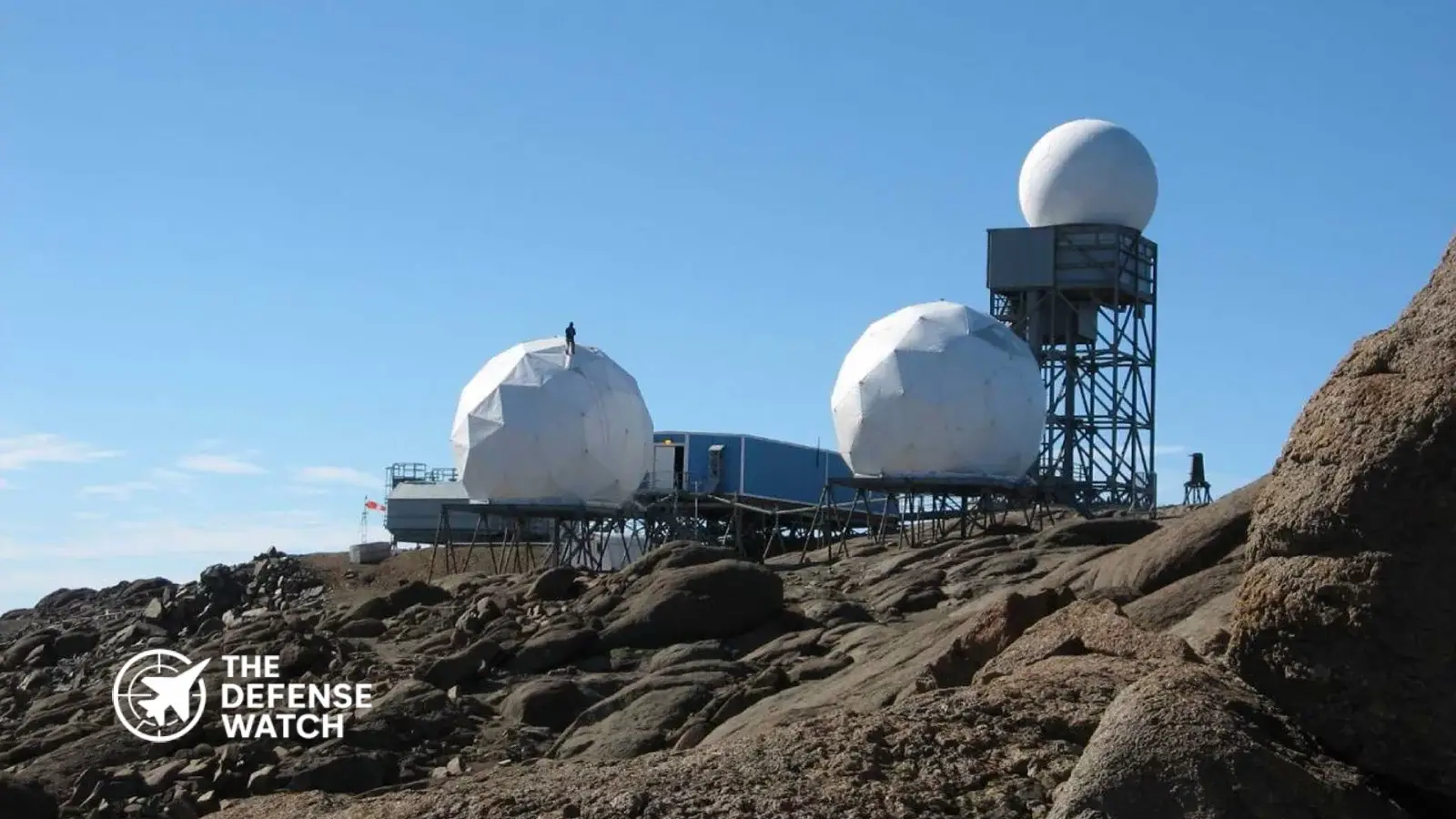
So conducting patrols over the cables and pipelines, ISR, is a legitimate defence need. As is the recent announcement of new radar stations for the Northwest Passage to be monitored by the Coast Guard.

....

Is a plausible scenario one of the Coast Guard deploying "observe and report" UUVs from their Multi-Purpose Vessels while the Navy deploys "kinetic" UUVs from their AOPSs? And both patrol the cables?

That would cause me to wonder at what point somebody interested in disrupting cable operations decided that Coast Guard UUVs were fair game and how long before they would extend their interest to the Coast Guard motherships.
 
Wow, so what have you done for me lately is really a thing.

This radar stuff and it's monitoring is foundational Coast guard spending. It will be the start of proper SAR coverage in the Arctic and a traffic management scheme with traffic check in points for the Arctic. Which means civilian traffic calls in to say they are at x place headed to y. Significant improvement of maritime picture and safety of navigation.

That creates governance over the waters and when you create governance you get sovereignty.
 
The key to engaging enemies is knowing where they are, that doesn't take an armed system outside of open war.
I agree with the sensors issue. My problem is the statement that "it doesn't take an armed system outside of open war." Hybrid warfare has already begun. We will be short of "open war" for a while yet but there is a need to have appropriate armed systems available to deal with events short of open war. What those events are and how to react to them needs to be a part of our overall doctrine and consequently our defence structure.

🍻
 
I agree with the sensors issue. My problem is the statement that "it doesn't take an armed system outside of open war." Hybrid warfare has already begun. We will be short of "open war" for a while yet but there is a need to have appropriate armed systems available to deal with events short of open war. What those events are and how to react to them needs to be a part of our overall doctrine and consequently our defence structure.

🍻

Historically there were two paths. One greyed the zone - civilians armed themselves.
The other rendered clarity - the government supplied an armed escort.

If the government supplies the safe environment through the provision of armed escorts, in any domain, then it gets to maintain its sovereign monopoly on lethal force and coercion.
 
Back
Top