• Thanks for stopping by. Logging in to a registered account will remove all generic ads. Please reach out with any questions or concerns.

CAN-USA Tariff Strife (split from various pol threads)

Booze for all?


The odd ones out just need a little more time in the oven.

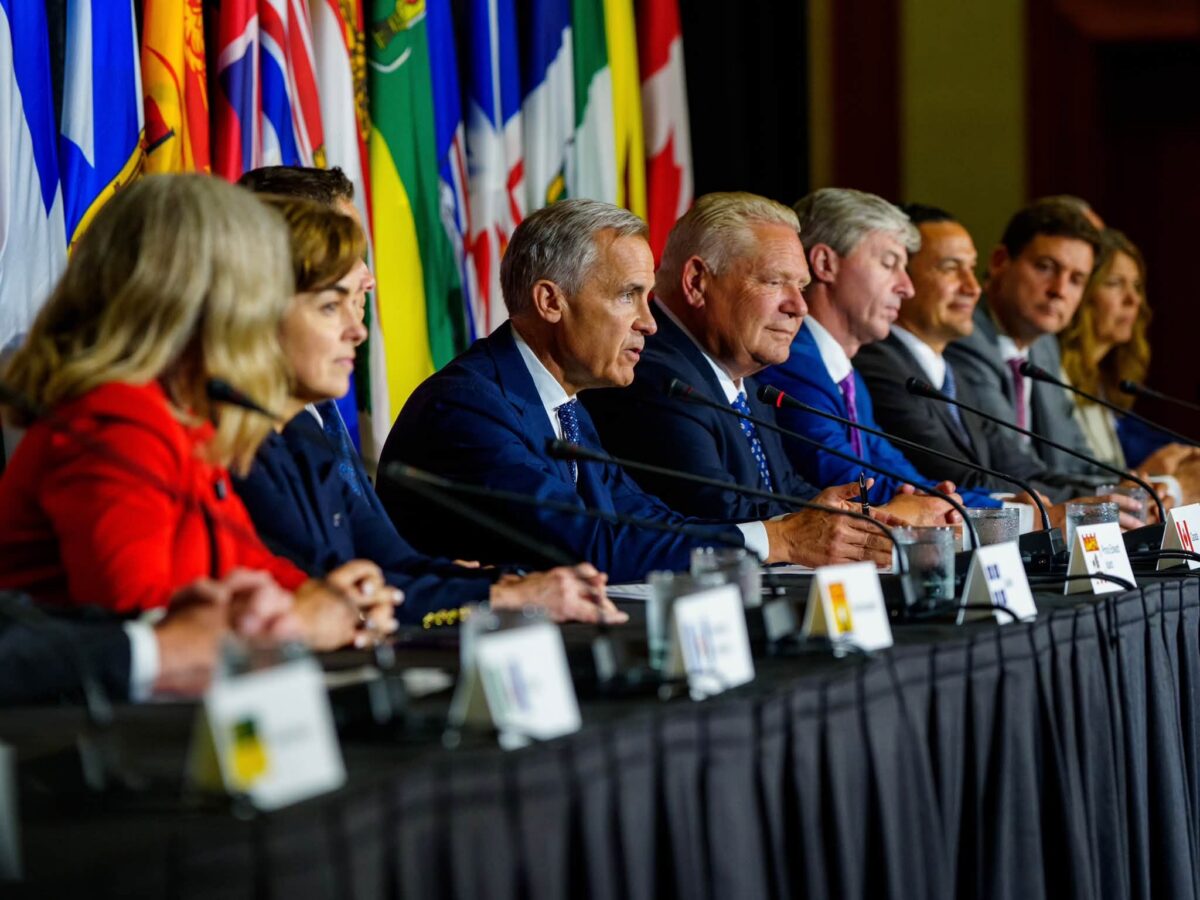
The premiers of Quebec, the Yukon, the Northwest Territories and Nunavut didn’t sign the deal. However, a statement released by those who did sign said Quebec and the Yukon were working to join in the near future.
 
For the record, Big Booze is unhappy :)
 
Well lets just drag this out then until this dies on the order table. Tariff us? Fine we wont ratify the agreement
Maybe drag it out at least well past the bridge being open. Lot harder for the government to close it once trade flows develop dependency on it and the midterms approach.
 
The Quebec National Assembly is in recess and I think they have to ratify any changes to the trade barriers before Quebec can be a party to them. So theres a good chance that they will join in once the assembly is back in session. I believe that is the way it works.
 
For the record, Big Booze is unhappy :)

Of course they aren’t this would actually create competition that would affect their market share.
 
The Quebec National Assembly is in recess and I think they have to ratify any changes to the trade barriers before Quebec can be a party to them. So theres a good chance that they will join in once the assembly is back in session. I believe that is the way it works.

Quite correct. It requires an amendment to the Act concerning the Regie des alcools, loteries et des jeux.
 
Time will tell.


Prime Minister Mark Carney says retaliatory measures are being considered if his government can't reach a deal with U.S. President Donald Trump before his new tariffs take effect.

Everything is on the table depending on the outcome of the negotiations," Carney told reporters following a meeting with the 13 premiers in Charlottetown on Thursday.

Unlike Trudeau, carney can read the room
 
Hockey sticks got the headlines, but worry more about the electronics...

These 3 charts show where Trump’s new tariffs could have the biggest impact​

Electronics sector, B.C. could feel the bite of potential new duties

While much has been said about alcohol and hockey sticks, the electronics sector stands to take the biggest hit. Canada exported more than $4 billion US worth of electronics equipment that would be subject to Trump’s new tariffs. In fact, certain electrical boards and controllers are on the list and are the largest value export to the U.S. of any threatened category.

These tariffs would also take a bite out of Canada’s plastics industry, including things like bottles, floor coverings and various household items. The value of items threatened in this category is about $3 billion US.

The more than 500 items under threat are split between three proclamations put out by the White House, each tied to well-known trade irritants for the U.S.: The provincial booze bans, Canada’s protected dairy industry and the integrated auto industry. It’s worth noting passenger cars and trucks are not on the list, though motorcycles and mopeds are, as are some components.

 
Hockey sticks got the headlines, but worry more about the electronics...

These 3 charts show where Trump’s new tariffs could have the biggest impact​

Electronics sector, B.C. could feel the bite of potential new duties

While much has been said about alcohol and hockey sticks, the electronics sector stands to take the biggest hit. Canada exported more than $4 billion US worth of electronics equipment that would be subject to Trump’s new tariffs. In fact, certain electrical boards and controllers are on the list and are the largest value export to the U.S. of any threatened category.

These tariffs would also take a bite out of Canada’s plastics industry, including things like bottles, floor coverings and various household items. The value of items threatened in this category is about $3 billion US.

The more than 500 items under threat are split between three proclamations put out by the White House, each tied to well-known trade irritants for the U.S.: The provincial booze bans, Canada’s protected dairy industry and the integrated auto industry. It’s worth noting passenger cars and trucks are not on the list, though motorcycles and mopeds are, as are some components.

Sounds like a pretty clear breach of CUSMA. Also some of the goods described don’t sound like they’ll be easy to substitute with other sources anywhere quickly. American importers are gonna get screwed by this.
 
Sounds like a pretty clear breach of CUSMA. Also some of the goods described don’t sound like they’ll be easy to substitute with other sources anywhere quickly. American importers are gonna get screwed by this.
So whats the mechanism to have this resolved? It seems like we're in a Darth Vader "pray I don't alter it further" situation. The most devastating repercussion of the Trump regime for the Americans will certainly be that noone will trust a word from an American politician for a generation.
 
So whats the mechanism to have this resolved? It seems like we're in a Darth Vader "pray I don't alter it further" situation. The most devastating repercussion of the Trump regime for the Americans will certainly be that noone will trust a word from an American politician for a generation.
Just one generation?

200.gif


We need some European nations levels of national memory here.
 

Attachments

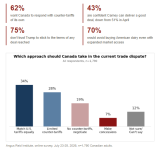
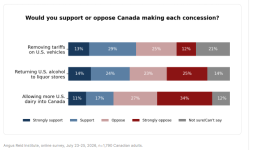
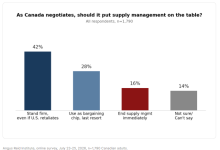
Survey says: time for at least some retaliatory tariffs (but losing confidence on PMMC getting a decent deal).
View attachment 101464
A few highlights ...
View attachment 101465
View attachment 101466
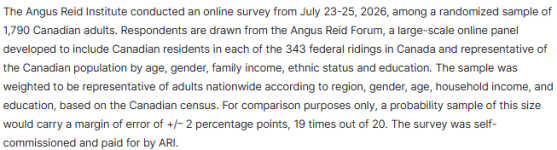
Methodology/how & how many:
View attachment 101467
More in link or attached PDF.
You're even seeing it here.

People, including myself, are fed up with Carney not returning fire.
 
A great piece from Andrew Coyne this morning, suggesting we treat this fight like what it is: an asymmetric conflict.


Canada can learn lessons from asymmetric warfare​

https://www.theglobeandmail.com/authors/andrew-coyne/
The similarity is often noted between the Ukraine and Iran wars: Mad billionaire autocrat with dreams of empire attempts to subjugate another country by force of arms; though seemingly in possession of overwhelming military advantage, is repelled by defenders armed with desperation, cunning and modern technology; now finds himself caught in a trap of his own making, unable either to advance or retreat.

There are common lessons, too: lessons that can be adapted to other situations, in which a smaller country confronts the aggressive designs of a much larger power – like, oh, for example, Canada and the United States. Yes, yes, I know: Tariffs are not missiles, and America is not Russia. But the underlying dynamics are similar.

The first lesson is be not afraid. What is striking about both Ukraine and Iran (without, again, comparing them as moral examples) is how utterly fearless they seem, even in the face of such imposing adversaries. This seems to be a pattern in human events: The people with the most to fear are usually least in fear.

Second, tie goes to the defender: It is an established principle of war that the defending force has the advantage over the invading force. It is much harder to take territory than to defend it. That is to our advantage, too: We are fighting for our economic lives, the Americans are not.

Applying these understandings gives rise to a third: Deny the other side a quick victory. Do not negotiate based on the initial shock-and-awe campaign. Concentrate on the measures needed to survive it – income supports, credit lines, and so on, the economic equivalent of bomb shelters and gas masks – while preserving retaliatory capacity.

Fourth, play for time. We’ll have to be willing to accept some short-term tactical losses: a plant here, an industry there. The point is to prevent these from becoming strategic defeats. The longer we can hold on, the more we can learn how to adapt, resist, and diversify our trade.

Fifth, preserve second-strike capability. Whatever retaliatory measures we take, we should not blow them all at once. We need the Americans to understand that further actions on their part will invite further actions on ours. We can’t give them any free kicks.

Sixth, demonstrate a superior willingness to endure pain. Tariffs ordinarily don’t make a lot of sense as a retaliatory tactic: Unlike missiles, they impose more harm on the country that imposes them than they do on their supposed targets. In the present conflict they may nevertheless have a certain utility. Yeah, this hurts us, too, is the message: but unlike you, we embrace pain.

Seventh, speed and mobility beat massed power. The power of the weaker party in these kinds of conflicts lies in the opportunity to impose favourable “exchanges of costs.” A drone costs a fraction to make as a heavy missile. The U.S., as the larger party, also has more points of vulnerability. We should be alert to these openings.

Eighth, limit our war aims. The aggressor in any such conflict has the burden of achieving its objective: All the defender has to do is frustrate it. Ukraine doesn’t have to conquer Russia to win. It just has to survive. Our objective, likewise, should not be to “defeat” the Trump administration, or even necessarily to preserve free trade. It is merely to persuade Donald Trump that we cannot be coerced: that no matter what measures he imposes, economic or otherwise, we will not bend to his will.

Ninth, unity is everything. Attacks by an aggressor tend to unite the defending population – to inspire rather than to demoralize. It is our own counter-attacks that have the potential to divide us. Provincial premiers have been free with advice for the federal government on the retaliatory measures it should take – a potash export ban, say, or tariffs on U.S. manufactured goods – each of which, by an amazing coincidence, seems to be freighted with potential costs for other provincial economies while costing their own province nothing. That’s the last thing we need.

Clausewitz famously defined war as the “continuation of policy by other means.” The object of war, he said, is to produce a desired political outcome. Our objective in this trade war is to demonstrate to Mr. Trump that “economic force” cannot work: that it will not induce us to make concessions; that it unites our population while dividing his; that it will simply encourage us to “trade around” the United States, implying a loss of leverage over time.

Or as it is often said of Ukraine and Iran: their adversaries lose by not winning. They win by not losing.

 
A great piece from Andrew Coyne this morning, suggesting we treat this fight like what it is: an asymmetric conflict.


Canada can learn lessons from asymmetric warfare​

Andrew Coyne
The similarity is often noted between the Ukraine and Iran wars: Mad billionaire autocrat with dreams of empire attempts to subjugate another country by force of arms; though seemingly in possession of overwhelming military advantage, is repelled by defenders armed with desperation, cunning and modern technology; now finds himself caught in a trap of his own making, unable either to advance or retreat.

There are common lessons, too: lessons that can be adapted to other situations, in which a smaller country confronts the aggressive designs of a much larger power – like, oh, for example, Canada and the United States. Yes, yes, I know: Tariffs are not missiles, and America is not Russia. But the underlying dynamics are similar.

The first lesson is be not afraid. What is striking about both Ukraine and Iran (without, again, comparing them as moral examples) is how utterly fearless they seem, even in the face of such imposing adversaries. This seems to be a pattern in human events: The people with the most to fear are usually least in fear.

Second, tie goes to the defender: It is an established principle of war that the defending force has the advantage over the invading force. It is much harder to take territory than to defend it. That is to our advantage, too: We are fighting for our economic lives, the Americans are not.

Applying these understandings gives rise to a third: Deny the other side a quick victory. Do not negotiate based on the initial shock-and-awe campaign. Concentrate on the measures needed to survive it – income supports, credit lines, and so on, the economic equivalent of bomb shelters and gas masks – while preserving retaliatory capacity.

Fourth, play for time. We’ll have to be willing to accept some short-term tactical losses: a plant here, an industry there. The point is to prevent these from becoming strategic defeats. The longer we can hold on, the more we can learn how to adapt, resist, and diversify our trade.

Fifth, preserve second-strike capability. Whatever retaliatory measures we take, we should not blow them all at once. We need the Americans to understand that further actions on their part will invite further actions on ours. We can’t give them any free kicks.

Sixth, demonstrate a superior willingness to endure pain. Tariffs ordinarily don’t make a lot of sense as a retaliatory tactic: Unlike missiles, they impose more harm on the country that imposes them than they do on their supposed targets. In the present conflict they may nevertheless have a certain utility. Yeah, this hurts us, too, is the message: but unlike you, we embrace pain.

Seventh, speed and mobility beat massed power. The power of the weaker party in these kinds of conflicts lies in the opportunity to impose favourable “exchanges of costs.” A drone costs a fraction to make as a heavy missile. The U.S., as the larger party, also has more points of vulnerability. We should be alert to these openings.

Eighth, limit our war aims. The aggressor in any such conflict has the burden of achieving its objective: All the defender has to do is frustrate it. Ukraine doesn’t have to conquer Russia to win. It just has to survive. Our objective, likewise, should not be to “defeat” the Trump administration, or even necessarily to preserve free trade. It is merely to persuade Donald Trump that we cannot be coerced: that no matter what measures he imposes, economic or otherwise, we will not bend to his will.

Ninth, unity is everything. Attacks by an aggressor tend to unite the defending population – to inspire rather than to demoralize. It is our own counter-attacks that have the potential to divide us. Provincial premiers have been free with advice for the federal government on the retaliatory measures it should take – a potash export ban, say, or tariffs on U.S. manufactured goods – each of which, by an amazing coincidence, seems to be freighted with potential costs for other provincial economies while costing their own province nothing. That’s the last thing we need.

Clausewitz famously defined war as the “continuation of policy by other means.” The object of war, he said, is to produce a desired political outcome. Our objective in this trade war is to demonstrate to Mr. Trump that “economic force” cannot work: that it will not induce us to make concessions; that it unites our population while dividing his; that it will simply encourage us to “trade around” the United States, implying a loss of leverage over time.

Or as it is often said of Ukraine and Iran: their adversaries lose by not winning. They win by not losing.


Meah...

From my position the intent of this is to elbows down. Accept losses, play the long game, hope we can weather the storm, stand with your Gov; allegiance to the Gov is allegiance to Canada...

Time may be on our side for outlasting DJT, but who knows how his successor and their Gov will look at and manage their side of our relationship.
 
Back
Top