• Thanks for stopping by. Logging in to a registered account will remove all generic ads. Please reach out with any questions or concerns.

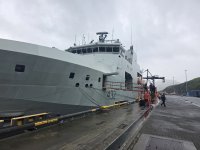
Arctic/Offshore Patrol Ship AOPS

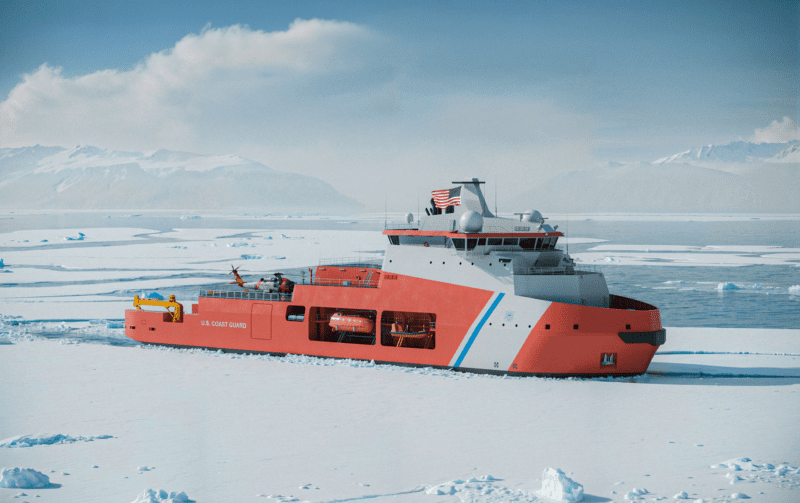
The American program with the Washington-Seaspan/Rauma/Aker Arctic/Bollinger consortium and Davie vessels is proceeding.


Plans for vessels at Seattle, Kodiak and Seward.
 
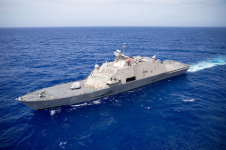
Interesting, USS Wichita (LCS 13) departed Naval Station Mayport, Aug. 7, to participate in Operation NANOOK TUUGAALIK 2026, the maritime component of Canada’s premier Arctic exercise. Didn't think they were fit to go the Arctic.Screenshot 2026-08-07 213040.png
 
Interesting, USS Wichita (LCS 13) departed Naval Station Mayport, Aug. 7, to participate in Operation NANOOK TUUGAALIK 2026, the maritime component of Canada’s premier Arctic exercise. Didn't think they were fit to go the Arctic.View attachment 101636
For Navy ships, how much of a difference between arctic August vs Arctic February?
 
For Navy ships, how much of a difference between arctic August vs Arctic February?
Aluminum hull, water jets. A few years ago a newly launched LCS got caught in the St. Lawrence during freeze up and wintered in Montreal. Had to have a bubbler to keep the ice off the hull and now they want to go to the Arctic in Aug. Its still the Arctic and random pieces of ice are up there. A few years ago I was in a KIN Class off Labrador and we smoked a pretty significant piece of ice very late at night, around the size of a car, hit us square in the front part of the bow on the stem. Got a boat in the water to check, just a bit of scratched paint, but the ship was strengthened for that sort of thing. It happens.
 
“Ice keels? Ice keels!”, man you need to simmer down a bit.

Yes, ice keels. You might want to direct your repeated instruction to “go read official government documents” toward yourself.

The Canadian Coast Guard defines an ice keel as the submerged portion of a pressure ridge and states that ridged ice is “usually found in first year ice.” The Canadian Ice Service says pressure ridges occur mostly in newer ice and may extend four to five times farther below the surface than above it. The National Research Council even published a 154 page report titled An Overview of First Year Sea Ice Ridges. Please read

So no, ice keels are not confined to “much older ice.” Medium first year ice describes the thickness of level ice. It does not guarantee that the ice remains level. Wind, currents, tides and pressure can deform first ear ice into ridges, with keels extending several metres beneath the surface.

When I saw this in the discussion on Subs I was tempted to disrupt the conversation with a tangent, as is my wont.

But I decided to go here instead.

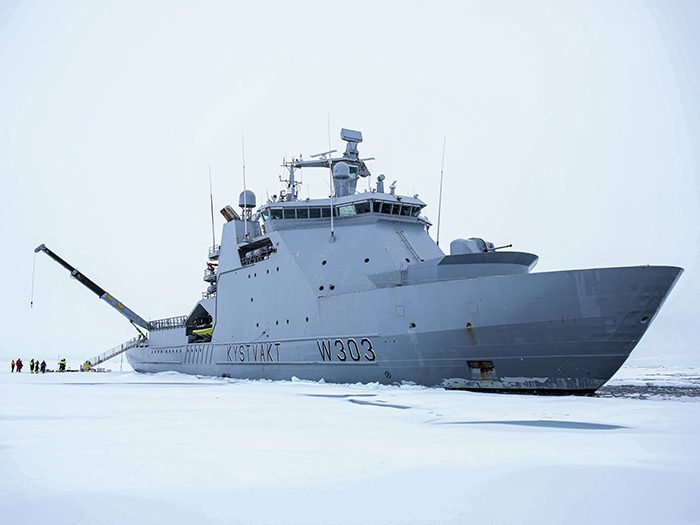
The AOPS has its origins in the Norwegian ship Svalbard. The key difference between the Svalbard and Harry de Wolf is the propulsion. Harry uses conventional propulsion. Svalbard uses Azipods. Azipods can swivel 360 degrees and the propellers can be run forwards or backwards in any orientation. That means that the ship can drive forwards with the Azipods pointed forwards or backwards and can drive backwards with the Azipods driving forwards or backwards.

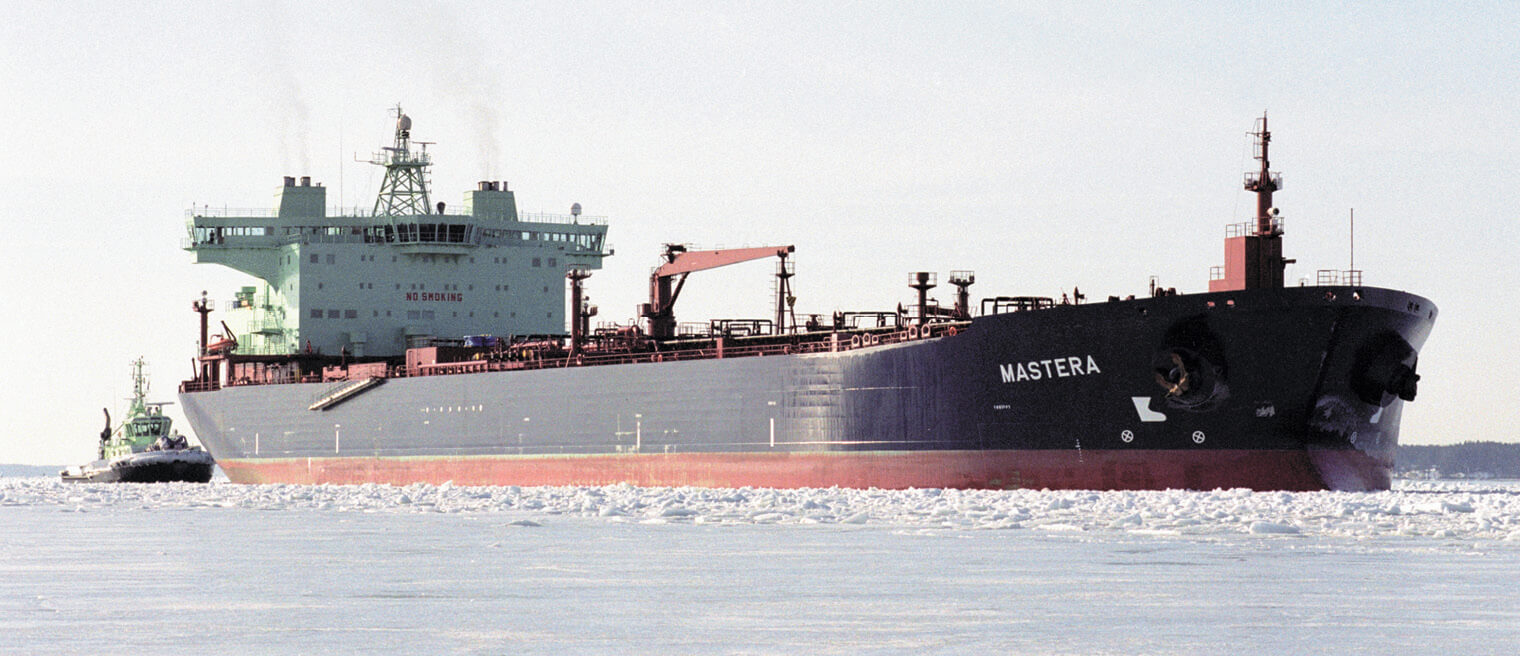
That allowed the Svalbard to optimize its bow for blue water transits and its stern for ice-breaking transits. This is known as Double-Acting technology and it has been applied to freighters and tankers operating in the Baltic and across the top of Russia. It is the technology that is referred to in the latest Manitoba report on extending the shipping season for Churchill.

In blue water the Svalbard uses the Azipods the same way that the Kingstons usee their Z drives and Svalbard drives forwards bow first.
In ice she reverses in place and drives through the ice stern-first, presenting her stern to the ice and uses it to ride over the ice like a conventional breaker and crack the ice with her weight.

But the Azipods give her couple of other advantages that a conventional breaker doesn't have.

The props can be rotated to face the bow or the stern while turning backwards or forwards.

If facing the bow the props are protected from the ice by the faring of the Azipod while pulling the Svalbard towards the ice. That action also drags the water out from under the ice, removing support from the ice and making the crushing and cracking of the ice when the stern leans on it that much more effective. That gets Svalbard through 1 m ice, or so. First year ice as typically found in the Baltic and Hudson Bay.

But, as noted, ice keels. They present an additional obstruction and can appear in first year ice. 2 to 5 m deep.

Svalbard has a solution.

She rotates her Azipods so that the blades of her props are presented to the ice and proceeds to use her blades to physically grind, mill and chew her way through the ridge.


"The 1,400 nautical mile voyage to the North Pole came just seven days after the ship’s departure of Longyearbyen. At times the vessel travelled through polar ice packs at speeds of up to 6 to 7 knots.

"ABB’s Azipod system is an electric propulsion system that uses electric drive motors located beneath the hull in a submerged pod, which can rotate 360 degrees to deliver thrust in any direction, making Azipod-equipped vessels highly maneuverable. ABB says its Azipods are capable of breaking ice up to 2.1 m thick and have proven to reduce fuel consumption by up to 20 percent as compared to traditional shaftline marine propulsion systems."

.....

This was the opportunity missed when the Canadian Navy opted for conventional drive over Double-Acting Technology.
As noted it is also the technology that enables year round operation in Hudsons Bay and Churchill.


.....


Proposition

svalbard double acting azipods originally designed with the intention of chewing or grinding through pressure ridges


AI Opinion.


Yes, that is correct. The Double Acting Ship (DAS) concept and its heavily reinforced icebreaking ABB Azipod systems were fundamentally designed to mill, chew, and grind through thick underwater ice accumulations and pressure ridges. [1, 2, 3]
When a vessel like the Norwegian Coast Guard's KV Svalbard operates in "double acting" mode, it navigates stern-first (backwards) through heavy ice. [1, 2, 3]

How the "Ice-Chewing" Mechanism Works
    • Propeller Milling: Instead of relying purely on the weight of the bow to crush ice from above, the ship turns 180 degrees. The massive, heavy-duty stainless steel Azipod blades act like a giant blender, physically milling and grinding down the submerged "keel" of Arctic pressure ridges. [1, 2, 3]
    • Water Flush Lubrication: As the pods rotate 360 degrees, they generate a powerful, high-velocity water stream (propeller wash). This water flow flushes the chopped ice fragments away and lubricates the ship's hull, dramatically lowering friction and preventing the vessel from getting wedged or stuck in compressed ice fields. [1, 2, 3]
    • Hull Optimization: This design allows the ship's bow to be perfectly streamlined for high-speed, fuel-efficient travel in open water, while the stern is specifically shaped and reinforced to handle severe ice-grinding loads. [1, 2]
This precise capability is what allowed the KV Svalbard to make history as the first Azipod-powered vessel to successfully navigate through dense polar ice packs all the way to the North Pole. [1, 2]
 
When I saw this in the discussion on Subs I was tempted to disrupt the conversation with a tangent, as is my wont.

But I decided to go here instead.

The AOPS has its origins in the Norwegian ship Svalbard. The key difference between the Svalbard and Harry de Wolf is the propulsion. Harry uses conventional propulsion. Svalbard uses Azipods. Azipods can swivel 360 degrees and the propellers can be run forwards or backwards in any orientation. That means that the ship can drive forwards with the Azipods pointed forwards or backwards and can drive backwards with the Azipods driving forwards or backwards.

That allowed the Svalbard to optimize its bow for blue water transits and its stern for ice-breaking transits. This is known as Double-Acting technology and it has been applied to freighters and tankers operating in the Baltic and across the top of Russia. It is the technology that is referred to in the latest Manitoba report on extending the shipping season for Churchill.

In blue water the Svalbard uses the Azipods the same way that the Kingstons usee their Z drives and Svalbard drives forwards bow first.
In ice she reverses in place and drives through the ice stern-first, presenting her stern to the ice and uses it to ride over the ice like a conventional breaker and crack the ice with her weight.

But the Azipods give her couple of other advantages that a conventional breaker doesn't have.

The props can be rotated to face the bow or the stern while turning backwards or forwards.

If facing the bow the props are protected from the ice by the faring of the Azipod while pulling the Svalbard towards the ice. That action also drags the water out from under the ice, removing support from the ice and making the crushing and cracking of the ice when the stern leans on it that much more effective. That gets Svalbard through 1 m ice, or so. First year ice as typically found in the Baltic and Hudson Bay.

But, as noted, ice keels. They present an additional obstruction and can appear in first year ice. 2 to 5 m deep.

Svalbard has a solution.

She rotates her Azipods so that the blades of her props are presented to the ice and proceeds to use her blades to physically grind, mill and chew her way through the ridge.


"The 1,400 nautical mile voyage to the North Pole came just seven days after the ship’s departure of Longyearbyen. At times the vessel travelled through polar ice packs at speeds of up to 6 to 7 knots.

"ABB’s Azipod system is an electric propulsion system that uses electric drive motors located beneath the hull in a submerged pod, which can rotate 360 degrees to deliver thrust in any direction, making Azipod-equipped vessels highly maneuverable. ABB says its Azipods are capable of breaking ice up to 2.1 m thick and have proven to reduce fuel consumption by up to 20 percent as compared to traditional shaftline marine propulsion systems."

.....

This was the opportunity missed when the Canadian Navy opted for conventional drive over Double-Acting Technology.
As noted it is also the technology that enables year round operation in Hudsons Bay and Churchill.


.....


Proposition

svalbard double acting azipods originally designed with the intention of chewing or grinding through pressure ridges


AI Opinion.


Yes, that is correct. The Double Acting Ship (DAS) concept and its heavily reinforced icebreaking ABB Azipod systems were fundamentally designed to mill, chew, and grind through thick underwater ice accumulations and pressure ridges. [1, 2, 3]
When a vessel like the Norwegian Coast Guard's KV Svalbard operates in "double acting" mode, it navigates stern-first (backwards) through heavy ice. [1, 2, 3]

How the "Ice-Chewing" Mechanism Works
    • Propeller Milling: Instead of relying purely on the weight of the bow to crush ice from above, the ship turns 180 degrees. The massive, heavy-duty stainless steel Azipod blades act like a giant blender, physically milling and grinding down the submerged "keel" of Arctic pressure ridges. [1, 2, 3]
    • Water Flush Lubrication: As the pods rotate 360 degrees, they generate a powerful, high-velocity water stream (propeller wash). This water flow flushes the chopped ice fragments away and lubricates the ship's hull, dramatically lowering friction and preventing the vessel from getting wedged or stuck in compressed ice fields. [1, 2, 3]
    • Hull Optimization: This design allows the ship's bow to be perfectly streamlined for high-speed, fuel-efficient travel in open water, while the stern is specifically shaped and reinforced to handle severe ice-grinding loads. [1, 2]
This precise capability is what allowed the KV Svalbard to make history as the first Azipod-powered vessel to successfully navigate through dense polar ice packs all the way to the North Pole. [1, 2]

Opportunity missed I guess but Harry DeWolf Class design like you mentioned is very different from the Svalbard. Designed around Canadian requirements, it has a different hull, different dimensions, different mission spaces, conventional twin shaft diesel electric propulsion, a bow optimized and strengthened for bow first icebreaking, an enclosed forecastle, vehicle and container capacity, landing craft, helicopter facilities and can be deployed overseas. Its hull is Polar Class 5, with additional strengthening around the bow. Would the Azipod system work with the design changes? I know they surrendered some manoeuvrability and stern first ridge penetration capability and people need to remember they do go to the Arctic but are deployable everywhere else, tradeoffs for sure.

It been talked about that an AOPV will eventually take a run at the North Pole. That would not mean sending one north to challenge whatever ice happens to be present. With favourable late summer conditions, careful routing, good ice reconnaissance and, of course, a suitable icebreaker escort available where required, there is no inherent reason an AOPV could not reach the Pole. Its long range, endurance and ice strengthened hull make such an expedition probably successful. What it could not do is duplicate Svalbard’s double acting performance which is pretty impressive TBH.


Back
Top