
- Reaction score
- 19,273
- Points
- 1,160
Oh it sucks, but lets say a couple of Halifax's are deemed unsafe to go to sea, then suddenly the idea sucks less.


Where do you get off suggesting I am talking about doing something half-assed? If there aren't people who have been sitting at desks for years now trying to imagine the future Canadian fleet I would be very much surprised. They may need to contract the blueprints but they probably have a good idea of what they want to see. If they haven't done any homework there are any number of frigate designs out there to chose from. But we won't because we are too afraid to be wrong. Or are we afraid to have the wherewithal to actually take a stand somewhere. 29 years ago we joined the F35 development programme. The first squadron is supposed to be operational in 2029 so 32 years from day 1 but day 1 was only after considerable discussion so add another couple of years and even then it'll be another 4 years after that before we could afford to send a 6 pack on mission. And we still haven't made a decision on how many we will eventually order. In the meantime the aircraft we are flying look great at an airshow and they have been significantly improved but they are well past their best before date. By the time the first River Class is commissioned the last Iroquois will have been gone for at least 15 years. That's a long time to operate without a major naval combatant for a country fronting on 3 oceans. From the plans that I have read as each ship is commissioned a Halifax will be retired so our net gain will be zero.We don't have enough personnel to staff a project completely and I believe that was mentioned here a few times before. We generally don't take a half assed approach to building a ship because that's exactly what you are doing, we don't figure out out things on the fly either. We don't even know if we had a design chosen which we don't, where it would even be built. Its not even funded. That's a lot of things to get into place before we can even think of cutting steel.

That's why were spending over 500M to refit each ship so that won't happen. Makes lots of sense hey? Your solution is not really a solution that they would consider. If it were we would would buy the whole lot overseas.Oh it sucks, but lets say a couple of Halifax's are deemed unsafe to go to sea, then suddenly the idea sucks less.
That was what the RN was doing until they drydocked their ships and realized how bad they were.That's why were spending over 500M to refit each ship so that won't happen. Makes lots of sense hey? Your solution is not really a solution that they would consider. If it were we would would buy the whole lot overseas.
Good for themThat was what the RN was doing until they drydocked their ships and realized how bad they were.
You are conflating having smart people think about the future fleet with having a mature, affordable, buildable and supportable program ready to go, and those are not the same thing. Of course the RCN and NDHQ have spent years thinking about what they want, but wanting a ship and actually fielding one inside Canadian industrial, budgetary, crewing and infrastructure constraints are two very different matters. Saying there are lots of frigate designs out there misses the point, because buying something off the shelf is easy on paper and much harder once you start integrating Canadian weapons, combat systems, standards, training, maintenance and long term support.Where do you get off suggesting I am talking about doing something half-assed? If there aren't people who have been sitting at desks for years now trying to imagine the future Canadian fleet I would be very much surprised. They may need to contract the blueprints but they probably have a good idea of what they want to see. If they haven't done any homework there are any number of frigate designs out there to chose from. But we won't because we are too afraid to be wrong. Or are we afraid to have the wherewithal to actually take a stand somewhere. 29 years ago we joined the F35 development programme. The first squadron is supposed to be operational in 2029 so 32 years from day 1 but day 1 was only after considerable discussion so add another couple of years and even then it'll be another 4 years after that before we could afford to send a 6 pack on mission. And we still haven't made a decision on how many we will eventually order. In the meantime the aircraft we are flying look great at an airshow and they have been significantly improved but they are well past their best before date. By the time the first River Class is commissioned the last Iroquois will have been gone for at least 15 years. That's a long time to operate without a major naval combatant for a country fronting on 3 oceans. From the plans that I have read as each ship is commissioned a Halifax will be retired so our net gain will be zero.

Finland's new corvette is basically just that, a slightly smaller Halifax with less crew.Yes it will a heavily armed combatant much like a Halifax Class, just with less people. We keep going back to the build a few hulls to tide us over and bild offshore solution. Yes its a solution, just not a realistic one for all kinds of reasons.

1995, HMCS Ottawa leaves Saint John Shipyard which was a worked up and efficient yard at the time. A forward looking government would have noticed that the AORs were nearing end of life. And the 280s, while just TRUMPed would also need to be replaced within the next 10 to 12 years. The entire Coast Guard and DFO fleets needed recapitalization.I get the frustration, but I still think that argument skips over the scale of the jump Irving is making. The Hero class and AOPS absolutely should have helped mature the yard, the workforce, and the production rhythm, and nobody is wrong to say that after two classes the shipyard ought to be performing better than a cold start. But the River class is not just “more of the same with a known hull and machinery.” It is a far more complex combatant, with a heavily Canadianized Type 26 baseline, new systems integration, new production sequencing, and a first-of-class learning curve that was always going to be ugly. Irving started the production test module in June 2024, moved to full-rate production in 2025, and by January 2026 had publicly reached the first major unit lift-and-flip milestone for HMCS Fraser, with keel laying still expected later in 2026. That is not lightning fast, but it is also not evidence that nothing is happening. The sixth and final RCN AOPS was delivered in August 2025, so the yard has in fact completed one class and is transitioning through the tail end of that work into the next one, not sitting idle with no experience at all.
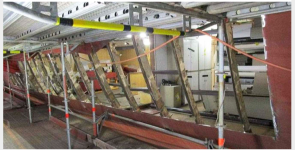


Im curious how extensive our refits are and what we can expect out of them in partI don't get what your point would be @suffolkowner ?
For frigates and destroyers, the British have always done major refit around 20 years of age in order to get about 5-6 more years out of them, then retire them. In Lancaster's case, that happened around 2012-13, so she should have retired her around 2017-18. Instead, they chose to give her a life extension refit. That gave her an extra 5-6 years, which is exactly what happened.
Unlike us, the Brits don't give a life extension refit at the 30 years mark in order to get 25 more years out of worn out frigates and destroyers.
thank you for that. But with the Admiral's wish list from several months ago coupled with the eminent retirement of an entire fleet, hasn't enough time passed by for someone to have at least published an official heads-up to industry to come up with a concept proposal and a prospective timeline thus putting those years of thought into action?You are conflating having smart people think about the future fleet with having a mature, affordable, buildable and supportable program ready to go, and those are not the same thing. Of course the RCN and NDHQ have spent years thinking about what they want, but wanting a ship and actually fielding one inside Canadian industrial, budgetary, crewing and infrastructure constraints are two very different matters. Saying there are lots of frigate designs out there misses the point, because buying something off the shelf is easy on paper and much harder once you start integrating Canadian weapons, combat systems, standards, training, maintenance and long term support.
The F-35 mess is a fair example of political delay, but it does not prove every procurement problem comes down to fear or a refusal to decide. More often it is governments changing priorities, stretching spending, piling on requirements and then acting surprised when timelines slip. The same applies to the River class. Yes, losing the Iroquois without a direct replacement for so long was a strategic failure, but that does not mean a major combatant can simply be rushed into service without risk. The first ship was always going to take the longest as the yard, workforce, suppliers and integration process mature, just as happened with AOPV, and later hulls should move faster. And no, replacing each Halifax with a River does not mean zero gain, because a modern River-class destroyer brings far more combat power, survivability and relevance than a worn out Halifax at the end of its life. A flat hull count is not ideal, but recapitalization with a much more capable ship is not the same thing as standing still.

Im curious how extensive our refits are and what we can expect out of them in part
and whether it really makes sense

The SK, Chinese, Japanese can pump out ships pretty quick. Im somewhat confident that by the end of the RCD run we will have at least split the difference. The question is what happens after? We need the continuous build. If Irving could cut the build time in half would they just run out of work?
So how about we talk to the Chilean Navy in a joint build so We pay for the initial build of 3 in say South Korea or Romania with a joint crewing regime that see's these Ships become Chilean property after the first three Rivers are FOC? Hulls in the water and people to sail them with friends that have helped each other in the past . Chile eventually replaces their type 23 and we replace Halifax, Vancouver and the next worst Hull. Soon.Seems to be verging on a Frigate sized vessel (I know they don't go by tonnage, but I bet politicians and TBS Bureaucrats likley do) at 3,000DWT, which also limits the shipyards they can be built in and no Polar Class rating.
One option is to contract a foreign shipyard that can build right now a proven existing large corvette/small frigate to produce 3 hulls to fill the gap till the RCD's come online in numbers and allow us to decommission the worst of the Halifax's. No real Canadianzation of the design, just speed into service that counts. Then sell those ships off to a friendly nation when we have enough RCD/CDC in the water.

Part of the point of the CDCs is to get more Canadian firms into the warship business, it isnt an emergency plan to replace the CPFs.So how about we talk to the Chilean Navy in a joint build so We pay for the initial build of 3 in say South Korea or Romania with a joint crewing regime that see's these Ships become Chilean property after the first three Rivers are FOC? Hulls in the water and people to sail them with friends that have helped each other in the past . Chile eventually replaces their type 23 and we replace Halifax, Vancouver and the next worst Hull. Soon.

Two things true here. Yes they can and must be built in Canada (but just not at Irving), and yes it’s just like Canada to drag its feet until the last possible minute.Thus ensuring the 5-6 years it takes to build such a vessel any war will likely and thankfully be long over.Part of the point of the CDCs is to get more Canadian firms into the warship business, it isnt an emergency plan to replace the CPFs.
That's not yet on the table, and is unlikely to be on the table short of a declared war akin to WWII.
Colin, that has almost certainly already been examined within the RCD production plan. Nobody running a first of class build is sitting there waiting to discover that some modules can be started earlier than others. Sequencing around long lead items, labour loading, module readiness, yard space, subcontractor flow, and critical path work is basic program management 101, not some hidden trick. The problem is not that Irving has failed to notice you can throw more bodies at early modules. The problem is that shipbuilding does not scale cleanly just because Ottawa throws more money at it. You need trained trades, supervisors, planners, QA staff, outfit integration, steel flow, and physical yard capacity to support them. Stuffing extra workers into the system too early can just create congestion, rework, and bottlenecks downstream. And targeted money with strings attached sounds great in theory, but in practice the yard is already under contractual pressure to hit milestones, so if this was an easy acceleration lever it would likely already be in play. The first hull is not slow because nobody thought of prebuilding what they can. It is slow because first of class warships are integration nightmares, and the true choke points are usually design maturity, supply chain friction, skilled labour depth, and production learning curves, not simply a shortage of funded hands on a few steel modules. Other than building a separate yard, production facility or expanding the existing one which is happening there's not much you can do over the short term to get a ship in the water faster.One thing Canada could do to speed up production of the first hull is to identify how many modules are ready for production and don't require longer lead items and then calculate how many more people are needed to start working on them and give Irving (I feel icky here) more targeted money to hire more workers to get those modules built asap. Making sure Irving is spending that extra money purely on faster production.


