• Thanks for stopping by. Logging in to a registered account will remove all generic ads. Please reach out with any questions or concerns.

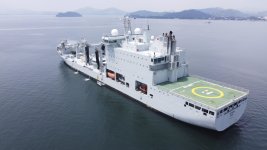
Canadian River Class Destroyer Megathread

"The weapons are available. You need, actually, more intelligence."

From the President of Shield Ai as to why his V-Bats don't need to be armed.


"If you have been in these combat zones, the US allies who fought closely with us in Afghanistan, they do not ask for organic fires on board the V-Bat," Tseng said. "Because everybody is so used to just saying: 'Okay, I have a targeting package. What fires asset do I have lined up? Is it a one-way attack drone? Is it HIMARS? Is it artillery? Is it an SM-6? SM-3?"

"Doesn't matter. You can find weapons,"

...

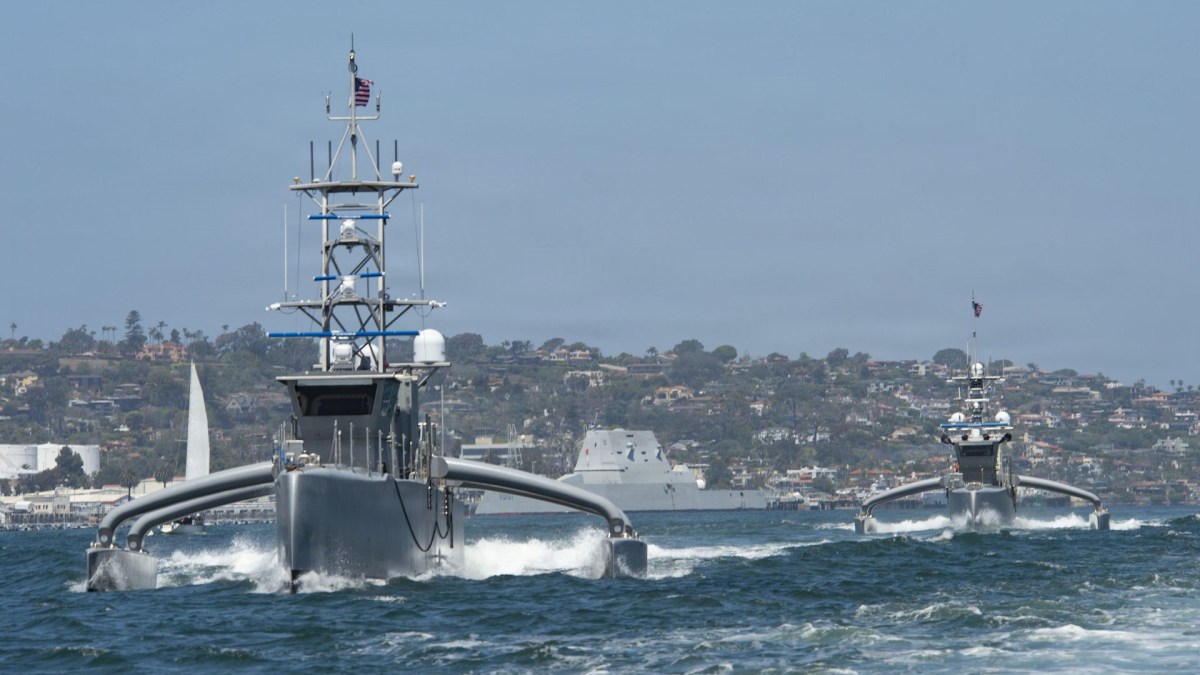
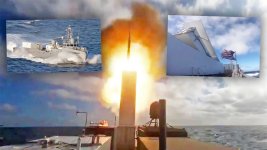
Even more true if you are sailing in company with $10,000,000 OSVs carrying 16 more strike length cells each.
1774545680566.jpeg
 
Swap your 12 SM2s for 12 SM6s.
Then you can add them to your 24 NSMs if the situation warrants.

The SM6 range seems to be highly Trumpian. Some place in the 200 to 1000 km range depending on sources and assumptions.

And if you still think the SAM:SSM ratio is still wrong you can always swap some of those ESSMs for a few 1600 km MST Tomahawks.
Block Va (MST) Tomahawks don't have that kind of range. Closer to 500km, and anything you shoot at at that range will be hard to find and hit by the time you get there. Longer range on anti-ship missiles isn't all it's cracked out to be, unless you have the capability to update the location of the target to the missile in flight, and as far as I'm tracking right now, not one has that capability.
 
Block Va (MST) Tomahawks don't have that kind of range. Closer to 500km, and anything you shoot at at that range will be hard to find and hit by the time you get there. Longer range on anti-ship missiles isn't all it's cracked out to be, unless you have the capability to update the location of the target to the missile in flight, and as far as I'm tracking right now, not one has that capability.
Hence why Ballistic Anti Ship Missiles are so interesting. They get to the target area very quickly from long ranges, then do a normal anti-ship missile profile when they get down to thicker atmosphere.
 
Hence why Ballistic Anti Ship Missiles are so interesting. They get to the target area very quickly from long ranges, then do a normal anti-ship missile profile when they get down to thicker atmosphere.
Which is why it drives me nuts every time the media says something like "ASBMs are un-interceptable!!". It needs to slow down to find its target.
 
The doctrine on ASM usage refers to specific salvo weights when planning engagements that are required to penetrate enemy AAW defences. You need X NSM/Harpoon/whatever per enemy ship you are attacking to ensure a hit.
Hughes equations right?

Not knowing (and not asking for) the success rate variables that feed those equations it seems to this layman that with with how robust local AAW defenses are getting that "X" is an absurdly high number relative to standard loadouts.

Going OT for the RCD thread- those ratios how they apply to the "Fleet in being" concept change my appreciation for value of a "self-defense only" CDC even without force tier missiles- especially when paired with the threat of a nearby sub.
 
Hughes equations right?

Not knowing (and not asking for) the success rate variables that feed those equations it seems to this layman that with with how robust local AAW defenses are getting that "X" is an absurdly high number relative to standard loadouts.

I'm not sure what number you think "absurdly" high is, nor am I going to tell you what the actual salvo sizes are against various enemy warships (or what we know of our enemy's planned salvo sizes against us), but I think you might be surprised.

Going OT for the RCD thread- those ratios how they apply to the "Fleet in being" concept change my appreciation for value of a "self-defense only" CDC even without force tier missiles- especially when paired with the threat of a nearby sub.

Almost the entire US navy surface fleets lacks purpose-built anti-ship missiles. Their Block IIA Arleigh Burkes and beyond had their Harpoons removed. Blocked Va MST Tomahawks only came into service last year. Up until that point, the only weapons they had for surface warfare were SM-2s (which require line of sigh) or SM-6s (which as not meant for ASuW, expensive as hell, and "needed" for long range air defence). Even the airwings on their carrier strike groups aren't meant to perform "SUCAP" (surface CAP). Technically an F-18 can carry Harpoons, they just don't. The older Arleighs, the Ticos, and now some of the LCSs carry them, but if you look at the list of ships that compose a Carrier Strike Group (which surprisingly you can find online), you can see that their are CSGs which have only Flight IIA Arleighs in their DESRON and no TICOs, so they aren't even taking along a single "older" Arleigh to have a few Harpoons in the CSG. So how did the the largest navy the world has ever seen expect to conduct ASuW?.... submarines.
 
I'm not sure what number you think "absurdly" high is, nor am I going to tell you what the actual salvo sizes are against various enemy warships (or what we know of our enemy's planned salvo sizes against us), but I think you might be surprised.
Not asking you to.

But going through the salvo math River vs River... 8 NSM shots each met with say, 12 SM2's targetted at 6, followed by 4 RAM's at 2, followed by... dirty looks at 180,000 paces?

Of course- realizing that time is a constraint and the defensive ship can't instantaneously empty its magazine and engage every threat at once.

Frankly it seems like I'm just connecting some dots that are very obvious to those of you that do this for a living, especially based on the below.

Almost the entire US navy surface fleets lacks purpose-built anti-ship missiles. Their Block IIA Arleigh Burkes and beyond had their Harpoons removed. Blocked Va MST Tomahawks only came into service last year. Up until that point, the only weapons they had for surface warfare were SM-2s (which require line of sigh) or SM-6s (which as not meant for ASuW, expensive as hell, and "needed" for long range air defence). Even the airwings on their carrier strike groups aren't meant to perform "SUCAP" (surface CAP). Technically an F-18 can carry Harpoons, they just don't. The older Arleighs, the Ticos, and now some of the LCSs carry them, but if you look at the list of ships that compose a Carrier Strike Group (which surprisingly you can find online), you can see that their are CSGs which have only Flight IIA Arleighs in their DESRON and no TICOs, so they aren't even taking along a single "older" Arleigh to have a few Harpoons in the CSG. So how did the the largest navy the world has ever seen expect to conduct ASuW?.... submarines.
 
Last edited:


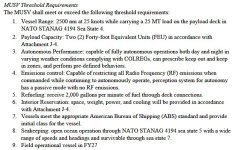
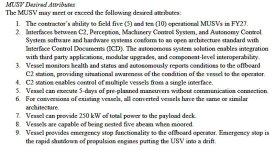
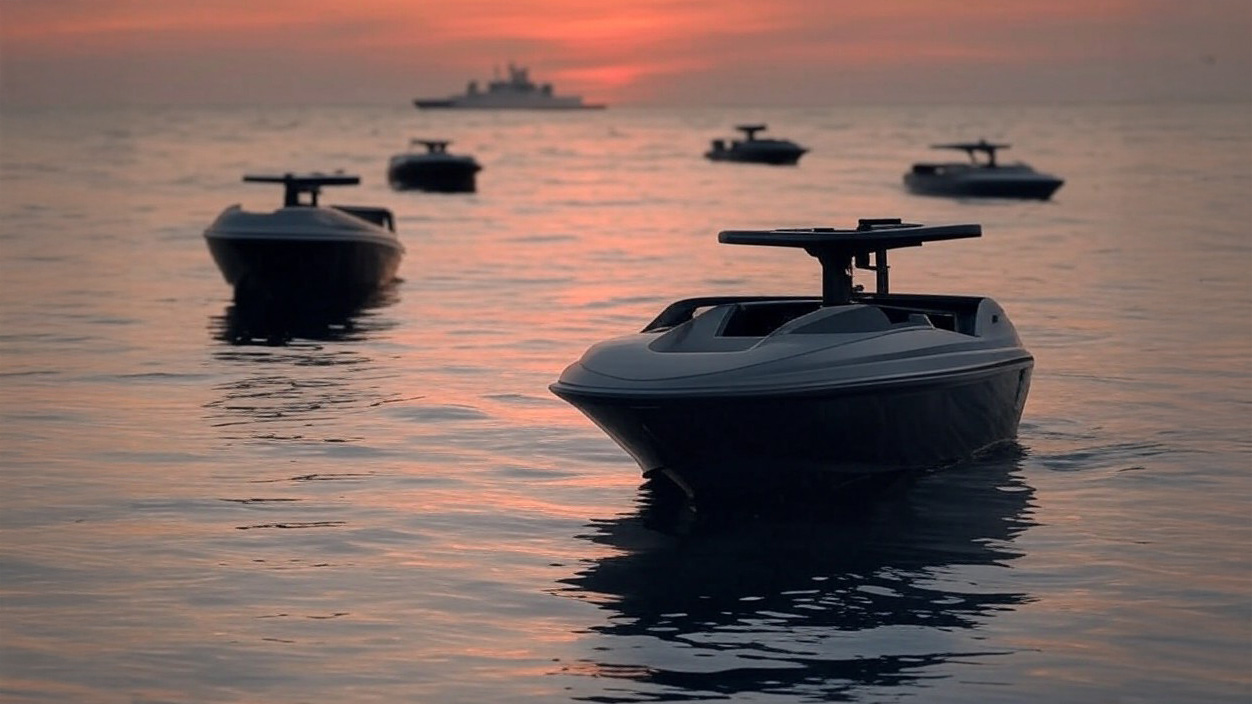
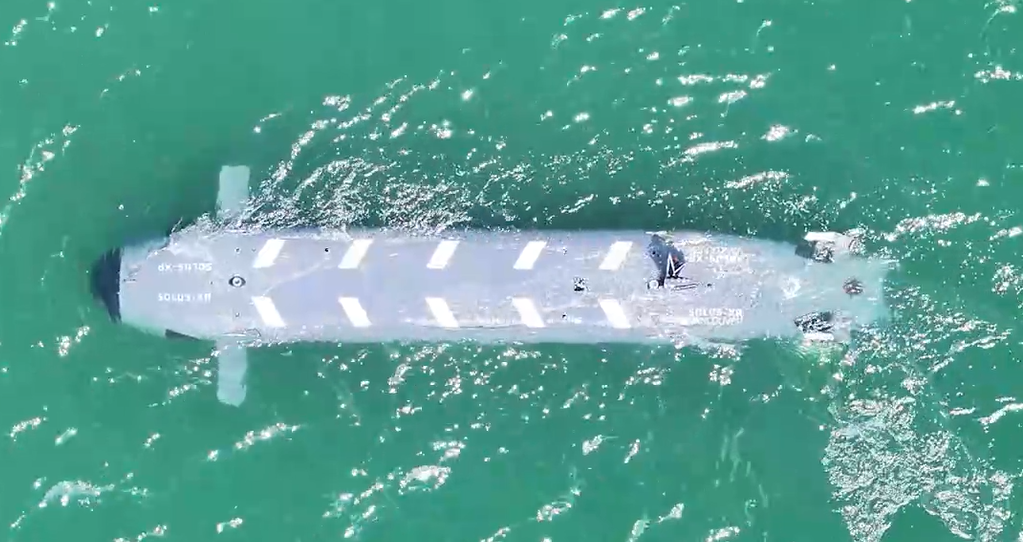
New USV plan

The Navy isn't going to select a ship to operate.
It is going to contract with operators to supply the capability

"the new strategy laid out today “is a replacement for MASC, absolutely,”"
"MASC “was tailored towards a very specific mission and a very specific ask from the Fleet, [and a] very specific quantity."

“As we look across how the Golden Fleet capability, or the Golden Fleet concept, has matured, and we look across where we could use these vessels as part of CNO’s [Chief of National Operations Adm. Daryl Caudle] tailored offsets and tailored forces, we bring ourselves to realize there’s a number of missions that we could immediately use these vessels for,” Gassler said. “That is, that is part of the strategy now, is that we will now have a scalable way to procure vessels that meet specific mission profiles.”

I detest the "Golden" label. But I love the implied inherent flexibility and speed of response.


1774550992915.jpeg


1774550909609.jpeg

Presumably the navy could contract with multiple operators with multiple solutions.

....

WRT the containers

"“There should be no reason why I can’t place a modular container on the back of our ships and carry an array of capabilities to any region in the world."

"Released in February, Caudle’s fighting instructions and associated “hedge” framework are designed to pivot the Navy from primarily relying on large, exquisite platforms toward more adaptable force packages that can be speedily reshaped as new conflicts and priorities emerge.

"Containerization will enable these aims, as it can allow the Navy to rapidly configure suitable ships with modular payloads — including drones, weapons and sensors — to confront localized threats without requiring a massive carrier strike group or other hefty fleet deployments."


""Consider Venezuela, when the Ford Strike Group left the Mediterranean, where was the other strike group to take her place? Imagine the flexibility we can do if, instead of a strike group replacing her, we’re able to provide [U.S. Southern Command] with other maritime options, like one of my new frigates paired with containerized, unmanned options,” Caudle said.
Tailored force packaging will not replace the Navy’s general-purpose fleet, according to the CNO. Instead, the notion is that it will supply military decision makers with “greater degrees of freedom” and help the Navy to “punch above its current weight class.”

"At the McAleese conference, Caudle urged members of America’s maritime and defense industry to “get clever” with ideas about what the Navy can containerize in the near term, such as directed energy weapons and drone swarms

"“I want to containerize everything,” Caudle said. “That’s why I kicked off the containerized capability campaign plan to get after this challenge at scale.”"

....

So Canada joins the RN and the USN and hires a contractor to supply a fleet of work boats and surveillance systems .... someone with experience preferably? Someone, oh, I don't know, that has previously supplied fleet services to the Navy?

1774551888496.jpeg

😁
 

Atlantic Net - They received 26 compliant offerings from service providers seeking contracts

"Atlantic NET, a programme intended to examine how persistent anti submarine warfare sensing might be delivered through service based models rather than through a single platform acquisition."

"“This involved the assessment of 26 compliant industry proposed solutions for ‘Persistent ASW Sense (ISR) as a Service’ and followed on from six months of regular two way industry engagement with approximately 327 companies in the supplier base. These are largely UK based, or have UK elements in their proposals.”"


Canadian Content

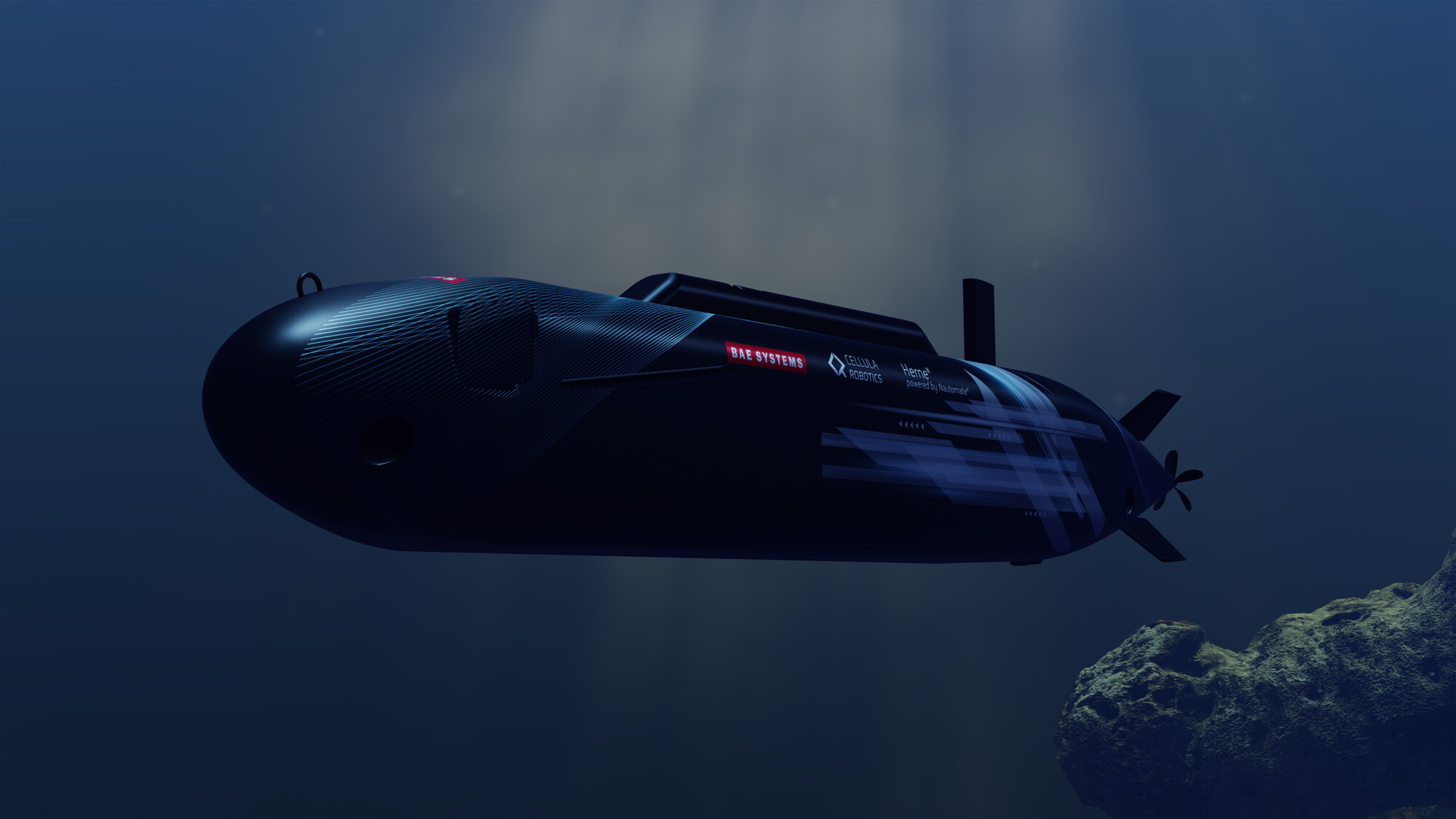
"For context, Herne is an extra large autonomous underwater vehicle concept developed by BAE Systems in partnership with Canadian firm Cellula Robotics. The modular platform has been promoted for long endurance missions including intelligence, surveillance and seabed monitoring."

1774552589249.jpeg
 
Hughes equations right?

Not knowing (and not asking for) the success rate variables that feed those equations it seems to this layman that with with how robust local AAW defenses are getting that "X" is an absurdly high number relative to standard loadouts.
Couldn't even tell you if I wanted. Those tables change all the time and there are too many variables based on who you are shooting, how big they are, time to target, how many ships are in the enemy task group and all that stuff. Knowing CO's though, why save any ammo for the second shot? Just dump your payload, hope it all hits, and get ready for the counter strike. ASM combat is a team sport anyways. You don't salvo on your own, the TG commander promulgates the plan and then everyone executes it together to coordinate the strike.
Going OT for the RCD thread- those ratios how they apply to the "Fleet in being" concept change my appreciation for value of a "self-defense only" CDC even without force tier missiles- especially when paired with the threat of a nearby sub.
This is what I'm talking about! Ships just existing pose a threat.
 
NSM - unit cost is about 2.2 MUSD to deliver a 120 kg warhead 250 km (15 to 20 minute time to max range)
The MST - unit cost is about 2.5 MUSD to deliver a 450 kg WDU-36/B Unitary Warhead out beyond 500 km (30 to 45 minute time to max range)
The SM6 - unit cost is 4 to 4.9 MUSD to deliver a 64 kg blast fragmentation warhead in the 400 km vicinity (7 minute time to max range)
 
Back
Top