
- Reaction score
- 1,733
- Points
- 1,040
There's not a bunch of Griffins parked in a field... yet (I think).The Griffon is the LSVW of the RCAF. Discuss.
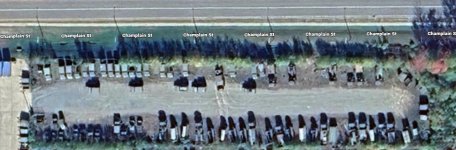


There's not a bunch of Griffins parked in a field... yet (I think).The Griffon is the LSVW of the RCAF. Discuss.
I checked what they'd look like if there was... ummm, heliiicopterssss....There's not a bunch of Griffins parked in a field... yet (I think).

I think I’m missing something besides my mind. Sikorsky was awarded a contract that they (with DND help) f upped beyond imagination, Trump is screwing our country, LM is screwing us on the River class and we should reward them with another Helicopter contract.Although I'm still not convinced that the proper fix for Cyclone, as an isolated situation, is to put money into it and fix it, the stars seem to be aligning into something different. Have MH-60Ms for 427, UH-60s for the rest of the Army (and a significant number of them), MH-60Rs for ASW (somewhere around 28 to replace the Cyclone), and MH-60Ss for other embarked roles (including, hopefully, the AOPS) is starting to make more and more sense.
Is LM screwing us on the River Class?I think I’m missing something besides my mind. Sikorsky was awarded a contract that they (with DND help) f upped beyond imagination, Trump is screwing our country, LM is screwing us on the River class and we should reward them with another Helicopter contract.
I don't think Sikorsky f'upped as bad as you, or Topshee, think.I think I’m missing something besides my mind. Sikorsky was awarded a contract that they (with DND help) f upped beyond imagination, Trump is screwing our country, LM is screwing us on the River class and we should reward them with another Helicopter contract.

Griffon I don't know a lot about, other than it flies and has a four blade main rotor.The Griffon is the LSVW of the RCAF. Discuss.

No they araren't. We're doing enough screwy stuff to ourselves, they dont need to do that at all.Is LM screwing us on the River Class?
Very well put. I made a similar argument in an earlier post. Negotiate with Sikorsky on an "Extended Warranty", whereby we pay a certain amount yearly for access to parts. Commit to a minimum 10 year time frame, with renewal options. That makes it worth their while to produce and stockpile parts on our behalf. We do this in my business, and it works great. It adds cost, but we are seeing availability rates above 98% (in some instances, 99%) on our mission critical assets. Well worth the extra cost.I don't think Sikorsky f'upped as bad as you, or Topshee, think.
Everybody is complicit: GDMS-C, Sikorsky, the project office (PMO), 12 Wing, RCAF, RCN... the only one that seems to be doing their job without drama is L3-MAS. I would say who I think is most at fault, but it's irrelevant at this point.
The first thing I would say is when the 101 was cancelled in 1993 Cretien said "not the cadilac." Yet, when the Cyclone finally first went to sea all the GOFOs were falling all over themselves say "best MH int he world." On paper, the equipment made that statement not false, but the sustainment, training, doctrine, and readiness were no were near being there yet. So, how did we end up with the best MH in the world, when we were told "not the cadilac," and didn't pay a cadilac budget.
It does surprise me that the GOFOs now (some of the same ones) don't seem to understand how Sikosrky can't continue to lose money on our experimental cadilac. They've made thier calculations; whether rightly or wrongly, they don't think they can recoup their loses by going even deeper into the hole to properly spare the aircraft. And the contract's only hook to make them do so is they get paid if we fly, but it's not clear that they won't just end up throwing good money after bad for a long time.
Add to that, the people who wrote the spec didn't have the institutional knowledge to do so. Nor did the community have the institutional knowledge to make what they thought they were asking for work. As a point of reference, I've spent my entire professional career doing those two things, including multiple instances of reveiwing the spec.
What Sikorsky did do wrong is this: they thought we were the "USN." What that means is they knew what our budget was, and knew they couldn't build what we were asking for within that budget, but thought it was all "programatics." They didn't think we actually would try to pull it off with that budget, and not add more money when it became necessary to do so.
Now we're in the position that the one thing that would make the "power by the hour" parts of the in service contract work, high flying rates, are impossible. We're ironically in the same trap as the Sea King was: lack of servicable aircraft means we can't train people, which means we can't get the hours up...
The PMO needs to stop trying to punish Sikorsky, Topshee needs to ask how he can help, and we need to move on. Whether or not that is with the Cyclone, or even Sikorsky, should be decided based on our requirements and national need, not people's historical bias.
And speaking of bias... like I hinted at, I've been doing this a long time. My perception is tinted by my biases.
There already is such a setup, its call the In Service Support (ISS) contract. Sikorsky has been contract for 20 years, from 2018 until 2038. It's been part of the program from the offset. It's not just spares, it's also things like engineering, configuration management, and continuing airworthiness. Any improvements are are determined to be in scope or our of scope of the existing requirements, and if in scope are paid through the ISS contract. Much of the payment was to be "power by the hour," which means Sikorsky gets paid when 12 Wing flies. However, 12 Wing was underflying expectations and certain services were still expected to be fully activated, which was creating substantial losses for Sikorsky and the subs. Out of scope are subject to an Additonal Work Request (AWR) which historically has been very expensive. The most obvious example is Link-16 and Mode 5 IFF.Very well put. I made a similar argument in an earlier post. Negotiate with Sikorsky on an "Extended Warranty", whereby we pay a certain amount yearly for access to parts. Commit to a minimum 10 year time frame, with renewal options. That makes it worth their while to produce and stockpile parts on our behalf. We do this in my business, and it works great. It adds cost, but we are seeing availability rates above 98% (in some instances, 99%) on our mission critical assets. Well worth the extra cost.
Understood. Thanks. I was merely advocating for a separate agreement, outside the terms of the current ISS, which appears to penalize Sikorsky for some things that are not entirely within their influence. Ultimately, this comes down to if the government feels this platform is worth salvaging. If the only issue is with parts availability, I would argue it is.There already is such a setup, its call the In Service Support (ISS) contract. Sikorsky has been contract for 20 years, from 2018 until 2038. It's been part of the program from the offset. It's not just spares, it's also things like engineering, configuration management, and continuing airworthiness. Any improvements are are determined to be in scope or our of scope of the existing requirements, and if in scope are paid through the ISS contract. Much of the payment was to be "power by the hour," which means Sikorsky gets paid when 12 Wing flies. However, 12 Wing was underflying expectations and certain services were still expected to be fully activated, which was creating substantial losses for Sikorsky and the subs. Out of scope are subject to an Additonal Work Request (AWR) which historically has been very expensive. The most obvious example is Link-16 and Mode 5 IFF.
The cost has continued to rise. It's currently advertised to be $11.17 Billion as per CH-148 Cyclone procurement project. What is not clear, from the outside, is whether the government has accepted and funded that cost, and if they have is Sikorsky acting on it. That is the heart of the actual viability discussion, and I doubt you'll find anyway that knows the answer that is willing to talk about it.
This structrure was forced on Sikorsky by the governemnt through the contract, and it hasn't been as successful as hoped.
I understand that there are obsolescence issues, of course, which presumably the ISS is capable of dealing with. I would like to know how many parts on the Cyclone are truly unique, given this machine was the baseline from which the new presidential VH-92 was developed, if my understanding is correct. Maybe this isn't as bad a situation as it's being made out to be, at least on the parts side of things?Understood. Thanks. I was merely advocating for a separate agreement, outside the terms of the current ISS, which appears to penalize Sikorsky for some things that are not entirely within their influence. Ultimately, this comes down to if the government feels this platform is worth salvaging. If the only issue is with parts availability, I would argue it is.
Two things:I understand that there are obsolescence issues, of course, which presumably the ISS is capable of dealing with. I would like to know how many parts on the Cyclone are truly unique, given this machine was the baseline from which the new presidential VH-92 was developed, if my understanding is correct. Maybe this isn't as bad a situation as it's being made out to be, at least on the parts side of things?

I don't think Sikorsky f'upped as bad as you, or Topshee, think.
Everybody is complicit: GDMS-C, Sikorsky, the project office (PMO), 12 Wing, RCAF, RCN... the only one that seems to be doing their job without drama is L3-MAS. I would say who I think is most at fault, but it's irrelevant at this point.
The first thing I would say is when the 101 was cancelled in 1993 Cretien said "not the cadilac." Yet, when the Cyclone finally first went to sea all the GOFOs were falling all over themselves say "best MH int he world." On paper, the equipment made that statement not false, but the sustainment, training, doctrine, and readiness were no were near being there yet. So, how did we end up with the best MH in the world, when we were told "not the cadilac," and didn't pay a cadilac budget.
It does surprise me that the GOFOs now (some of the same ones) don't seem to understand how Sikosrky can't continue to lose money on our experimental cadilac. They've made thier calculations; whether rightly or wrongly, they don't think they can recoup their loses by going even deeper into the hole to properly spare the aircraft. And the contract's only hook to make them do so is they get paid if we fly, but it's not clear that they won't just end up throwing good money after bad for a long time.
Add to that, the people who wrote the spec didn't have the institutional knowledge to do so. Nor did the community have the institutional knowledge to make what they thought they were asking for work. As a point of reference, I've spent my entire professional career doing those two things, including multiple instances of reveiwing the spec.
What Sikorsky did do wrong is this: they thought we were the "USN." What that means is they knew what our budget was, and knew they couldn't build what we were asking for within that budget, but thought it was all "programatics." They didn't think we actually would try to pull it off with that budget, and not add more money when it became necessary to do so.
Now we're in the position that the one thing that would make the "power by the hour" parts of the in service contract work, high flying rates, are impossible. We're ironically in the same trap as the Sea King was: lack of servicable aircraft means we can't train people, which means we can't get the hours up...
The PMO needs to stop trying to punish Sikorsky, Topshee needs to ask how he can help, and we need to move on. Whether or not that is with the Cyclone, or even Sikorsky, should be decided based on our requirements and national need, not people's historical bias.
And speaking of bias... like I hinted at, I've been doing this a long time. My perception is tinted by my biases.
so limited spare parts usage between the two? No value in doing a reverse VH-71?Two things:
The Cyclone was developed from the S-92, whereas the VH-92A from the S-92A. Sikorsky is rapidly not supporting the S-92.
The mission avionics all came from GDMS-C and are unique. The representative a very large part of the complexity.
A reverse VH-71 would be selling the US the Cyclones as a pile of spares.so limited spare parts usage between the two? No value in doing a reverse VH-71?
yes thats what i meantA reverse VH-71 would be selling the US the Cyclones as a pile of spares.
Project Management OfficeJust for clarification, when you say "PMO" are you talking about the "Prime Ministers Office" or "Project Managers Office?"

Except, we don’t own any spare parts- Sikorsky does.A reverse VH-71 would be selling the US the Cyclones as a pile of spares.
Project Management Office

We could always just get AW101 for everything.You are not wrong.
But, if not Lockmart/Boeing helicopters- then who? Leonardo? NH Industries? Nobody is easy to work with in this space.


