
- Reaction score
- 12,276
- Points
- 1,040
Doesn't quite fit the theory that you can't use the master's tools to dismantle the master's house. Which is OK, because the theory is asinine.




 globalnews.ca

Well duh, its amazing how things go if you don't build on flood plains, vulnerable coastlines, difficult to access forested areas. It also helps if you leave wetlands and coastal marsh areas alone and don't allow deadfall in forests to build up.
Faster adaptation to climate change will save Canada billions: analysis | Globalnews.ca
Beyond higher reconstruction costs, Canada is also facing massive economic disruptions as factories are closed during storms or extreme heat and supply chains are disrupted.

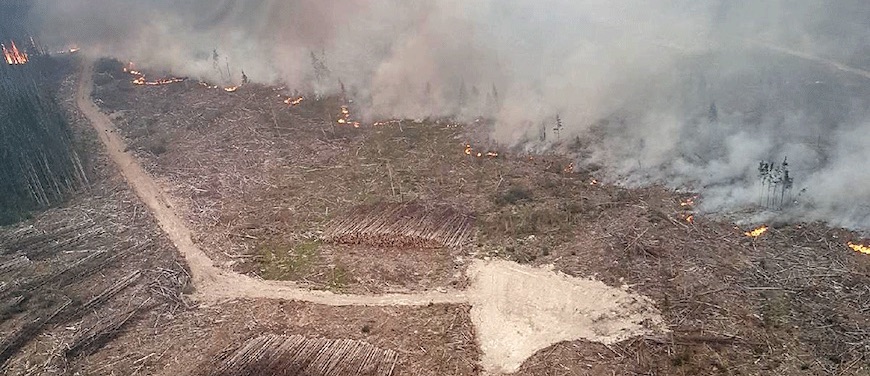
Years ago - ln the late 80s IIRC and forest guy said with all the build up of deadfall there would be issues. They used to do controlled burns of older dieing parts of the forest....but.....Green Peace and politicians eager to suck up stopped that.don't allow deadfall in forests to build up.

Could ditch the word "change" and headline would still make sense, and be closer to the root of the issue. Going head-to-head with natural forces is rarely prudent.

Years ago - ln the late 80s IIRC and forest guy said with all the build up of deadfall there would be issues. They used to do controlled burns of older dieing parts of the forest....but.....Green Peace and politicians eager to suck up stopped that.

 www.bcfpb.ca
...
Babcock Ranch calls itself "America's first solar-powered town." Its nearby solar array — made up of 700,000 individual panels — generates more electricity than the 2,000-home neighbourhood uses, in a state where most electricity is generated by burning natural gas, a planet-warming fossil fuel.
The streets in this meticulously planned neighbourhood were designed to flood so houses don't. Native landscaping along roads helps control storm water. Power and internet lines are buried to avoid wind damage. This is all in addition to being built to Florida's robust building codes.
Some residents, like Grande, installed more solar panels on their roofs and added battery systems as an extra layer of protection from power outages. Many drive electric vehicles, taking full advantage of solar energy in the Sunshine State.
Climate resiliency was built into the fabric of the town with stronger storms in mind.
...

 www.ctvnews.ca
I came here to post this! I thought it was interesting how they’ve kept power on with solar. It says that they produce more than they need, so presumably they’re normally tied to the rest of the grid and selling the excess.This 100% solar community endured Hurricane Ian with no loss of power and minimal damage
Babcock Ranch calls itself 'America's first solar-powered town.' The streets in this meticulously planned neighbourhood are designed to flood so houses don't, and power and internet lines are buried to avoid wind damage. While Hurricane Ian obliterated the nearby Fort Myers and Naples areas...
After decades of fuel build-up, I can guess that prescribed burns won't behave the way people "remember" from long ago.
"Yeah, we used to do this all the time."
"Wow, look at it go!"
Florida is still going underwater.I came here to post this! I thought it was interesting how they’ve kept power on with solar. It says that they produce more than they need, so presumably they’re normally tied to the rest of the grid and selling the excess.
:format(jpeg)/cloudfront-us-east-1.images.arcpublishing.com/tgam/MPGH4LELIJIC7D4SKH4ELSTHHA.JPG)
/cloudfront-us-east-1.images.arcpublishing.com/tgam/MPGH4LELIJIC7D4SKH4ELSTHHA.JPG)
 www.theglobeandmail.com

It takes roughly 10 years from proposal to shipment for a big LNG plant. There is a lot and I mean a lot of ground work to be done. You need access to the gas and a long term customer first. Then you need to figure out a pipeline route, taking into account existing, environmental, geophysical, cultural, industrial and infrastructure along the route. Plus archaeological. Then you need to find a plant site, negotiate ownership. Plus you need a port and terminal. Once you have reach FID, then you need to order the modules, which you have been negotiating and selecting a contractor for. You need to build a MOF to unload those modules, a Camp to house the workers, electrical supply, road access. You need an combined environmental assessment, NEB export permit, likley a Fisheries Act authorization(s), CNWA approvals, EC Ocean disposal for dredging is possible and likley 300 or so Provincial permits for road use, roading building, stream crossings, cutting permits, fish salvage, quarries, water extraction, etc, etc. Not to mention foreshore lease, pipeline ROW. And then there is aboriginal consultation at the environmental assessment stage and for every approval, permit and authorization. You likley want to negotiate soon revenue sharing agreements first.
I sold it when I retired......My lord man! What a lot of Koolaid you have drunk.
Where is your sense of Urgency?


