


- Reaction score
- 35
- Points
- 560
The Good Nazi , (book) NY Times, Sunday, December 13, 1998
Scarred by history: The Rape of Nanjing, Monday, 11 April, 2005
- LETTER FROM CHINA; China Hails a Good Nazi and Makes Japan Take Notice, NY Times, March 15, 2006, suite in following link
-China Hails a Good Nazi and Makes Japan Take Notice, NY Times, March 15, 2006
Nanjing massacre victims named, Tuesday, 4 December 2007
Giving Testimony on the Horror That Was Nanking, (documentary) NY Times, December 12, 2007
China remembers dead of Nanjing (70 years), Thursday, 13 December 2007
'Good Nazi of Nanjing' sparks debate, Thursday, 19 March 2009
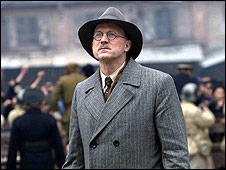
John Rabe remains a hero in China but
his story is little known elsewhere
A film about a member of the Nazi party who saved thousands of Chinese during
the massacre in Nanjing recently opened in Germany. The BBC's Zoe Murphy looks
at the possible impact this unlikely hero's story may have on Sino-Japanese relations.
On Christmas Eve in 1937, German businessman John Rabe visited the mortuary in
China's then capital, Nanjing. He later described in his diary the charred body of a
civilian man whose eyes had been gouged out, and a boy of perhaps seven, whose
corpse was punctured with bayonet wounds.
"I wanted to see these atrocities with my own eyes, so that I can speak as an
eyewitness later," he wrote. "A man cannot be silent about this kind of cruelty!"
The Second Sino-Japanese War was raging. Japanese troops had stormed the
capital, carrying out mass executions and raping tens of thousands of local
women and girls, in a six-week orgy of violence that became known as the
Rape of Nanjing.
Risking his life, Rabe remained in China and, along with a handful of Westerners,
set up a "safety zone" in Nanjing that is thought to have prevented the massacre
of more than 200,000 Chinese during one of the bloodiest episodes of the
Japanese invasion.
As Germany and Japan were allies, Rabe used his Nazi party membership to do
all he could to protect civilians in the zone - including 650 sheltering refugees in
his own house and garden. With a flash of his swastika armband and through
sheer force of personality, he intervened in acts of looting and attempted rape
by the Japanese troops.
The diaries of this unlikely and unsung hero only became public knowledge in the
late 1990s, when they were published in Germany. They have now been made into
a film, simply titled John Rabe.
The biopic, which premiered recently in Germany, may stoke historical tensions
between Beijing and Tokyo. But it is hoped that Rabe's story may renew debate
and ultimately help heal old wounds.
Historical document
The events of 1937 have left enormous psychological scars in China, and the
Chinese believe that Japan has not done enough to atone for its militarist past.
China says 300,000 people were killed during the assault on Nanjing. But much
to the anger of Beijing, some conservative Japanese politicians and academics
have said such figures are exaggerated. Some even deny that a massacre ever
took place.
Such declarations also frustrate mainstream historians in Japan and further afield.
William Kirby, head of the Fairbank Center for Chinese Studies at Harvard
University, says the exact death toll is not the main issue.
"What you have is a great massacre of a civilian population that goes on for weeks…
Nanjing is surrendered but the Japanese proceed to terrorise the inhabitants. These
facts are incontrovertible."
Coming to light nearly 60 years after the event, he says that John Rabe's diaries
are a powerful new document detailing what happened day-by-day. Mr Kirby says
that Rabe had "no anti-Japanese axe to grind" at the outset. "He saw the Japanese
as a normal army and initially resisted the stories of wrongdoing - he was a neutral
outsider."
During the conflict, Rabe wrote: "Last night up to 1,000 women and girls are said
to have been raped... If husbands or brothers intervene, they're shot. "What you
hear and see on all sides is the brutality and bestiality of the Japanese soldiery."
Nazi links
The film's director Florian Gallenberger says it was by staying true to the events
as described by Rabe that the film achieved neutrality. "At the beginning of the
conflict I think [Rabe] has great trust in the Japanese as German allies to behave
in a disciplined and fair way - but when it turns out otherwise he is shocked. He
feels it is his responsibility to act." He says Rabe's courage was fuelled by his
sense of morality, rather than any political conviction.
As bombs rained down, Rabe wrote: "Anyone who has ever... held a trembling
Chinese child in each hand through the long hours of an air raid can understand
what I feel." At one point, he covered a shelter with a huge swastika flag, which
he described as being considered "especially bombproof".
After living in China for 30 years, Rabe had a naive image of Germany's National
Socialism as a humanistic workers' movement, says Mr Gallenberger. Rabe even
wrote to Adolf Hitler asking for his intervention in the violence, as he believed the
Nazi leader would not have condoned Japan's actions.
'Hard to watch'
The passage of time has allowed Germany to review its own wartime actions,
notably the Nazi genocide of some six million European Jews during World War II.
Now with historical distance, the 37-year-old director hopes the film will trigger a new
dialogue and help Japan also come to terms with its own past. "After such a long time,
there should be a way of dealing differently with the responsibility they have, rather
than trying to avoid it or make it disappear," he says.
John Rabe is expected to be widely viewed in China after it premieres at the Shanghai
Film Festival in June. But it is unclear whether the film will be released in Japanese
cinemas. The film's producers hope that the involvement of Japanese star Teruyuki
Kagawa will prevent the film from being silenced there.
Teruyuki Kagawa plays the emperor's relative, Prince Asaka, who was the top ranking
Japanese officer in Nanjing at the height of the atrocities. During the Tokyo War Crimes
Tribunal in 1946, Prince Asaka denied any massacre of Chinese and said he had never
received any complaint about his soldiers' conduct.
Controversially, the film speculates on his involvement in the decision-making process.
Teruyuki Kagawa says: "When faced with this film, many people will be shocked [to learn]
the Japanese carried out such cruel acts. "I think Japanese people will find the two hours
very hard [to watch]."
Scarred by history: The Rape of Nanjing, Monday, 11 April, 2005
- LETTER FROM CHINA; China Hails a Good Nazi and Makes Japan Take Notice, NY Times, March 15, 2006, suite in following link
-China Hails a Good Nazi and Makes Japan Take Notice, NY Times, March 15, 2006
Nanjing massacre victims named, Tuesday, 4 December 2007
Giving Testimony on the Horror That Was Nanking, (documentary) NY Times, December 12, 2007
China remembers dead of Nanjing (70 years), Thursday, 13 December 2007
'Good Nazi of Nanjing' sparks debate, Thursday, 19 March 2009
John Rabe remains a hero in China but
his story is little known elsewhere
A film about a member of the Nazi party who saved thousands of Chinese during
the massacre in Nanjing recently opened in Germany. The BBC's Zoe Murphy looks
at the possible impact this unlikely hero's story may have on Sino-Japanese relations.
On Christmas Eve in 1937, German businessman John Rabe visited the mortuary in
China's then capital, Nanjing. He later described in his diary the charred body of a
civilian man whose eyes had been gouged out, and a boy of perhaps seven, whose
corpse was punctured with bayonet wounds.
"I wanted to see these atrocities with my own eyes, so that I can speak as an
eyewitness later," he wrote. "A man cannot be silent about this kind of cruelty!"
The Second Sino-Japanese War was raging. Japanese troops had stormed the
capital, carrying out mass executions and raping tens of thousands of local
women and girls, in a six-week orgy of violence that became known as the
Rape of Nanjing.
Risking his life, Rabe remained in China and, along with a handful of Westerners,
set up a "safety zone" in Nanjing that is thought to have prevented the massacre
of more than 200,000 Chinese during one of the bloodiest episodes of the
Japanese invasion.
As Germany and Japan were allies, Rabe used his Nazi party membership to do
all he could to protect civilians in the zone - including 650 sheltering refugees in
his own house and garden. With a flash of his swastika armband and through
sheer force of personality, he intervened in acts of looting and attempted rape
by the Japanese troops.
The diaries of this unlikely and unsung hero only became public knowledge in the
late 1990s, when they were published in Germany. They have now been made into
a film, simply titled John Rabe.
The biopic, which premiered recently in Germany, may stoke historical tensions
between Beijing and Tokyo. But it is hoped that Rabe's story may renew debate
and ultimately help heal old wounds.
Historical document
The events of 1937 have left enormous psychological scars in China, and the
Chinese believe that Japan has not done enough to atone for its militarist past.
China says 300,000 people were killed during the assault on Nanjing. But much
to the anger of Beijing, some conservative Japanese politicians and academics
have said such figures are exaggerated. Some even deny that a massacre ever
took place.
Such declarations also frustrate mainstream historians in Japan and further afield.
William Kirby, head of the Fairbank Center for Chinese Studies at Harvard
University, says the exact death toll is not the main issue.
"What you have is a great massacre of a civilian population that goes on for weeks…
Nanjing is surrendered but the Japanese proceed to terrorise the inhabitants. These
facts are incontrovertible."
Coming to light nearly 60 years after the event, he says that John Rabe's diaries
are a powerful new document detailing what happened day-by-day. Mr Kirby says
that Rabe had "no anti-Japanese axe to grind" at the outset. "He saw the Japanese
as a normal army and initially resisted the stories of wrongdoing - he was a neutral
outsider."
During the conflict, Rabe wrote: "Last night up to 1,000 women and girls are said
to have been raped... If husbands or brothers intervene, they're shot. "What you
hear and see on all sides is the brutality and bestiality of the Japanese soldiery."
Nazi links
The film's director Florian Gallenberger says it was by staying true to the events
as described by Rabe that the film achieved neutrality. "At the beginning of the
conflict I think [Rabe] has great trust in the Japanese as German allies to behave
in a disciplined and fair way - but when it turns out otherwise he is shocked. He
feels it is his responsibility to act." He says Rabe's courage was fuelled by his
sense of morality, rather than any political conviction.
As bombs rained down, Rabe wrote: "Anyone who has ever... held a trembling
Chinese child in each hand through the long hours of an air raid can understand
what I feel." At one point, he covered a shelter with a huge swastika flag, which
he described as being considered "especially bombproof".
After living in China for 30 years, Rabe had a naive image of Germany's National
Socialism as a humanistic workers' movement, says Mr Gallenberger. Rabe even
wrote to Adolf Hitler asking for his intervention in the violence, as he believed the
Nazi leader would not have condoned Japan's actions.
'Hard to watch'
The passage of time has allowed Germany to review its own wartime actions,
notably the Nazi genocide of some six million European Jews during World War II.
Now with historical distance, the 37-year-old director hopes the film will trigger a new
dialogue and help Japan also come to terms with its own past. "After such a long time,
there should be a way of dealing differently with the responsibility they have, rather
than trying to avoid it or make it disappear," he says.
John Rabe is expected to be widely viewed in China after it premieres at the Shanghai
Film Festival in June. But it is unclear whether the film will be released in Japanese
cinemas. The film's producers hope that the involvement of Japanese star Teruyuki
Kagawa will prevent the film from being silenced there.
Teruyuki Kagawa plays the emperor's relative, Prince Asaka, who was the top ranking
Japanese officer in Nanjing at the height of the atrocities. During the Tokyo War Crimes
Tribunal in 1946, Prince Asaka denied any massacre of Chinese and said he had never
received any complaint about his soldiers' conduct.
Controversially, the film speculates on his involvement in the decision-making process.
Teruyuki Kagawa says: "When faced with this film, many people will be shocked [to learn]
the Japanese carried out such cruel acts. "I think Japanese people will find the two hours
very hard [to watch]."


