• Thanks for stopping by. Logging in to a registered account will remove all generic ads. Please reach out with any questions or concerns.

High Speed Train Coming?-split from boosting Canada’s military spending"

By this logic, Havelock, Marmora and Smiths Falls just need private investment right? Why don't you ask Porter to do it?
To answer your question, corporations do not fund large infrastructure projects.

Even as we are seeing with the MOU in Alberta, even when given free rein, corporate interests are hesitant to put their money forward. They much prefer government pay for the infrastructure that they plan to benefit from.

So all this talk of the private sector building the rail is poppycock. Balderdash. Twaddle and malarkey.

The taxpayer has always been the one funding large infrastructure projects. Even the new Gordie Howe bridge that will hopefully open one day is owned by the feds.

This thing will be built, hopefully, and then run just fine for what it's being designed to do. Then like every other infrastructure project outside of Mirabel airport, we will move on with our lives and reap the benefits. At least until the next big infrastructure project, where we do this song and dance all over again.
 
The point I believe is these airports don't build themselves with the power of capitalism.

Governments build these airports.

Same for HSR. Naturally the taxpayer is paying for HSR. The taxpayer pays for roads, ports, airports, ferries, bridges, why in the world wouldnt we be paying for rail?
Any private person or commercial enterprise can take a vehicle on roads, ferries, bridges, or a boat into a port, or an aircraft into an airport. I doubt there will be any provisions for private persons to take their own powered vehicles onto HSR lines, or even for business competitors to have equal access with their own rolling stock.

"Business travellers need more subsidized comfort" isn't really a strong selling point.

YVR's airport authority made a decision a few years back to borrow to fund a parkade, which apparently might not even be built to completion now. It's an excellent example of why such ventures should be fully self-funded: privatization of profits AND losses.
 
Good thing that's not the selling point.
It kind of is.

"Given that business travellers are the highest margin, they are what pay for development. That's the market Alto is rightfully aiming at. I'm sure you're well aware of how with airlines the 10% of passengers at the front usually generate over 50% of revenues."

Sounds like they can afford it. Sounds like they can support it. I'm all for business travellers paying for the capital and operating costs and subsidizing the rest of the economy herd.
 
To answer your question, corporations do not fund large infrastructure projects.
Depends on what one considers large.
LNG Canada Kitimat project was funded to the tune of $40billion of private/ investor funds. The Government funded $275million for (energy efficient) turbines and replacing a bridge.
Transmountain Pipeline was a Non Government company that walked away when uncertainty from all levels of Government caused them to pack up and leave. Only to be approved and the provincial and federal government swooped in and paid 6 times more to complete the project.
Even as we are seeing with the MOU in Alberta, even when given free rein, corporate interests are hesitant to put their money forward. They much prefer government pay for the infrastructure that they plan to benefit from.
Why would any company spend money on the preliminary process which costs hundred of millions of dollars. When the very approvers are anti western industry.
I do not know of any large company who wants the government to build any pipeline, refinery/ upgrader or mod yard. In doing so they tend to drive up the costs where they are not feasible to build.
So all this talk of the private sector building the rail is poppycock. Balderdash. Twaddle and malarkey.
If the government was actually serious about supporting the Port of Churchill then I have no doubt there would be private investors. With the way business with government is conducted with all the rules, regulations and multiple approvals required, then changing of conditions at the final stages. I doubt any company is going to spend a cent building infrastructure they have no control over and or actually will be able to use. (unless a Quebec company is in charge). Cement plants and LNG plants with limited and or no environmental approval.
The taxpayer has always been the one funding large infrastructure projects. Even the new Gordie Howe bridge that will hopefully open one day is owned by the feds.
One has to separate what is public infrastructure and what is private infrastructure. Of the latter what is critical and non critical.
This thing will be built, hopefully, and then run just fine for what it's being designed to do. Then like every other infrastructure project outside of Mirabel airport, we will move on with our lives and reap the benefits. At least until the next big infrastructure project, where we do this song and dance all over again.
 
Sometimes the problem with wanting to be the smartest person in the room is the obvious subtleties of sarcasm leave a mark as they get really close to the scalp when they fly over.😃

EDIT: though a sarcasm emogi on the site wouldn't hurt
 
Last edited:
  • Like
Reactions: ytz
Canadians have a weird "Can't do" attitude. No matter what it is, there's always somebody ready with an excuse for why it can't be done or won't succeed.
It's because there is a plethora of examples of Govt boondoggle with eerily similar starting points to the ALTO project:

1776775634219.jpeg

I like the idea of a high-speed rail network; however, if it's run anything like VIA, I'll take a hard pass. I have lots of experience dealing with VIA and it's basically amateur hour and run on a shoestring budget.

We have a worldclass freight rail network, we should have a world class passenger rail network as well. I'm just unsure of the plan at this time.
 
I like the idea of a high-speed rail network; however, if it's run anything like VIA, I'll take a hard pass. I have lots of experience dealing with VIA and it's basically amateur hour and run on a shoestring budget.

They literally created a completely separate agency from VIA and brought in foreign multinationals to design and build this. Every bid team had a major HSR builder from their country. Renfe from Spain. SNCF from France. Deutsche Bahn from Germany. And JR from Japan. It was one of the most sought after rail procurements in decades. What more do you think could have been done differently?

I get that a lot of people are totally clueless about the project till recently. That doesn't excuse the projecting of ignorance as fact, when Google can so easily tell you this isn't VIA running the show.
 
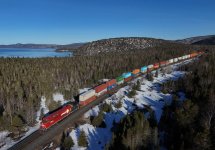
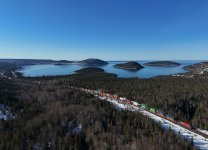
We do have lots of rail expertise in this Country and we have a world class freight network:

FB_IMG_1776776520522.jpg
FB_IMG_1776776503352.jpg

10s of thousands of tons of essential goods and commodities move across some of the most difficult and inhospitable terrain in the World every single day. The conditions our railroaders operate in and their skill are unrivaled as far as I am concerned.

We have all of the expertise we need right here to build a credible passenger railway service that provides value and is run the Canadian-way. The mistake I see is we will hire a bunch of outsiders and let a bunch of Euros come over here and tell us how we should be doing things based on conditions that don't exist here.
 
They literally created a completely separate agency from VIA and brought in foreign multinationals to design and build this. Every bid team had a major HSR builder from their country. Renfe from Spain. SNCF from France. Deutsche Bahn from Germany. And JR from Japan. It was one of the most sought after rail procurements in decades. What more do you think could have been done differently?

I get that a lot of people are totally clueless about the project till recently. That doesn't excuse the projecting of ignorance as fact, when Google can so easily tell you this isn't VIA running the show.
It will be just like ONExpress which was an absolute dumpster fire...
 
They literally created a completely separate agency from VIA and brought in foreign multinationals to design and build this. Every bid team had a major HSR builder from their country. Renfe from Spain. SNCF from France. Deutsche Bahn from Germany. And JR from Japan. It was one of the most sought after rail procurements in decades. What more do you think could have been done differently?

I get that a lot of people are totally clueless about the project till recently. That doesn't excuse the projecting of ignorance as fact, when Google can so easily tell you this isn't VIA running the show.
We aren't clueless, we are skeptical. There is a difference.

I am not clueless about rail operations. I'm a professional trainman, qualified Locomotive Engineer. I've railroaded in a number of different territories.

I am skeptical of anything the Govt touches with respect to rail, based on my experience dealing with them directly.
 
Where does LNG Canada get the gobs of electricity it needs and what was done to provide that?
if I am not mistaken the power comes from the dam that was put in to power the aluminum smelters. The town, the dam, the tunnels were all designed AND paid for by ALCAN. Here is the para. from Wilki. The municipal town of Kitimat came into existence in 1951 after the Provincial Government of British Columbia invited Alcan to develop hydroelectric facilities to support one of the most power-intensive of all industries—the aluminum smelting industry.<a href="Kitimat - Wikipedia"><span>[</span>8<span>]</span></a> The company built a dam, 16 km (10 mi) tunnel, powerhouse, 82 km (51 mi) transmission line, a deep-sea terminal and smelter. The company also designed, laid out and assisted with the initial construction of the city. At the time, the combined development was considered "the most expensive project ever attempted by private industry."<a href="Kitimat - Wikipedia"><span>[</span>7<span>]</span></a>
 
We do have lots of rail expertise in this Country and we have a world class freight network:

View attachment 99957
View attachment 99958

10s of thousands of tons of essential goods and commodities move across some of the most difficult and inhospitable terrain in the World every single day. The conditions our railroaders operate in and their skill are unrivaled as far as I am concerned.

We have all of the expertise we need right here to build a credible passenger railway service that provides value and is run the Canadian-way. The mistake I see is we will hire a bunch of outsiders and let a bunch of Euros come over here and tell us how we should be doing things based on conditions that don't exist here.
Please show us or tell us which Canadian companies have real world experience in building a HSR project?

Metrolinx (Go Transit) is in the process of getting ready to kick off electrifying its network. Who do you think their partners are for this project since there are zero Canadian companies with experience in electrifying a rail network? Alstom and Deutsche Bahn.

As for having 'Euros come over here and tell us how we should be doing things based on conditions that don't exist here' - do you know how often we get alerts from Go Transit that the trains speed will be reduced because of the following reasons:

1) 'Wet leaves on the track'
2) 'Excessive heat makes the rails unstable'
3) 'Extreme cold weather'

And this is present day, using diesel locomotives and rail cars built in Canada/US....... we don't have to worry about the Euro's and their 'inability' to build to 'our weather conditions' because we can't even do it for ourselves.
 
Please show us or tell us which Canadian companies have real world experience in building a HSR project?

Metrolinx (Go Transit) is in the process of getting ready to kick off electrifying its network. Who do you think their partners are for this project since there are zero Canadian companies with experience in electrifying a rail network? Alstom and Deutsche Bahn.

As for having 'Euros come over here and tell us how we should be doing things based on conditions that don't exist here' - do you know how often we get alerts from Go Transit that the trains speed will be reduced because of the following reasons:

1) 'Wet leaves on the track'
2) 'Excessive heat makes the rails unstable'
3) 'Extreme cold weather'

And this is present day, using diesel locomotives and rail cars built in Canada/US....... we don't have to worry about the Euro's and their 'inability' to build to 'our weather conditions' because we can't even do it for ourselves.
Bombardier Transportation (sold off to Alstom in 2021).... sold off for pennies on the dollar like the rest of our once robust manufacturing capabilities.

Metrolinx is a dumpster fire AFAIAC... couldn't run a piss up in a brewery. Crews are also low skill and poorly trained which contributes to the malaise. Takes them hours to do power moves that should take a skilled train crew minutes.

I think what the Ford Govt is doing with Ontario Northland and Amtrak corridor services are something we should be looking to emulate though. Deutsch Bahn was brought in to manage the operations of ONXpress, they complained the entire time because the conditions weren't comparable to Germany. "You guys just don't work like us!" .... yes the conditions are different.

It's apples and oranges.

The Euros also regularly overpromise and under-deliver in many sectors.
 
DB is better than most North American Passenger Rail operators, but by European standards, they have a shitty reputation for ontime performance (I’ve ridden them alot and generally had good experiences- except for them once stranding me in Mannhiem), but I also came a Canadian background of low expectations for rail transport. It was easy to tell that the Germans around me were none too impressed with DB…

The Germans think they know railroads. They do- in a European context. I don’t get that they understand the Canadian context of geography or weather conditions.
 
Back
Top