Man I wish the Armoured Corps would release something like that. The uncertainty is killing us.
Coincidental timing?
"The MoD’s judgment that future lethality will come roughly 80 per cent from drones and autonomous systems, and only 20 per cent from traditional armoured platforms and artillery, is both bold and correct.
"Some traditionalists may recoil at this, but the evidence from Ukraine is overwhelming. The side that can find, identify and destroy targets fastest is the side that survives. The Ukrainians, despite chronic shortages in ammunition and equipment, have become masters of this new form of warfare and remain streets ahead of most Nato armies in understanding its practical application."
.....
Hamish de Bretton-Gordon
Recce Strike: The British Army’s new way of warfare
It is deceptively simple in concept but revolutionary in execution
Hamish de Bretton-Gordon was an army officer for 23 years, reaching the rank of colonel, and was commanding officer of the UK's Joint Chemical, Biological, Radiological and Nuclear Regiment and Nato's Rapid Reaction CBRN Battalion.
Published 18 May 2026 1:33pm BST
The British Army has finally planted its flag firmly in the ground over the future of land warfare, embracing the Recce-Strike doctrine laid out in the Ministry of Defence’s 2025 Strategic Defence Review.
In many respects, this is one of the most important conceptual shifts in British military thinking since the end of the Cold War. Crucially, it recognises the brutal realities of modern combat witnessed daily on the battlefields of Ukraine, where drones, sensors and rapid precision strike have fundamentally changed warfare.
The MoD’s judgment that future lethality will come roughly 80 per cent from drones and autonomous systems, and only 20 per cent from traditional armoured platforms and artillery, is both bold and correct.
Some traditionalists may recoil at this, but the evidence from Ukraine is overwhelming. The side that can find, identify and destroy targets fastest is the side that survives. The Ukrainians, despite chronic shortages in ammunition and equipment, have become masters of this new form of warfare and remain streets ahead of most Nato armies in understanding its practical application.
Had Ukraine received the military support it requested earlier and in greater quantity, there is little doubt that Putin would now be in a far weaker position and considerably more enthusiastic about genuine peace negotiations. That lesson should not be lost on Britain. Defence cannot once again become the sacrificial lamb of domestic political turmoil. At a time when global instability is increasing, any government distracted by internal political warfare risks placing the defence of the realm in genuine jeopardy.
Recce-Strike itself is deceptively simple in concept but revolutionary in execution. It integrates surveillance, reconnaissance and strike assets into a single digital ecosystem capable of identifying and destroying enemy targets within minutes, sometimes within seconds. The aim is to collapse the traditional “kill chain” through the use of AI-assisted targeting, drones, sensors, electronic warfare and long-range precision fires.
There are three principal components. First, rapid targeting, drastically reducing the time between detection and destruction through AI-enabled decision making. Second, persistent battlefield surveillance using drones, sensors and electronic warfare to create a comprehensive picture of the battlespace. This is precisely where the much-maligned Ajax reconnaissance vehicle becomes absolutely critical. Critics have spent years deriding Ajax, but they fundamentally misunderstand its role. It is not merely a reconnaissance platform; it is the digital nerve centre of the future battlefield. Third comes long-range fires, combining intelligence and precision strike through artillery, missiles and loitering munitions to hit enemy formations deep behind the front line.
That is why this week’s announcement regarding the acquisition of 72 new self-propelled 155mm howitzers is so significant. Mounted on the Boxer chassis, the RCH 155 represents exactly the sort of long-range precision capability Britain desperately needs. Under the near-£1bn contract, the systems will also be manufactured in the United Kingdom, strategically vital in itself at a time when sovereign industrial resilience matters more than ever. The remotely or manually operated howitzer can fire eight rounds per minute at targets up to 70 kilometres away and can even operate unmanned when required.
Together with Ajax and Challenger 3, Britain is beginning to assemble the foundations of a genuinely modern, digitally integrated land force. Challenger 3, in particular, will be the Army’s first truly digital main battle tank and a formidable capability if fielded correctly. Together, these systems could provide the British Army with a highly credible Recce-Strike capability capable of surviving and winning on tomorrow’s battlefield.
However, time is not on our side. The current ambition to have these capabilities fully operational by the end of the decade may simply be too slow given the pace of global instability and military innovation. Integrating Ajax, RCH 155 and Challenger 3 into a coherent fighting force presents enormous challenges in training, logistics and doctrine. Nonetheless, these are solvable problems, provided the Treasury delivers sustained funding and political leaders maintain strategic focus.
That, ultimately, is the key issue. Defence requires long-term national resolve, not short-term political calculation. The danger is that political chaos in Westminster, and particularly any lurch further to the Left should Sir Keir Starmer lose his grip on Labour, could once again see defence spending sacrificed in favour of ever-expanding welfare commitments. Britain has made this mistake before. Following the Cold War, the so-called “peace dividend” hollowed out much of our military capability at precisely the moment when history should have taught us that peace is never permanent.
Today, the world looks considerably more dangerous than it did then. Russia remains aggressive, China increasingly assertive, and conflict in the Middle East continues to destabilise the international order. Against such a backdrop, weakening defence spending would not simply be irresponsible. It would be reckless.
Ultimately, without national security, every other area of public spending becomes meaningless. If Britain cannot defend itself, debates over welfare and healthcare budgets rapidly become academic. History repeatedly teaches us that freedom, prosperity and stability are only preserved when nations possess both the will and the capability to defend them.



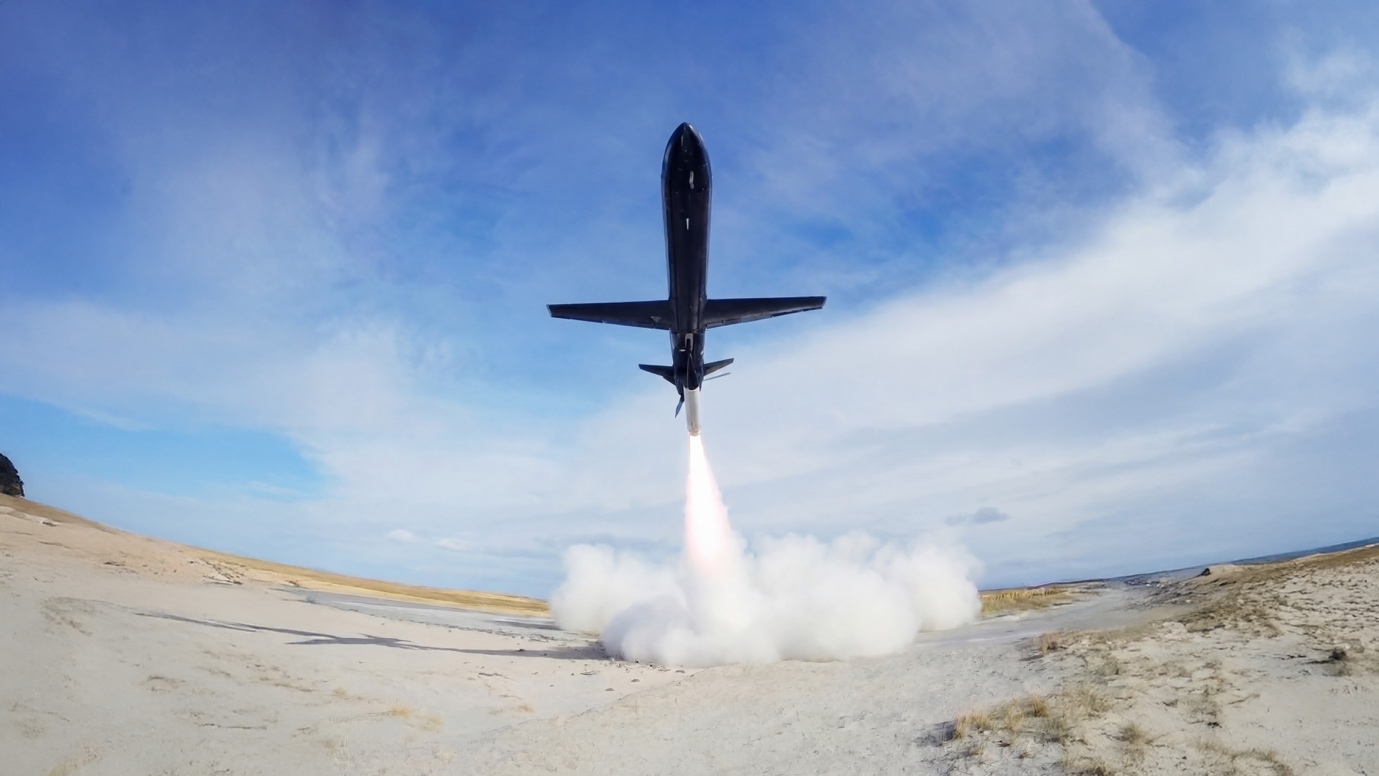
 militarnyi.com