• Thanks for stopping by. Logging in to a registered account will remove all generic ads. Please reach out with any questions or concerns.

Indirect Fires Modernization Project - C3/M777 Replacement

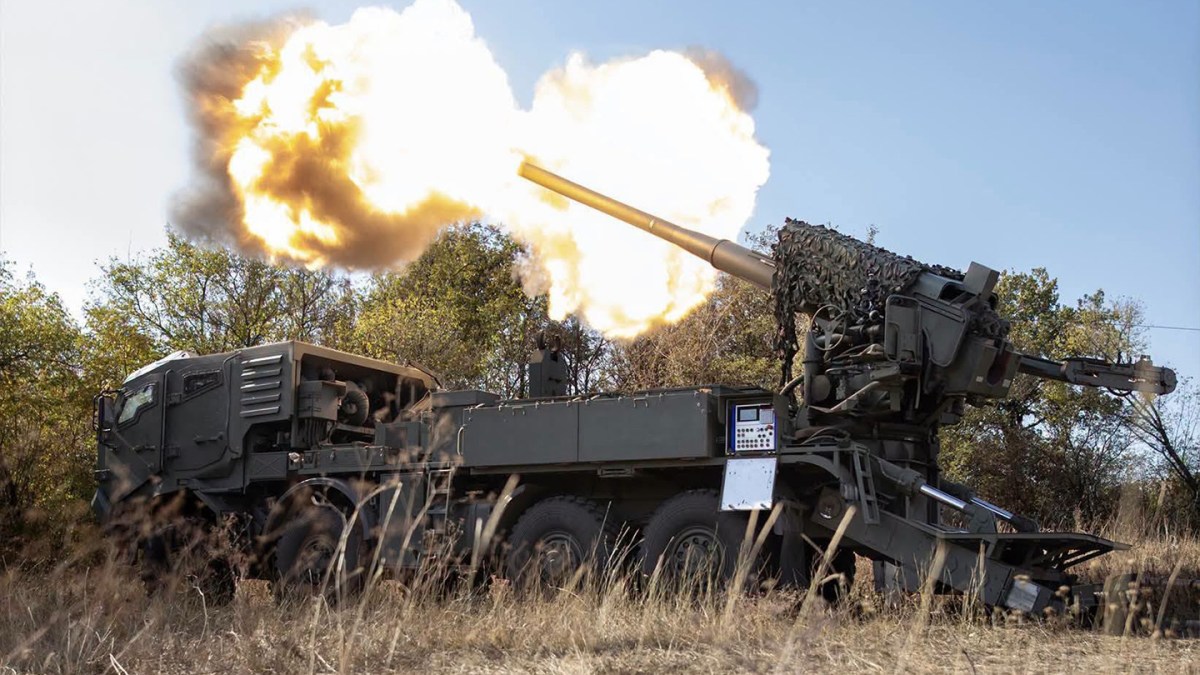
9 Rocket won't be stood up for a while. The artillery regiments are standing down their OP Batteries and reintroducing the FSCC and FOO parties to the gun batteries. C Bty 1 RCHA has been retasked from OP Bty to be the first HIMARS battery and will do the introduction and conversion to HIMARS for the branch. They are already turning to the task AFAIK. In due course once the systems come on line, 1 RCHA will split into two regiments - 1 RCHA and 9 Rocket, RCA - with both currently expected to operate out of Shilo. Note too that 10 Fd Regina, 26 Fd Brandon and 116 Fd Kenora are designated to be aligned as LRPS-L units with 9 Rocket.

Yes there are and there should be even more which is why I smile anytime someone suggests using gunners for mortars. Air defence alone could and should eat up several thousand. STA and deep strike, more yet. And that's before we start going from 2 four-gun batteries/regiment back to 3 six-gun ones. And what about a light regiment for the LIR? I could go on but we simply don't have enough gunners as it stands even if we filled all the blank files in all the regiments. More PYs and more ARes positions are needed.

I'm not sure what you mean by off-loaded. Quite clearly the infantry needs to designate a lot more folks to the combat support companies in the battalions to do mortars, anti-armour, CUAV, LM, even pioneer - not everyone can be in recce. :giggle:

Not just the RCAC but also the rifle companies. You know my view on the LAV. IMHO it is not an IFV for MCO albeit the 25mm is nothing to sneeze at in a pinch. My view is that every rifle coy should keep 7 of their LAVs with the 25mm and get 7 new ACSV TCVs with a 30 or 35mm RWS capable of both anti air and DFS tasks. That puts a fair number of 25mm LAVs into reserve or form more mech battalions and could keep the GDLS factory busy churning out more ACVs. Since I'm not paying the bills anyway, I'd do the same for a fleet of tracked IFVs for NATO albeit there, since all the vehicles would be new, I'd want dual purpose RWS on every vehicle in the rifle coy. Yup I see two type of brigades - and armoured brigade with tanks and tracked IFVs and a wheeled mech brigade with just LAVs. (Yes - light brigades too).

🍻


C Bty was STA not OP. Z, the OP Bty, is stood down while C is currently sending a small nucleus to various partner nations to train for himars.
 
9 Rocket won't be stood up for a while. The artillery regiments are standing down their OP Batteries and reintroducing the FSCC and FOO parties to the gun batteries. C Bty 1 RCHA has been retasked from OP Bty to be the first HIMARS battery and will do the introduction and conversion to HIMARS for the branch. They are already turning to the task AFAIK. In due course once the systems come on line, 1 RCHA will split into two regiments - 1 RCHA and 9 Rocket, RCA - with both currently expected to operate out of Shilo. Note too that 10 Fd Regina, 26 Fd Brandon and 116 Fd Kenora are designated to be aligned as LRPS-L units with 9 Rocket.

Yes there are and there should be even more which is why I smile anytime someone suggests using gunners for mortars. Air defence alone could and should eat up several thousand. STA and deep strike, more yet. And that's before we start going from 2 four-gun batteries/regiment back to 3 six-gun ones. And what about a light regiment for the LIR? I could go on but we simply don't have enough gunners as it stands even if we filled all the blank files in all the regiments. More PYs and more ARes positions are needed.

I'm not sure what you mean by off-loaded. Quite clearly the infantry needs to designate a lot more folks to the combat support companies in the battalions to do mortars, anti-armour, CUAV, LM, even pioneer - not everyone can be in recce. :giggle:

Not just the RCAC but also the rifle companies. You know my view on the LAV. IMHO it is not an IFV for MCO albeit the 25mm is nothing to sneeze at in a pinch. My view is that every rifle coy should keep 7 of their LAVs with the 25mm and get 7 new ACSV TCVs with a 30 or 35mm RWS capable of both anti air and DFS tasks. That puts a fair number of 25mm LAVs into reserve or form more mech battalions and could keep the GDLS factory busy churning out more ACVs. Since I'm not paying the bills anyway, I'd do the same for a fleet of tracked IFVs for NATO albeit there, since all the vehicles would be new, I'd want dual purpose RWS on every vehicle in the rifle coy. Yup I see two type of brigades - and armoured brigade with tanks and tracked IFVs and a wheeled mech brigade with just LAVs. (Yes - light brigades too).

🍻
In your view, do Manpads belong to the Artillery Air Defense units or be organic to the various Infantry and Armour units?
 
Ukrainian current assessment on guns and drones.

Some interesting numbers and tactics.

That's a good article and hits the nail on the head. You need both. The as yet unanswered question is what ratio of gun to launcher do you need.

One thing that concerns me is that drone countermeasures are getting more and more effective and I don't think we have the same level of innovation cycle that the Ukrainians have. We're too risk averse to innovate rapidly and I'm not sure we can change.

So far I'm staying with a 3:1 ratio but am willing to go to 1:1. We're also missing dedicated rapid entrenching systems for guns and physical and electronic deception systems. Or electronic strikes and proper intel/fusion cells that optimize selecting the right effector. And anti-drone screens. There's so much we don't have and don't do.

If there is one thing we aren't its agile.

🍻
 
If there is one thing we aren't its agile.
No peacetime military is ever agile.

Ukraine until 2022 was still a post-soviet state with a soviet style military. It was Western advisors, and battlefield experience, that helped them adapt. They have managed to adapt and become agile pretty fast, so our military, that has been trained to "adapt and overcome" from BMQ/BMOQ onward will do the same when required.

My concern with the obsession with drones is that, as you said, countermeasures are getting better, and soon enough the "cheap" drone goes back to being an expensive missile.
 
Last edited:
No peacetime military is ever agile.

Ukraine until 2022 was still a post-soviet state with a soviet style military. It was Western advisors, and battlefield experience, that helped them adapt. They have managed to adapt and become agile pretty fast, so our military, that has been trained to "adapt and overcome" from BMQ/BMOQ onward will do the same when required.

My concern with the obsession with drones is that, as you said, countermeasures are getting better, and soon enough the "cheap" drone goes back to being an expensive missile.

Will we ever get to the point where we are willing to go into battle without drones because counter-measures exist?

Aircraft generated anti-aircraft measures which did not remove aircraft from the battlespace.

Likewise for tanks and AT defenses, for subs and sonars.

....

As to the expense, the costs of engines, hulls and sensors are all rapidly falling. Just like prox fuses have.
 
Will we ever get to the point where we are willing to go into battle without drones because counter-measures exist?

Aircraft generated anti-aircraft measures which did not remove aircraft from the battlespace.

Likewise for tanks and AT defenses, for subs and sonars.

....

As to the expense, the costs of engines, hulls and sensors are all rapidly falling. Just like prox fuses have.
I'm not suggesting drones won't be an ever present part of warfare... Playing Ghost Recon back in the late-00's/early-10's I saw the advantage of drones for recce.

I'm more specifically speaking about strike drones. You're correct that aircraft persist, but they have had to become far more costly and rare to exist in the current AAW world, so it stands to reason that drones will need to do the same in due course.

My point is; rockets, and guns will continue to be important, perhaps more important than attack drones. It's still harder to hit an object moving at/beyond the speed of sound than it is to hit a drone at 100+mph.
 
That's a good article and hits the nail on the head. You need both. The as yet unanswered question is what ratio of gun to launcher do you need.

One thing that concerns me is that drone countermeasures are getting more and more effective and I don't think we have the same level of innovation cycle that the Ukrainians have. We're too risk averse to innovate rapidly and I'm not sure we can change.

So far I'm staying with a 3:1 ratio but am willing to go to 1:1. We're also missing dedicated rapid entrenching systems for guns and physical and electronic deception systems. Or electronic strikes and proper intel/fusion cells that optimize selecting the right effector. And anti-drone screens. There's so much we don't have and don't do.

If there is one thing we aren't its agile.

🍻


Some Ukrainian lessons as applied by the French.

8 gun batteries (2x4) converted to 6 gun batteries (3x2 + a recce element)
More batteries for the same number of guns.

Ammo supply.
Eng element to prep firing positions with overhead cover.

Recce element may include armoured and infantry elements.

Guns stay quiet and out of sight until called to move to firing positions.
 
That's a good article and hits the nail on the head. You need both. The as yet unanswered question is what ratio of gun to launcher do you need.

One thing that concerns me is that drone countermeasures are getting more and more effective and I don't think we have the same level of innovation cycle that the Ukrainians have. We're too risk averse to innovate rapidly and I'm not sure we can change.

So far I'm staying with a 3:1 ratio but am willing to go to 1:1. We're also missing dedicated rapid entrenching systems for guns and physical and electronic deception systems. Or electronic strikes and proper intel/fusion cells that optimize selecting the right effector. And anti-drone screens. There's so much we don't have and don't do.

If there is one thing we aren't its agile.

🍻
Each gun detachment get's a LMG and electronic drone killer gun and shotguns and has 1-2 air sentries during setup and firing and prepping to move. Each battery gets a gun based short ranged AD system to cover movement?
 

Some Ukrainian lessons as applied by the French.

8 gun batteries (2x4) converted to 6 gun batteries (3x2 + a recce element)
More batteries for the same number of guns.

Ammo supply.
Eng element to prep firing positions with overhead cover.

Recce element may include armoured and infantry elements.

Guns stay quiet and out of sight until called to move to firing positions.
The French do some interesting stuff in all of their arms. I think we can really learn from them across the board, from their sub-sub-unit echelon vehicle per armoured troop to integrating a recce and force protection section into their tank troops. Neat solutions to some common problema.
 
That's a good article and hits the nail on the head. You need both. The as yet unanswered question is what ratio of gun to launcher do you need.

One thing that concerns me is that drone countermeasures are getting more and more effective and I don't think we have the same level of innovation cycle that the Ukrainians have. We're too risk averse to innovate rapidly and I'm not sure we can change.

So far I'm staying with a 3:1 ratio but am willing to go to 1:1. We're also missing dedicated rapid entrenching systems for guns and physical and electronic deception systems. Or electronic strikes and proper intel/fusion cells that optimize selecting the right effector. And anti-drone screens. There's so much we don't have and don't do.

If there is one thing we aren't its agile.

🍻
I wonder how the ratio of drones to traditional gun and missile artillery will change when applied to a different conflict. In Ukraine drones really came into their own once the battlefield had already become largely static.

Often dozens of drones are required to take out a single armoured vehicle. The thing is, it's not typically a swarm of dozens of drones attacking the vehicle at once it's more like a vehicle gets detected and they keep sending drones until one of them manages to take the vehicle out. There are also stories of drone operators waiting for hours and even days for a target to expose itself by moving or firing so that it can be targeted.

How does that slow, methodical pace hold up when faced with a divisional-sized advance? In that case I think more traditional area effect systems like guns and rockets will regain more importance with their ability to deliver HE quicker and covering a wider area than small, precision drones that have to seek out their targets.
 
I wonder how the ratio of drones to traditional gun and missile artillery will change when applied to a different conflict. In Ukraine drones really came into their own once the battlefield had already become largely static.

Often dozens of drones are required to take out a single armoured vehicle. The thing is, it's not typically a swarm of dozens of drones attacking the vehicle at once it's more like a vehicle gets detected and they keep sending drones until one of them manages to take the vehicle out. There are also stories of drone operators waiting for hours and even days for a target to expose itself by moving or firing so that it can be targeted.

How does that slow, methodical pace hold up when faced with a divisional-sized advance? In that case I think more traditional area effect systems like guns and rockets will regain more importance with their ability to deliver HE quicker and covering a wider area than small, precision drones that have to seek out their targets.

How many bullets are required to take out a single infanteer?
 
Each gun detachment get's a LMG and electronic drone killer gun and shotguns and has 1-2 air sentries during setup and firing and prepping to move. Each battery gets a gun based short ranged AD system to cover movement?
That's not really enough. See below.

8 gun batteries (2x4) converted to 6 gun batteries (3x2 + a recce element)
More batteries for the same number of guns.
Grouping guns in troops and batteries had more to do with locate and oreint guns to a common grid so as to be able to concentrate their fire, having a single command post to produce firing data for the troop, resupply and local defence and security.

The ability of guns to be able to self locate and orient and the ability to pass or self produce firing data takes away one of those requirements to group. It doesn't relieve the other ones and the more that you spread around the guns the harder recce, position preparation, local defence, and resupply become. This is why in the past I've cautioned that reduced detachment size of a single gun is a false economy. Manpower needs go up elsewhere especially in a 24/7 environment.

It's technically feasible and even desirable from a counter battery view to deploy as single guns. (That leaves aside the fact that you are now firing from everywhere in the rear area and drawing fire on other folks who you are sharing space with - they don't like guns near them)
Ammo supply.
Absolutely. Big, big issue even as low as the regimental issue. Ammo dumps. Break bulk tasks. Forward rearming points Stocks on wheels for emergency resupply. Cover, concealment, local defence.
Eng element to prep firing positions with overhead cover.
It's an easy to ignore issue by saying the engineers will do it. I've dug in guns from L5s to M109s. It ain't easy. I'm of the view that you don't need engineers with all the skills that they have. You just need dedicated entrenching systems appropriate for the gun in use and folks who are able to operate the gear and then do all the revetting, overhead protection and camouflage etc etc. Much of that is non complex bull work. But it needs to be done often and quickly.
Recce element may include armoured and infantry elements.
Again, these are folks with far more skills than are needed. Arty recce is quite different from cavalry-type recce. Local defence doesn't need qualified infantry. CUAS does not need a full blown air defender. BUT - it does need people and the proper weapons and equipment and a certain level of training. On top of that you want your ammo teams, local defenders etc etc gunner qualified because, sure as shooting, some of them will be killed or wounded or just plain exhausted and will need to be replaced by folks that can already operate a gun or an LM launcher or bulk break ammo etc. etc.
Guns stay quiet and out of sight until called to move to firing positions.
Too slow.

Some guns must be concealed in firing positions in order to respond quickly when needed. As they start engaging others can shuttle from a hide to a firing position so that the guns that are firing can move. The key is many more hides, rearming points, firing platforms than you have guns with many also set up as decoys and drone ambushes and EW defences all coupled with a robust counter battery system so that the moment someone starts shooting at your guns you can immediately take them out. The overarching problem is that shooting unmasks guns, but so does moving. LMs are a bit better off as the launch can be concealed to an extent, but LMs can't do it all.

In my mind, divisional artillery is much more an orchestra that operates on a continuous 24/7 symphony than anything else. A whole lot of different skills and capabilities coming together in a continuing orchestrated manner. On top of that there has to be a high level of redundancy and self-healing of the system in order to provide that continuous fire support required.

It's way different than anything that I grew up with and, what's worse, its much different from what any of our higher leadership experienced in Afghanistan. In spite of everything, Afghanistan was a very permissive environment as far as fires was concerned. Any restrictions there were self-imposed. Things have changed dramatically.

$0.02 🍻
 
I wonder how the ratio of drones to traditional gun and missile artillery will change when applied to a different conflict. In Ukraine drones really came into their own once the battlefield had already become largely static.

Often dozens of drones are required to take out a single armoured vehicle. The thing is, it's not typically a swarm of dozens of drones attacking the vehicle at once it's more like a vehicle gets detected and they keep sending drones until one of them manages to take the vehicle out. There are also stories of drone operators waiting for hours and even days for a target to expose itself by moving or firing so that it can be targeted.

How does that slow, methodical pace hold up when faced with a divisional-sized advance? In that case I think more traditional area effect systems like guns and rockets will regain more importance with their ability to deliver HE quicker and covering a wider area than small, precision drones that have to seek out their targets.
That's a good question. I firmly believe that manoeuvre isn't dead yet. When it does happen both sides will need to be able to deal with that reality. I know arty doctrine is currently being rewritten but haven't yet seen the end product. The problem for the folks that are trying to define future conflicts have three experience models to consider - the Cold War/Iraq manoeuvre war model; the counter insurgency/hybrid war model; and the Ukraine/Russia trench war model. It's hard to extrapolate a future doctrine that fits. When it comes to preparing for a future war, most countries have a perfect record of never getting it right. Adaptability matters.

🍻
 
Back
Top