• Thanks for stopping by. Logging in to a registered account will remove all generic ads. Please reach out with any questions or concerns.

Iran Super Thread- Merged

Didn't he do that four weeks ago?
Or so ....
... Soldiers are responsible for jus in bello, not jus ad bellum.
The soldiers are certainly responsible for the "how" of war (jus in bello), but the buck stops at the political masters re: why (jus ad bellum).

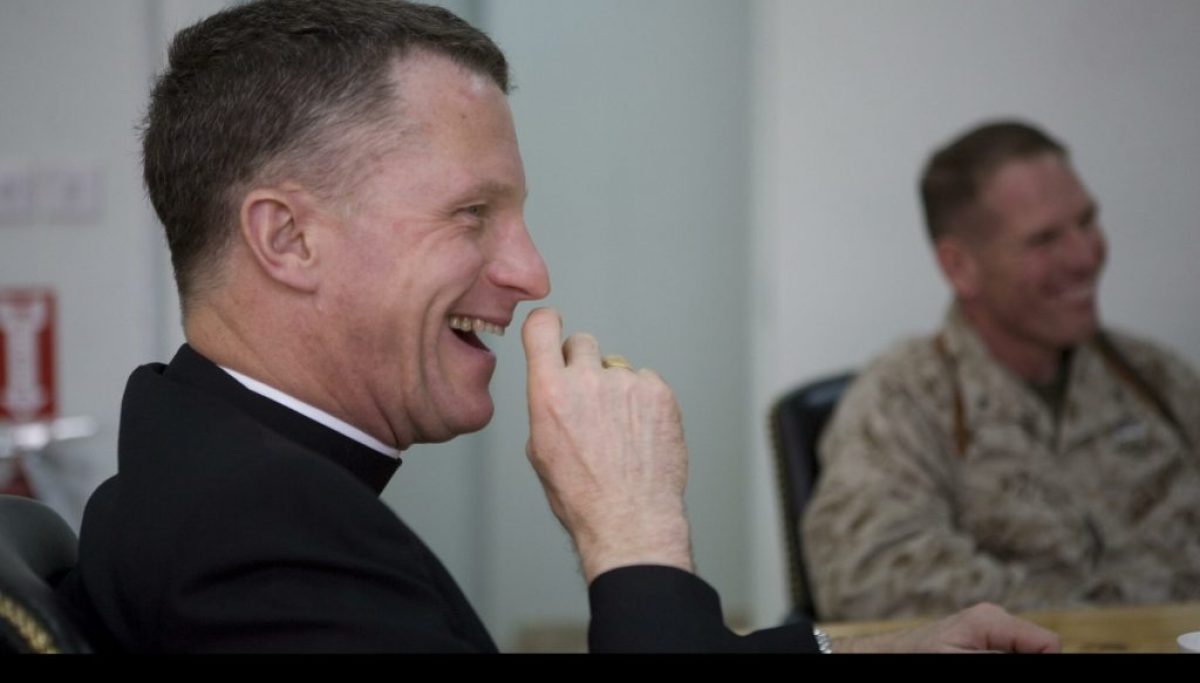
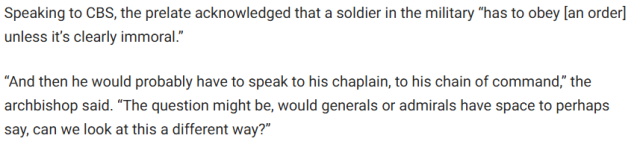
This tidbit from a Catholic media outlet dealing with same Archbishop interview jumped out at me in light of recent changes to how U.S. military chaplains are supposed to chaplain:
1775322246814.png
More takes from the same interview (left-ish & right-ish outlets) ...
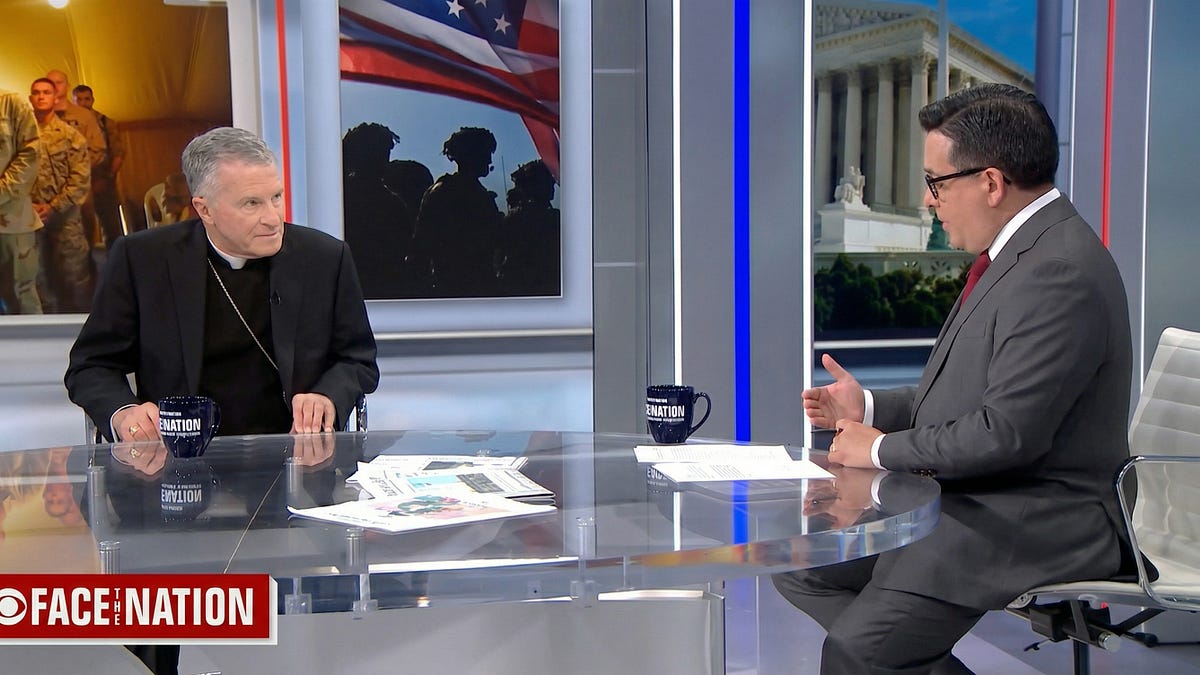
... with the 9-ish interview itself on YT to get the whole context:
 
Last edited:
I suggest we will probably never know. We can slag different Govs all we want but I think some humble pie is required in that we don't have sweet clue about what game of chess is actually afoot. And perhaps some politicians don't either.

But I think it has shown two things:

(1) China imports too much energy, I expect they will work fix that; and

(2) The straights of Taiwan would be a ship graveyard in a shooting war. Drones, drones drones.
and the only way to get large numbers of troops and equipment across that strait is by boat. Taiwan, I suspect, has founded any number of drone schools and kitchen factories. Ukraine developed a significant industry in just a couple of years are there any bets that there are either Ukrainians in Taiwan or visa versa.
 
America's not as independent of Gulf oil as claimed, which accounts for the tone of desperation coming out of the White House


Trump and the Myth of American Oil Independence​

The president says the U.S. can walk away from the Strait of Hormuz. The global market says otherwise.


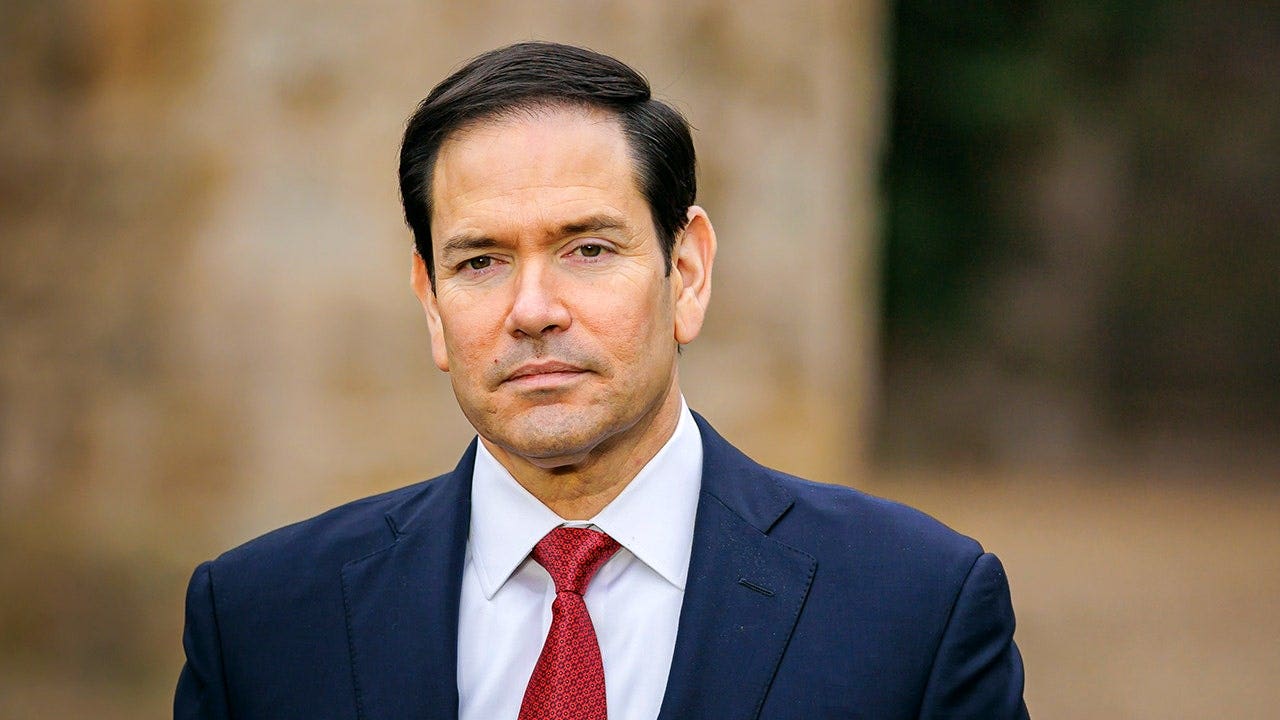
When President Donald Trump announced Wednesday that he’s winding down the U.S. war on Iran and washing his hands of the embattled Strait of Hormuz, he invoked what he likes to call America’s “energy dominance”: The United States has become the biggest oil producer in the world, and no longer needs to secure the Persian Gulf by force.

“The United States imports almost no oil through the Hormuz Strait and won’t be taking any in the future,” he declared. “We don’t need it.”


That’s news to the oil and gas industry. Trump is right: The flow of oil from the Persian Gulf to the U.S. is far less than it used to be. But no matter what he says, the industry is keenly aware of how important that oil still is. That’s why CEOs have been pleading with Trump for weeks to end Iran’s stranglehold on the Strait, which remains vital to the global market in which they operate.


And it’s another reason why it’s time to add Big Oil and national security to the list of longstanding political and economic dynamics that Trump has successfully thrown into chaos.

The dizzying effects of the Iran war actually seem to be ending a long period during which growing oil and gas production at home meant U.S. political leaders felt they could worry less about the energy-related risks of U.S. military interventions — and energy executives didn’t have to fret about U.S. foreign policy as a major risk to their business.

Instead, Trump’s war in Iran — not to mention his nominal takeover of Venezuela — has brought energy and foreign policy crashing back together, in unpredictable ways. And energy executives are indeed fretting.


Or so ....

The soldiers are certainly responsible for the "how" of war (jus in bello), but the buck stops at the political masters re: why (jus ad bellum).
To be pedantic, a soldier has to obey an order not manifestly unlawful. Domestic and international law codify what parts of "immoral" are "unlawful".

It's common for anti-war advocates to try to squeeze "immoral war" into there, but it doesn't fit. Nor should it. The (improbable) assumption is that doing so would undercut warfighting. One of my fundamental assumptions is that if LOAC makes warfighting absurdly difficult for those who mostly try to comply, parts of LOAC will be jettisoned, not war. Baser emotions will override reason. So, for example, if Iran's government continues to indefinitely turtle and destroy infrastructure of neighbours who are only barely involved, I'd be OK with relaxing the restraints on military necessity and going medieval on much of Iran's infrastructure, particularly industry and transportation (exclusions would still include, for example, public health: water, sewer).

I don't get fussed about unjust war. Back when I was more engaged with the profession of arms, I used to read some of the periodicals. Some of the stuff in periodicals seemed to originate as essays by people on staff courses (and if you know/knew where to look, lots of essays and theses are/were on-line). One of the common topics is "Was such-and-such a war just/unjust?" Almost without exception, an aggressor is fighting an unjust war by one or more of the traditional criteria (typically five to seven of them): cause, intent (sometimes collapsed into cause), authority, proportion, last resort, aims (including restoration of peace) declared openly (sometimes collapsed into proportion/cause/intent), reasonable prospect of success (sometimes collapsed into proportion).

Almost any war can be characterized as unjust on the part of the aggressor by focusing on "proportion" and "last resort". "Authority" is a gimme, and "cause" is often easy enough to manufacture.

Conversely, a defender's war is difficult to characterize as unjust, but cases can be made by focusing on "intent" and "proportion" (including "hopeless cause").

[Edited for at least a couple of grammatical errors.]
 
As for whether MANPADs were involved yesterday, todays claim. They do have several domestically made systems.


Meanwhile, United24 is making public some alleged classified Russian documents they've gotten a hold of.

 
Back in the U.S., guess whose green cards are being pulled?
 
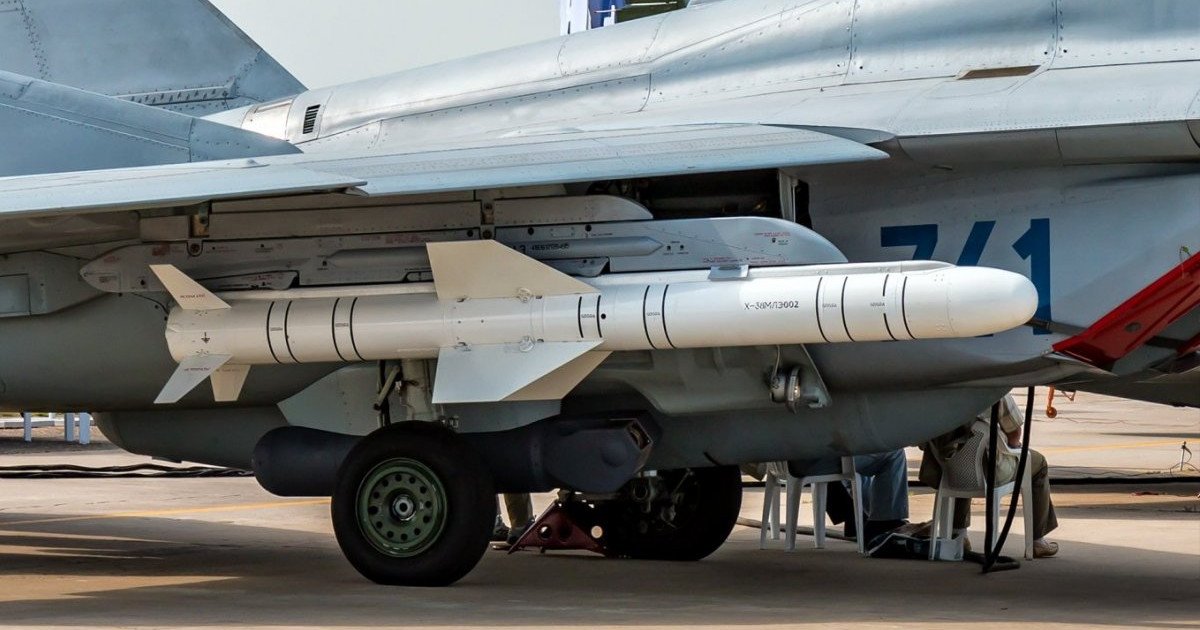
Reports that the US is going to be dedicating the majority of their JASSM-ER's to Iran, including those from it's Pacific stockpiles.

Does the US believe Iran now/still has the AD capability to necessitate this move? Or are overall missile stocks just that dangerously low that they have to dip into them?

These especially will take a while to build back up again.

Going to be very hard to fight China if they get any ideas.

US Deploys Bulk of Stealthy Long-Range Missile for Iran War
Archive

After the moves, only about 425 JASSM-ER out of a prewar inventory of 2,300 will remain available for the rest of the globe. That would be roughly enough for 17 B-1B bombers on a single mission. Another 75 or so are “unserviceable” because of damage or technical faults.

EDIT: A thought just occurred. Is it possible Hegseth may be overriding weaponeering recommendations and personally picking which systems to use?
 
Last edited:
Back
Top