


- Reaction score
- 35
- Points
- 560
Life at 60 for the Commonwealth, Monday, 9 March 2009
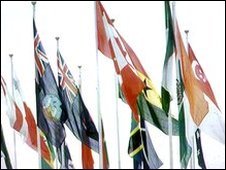
It is quite an achievement for the Commonwealth to have survived to the age of 60.
It has been through three phases. The first was an over-ambitious attempt to subtly
continue the British Empire by other means. The second saw it torn apart by divisions,
often over white rule in southern Africa, and was also marked by coups and chaos in
many member states.
It wasn't until the third phase that it emerged into what it is today - a middle-ranking,
reasonably useful organisation with a formal commitment to democracy and good
governance and able to bring an influence to bear on regional problems within its orbit.
This is its perhaps suitably modest mission statement: "Fifty-three independent states
consulting and co-operating in the common interests of their peoples and in the promotion
of international understanding."
It is interesting to note that this statement, taken from the Singapore Declaration in 1971,
leaves out key words from the original. The original referred to "independent sovereign
states, each responsible for its own policies".
The modified language represents an important change in Commonwealth (and indeed UN)
thinking about non-intervention. This was an important part of phase three.
Phase one - the Empire strikes back
You can see the first ambitions for the Commonwealth in the speech made by the then
Princess Elizabeth on her 21st birthday, delivered in Cape Town where her family was
taking a post-war holiday in the winter of 1947.
The speech was admired mainly for the personal commitment given by the 21-year-old
heir to the throne. However, the language of her speech is distinctly imperial. She
referred to "all peoples of the British Commonwealth and Empire" and to her "father's
subjects". She even proposed a post-war agenda, saying: "The British Empire has saved
the world first and has now to save itself." She said: "We shall be able to make of this
ancient Commonwealth which we all love so dearly an even grander thing."
In fact the Commonwealth was by no means "ancient"; this is a reference to the Empire.
The service to which she dedicated herself was the service of "our great imperial family
to which we all belong".
In those days, the Commonwealth's greatest success was probably in getting India to join.
It signalled that post-imperial nations still saw a value in keeping ties to the "mother
country", which itself was changing rapidly.
India was a republic, but deft diplomacy got round that one by declaring that the Queen
was simply "head of the Commonwealth" and she is still recognised as such. This is a
personal title, though, and it remains to be seen if her successor will be asked to take it
on as well. But even then there were signs that this new world grouping might not in fact
deliver.
The Irish left as soon as they could and as the years went by, several important countries
of the former Empire did not join as they became independent - Burma and Sudan among
them, both countries where the Commonwealth's influence might have been put to use
today.
The Gulf states that had been under British tutelage stayed out and the club became largely
English-speaking and British-dominated.
Phase Two - coups and chaos
The worst period for the Commonwealth came in the 60s, 70s and 80s. Commonwealth
conferences became notorious for the coups that threatened heads of state while they
were unwisely away.
One correspondent was reputed to have informed a head of state that he was no longer
in power. Because the principle then was that nobody should interfere in anyone else's
affairs, there was no accountability for behaviour. But it was minority white rule in
Rhodesia and South Africa over which the Commonwealth nearly fell apart.
Much of the wrath was turned on Britain, which was seen as doing too little. When Ian
Smith and his whites-only government in Rhodesia declared unilateral independence
(no black majority rule ever, "not in a thousand years", he declared), many African
countries felt that Britain should invade.
A conference in Lagos in 1966 was a bitter one. An African group called for intervention.
Some members kept their distance from this shambles. New Zealand sent a diplomat,
not its prime minister, and Australia sent only an observer. British Prime Minister Harold
Wilson called it a "nightmare conference, by common consent the worst ever held".
Somehow the Commonwealth survived. Britain accepted that majority rule would be a
condition for recognising Rhodesian independence and tempers calmed.
At the same time British priorities were themselves changing. In 1973, it joined the then
European Common Market, a decisive shift away from days of empire. The Commonwealth
went down another notch.
It was shaken again by attitudes towards apartheid. South Africa had left the Commonwealth
in 1961, in a case of jumping before being pushed. And again, Britain was in the dock. In
particular, the accused was the Conservative Prime Minister Margaret Thatcher, who opposed
sanctions.
I saw all this at a conference in Vancouver in 1987. Mrs Thatcher seemed to revel in her minority
position. She allowed two of her senior officials to counter-attack the Canadian hosts by pointing
out to the press that Canadian trade with South Africa was actually rising.
The Canadians were more than angry - they were hurt. "They can give it but they can't take it,"
Mrs Thatcher responded. She then attacked the African National Congress, which led the fight
against apartheid. Asked about a threat an ANC spokesman had made against British interests
in South Africa, she declared that this was the attitude of a "typical terrorist organisation".
It was not a happy conference. For good measure, Fiji was expelled after a coup there (it came
back but is currently in suspension over another coup).
Phase Three - recovery
At around this time there was a general acceptance that the Commonwealth itself had to change.
The most significant moment came in 1991 with the adoption of the Harare Declaration. This
emphasised the need for "free and democratic political processes", a shift away from the old idea
of sovereign states setting their own policies.
And the declaration did not repeat a phrase in the Singapore Declaration about "rejecting coercion
as an instrument of policy", showing that the business of one now was the business of all.
The Millbrook agreement in New Zealand in 1995 allows the Commonwealth to intervene
diplomatically if democracy in a member state is undermined or abandoned, with the sanction
of suspension from Commonwealth meetings. A group of foreign ministers was set up to
monitor the actions of member states.
This shift enabled the Commonwealth to settle into a new role. It even gained new members
from outside the old empire. Portuguese-speaking Mozambique, attracted by the way in which
the Commonwealth had acted against South Africa, joined in 1995. Partly French-speaking
Cameroon also joined in 1995.
And former members keep on coming back. South Africa rejoined in 1991, with warm words
for the Commonwealth from Nelson Mandela which did wonders for the organisation.
Pakistan, which left in 1972, came back in 1989 (though it has been suspended twice since then).
Nigeria was suspended after executing an activist in 1995, but also returned, in 1999.
Fun and games
Membership has always been valuable for the very smallest countries, of which there are many,
some of them island states. They feel they have a voice in the world.
No Commonwealth conference goes by without the Maldives warning that its very future would be
threatened by a rise in sea levels. The Commonwealth also carries out useful aid work and training.
The Commonwealth Games are fun.
But, of course, the Commonwealth's power is slight and its influence is limited. It has been able
to do nothing about Zimbabwe, which left in 2003 after being suspended the previous year. Conflicts
in and between its member states continue. Some are disappointed that it has not been more active
over the civil war in Sri Lanka.
No doubt there will have to be some rethinking at the end of the Queen's reign.
Maybe there will be no invitation to a King Charles to assume his mother's title as Head of the
Commonwealth. She has a personal status that is unique. When she was giving a dinner on board
Britannia in Malaysia in 1989, Kenneth Kaunda, the president of Zambia, called her the "mother
figure". Even Robert Mugabe beamed from his place at the table.
And if there is no British royal at the top of it all, it will be a long way from the "imperial family"
that the Queen spoke of in her youth.
[email protected]
It is quite an achievement for the Commonwealth to have survived to the age of 60.
It has been through three phases. The first was an over-ambitious attempt to subtly
continue the British Empire by other means. The second saw it torn apart by divisions,
often over white rule in southern Africa, and was also marked by coups and chaos in
many member states.
It wasn't until the third phase that it emerged into what it is today - a middle-ranking,
reasonably useful organisation with a formal commitment to democracy and good
governance and able to bring an influence to bear on regional problems within its orbit.
This is its perhaps suitably modest mission statement: "Fifty-three independent states
consulting and co-operating in the common interests of their peoples and in the promotion
of international understanding."
It is interesting to note that this statement, taken from the Singapore Declaration in 1971,
leaves out key words from the original. The original referred to "independent sovereign
states, each responsible for its own policies".
The modified language represents an important change in Commonwealth (and indeed UN)
thinking about non-intervention. This was an important part of phase three.
Phase one - the Empire strikes back
You can see the first ambitions for the Commonwealth in the speech made by the then
Princess Elizabeth on her 21st birthday, delivered in Cape Town where her family was
taking a post-war holiday in the winter of 1947.
The speech was admired mainly for the personal commitment given by the 21-year-old
heir to the throne. However, the language of her speech is distinctly imperial. She
referred to "all peoples of the British Commonwealth and Empire" and to her "father's
subjects". She even proposed a post-war agenda, saying: "The British Empire has saved
the world first and has now to save itself." She said: "We shall be able to make of this
ancient Commonwealth which we all love so dearly an even grander thing."
In fact the Commonwealth was by no means "ancient"; this is a reference to the Empire.
The service to which she dedicated herself was the service of "our great imperial family
to which we all belong".
In those days, the Commonwealth's greatest success was probably in getting India to join.
It signalled that post-imperial nations still saw a value in keeping ties to the "mother
country", which itself was changing rapidly.
India was a republic, but deft diplomacy got round that one by declaring that the Queen
was simply "head of the Commonwealth" and she is still recognised as such. This is a
personal title, though, and it remains to be seen if her successor will be asked to take it
on as well. But even then there were signs that this new world grouping might not in fact
deliver.
The Irish left as soon as they could and as the years went by, several important countries
of the former Empire did not join as they became independent - Burma and Sudan among
them, both countries where the Commonwealth's influence might have been put to use
today.
The Gulf states that had been under British tutelage stayed out and the club became largely
English-speaking and British-dominated.
Phase Two - coups and chaos
The worst period for the Commonwealth came in the 60s, 70s and 80s. Commonwealth
conferences became notorious for the coups that threatened heads of state while they
were unwisely away.
One correspondent was reputed to have informed a head of state that he was no longer
in power. Because the principle then was that nobody should interfere in anyone else's
affairs, there was no accountability for behaviour. But it was minority white rule in
Rhodesia and South Africa over which the Commonwealth nearly fell apart.
Much of the wrath was turned on Britain, which was seen as doing too little. When Ian
Smith and his whites-only government in Rhodesia declared unilateral independence
(no black majority rule ever, "not in a thousand years", he declared), many African
countries felt that Britain should invade.
A conference in Lagos in 1966 was a bitter one. An African group called for intervention.
Some members kept their distance from this shambles. New Zealand sent a diplomat,
not its prime minister, and Australia sent only an observer. British Prime Minister Harold
Wilson called it a "nightmare conference, by common consent the worst ever held".
Somehow the Commonwealth survived. Britain accepted that majority rule would be a
condition for recognising Rhodesian independence and tempers calmed.
At the same time British priorities were themselves changing. In 1973, it joined the then
European Common Market, a decisive shift away from days of empire. The Commonwealth
went down another notch.
It was shaken again by attitudes towards apartheid. South Africa had left the Commonwealth
in 1961, in a case of jumping before being pushed. And again, Britain was in the dock. In
particular, the accused was the Conservative Prime Minister Margaret Thatcher, who opposed
sanctions.
I saw all this at a conference in Vancouver in 1987. Mrs Thatcher seemed to revel in her minority
position. She allowed two of her senior officials to counter-attack the Canadian hosts by pointing
out to the press that Canadian trade with South Africa was actually rising.
The Canadians were more than angry - they were hurt. "They can give it but they can't take it,"
Mrs Thatcher responded. She then attacked the African National Congress, which led the fight
against apartheid. Asked about a threat an ANC spokesman had made against British interests
in South Africa, she declared that this was the attitude of a "typical terrorist organisation".
It was not a happy conference. For good measure, Fiji was expelled after a coup there (it came
back but is currently in suspension over another coup).
Phase Three - recovery
At around this time there was a general acceptance that the Commonwealth itself had to change.
The most significant moment came in 1991 with the adoption of the Harare Declaration. This
emphasised the need for "free and democratic political processes", a shift away from the old idea
of sovereign states setting their own policies.
And the declaration did not repeat a phrase in the Singapore Declaration about "rejecting coercion
as an instrument of policy", showing that the business of one now was the business of all.
The Millbrook agreement in New Zealand in 1995 allows the Commonwealth to intervene
diplomatically if democracy in a member state is undermined or abandoned, with the sanction
of suspension from Commonwealth meetings. A group of foreign ministers was set up to
monitor the actions of member states.
This shift enabled the Commonwealth to settle into a new role. It even gained new members
from outside the old empire. Portuguese-speaking Mozambique, attracted by the way in which
the Commonwealth had acted against South Africa, joined in 1995. Partly French-speaking
Cameroon also joined in 1995.
And former members keep on coming back. South Africa rejoined in 1991, with warm words
for the Commonwealth from Nelson Mandela which did wonders for the organisation.
Pakistan, which left in 1972, came back in 1989 (though it has been suspended twice since then).
Nigeria was suspended after executing an activist in 1995, but also returned, in 1999.
Fun and games
Membership has always been valuable for the very smallest countries, of which there are many,
some of them island states. They feel they have a voice in the world.
No Commonwealth conference goes by without the Maldives warning that its very future would be
threatened by a rise in sea levels. The Commonwealth also carries out useful aid work and training.
The Commonwealth Games are fun.
But, of course, the Commonwealth's power is slight and its influence is limited. It has been able
to do nothing about Zimbabwe, which left in 2003 after being suspended the previous year. Conflicts
in and between its member states continue. Some are disappointed that it has not been more active
over the civil war in Sri Lanka.
No doubt there will have to be some rethinking at the end of the Queen's reign.
Maybe there will be no invitation to a King Charles to assume his mother's title as Head of the
Commonwealth. She has a personal status that is unique. When she was giving a dinner on board
Britannia in Malaysia in 1989, Kenneth Kaunda, the president of Zambia, called her the "mother
figure". Even Robert Mugabe beamed from his place at the table.
And if there is no British royal at the top of it all, it will be a long way from the "imperial family"
that the Queen spoke of in her youth.
[email protected]


