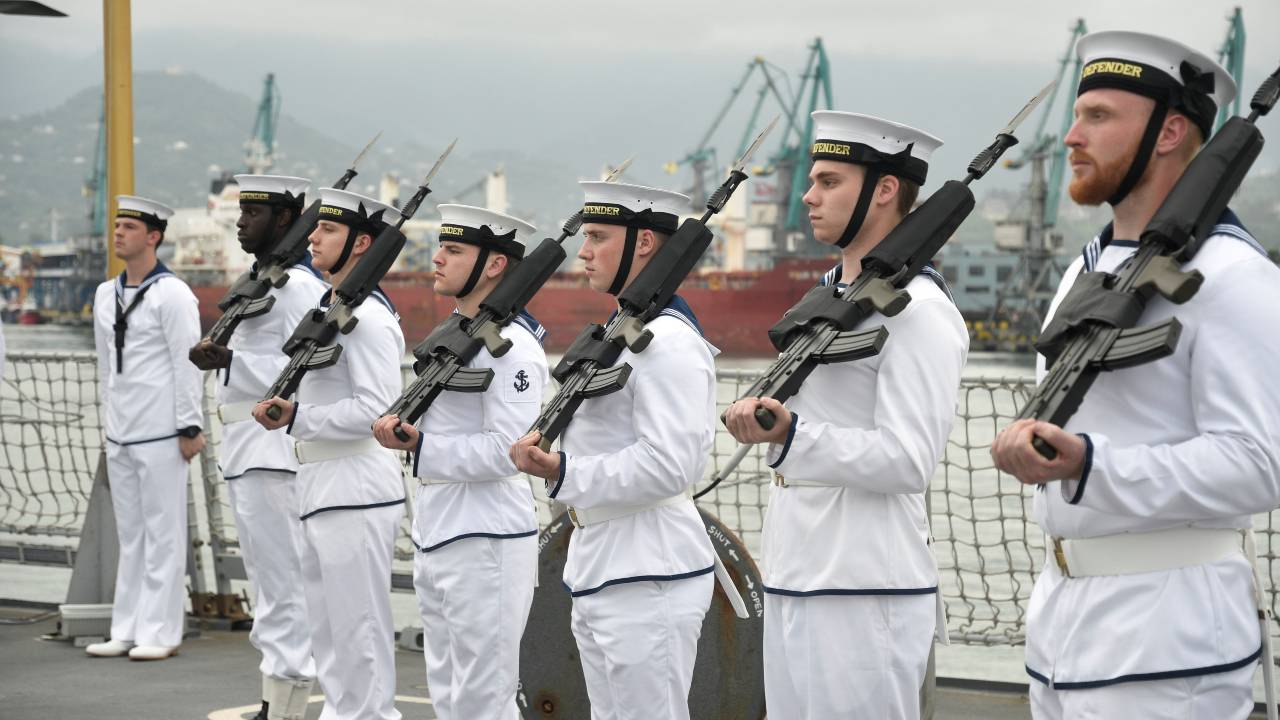
Bad policy, erroneous assumptions, and decades of neglect all catching up with them... at least they can blame the First Bootneck Sea Lord

The Royal Navy: On Course for National Embarrassment
The UK has accepted it no longer rules the waves, but the dismal condition of its fleet has caused national shock. Can it change?
Whereas the Admiralty was primarily concerned with maintaining the balance of naval power to ensure stability and maintain British influence and trade, and NATO was primarily concerned with the balance of forces to deter the Soviet Union, successive British defense reviews have largely considered American military power and the NATO alliance as guarantors of national security, to which Britain need contribute little beyond its nuclear deterrent.
Politicians, meanwhile, attempted to reshape maritime capabilities to deliver short-term political priorities to counter terrorism, support humanitarian intervention, and promote concepts like “
Global Britain” in the early 2020s. During the 21st century, this questioning has deepened as non-state Islamic terrorism emerged as the primary threat, and “defense” was recast as “security” (and the defense reviews became defense and security reviews), removing the last vestigial sense that, beyond the nuclear deterrent, the balance of hard power was of any importance whatsoever in securing the nation.
The results have been catastrophic for the Royal Navy’s ability to generate meaningful conventional power. The navy has been pared back to the ability to generate just enough fighting ships to deliver and protect the nuclear deterrent and generate an occasional (every three to four years) carrier strike group to support US foreign policy objectives. Beyond that, the Royal Navy and Royal Marines only have the capability to support small-scale policing or counter-terrorism operations and patrol the UK and overseas territory coastal waters.
In the MoD, money has flowed everywhere except into hard naval power. Into capabilities to support counter-terrorism, counter-insurgency, support humanitarian intervention, and train and mentor allies, and develop the policies and strategies to support these initiatives, but not into building and operating the fleets of fighting ships needed to ensure the strategic balance of power operates in Britain’s favor along the trade routes it needs to secure its economic and political future.
The UK has accepted it no longer rules the waves, but the dismal condition of the Royal Navy has caused national shock. Can it change?

cepa.org