

You are using an out of date browser. It may not display this or other websites correctly.
You should upgrade or use an alternative browser.
You should upgrade or use an alternative browser.
Paid off vs Decommissioning split -HMCS Fraser looking for interested volunteers
- Thread starter tabernac
- Start date

- Reaction score
- 1
- Points
- 360
geo said:Tomato / Tamato
Rifle/gun?

George Wallace
Army.ca Dinosaur
- Reaction score
- 254
- Points
- 910

- Reaction score
- 15
- Points
- 430
N. McKay said:Rifle/gun?
Ship/boat?

- Reaction score
- 28,499
- Points
- 1,360
Frankly, as a naval 'outie' (not inside the 'inner circle' of service at sea) but having banged around RCNC (Road's) parade square to Heart of Oak a few times and still calling things by strange names (heads=latrine, wall=bulkhead, deck=floor, pusser=good), I find myself surprised that people would argue for what I see as the less respectful term of "paid-off" (oh, the crew got their last pay....from the days when they were paid aboard their ship -- like swome kind of admin detail..."oh, by the way...") vs decommissioned (in my mind, a formal, fitting procedure to respectfully withdraw a warship from its Commission to serve).
I only see the term paid-off in jargon, while the RN still formally Decommissions its ships and boats - ex. HMS Repulse Decommissioned.
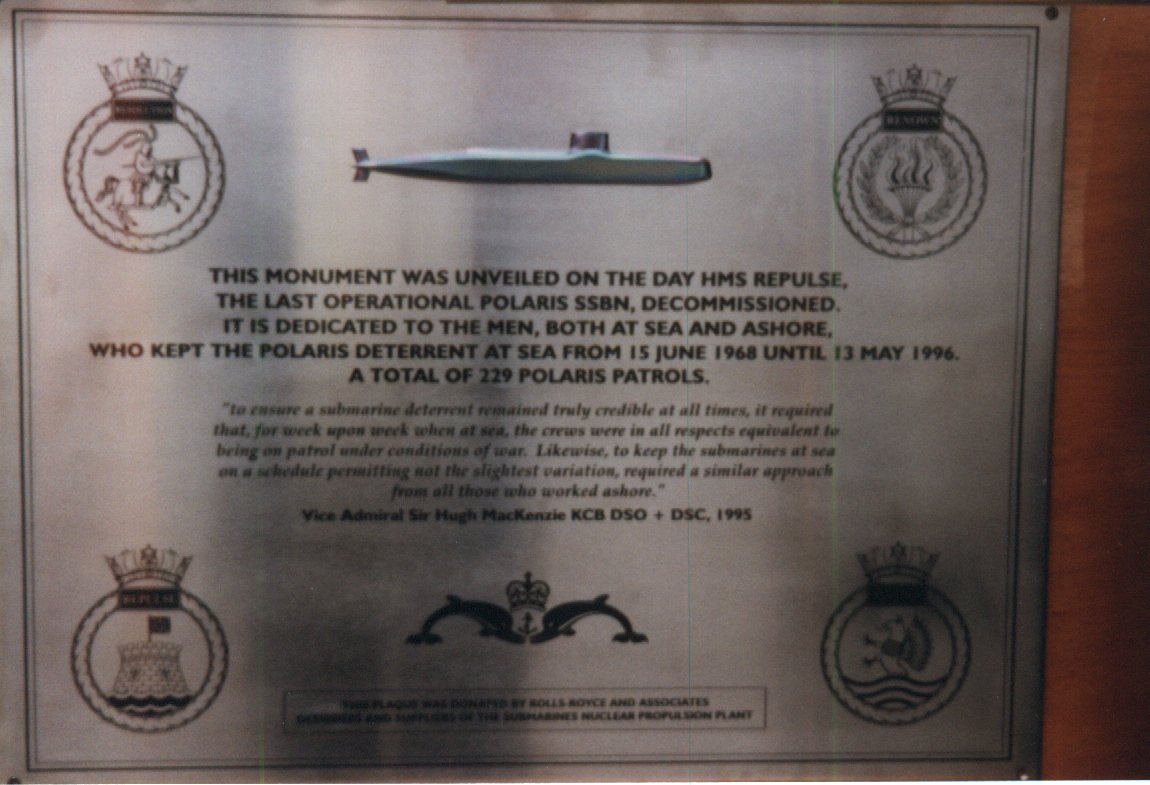
I only see the term paid-off in jargon, while the RN still formally Decommissions its ships and boats - ex. HMS Repulse Decommissioned.

- Reaction score
- 195
- Points
- 830
Good2Golf said:Frankly, as a naval 'outie' (not inside the 'inner circle' of service at sea) but having banged around RCNC (Road's) parade square to Heart of Oak a few times and still calling things by strange names (heads=latrine, wall=bulkhead, deck=floor, pusser=good), I find myself surprised that people would argue for what I see as the less respectful term of "paid-off" (oh, the crew got their last pay....from the days when they were paid aboard their ship -- like swome kind of admin detail..."oh, by the way...") vs decommissioned (in my mind, a formal, fitting procedure to respectfully withdraw a warship from its Commission to serve).
I only see the term paid-off in jargon, while the RN still formally Decommissions its ships and boats - ex. HMS Repulse Decommissioned.
umm... picture is broken?
George Wallace
Army.ca Dinosaur
- Reaction score
- 254
- Points
- 910
NFLD Sapper said:umm... picture is broken?
ummm!..........whole discusion is broken. ;D
- Reaction score
- 28,499
- Points
- 1,360
NFLD Sapper said:umm... picture is broken?
Hmmm...I can still see it. It should look like:
- Reaction score
- 1
- Points
- 360
Michael O`Leary said:Ship/boat?
Another excellent example.
George Wallace said:ummm!..........whole discusion is broken. ;D
Don't have to play if you don't want to!

- Reaction score
- 0
- Points
- 210
Dolphin_Hunter said:Its a Navy thing, I noticed some like to get worked up over certain terms. I would say things to intentionally get certain people going.
"I am going downstairs" would always ensure a lecture about proper naval terms.
Decommissioned vs Paid Off.... Who gives a damn?
Its not just a Navy thing, the CF as a whole is particular about its terms, though I think the Navy is much more anal about it. However, I happen to like that fact. Part of the military experience, to me anyway, is the culture, tradition, ect... And although from a practical standpoint the terminology probably does not mean much and a "who gives a damn"? could be a perfectly legitimate question, from a sentimental standpoint it DOES mean something to the sailors, and I happen to like that. Culture, language and society will undoubtedly change over time, but it is still nice to see other things stay the same, "just because"...
- Reaction score
- 1
- Points
- 360
ltmaverick25 said:Part of the military experience, to me anyway, is the culture, tradition, ect... And although from a practical standpoint the terminology probably does not mean much and a "who gives a damn"? could be a perfectly legitimate question, from a sentimental standpoint it DOES mean something to the sailors, and I happen to like that. Culture, language and society will undoubtedly change over time, but it is still nice to see other things stay the same, "just because"...
That's it exactly. Whether we say "paid off" or "decommissioned", or "deck" or "floor", won't affect whether a missile hits or misses an opposing ship. But it does contribute to the culture of the Service, without which we would eventually become nothing more than uniformed civil servants. There's nothing wrong with uniformed civil servants (e.g. the Coast Guard or the post office), but I think we all want to be something more than that. Every grain of sand that we take away from the pile makes the pile a little bit smaller, even if it's not obvious after each grain.
- Reaction score
- 28,499
- Points
- 1,360
N. McKay said:That's it exactly. Whether we say "paid off" or "decommissioned", or "deck" or "floor", won't affect whether a missile hits or misses an opposing ship. But it does contribute to the culture of the Service, without which we would eventually become nothing more than uniformed civil servants. There's nothing wrong with uniformed civil servants (e.g. the Coast Guard or the post office), but I think we all want to be something more than that. Every grain of sand that we take away from the pile makes the pile a little bit smaller, even if it's not obvious after each grain.
 I can't believe you just used the Coast Guard as an "example" of a uniformed civil servant!
 I know several mariners in the Coast Guard, all living and breathing the sea they work on, and you do them a grave diservice with that statement/attitude. No mutual respect for other seafarers apparently...
Shame!
- Reaction score
- 1
- Points
- 360
Good2Golf said:
I know several mariners in the Coast Guard, all living and breathing the sea they work on, and you do them a grave diservice with that statement/attitude. No mutual respect for other seafarers apparently...
Shame!
How on earth is that disrespectful? They are civil servants, just like most other government employees. Are you reading a negative connotation into the term "civil servant"? I can assure you that none was intended. In fact, in my day job I'm a provincial civil servant.
I have all the respect in the world for the Coast Guard; in fact, I came within a heartbeat of joining a couple of years ago.
- Reaction score
- 28,499
- Points
- 1,360
For as much as you speak about traditions of the mariner, you then equate a Coast Guard sailor to merely a "uniformed civil servant", like a postal worker. Pointed a Coast Guardsman friend to this post and he noted his appreciation that he and his fellow sailors were spared "by a heartbeat" of having someone with your lack of appreciation the Guard as the Nation's maritime responders and protectors. While you're at it, shouldn't you also include soldiers, sailors and airmen and airwomen as uniformed civil servants...pay's linked with PSAC equivalencies, we all take statutory holidays (when not on duty) like civil servants. I thought that perhaps it was me being overly sensitive and insulted until my friend told me that it wasn't just me. Whether you intended to or not, you did insult the Guard, or at least a few of its sailors.
- Reaction score
- 1
- Points
- 360
Good2Golf said:For as much as you speak about traditions of the mariner, you then equate a Coast Guard sailor to merely a "uniformed civil servant", like a postal worker.
Most of the people who work for the government are called civil servants. By convention, military members are not. In Canada it may be that the RCMP are also not, but the Coast Guard definitely are. That's not me using a term to express a particular slanted meaning, it's simply what they are. You seem to see some kind of derogatory meaning in that, but there isn't any.
Pointed a Coast Guardsman friend to this post and he noted his appreciation that he and his fellow sailors were spared "by a heartbeat" of having someone with your lack of appreciation the Guard as the Nation's maritime responders and protectors.
Your friend isn't in any position to pronounce on my opinion of the Coast Guard's role based on a few lines of text on a computer screen.
While you're at it, shouldn't you also include soldiers, sailors and airmen and airwomen as uniformed civil servants...pay's linked with PSAC equivalencies, we all take statutory holidays (when not on duty) like civil servants.
To expand on the exclusion of military members from the civil service, I note that CF members are subject to a very different legislative framework from the civil service. Coast Guard members are subject to the same framework as the rest of the civil service. The Coast Guard itself has publicly emphasized that it is not a military or para-military service.
None of that takes away from the role of the Coast Guard in maintaining the safety of the waterways, nor the much riskier nature of their jobs. The iciest sidewalks and the most aggressive dogs in the land do not compare to the dangers of the sea, and I certainly realize that the Postie sleeps in his own -- stationary! -- bed every night while the Coast Guardsman is at sea continuously for four to six weeks at a time, living with all that implies.
But they are not the navy, and do not have the same cultural and legal overhead that the armed forces do. They are civilians, and government employees, and in most of the English-speaking world that's what a civil servant is.
I thought that perhaps it was me being overly sensitive and insulted until my friend told me that it wasn't just me. Whether you intended to or not, you did insult the Guard, or at least a few of its sailors.
The only people I could reasonably have insulted are ones who feel that there is something wrong with being a civil servant or who find the term in some way degrading, and those who have badly misunderstood my intention. I can't do anything for the former, but I hope I've clarified my comments enough to satisfy the latter.
- Reaction score
- 0
- Points
- 210
I dont really see what all the fuss is about. It is entirely possible to have a deep pride in your respective profession at arms without it having to be derogatory to all else. I agree with N.McKay on a personal level. I am looking for something more then a career in civil service (ive considered civil service jobs at length) and certainly want something more then a civilian job in the business world. That is not a slant on any of the former, it is a personal choice and beleif of mine. I beleif that by being a part of the Canadian Navy, I am a part of a long and proud tradition. It is something completely different and unique from any other job in the country and I like it, even if that means some of my peers with argue with each other until dawn over terminology ;D

- Reaction score
- 0
- Points
- 210
I wish I could just let things go, but I can't
When they start paying us for over time at sea like they do for the Coast Guard, or even letting us bank the overtime and returning home early like the Coast Guard, then maybe our pay would be equivalent. When we get called out on a search with the Coast Guard and they get overtime pay because it's after their working hours and all we get is a Bravo Zolo, it shows who is the civil servant. And then there's the "let go on strike to get more benifits" that we in the Armed Services can't do.
shouldn't you also include soldiers, sailors and airmen and airwomen as uniformed civil servants...pay's linked with PSAC equivalencies
When they start paying us for over time at sea like they do for the Coast Guard, or even letting us bank the overtime and returning home early like the Coast Guard, then maybe our pay would be equivalent. When we get called out on a search with the Coast Guard and they get overtime pay because it's after their working hours and all we get is a Bravo Zolo, it shows who is the civil servant. And then there's the "let go on strike to get more benifits" that we in the Armed Services can't do.

CountDC
Army.ca Veteran
- Reaction score
- 704
- Points
- 1,090
Harley Sailor said:I wish I could just let things go, but I can't
When they start paying us for over time at sea like they do for the Coast Guard, or even letting us bank the overtime and returning home early like the Coast Guard, then maybe our pay would be equivalent. When we get called out on a search with the Coast Guard and they get overtime pay because it's after their working hours and all we get is a Bravo Zolo, it shows who is the civil servant. And then there's the "let go on strike to get more benifits" that we in the Armed Services can't do.
Nor can I - We in the Armed Services do not need to go on strike and lose our regular pay cheque - the civil servants (PSAC) do it for us. Every thing they get is taken into account when our benefits and pay are calculated. That is why some members of the military will bring timmies to the strikers, Shearwater used to have a bunch that changed into civvie dress and walked the line with them on their lunch hour, and I always encourage them to fight for as much as they can get >
 .
.As for overtime - that is already included in our pay rates, one of the reasons we get more than our civilian counterparts (although I do question the comparatives sometimes).
How about Sea Pay without sailing? (not that I am complaining - was quite happy to take it)
As a side - if you want to calculate out your hourly rate of pay for comparing to your counterparts:
monthly pay rate *12 = yearly pay
yearly pay / 365 = daily pay (if you are reserve and want to see how accurate your daily pay compares take this # and multiply by .85)
daily pay / 7.5 = hourly pay. (learned when working at CE - TB considers our pay based on a 5 day, 7.5 hour daily work week, at least in 2000/2001 they did.)
- Reaction score
- 0
- Points
- 210
I still dont understand why we are having a pissing contest between the Navy and the Coast Guard... We arent comparing apples to apples here. One force is a military force that trains for fighting wars, among other things. The other is indeed a uniformed civil servant (no slight intended here) with a totally different mandate. After talking to one of my Coast Guard friends I have surmised that the only thing we have in common is the country we serve and the fact that we sail, everything else is different. Why is this even an issue anyway? We were talking about commissioning/paid off and Navy culture..

- Reaction score
- 0
- Points
- 210
I haven't been paying attention to the thread so it may be old news to some that DND has taken control of HMCS Fraser. What will happen to her is still unknown. One of the reasons that it was given back was the state of the vessel and the costs involved in maintaining her.
Similar threads


- Replies
- 4
- Views
- 9K


J
- Replies
- 2
- Views
- 9K

- Replies
- 4
- Views
- 11K

