• Thanks for stopping by. Logging in to a registered account will remove all generic ads. Please reach out with any questions or concerns.

Pipelines, energy and natural resources

  • Thread starter Thread starter QV
  • Start date Start date
More LNG news

Good news for Europe. Bad news for producers.
Increased supply = decreased prices.


Competitive Industrial America's back, and it's going to get uncomfortable for alot of (uncompetitive and far too comfortable) people...


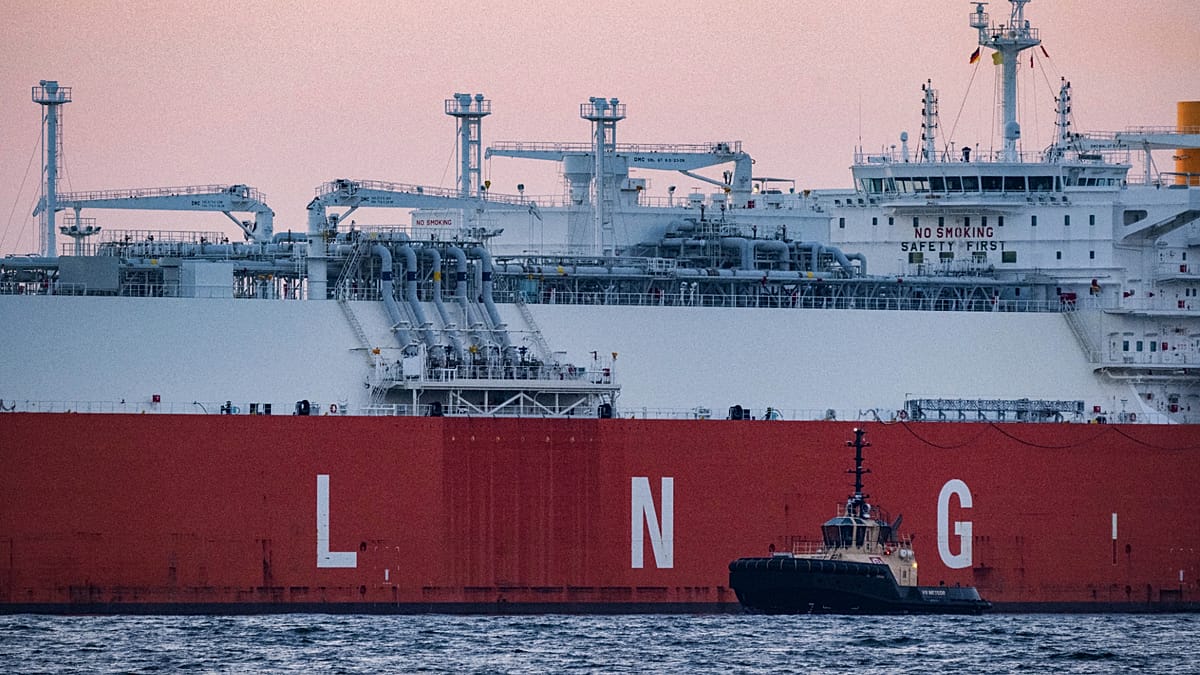
"The main driver behind the falling prices lies across the Atlantic. The United States has ramped up exports of liquefied natural gas (LNG) to Europe, offsetting reduced Russian supplies and reshaping the global energy balance. According to Kpler data, US cargoes have accounted for around 56% of Europe’s LNG imports this year. With Asian demand relatively weak and US export capacity strong, Europe has become the primary destination for American LNG."
 
Competitive Industrial America's back, and it's going to get uncomfortable for alot of (uncompetitive and far too comfortable) people...


"The main driver behind the falling prices lies across the Atlantic. The United States has ramped up exports of liquefied natural gas (LNG) to Europe, offsetting reduced Russian supplies and reshaping the global energy balance. According to Kpler data, US cargoes have accounted for around 56% of Europe’s LNG imports this year. With Asian demand relatively weak and US export capacity strong, Europe has become the primary destination for American LNG."

Silly buggers like to compete. I understand some families even train their kids to compete.

Or at least that was the consensus at our last convention...
 
We may have left our bid for independence a bit late.

American rules, American goods, American markets.

....

American money supporting efforts to block sales to anybody but America -
American pressure to buy only American systems.


National Security Strategy of the United States of America November 2025

We want to ensure that the Western Hemisphere remains reasonably stable and well-governed enough to prevent and discourage mass migration to the United States; we want a Hemisphere whose governments cooperate with us against narco-terrorists, cartels, and other transnational criminal organizations; we want a Hemisphere that remains free of hostile foreign incursion or ownership of key assets, and that supports critical supply chains; and we want to ensure our continued access to key strategic locations. In other words, we will assert and enforce a “Trump Corollary” to the Monroe Doctrine; p.5

Fairness – From military alliances to trade relations and beyond, the United States will insist on being treated fairly by other countries. We will no longer tolerate, and can no longer afford, free-riding, trade imbalances, predatory economic practices, and other impositions on our nation’s historic goodwill that disadvantage our interests. As we want our allies to be rich and capable, so must our allies see that it is in their interest that the United States also remain rich and capable. In particular, we expect our allies to spend far more of their national Gross Domestic Product (GDP) on their own defense, to start to make up for the enormous imbalances accrued over decades of much greater spending by the United States. p.8

Burden-Sharing and Burden-Shifting – The days of the United States propping up the entire world order like Atlas are over. We count among our many allies and partners dozens of wealthy, sophisticated nations that must assume primary responsibility for their regions and contribute far more to our collective defense. President Trump has set a new global standard with the Hague Commitment, which pledges NATO countries to spend 5 percent of GDP on defense and which our NATO allies have endorsed and must now meet. Continuing President Trump’s approach of asking allies to assume primary responsibility for their regions, the United States will organize a burden-sharing network, with our government as convener and supporter. This approach ensures that burdens are shared and that all such efforts benefit from broader legitimacy. The model will be targeted partnerships that use economic tools to align incentives, share burdens with like-minded allies, and insist on reforms that anchor long-term stability. This strategic clarity will allow the United States to counter hostile and subversive influences efficiently while avoiding the overextension and diffuse focus that undermined past efforts. The United States will stand ready to help— potentially through more favorable treatment on commercial matters, technology sharing, and defense procurement—those counties that willingly take more responsibility for security in their neighborhoods and align their export controls with ours. p.12

Energy Dominance – Restoring American energy dominance (in oil, gas, coal, and nuclear) and reshoring the necessary key energy components is a top strategic priority. Cheap and abundant energy will produce well-paying jobs in the United States, reduce costs for American consumers and businesses, fuel reindustrialization, and help maintain our advantage in cutting-edge technologies such as AI. Expanding our net energy exports will also deepen relationships with allies while curtailing the influence of adversaries, protect our ability to defend our shores, and—when and where necessary—enables us to project power. We reject the disastrous “climate change” and “Net Zero” ideologies that have so greatly harmed Europe, threaten the United States, and subsidize our adversaries. p.14

A. Western Hemisphere: The Trump Corollary to the Monroe Doctrine After years of neglect, the United States will reassert and enforce the Monroe Doctrine to restore American preeminence in the Western Hemisphere, and to protect our homeland and our access to key geographies throughout the region. We will deny non-Hemispheric competitors the ability to position forces or other threatening capabilities, or to own or control strategically vital assets, in our Hemisphere. This “Trump Corollary” to the Monroe Doctrine is a common-sense and potent restoration of American power and priorities, consistent with American security interests. p.15


The United States will prioritize commercial diplomacy, to strengthen our own economy and industries, using tariffs and reciprocal trade agreements as powerful tools. The goal is for our partner nations to build up their domestic economies, while an economically stronger and more sophisticated Western Hemisphere becomes an increasingly attractive market for American commerce and investment. p.16

As we deepen our partnerships with countries with whom America presently has strong relations, we must look to expand our network in the region. We want other nations to see us as their partner of first choice, and we will (through various means) discourage their collaboration with others p.17

The United States must be preeminent in the Western Hemisphere as a condition of our security and prosperity—a condition that allows us to assert ourselves confidently where and when we need to in the region. p.17

In the Western Hemisphere—and everywhere in the world—the United States should make clear that American goods, services, and technologies are a far better buy in the long run, p.18

Every U.S. official working in or on the region must be up to speed on the full picture of detrimental outside influence while simultaneously applying pressure and offering incentives to partner countries to protect our Hemisphere. p.18


We should also partner with regional governments and businesses to build scalable and resilient energy infrastructure, invest in critical mineral access, and harden existing and future cyber communications networks that take full advantage of American encryption and security potential. The aforementioned U.S. Government entities should be used to finance some of the costs of purchasing U.S. goods abroad. pp.18-19

The United States must also resist and reverse measures such as targeted taxation, unfair regulation, and expropriation that disadvantage U.S. businesses. The terms of our agreements, especially with those countries that depend on us most and therefore over which we have the most leverage, must be sole-source contracts for our companies. At the same time, we should make every effort to push out foreign companies that build infrastructure in the region. p.19

 
We may have left our bid for independence a bit late.

American rules, American goods, American markets.

....

American money supporting efforts to block sales to anybody but America -
American pressure to buy only American systems.


National Security Strategy of the United States of America November 2025

We want to ensure that the Western Hemisphere remains reasonably stable and well-governed enough to prevent and discourage mass migration to the United States; we want a Hemisphere whose governments cooperate with us against narco-terrorists, cartels, and other transnational criminal organizations; we want a Hemisphere that remains free of hostile foreign incursion or ownership of key assets, and that supports critical supply chains; and we want to ensure our continued access to key strategic locations. In other words, we will assert and enforce a “Trump Corollary” to the Monroe Doctrine; p.5

Fairness – From military alliances to trade relations and beyond, the United States will insist on being treated fairly by other countries. We will no longer tolerate, and can no longer afford, free-riding, trade imbalances, predatory economic practices, and other impositions on our nation’s historic goodwill that disadvantage our interests. As we want our allies to be rich and capable, so must our allies see that it is in their interest that the United States also remain rich and capable. In particular, we expect our allies to spend far more of their national Gross Domestic Product (GDP) on their own defense, to start to make up for the enormous imbalances accrued over decades of much greater spending by the United States. p.8

Burden-Sharing and Burden-Shifting – The days of the United States propping up the entire world order like Atlas are over. We count among our many allies and partners dozens of wealthy, sophisticated nations that must assume primary responsibility for their regions and contribute far more to our collective defense. President Trump has set a new global standard with the Hague Commitment, which pledges NATO countries to spend 5 percent of GDP on defense and which our NATO allies have endorsed and must now meet. Continuing President Trump’s approach of asking allies to assume primary responsibility for their regions, the United States will organize a burden-sharing network, with our government as convener and supporter. This approach ensures that burdens are shared and that all such efforts benefit from broader legitimacy. The model will be targeted partnerships that use economic tools to align incentives, share burdens with like-minded allies, and insist on reforms that anchor long-term stability. This strategic clarity will allow the United States to counter hostile and subversive influences efficiently while avoiding the overextension and diffuse focus that undermined past efforts. The United States will stand ready to help— potentially through more favorable treatment on commercial matters, technology sharing, and defense procurement—those counties that willingly take more responsibility for security in their neighborhoods and align their export controls with ours. p.12

Energy Dominance – Restoring American energy dominance (in oil, gas, coal, and nuclear) and reshoring the necessary key energy components is a top strategic priority. Cheap and abundant energy will produce well-paying jobs in the United States, reduce costs for American consumers and businesses, fuel reindustrialization, and help maintain our advantage in cutting-edge technologies such as AI. Expanding our net energy exports will also deepen relationships with allies while curtailing the influence of adversaries, protect our ability to defend our shores, and—when and where necessary—enables us to project power. We reject the disastrous “climate change” and “Net Zero” ideologies that have so greatly harmed Europe, threaten the United States, and subsidize our adversaries. p.14

A. Western Hemisphere: The Trump Corollary to the Monroe Doctrine After years of neglect, the United States will reassert and enforce the Monroe Doctrine to restore American preeminence in the Western Hemisphere, and to protect our homeland and our access to key geographies throughout the region. We will deny non-Hemispheric competitors the ability to position forces or other threatening capabilities, or to own or control strategically vital assets, in our Hemisphere. This “Trump Corollary” to the Monroe Doctrine is a common-sense and potent restoration of American power and priorities, consistent with American security interests. p.15


The United States will prioritize commercial diplomacy, to strengthen our own economy and industries, using tariffs and reciprocal trade agreements as powerful tools. The goal is for our partner nations to build up their domestic economies, while an economically stronger and more sophisticated Western Hemisphere becomes an increasingly attractive market for American commerce and investment. p.16

As we deepen our partnerships with countries with whom America presently has strong relations, we must look to expand our network in the region. We want other nations to see us as their partner of first choice, and we will (through various means) discourage their collaboration with others p.17

The United States must be preeminent in the Western Hemisphere as a condition of our security and prosperity—a condition that allows us to assert ourselves confidently where and when we need to in the region. p.17

In the Western Hemisphere—and everywhere in the world—the United States should make clear that American goods, services, and technologies are a far better buy in the long run, p.18

Every U.S. official working in or on the region must be up to speed on the full picture of detrimental outside influence while simultaneously applying pressure and offering incentives to partner countries to protect our Hemisphere. p.18


We should also partner with regional governments and businesses to build scalable and resilient energy infrastructure, invest in critical mineral access, and harden existing and future cyber communications networks that take full advantage of American encryption and security potential. The aforementioned U.S. Government entities should be used to finance some of the costs of purchasing U.S. goods abroad. pp.18-19

The United States must also resist and reverse measures such as targeted taxation, unfair regulation, and expropriation that disadvantage U.S. businesses. The terms of our agreements, especially with those countries that depend on us most and therefore over which we have the most leverage, must be sole-source contracts for our companies. At the same time, we should make every effort to push out foreign companies that build infrastructure in the region. p.19

So . . . cooperation and burden-sharing, along with dominance, all in the same document. The neighbourhood bully wants to be friends with everybody but still be the neighbourhood bully.
 
So . . . cooperation and burden-sharing, along with dominance, all in the same document. The neighbourhood bully wants to be friends with everybody but still be the neighbourhood bully.

The Mafia wants to keep your family safe.
 
Flare gas for remote power...

 
Energy and productivity have hit the Canadian food market.


The middle has been hollowed out as mom and pops can't find the capital to make the move to midsize facilities that can challenge the internationals regionally.

Innovation suffers as do jobs.
 
Old news, as with any aggregate organization representing multiple FNs - but each member FN might have an effective veto of sorts, depending on the circumstances.

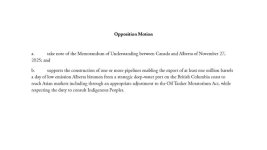
Meanwhile, Team Blue seems to want to put everyone's vote on the record, so to speak, on the CAN-AB pipeline deal:
Here's the motion from PP's x.com feed:
G7bNU8LXYAAVSkE.jpg
Interesting - trying to flush out the better-green-than-Carney Team Red members?

Boosters'll say it's good to make things more official, and should be an easy-peasy vote - Red Coach says deal's on, so it should be a rubber stamp.

Haters'll say if Team Blue might be using this to fuel (further?) dissent within Team Red, fuelling the "partisan politics over the good of the country" narrative.

We'll have to see ....
 
Back
Top