• Thanks for stopping by. Logging in to a registered account will remove all generic ads. Please reach out with any questions or concerns.

Pipelines, energy and natural resources

  • Thread starter Thread starter QV
  • Start date Start date
For comparison the largest US above ground storage farm is in Nederland, TX at 33 million barrels. Plus Cushing OK and (27 million) and Corpus Christie, TX (20 million). The majority of the US strategic reserve is held underground which also has me thinking about places like Sudbury ON as alterantives?
I don't know the details about storing liquid petroleum underground but suspect it relies more on geology rather than simply abandoned holes in the ground.
 
AI....

In North America, salt caverns provide a highly secure, cost-effective method for bulk petroleum and natural gas liquids (NGL) storage. They are created by solution mining—pumping freshwater into underground salt deposits and extracting the dissolved brine. Because rock salt is impermeable, it prevents hydrocarbons from leaking or migrating.

United States

The US operates the world's largest salt cavern-based strategic crude oil reserve. The Strategic Petroleum Reserve (SPR) is maintained by the Department of Energy to secure the country against severe supply interruptions.

Storage Sites: The reserve consists of massive caverns clustered at five sites in deep salt domes along the Texas and Louisiana coasts:

Bryan Mound (Freeport, TX): ~20 caverns holding 254 million barrels.
Big Hill (Winnie, TX): ~160 million barrels of authorized storage.
West Hackberry (near Lake Charles, LA): ~227 million barrels.
Bayou Choctaw (Baton Rouge, LA): ~76 million barrels.
Weeks Island (~1.1 million barrels capacity).

Total Capacity: The SPR's maximum authorized capacity exceeds 700 million barrels.

Commercial and NGL Storage:

Beyond government strategic reserves, numerous commercial salt caverns are used across Texas, Louisiana, and Mississippi to hold working inventory of crude oil, propane, butane, and ethylene.

Canada

Canada primarily uses underground salt caverns to store natural gas and Natural Gas Liquids (NGLs) like condensate, propane, butane, and ethylene.

Unlike the US SPR, Canada's federal Strategic Petroleum Reserve (United States) strategy relies more on industry-held inventories.

Alberta: The vast majority of cavern storage is located in bedded salt formations in Alberta.

Major facilities, including the ATCO Salt Cavern Storage Expansion Project, are concentrated in the province's "Industrial Heartland" around Fort Saskatchewan. More than 100 salt caverns have been utilized across Alberta for decades to store hydrocarbons.

Southern Ontario: About 71 operational solution-mined salt caverns are situated near Windsor and Sarnia. These are crucial for storing hydrocarbons—such as ethylene, propane, and butane—that are either liquids or become liquid under storage pressures.

Emerging Regions: New frontiers are developing, such as the Fischells Salt Dome in western Newfoundland, which is considered the only domal salt formation in Canada and is being eyed for large-scale energy storage, including clean hydrogen and compressed air.

....

Potash is a salt.
 
Canada tells UAE it is not ready for its C$70bn investment
Lack of shovel-ready projects is holding back Mark Carney’s plan to double trade with partners outside of the US


Ilya Gridneff in Toronto

Published YESTERDAY
Updated02:40

Prime Minister Mark Carney’s flagship investment agency has delivered a blunt message to United Arab Emirates officials looking to pour billions of dollars into Canada: we have nowhere to put your money.

Three officials, speaking on the condition of anonymity, said the Calgary-based Major Projects Office in mid-June told an official UAE delegation it was too soon to inject capital into Canada.

“The PM keeps talking about the C$70bn [US$49bn] UAE commitment he secured on his first visit in November. None of that has been deployed,” said one Canadian official.

Carney landed a US$50bn commitment from UAE president Sheikh Mohamed bin Zayed al-Nahyan and Crown Prince of Abu Dhabi, Sheikh Khaled bin Mohamed bin Zayed al-Nahyan, who made the official announcement in November. Oil-rich Abu Dhabi manages almost $2tn in sovereign funds.

But after Carney hosted a UAE-Canada Business Council meeting in Ottawa in mid-June, the MPO turned away members from the Emirati delegation who were seeking investment opportunities, the officials said. The reason was a lack of projects at a stage where they could deploy the money.

Former Quebec premier Jean Charest, who is the co-chair of the council, said the MPO was “only one bucket of potential projects”.

“They [the MPO] gave them the only answer they could give them, at this point, we’re not ready. But that is the same answer for everyone,” he said.


Over the paywall, then :) https://archive.md/Rrj1m
 
I tend to agree with you on the multiple tank farms is better than super complexes.

Largest tank farm in Canada right now is Hardisty, AB at 14 million barrels. That's about 2.5 days worth of Canada's production. There are a couple of others in the 2-3 million range in Alberta as well but more distributed - Anzac, Fort MacMurray etc.

For comparison the largest US above ground storage farm is in Nederland, TX at 33 million barrels. Plus Cushing OK and (27 million) and Corpus Christie, TX (20 million). The majority of the US strategic reserve is held underground which also has me thinking about places like Sudbury ON as alterantives?

The bigger thing in my mind is to have enough oil on hand, in storage, that should the unexpected happen in places like Europe/Asia the volume exists to allow for fast delivery. For context Germany uses just over 2 million barrels a day and South Korea about 2.5 million.

Is Canada a much more valuable partner if they are sitting on a month plus supply for a country, available upon demand? It also allow for more market trading as storage can fill up in the lows vs. shipping it out for pennies...and cash in on highs.

The only question is how large and how much total capacity is needed.
nobody seems to talk about refineries. We have closed down numerous ones over the last couple of decades; at least 4 that I know of in the golden horseshoe alone. Is it not advantageous to distill and ship finished product? I mentioned it earlier but with California shuttering theirs due net zero would it not be profitable to pick up the slack including shipping globally?
 
But we've been told that MOUs and agreements should be counted as completed projects. Or does that logic only count for Liberal announcements?
I have the foggiest wjat youre getting at with this project. Theres been no consultation or groundwork. May as well be a line on a map. Patience.
 

More progress...


Trans Mountain Reaches Settlement Agreement with Shippers​


Trans Mountain Corporation (“Trans Mountain”) announced today that it has filed a negotiated Settlement with the Canada Energy Regulator (“CER”) covering tolling, tariff and service-related matters on the Trans Mountain Pipeline System (“System”). The parties to the Settlement Agreement (“Settlement”) represent the substantial majority of contracted firm shipment volumes on the System and reflect a broad range of commercial interests.

The Settlement, reached following approximately 18 months of extensive engagement and good-faith negotiations with shippers, establishes a comprehensive long-term framework for tolls, tariffs and service on the System, subject to CER approval. It provides greater certainty and predictability for customers and stakeholders, while supporting the long-term operation of the Trans Mountain Pipeline System.

 
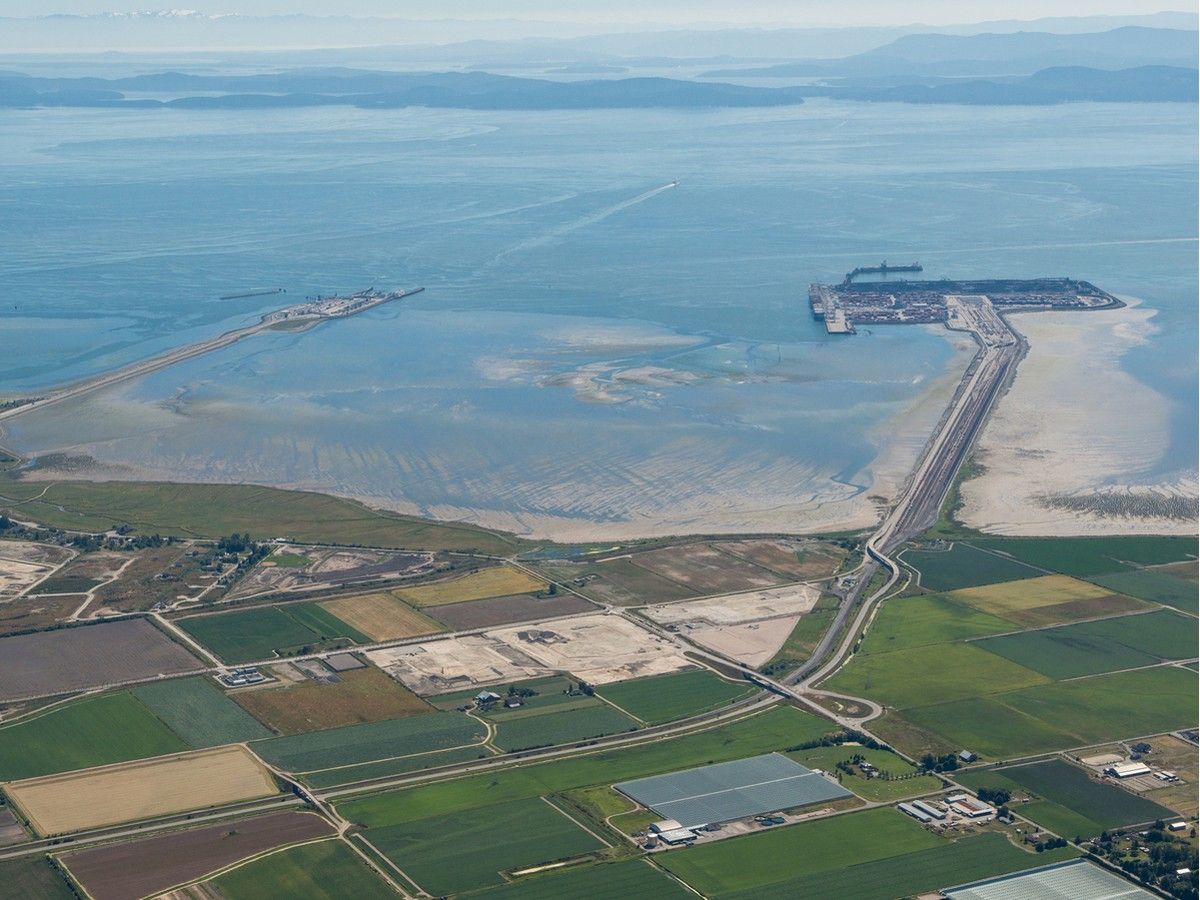
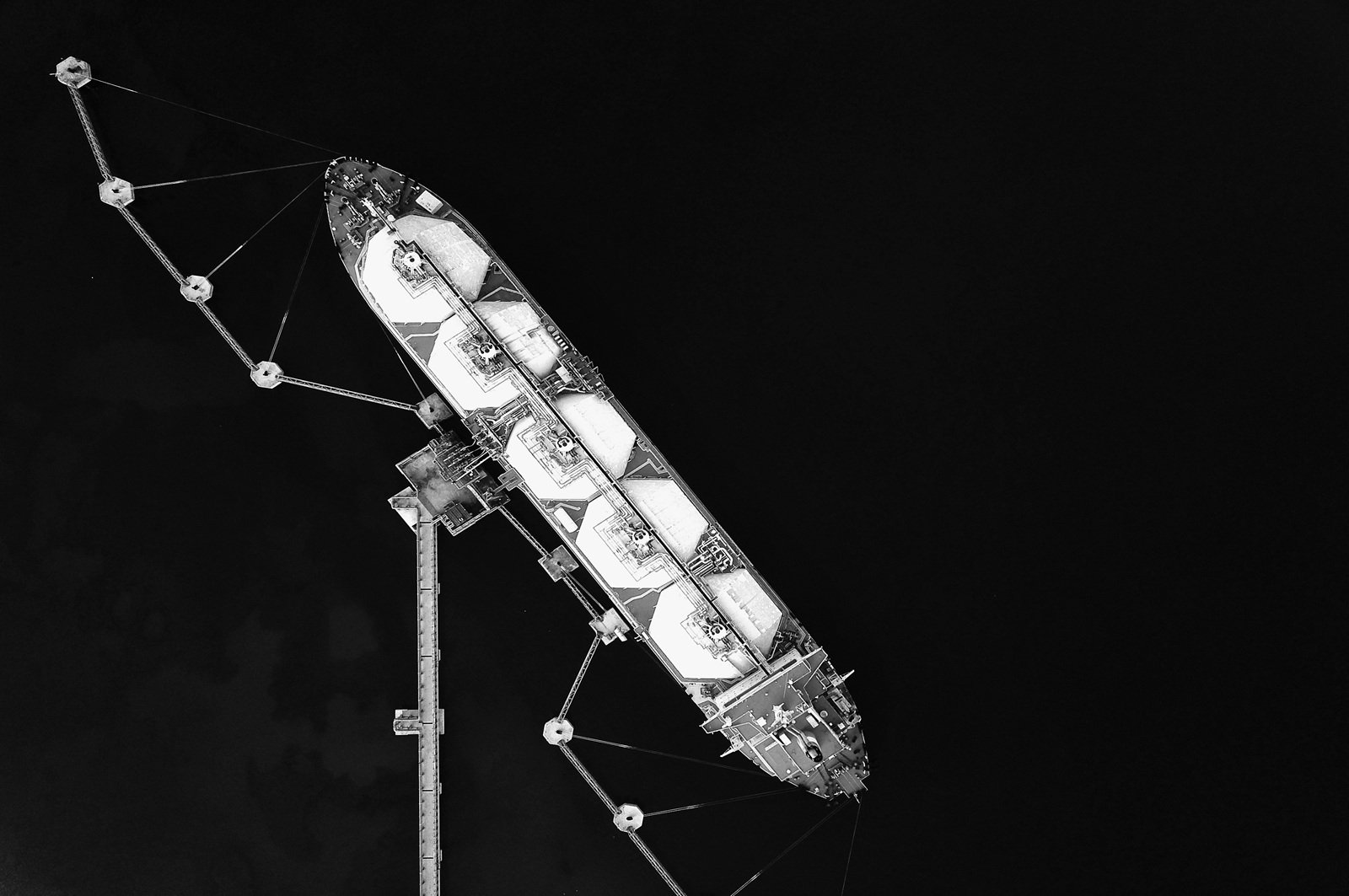
the amount of infrastructure required at Roberts Bank to be able to load VLCC's has not been fully articulated to the public. It's not just a pipe to the end of the jetty.
 
the amount of infrastructure required at Roberts Bank to be able to load VLCC's has not been fully articulated to the public. It's not just a pipe to the end of the jetty.
Oh!
I thought it was like a water hose in my backyard that I just unravel and walk over to my pool and turn on to top off the water level. It works well and very little water drips on the ground when I take it from the pool and coil it back up. The small amount of water dripped dries up right quick.
 
Hub article on the VLCC requirements at Vancouver.


Why TMX chose Burnaby

During planning for the Trans Mountain expansion more than a decade ago, the pipeline company evaluated Roberts Bank as an alternative to expanding its longtime home terminal in Burnaby.

Engineering documents filed with the former National Energy Board envisioned many of the same features now appearing in Alberta’s current proposal. These included deep-water berths, a larger tank farm, additional utility infrastructure, and roughly seven kilometres of offshore trestle.

Ultimately, Trans Mountain chose to stick with Burnaby, citing the “significantly greater cost” of the Roberts Bank option, which it estimated would add roughly $1.2 billion to the project.

But the price premium was only part of the story.

Trans Mountain also highlighted engineering challenges, environmentally sensitive coastal habitat, and the difficulty of fitting another major industrial project into one of Canada’s busiest ports and transportation corridors—on the doorstep of Metro Vancouver communities including Delta, Tsawwassen, and Richmond.

Many of those same considerations now loom over Alberta’s proposal.

“It’s not like you’re sitting on the Prairies where you’ve got lots of room to manoeuvre,” said Veldman. “Routing through the Lower Mainland? It’s a pretty dense area. And the closer you get to Roberts Bank…you’re going to get into some sensitive areas, you’re going to get into some wetlands.”
 
the amount of infrastructure required at Roberts Bank to be able to load VLCC's has not been fully articulated to the public. It's not just a pipe to the end of the jetty.
I am curious where they are going to put the tank farm, on a river delta, that will liquify in the even of an earthquake.

I am sure it can be done. I am just not sure how.
 
I am curious where they are going to put the tank farm, on a river delta, that will liquify in the even of an earthquake.

I am sure it can be done. I am just not sure how.

They're adding a big container port at Roberts Bank too... lots of infill will be needed. The gravel companies will be booming ...

Local impacts of pipeline to B.C. coast and Delta port expansion​


“As we look to double exports, that’s going to require a lot more capacity, and thankfully we have game-changing projects on the horizon like Roberts Bank Terminal 2 that’s going to increase container trade capacity by $100 billion annually,” Alexa Young told CityNews, a spokesperson for the Port of Vancouver.

The port is also proposed to be the end of Alberta’s new pipeline route as the federal and provincial governments uphold the northern tanker ban, a move welcomed by coastal First Nations who rely on the critical waters.

“We have been supporting this type of measure for at least five decades, and we had members there in the late 70s talking about what the impacts would be, talking about if an oil spill happened in our territory that it would finish us,” said Chief Marilyn Sleet of the Heiltsuk Nation.

 
Back
Top