• Thanks for stopping by. Logging in to a registered account will remove all generic ads. Please reach out with any questions or concerns.

Radar

Kirkhill

Puggled and Wabbit Scot.
Subscriber
Donor
Reaction score
13,776
Points
1,160
Another area without a thread of its own, and yet it is critical.

Area 22 is our responsibility (22 Wing out of Nort Bay monitoring the North Warning Sites)

1768409767632.jpeg

1768409821049.jpeg

The US has maintained Over-The-Horizon-Backscatter sites since at least the 1980s

1768410100800.gif

Our current purchase of the Australian JORN is us playing catch-up.


I understand that we will actually need three arrays. The first one in the Borden area is focused towards Greenland and effectively overlapping with Maine's sector 1 and effectively covers the Halifax SRR. There will be another covering off the Victoria SRR direction over the pacific and a third will be required for the Trenton SRR geography over the Arctic. That sounds as if the Arctic one will be built in the Alert - Eureka area. I presume that the western one, like the eastern one, will be built inland.
 
And, of course, there are our space based efforts with the Radarsat constellation.

1768412173401.jpeg


Just as a side note, this public private patrnership is probably similar in concepi to the proposed UxV sensor network being proposed by the RN for their Atlantic Bastion and I am guessing that that is where the civil-military-paramilitary Coast Guard fits into the picture on our side of the Atlantic.
 
1) R2 and RCM will be replaced for the CAF by DESSP. Both currently have SOCDs raised against them. We need our own.

2) North Warning System is being replaced by Crossbow.
 
R2= Radarsat 2
RCM=Radarsat Constellation Mission
DESSP=Defence Enhanced Surveillance from Space Project
SOCD=Statement Of Capability Deficiency
 
1) R2 and RCM will be replaced for the CAF by DESSP. Both currently have SOCDs raised against them. We need our own.

2) North Warning System is being replaced by Crossbow.
Are there any resources (either DWAN or publicly available) to read up on our space based capabilities and future plans? I'm interested in knowing more about the subject but don't really know where to start learning about it.
 
Are there any resources (either DWAN or publicly available) to read up on our space based capabilities and future plans? I'm interested in knowing more about the subject but don't really know where to start learning about it.

You can do a Sharepoint search to learn more. Crossbow is highly classified. So not much will be found. But you can read between the lines here:

In close coordination with the United States, we will establish the backbone of a brand-new, Northern Approaches Surveillance system to enhance surveillance and early warning of threats to our continent. Most notably, this will include three initiatives:

  • An Arctic Over-the-Horizon Radar system to provide early warning radar coverage and threat tracking from the Canada-U.S. border to the Arctic Circle.
  • A Polar Over-the-Horizon Radar system to provide early warning radar coverage over and beyond the northernmost approaches to North America, including the Canadian Arctic archipelago, and
  • A new system called Crossbow — a network of sensors with classified capabilities, distributed across northern Canada, as another layer of detection.

DESSP is in the DCB. So you can get the quick overview here:

 
Another area without a thread of its own, and yet it is critical.

Area 22 is our responsibility (22 Wing out of Nort Bay monitoring the North Warning Sites)

View attachment 97817

View attachment 97818

The US has maintained Over-The-Horizon-Backscatter sites since at least the 1980s
View attachment 97819

Our current purchase of the Australian JORN is us playing catch-up.
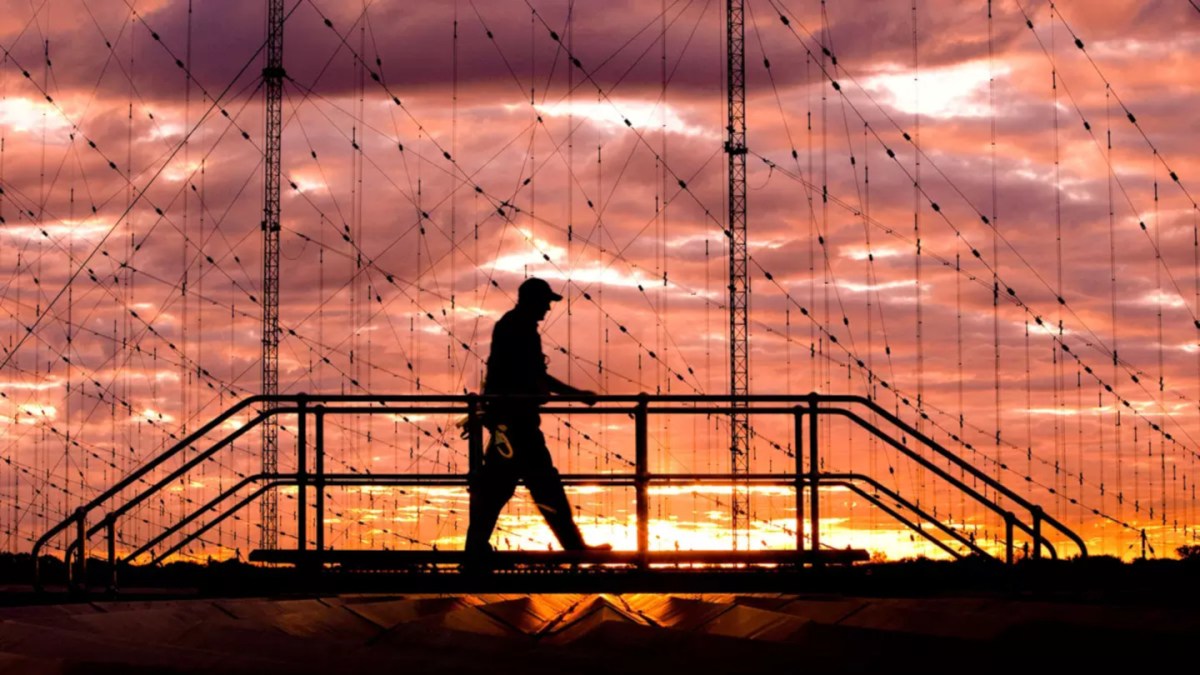

I understand that we will actually need three arrays. The first one in the Borden area is focused towards Greenland and effectively overlapping with Maine's sector 1 and effectively covers the Halifax SRR. There will be another covering off the Victoria SRR direction over the pacific and a third will be required for the Trenton SRR geography over the Arctic. That sounds as if the Arctic one will be built in the Alert - Eureka area. I presume that the western one, like the eastern one, will be built inland.
Not to take away from your argument but your first map is dacades out of date.

1768418434924.png
 
While we are on the subject of maps

The battlefield

1768421240440.jpeg

Sea transit routes

1768421309825.jpeg

Air transit

1768421589513.png

Territorial claims

1768421795571.png
 

Attachments

  • 1768421452686.png
    1768421452686.png
    50.7 KB · Views: 4
Sorry. can't compete - won't even try.

Not a competition, a legitimate question. Asking out of curiosity because that is the map that I was originally looking for.

Cheers.
 
I think this the map I was looking for.

1768623348721.png
 
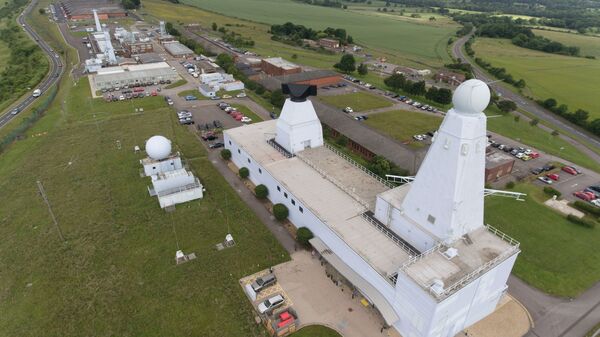
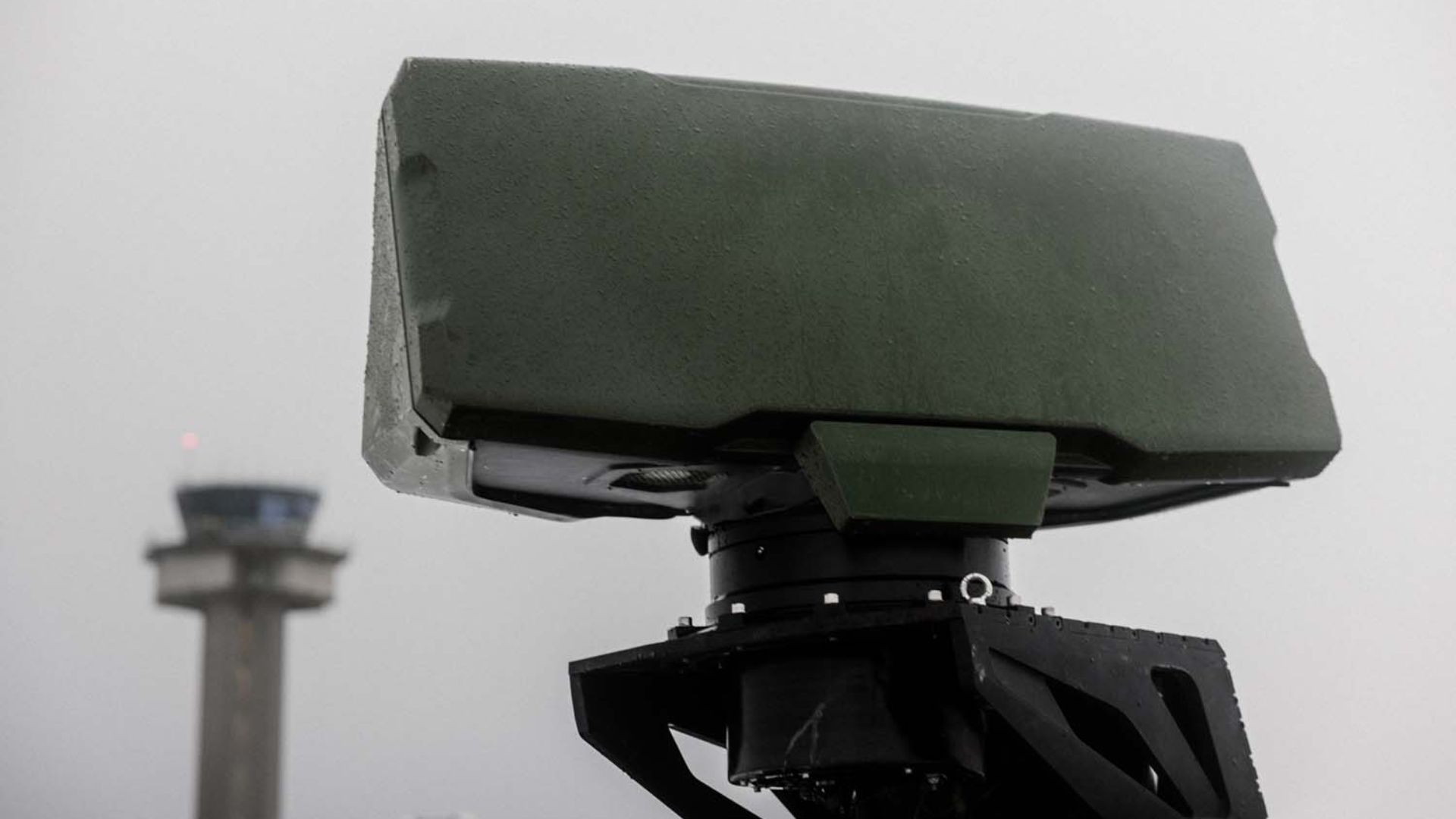
Some UK developments in radar


On quantum clocks

Quantum and optical atomic clocks are the most precise instruments ever made by humans, achieving fractional systematic uncertainties and inconsistencies below the 10⁻¹⁸ level, meaning they would drift by less than one second over billions of years.

Accuracy (Systematic Uncertainty)

Defined by how closely a clock's ticked frequency matches the true, unperturbed natural quantum transition of an atom.

Top-tier optical lattice clocks reach uncertainties below 1.4 × 10⁻¹⁸ (losing or gaining roughly one second in 30 billion years).

Main limitations come from tiny external shifts like blackbody radiation from the environment, magnetic fields, and gravity (gravitational redshift).


Reproducibility

Defined by how identically two independently built clocks of the same design tick relative to each other.

Advanced strontium and ytterbium setups show independent systems agreeing on their ticking frequencies below the 10⁻¹⁸ threshold.

Proves that the underlying quantum mechanical transitions are universal constants unaffected by manufacturing variations.


Consistency (Stability)

Defined by how little the tick rate fluctuates over a specific measurement duration (Allan deviation).

State-of-the-art quantum systems achieve stabilities past 3.2 × 10⁻¹⁹ over a single day of averaging.

Quantum entanglement techniques (like spin squeezing) are increasingly used to suppress fundamental quantum projection noise and push consistency even higher.
 
True commercial hardware atomic clocks are about the size of a matchbook and cost roughly $1,500 to $4,500 USD.

However, the size and price vary drastically depending on whether you are looking for a standard consumer wall clock or a high-precision scientific instrument.

1. Consumer "Atomic" Clocks (Radio-Controlled)

Consumer clocks sold as "atomic clocks" do not actually contain internal atomic hardware. Instead, they feature a built-in radio receiver that automatically syncs with national atomic clock broadcast signals (like WWVB in Colorado).

Size: Typical wall clock or desk alarm clock sizes (ranging from 2.5 to 14 inches).

Cost: $20 to $100 USD.

You can easily browse these options via online retailers like Amazon or eBay.


2. Chip-Scale Atomic Clocks (CSAC)

These are the smallest real atomic clocks in existence, designed for aerospace, military, and deep-sea exploration where GPS signals cannot reach.

They use microelectromechanical systems (MEMS) to bounce a laser through a tiny chamber of cesium atoms.

Size: Roughly 1.5 x 1.4 x 0.4 inches (4 x 3.5 x 1 cm) and weighing just 35 grams.

Cost:

Base models usually start around $1,500 USD.
Specialized variants, such as radiation-tolerant space-grade chips, can range from $2,700 to over $7,400 USD depending on order volume.

Leading manufacturers like Microchip Technology supply these units.

3. Benchtop & Primary Frequency Standards

These are the ultra-precise, heavy-duty atomic clocks used by telecommunication networks, data centers, and scientific laboratories.

Size: Ranging from a large toaster to a 19-inch rack-mounted server chassis.

Cost: $3,000 to $50,000+ USD.

The absolute pinnacle of precision technology—commercial optical lattice clocks—can sell for up to $3.4 million USD.

.....

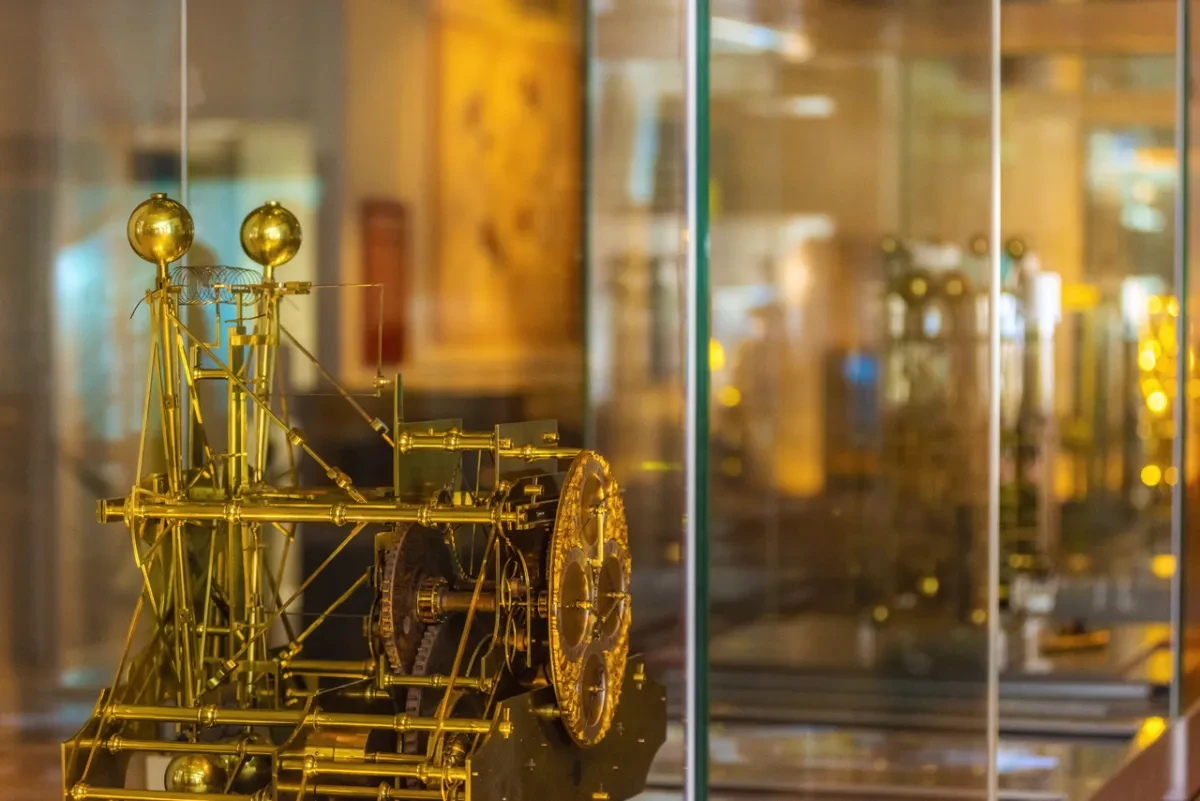
The key to modern navigation was Harrison's clock.


Now that capability is available on a chip for a couple of thousand dollars. Cheap enough to blow it up.
 
Back
Top