• Thanks for stopping by. Logging in to a registered account will remove all generic ads. Please reach out with any questions or concerns.

The RCAF's Next Generation Fighter (CF-188 Replacement)


In a world where nothing really matters...
So do they play team 'Red' or team 'Blue' in those exercises?
 
So do they play team 'Red' or team 'Blue' in those exercises?
It’s unfortunate but we are reaping what we have sowed.
The highest bidder wins. No sense of loyalty peddling their skill in similar fashion of pro athletes and “pros” from another line of work.

At least the “pros” admit what they are.
 
Dual fleet rumint is getting stronger. This is probably happening. Just hoping the numbers and scheduling don't put us in a total hurt locker.
I wish someone would grow a brain and make the Saab deal for a plant to design and build 72 (or more) CCV's based on the Gripen's technology to go along with our F-35's instead of replacing some of the F-35's with Gripens.

Our NORAD CCV requirements call for a very long range and relatively high weapon load capacity due to the extreme distances involved which makes the design more like a trimmed down crewed fighter design rather than a beefed up missile design.

Saab and Canada would still get their plant to build large sovereign aircraft (along with the jobs that entails), Canada would still get the 88 x F-35's it needs (and not trigger the man-child in the US by cutting our order) and I bet Saab (and this plant) would have much better chances of securing additional foreign sales for a CCV then they would for Gripens. Seems like a win-win all around.
 
Dual fleet rumint is getting stronger. This is probably happening. Just hoping the numbers and scheduling don't put us in a total hurt locker.
IF this turns out to be correct, in your opinion, what numbers could you live with.
 
IF this turns out to be correct, in your opinion, what numbers could you live with.

50 allows two operational squadrons and an OTU. 65 allows three sqns. 72 allows four smaller (12 a/c) squadrons with slightly less attrition margin. I really hope we get to 50 at least.

This is very old article. But it gives an idea of how fleet sizing is done.

 
I wish someone would grow a brain and make the Saab deal for a plant to design and build 72 (or more) CCV's based on the Gripen's technology to go along with our F-35's instead of replacing some of the F-35's with Gripens.

The Gripen frame isn't particularly optimized for CCAs. And we don't need them for it. Honestly, I fully believe Bombardier with help from another company could build a decent clean sheet.
 
50 allows two operational squadrons and an OTU. 65 allows three sqns. 72 allows four smaller (12 a/c) squadrons with slightly less attrition margin. I really hope we get to 50 at least.

This is very old article. But it gives an idea of how fleet sizing is done.

If it comes to this, maybe 65 is the number they go with. With 65 it goes back to the older number that Harper put forward in the past. It allows the Liberals to put to the Conservatives and say, we are just going back to what you previously proposed.......Kind of takes the wind a bit out of their sails.
 
In theory, as long as the line is open, we can acquire attritional replacements on an as needed basis.

In practice, in a shooting war, those timelines may be unacceptable.
 
The Gripen frame isn't particularly optimized for CCAs. And we don't need them for it. Honestly, I fully believe Bombardier with help from another company could build a decent clean sheet.
I didn't say use Gripen airframes I said their technology. Saab already has several CCV prototypes with control software already developed as well as plans for an unmanned version of their next-gen Gripen technology. A Saab-Bombardier collaboration would be a huge head start in developing a CCV that meets the specific Canadian NORAD requirements rather than either going it alone from scratch or joining an existing CCV program that doesn't match our unique requirements.
 

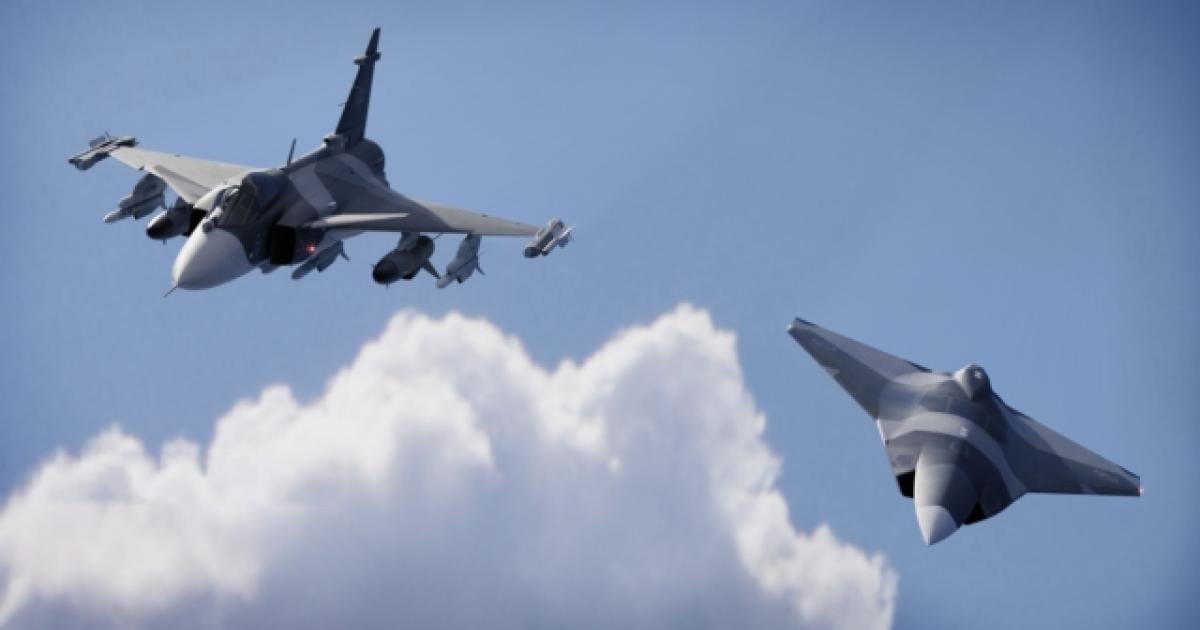
Sweden's Saab is preparing to make the first flight of an uncrewed fighter-sized demonstration aircraft in 2027. The project is gathering pace as the NATO member state solidifies a strategy for its future combat aircraft program by 2030 in a process that could see it partner with other nations or decide to go it alone.

“The overall purpose is to develop our future fighter system, but on its way, also develop an unmanned platform [as a] force multiplier,” explained Per Nilsson, Saab’s senior strategic advisor of advanced programs, in a press briefing at the recent Singapore Airshow. Following an “intense research and development phase” encompassing some 150 projects, the upcoming demonstrator will possess “fighter-like characteristics,” he revealed. Saab has yet to confirm the engine supplier for the aircraft.

Crucially, the demonstrator is designed to build on what Saab says are the “unique features” of the its Gripen fighter’s split-software core. This separates operational and flight-critical software, allowing the Gripen’s tactical system to be rapidly and constantly updated.

According to Saab, it is the only fighter manufacturer to “split the DNA and the brain,” which Nilsson argued offers an advantage “in that we can easily adopt and share other platforms." He said the company intends to expand this capability as the demonstration program is conducted.

Multiple OEMs are fielding the concepts for collaborative combat aircraft (CCAs), and while Saab believes uncrewed vehicles will be a part of future airpower Nilsson maintained that being first to market is not a decisive factor. Saab sees the highly capable drones operating alongside Sweden’s Gripen E fleet, and Nilsson said that expertise in the area will also serve as “a stepping stone into the future fighter system.”

Alongside ongoing development of the in-service Gripen E fighter, Saab will continue to look at future crewed platforms as well as supersonic and subsonic uncrewed adjuncts: supported by artificial intelligence and what Nilsson defines as “robust low observability.” He defined the latter as the integration of stealth characteristics alongside the ability to “withstand harsh conditions and real-world operations built for dispersed operations.” Saab will also continue to develop its own self-funded rapid prototype and additive manufacturing capabilities.
 
Dual fleet rumint is getting stronger. This is probably happening. Just hoping the numbers and scheduling don't put us in a total hurt locker.
A horrible idea that the RCAF and Canadian Govt will very likely come to regret, dragging along what will be a largely irrelevant aircraft for the foreseeable future.

Welcome back Canadair CF-5.
 
If it comes to this, maybe 65 is the number they go with. With 65 it goes back to the older number that Harper put forward in the past. It allows the Liberals to put to the Conservatives and say, we are just going back to what you previously proposed.......Kind of takes the wind a bit out of their sails.
80 to 65 to 88 to ??
 
Back
Top