• Thanks for stopping by. Logging in to a registered account will remove all generic ads. Please reach out with any questions or concerns.

The RCAF's Next Generation Fighter (CF-188 Replacement)

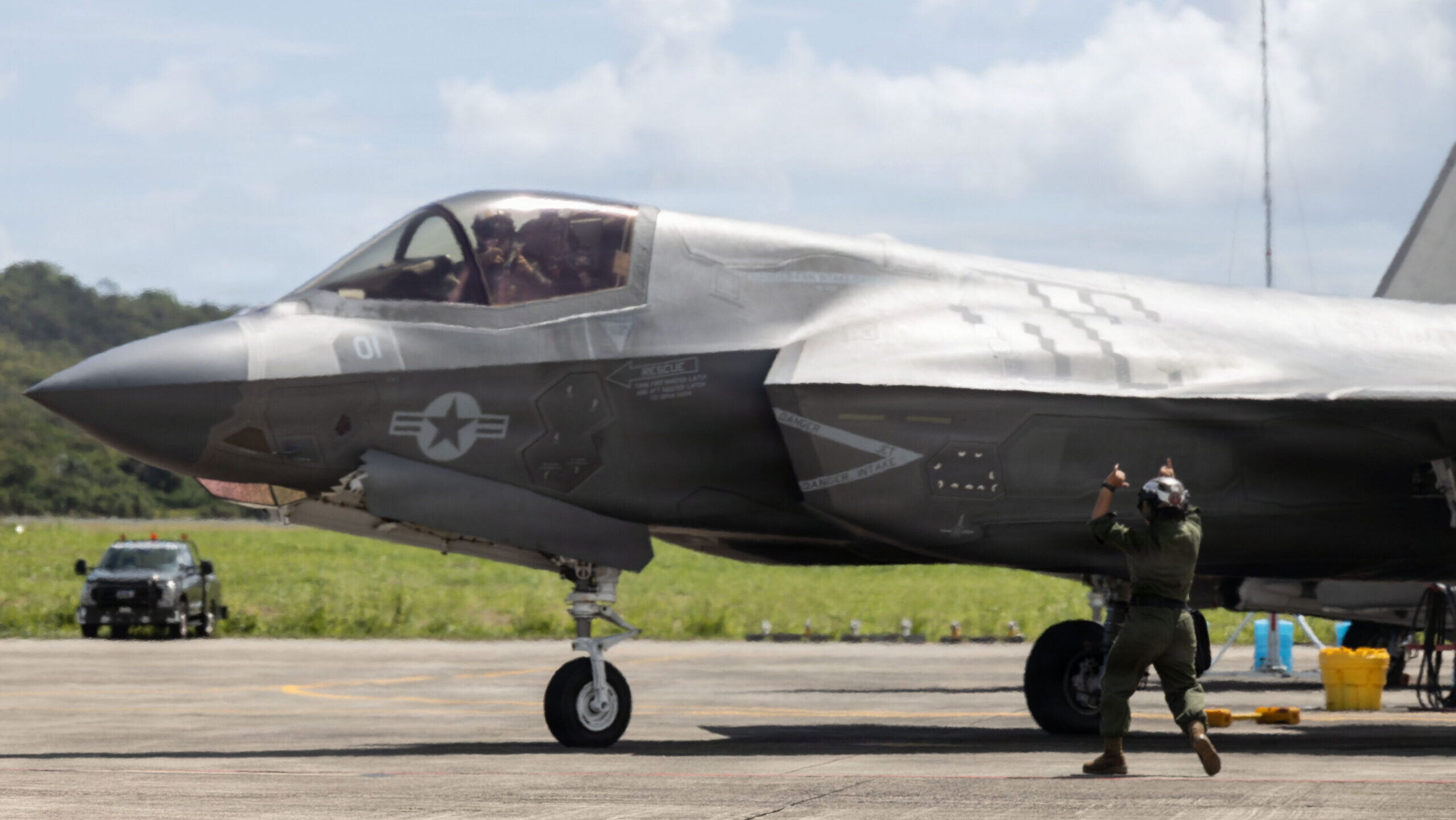
Breaking Defence has an interesting article about the problems the US has in integrating the newer APG-85 radar into the F-35 airframe vs the earlier APG-81. Because of these complications, some F35s will be flying without a radar, which restricts them to non-combat roles.

It will be interesting to see how this impacts foreign sales.

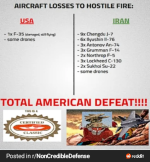
We don't want them anyway...even the Iranians with 0% of their military capacity left can shoot one down!
 
If you're inclined to believe Baghdad Bob's PR firm, sure.
Or CNN?

US F-35 damaged by suspected Iranian fire makes emergency landing, sources say

A US F-35 fighter jet made an emergency landing at US air base in the Middle East after it was struck by what is believed to be Iranian fire, according to two sources familiar with the matter.

Capt. Tim Hawkins, a spokesperson for US Central Command, said the fifth-generation stealth jet was “flying a combat mission over Iran” when it was forced to make an emergency landing. Hawkins said the aircraft landed safely and the incident is under investigation.

“The aircraft landed safely, and the pilot is in stable condition,” Hawkins added. “This incident is under investigation.”

The incident would be the first time Iran has hit a US aircraft in the war started in late February. Both the US and Israel are flying F-35s in the conflict; the aircraft costs upwards of $100 million.

The US has lost other aircraft in the war thus far, though none known to have been hit by enemy fire. Three US F-15 fighter jets were mistakenly shot down by Kuwaiti air defenses, with all six crew members ejecting safely. And last week, a KC-135 Stratotanker refueling aircraft crashed in western Iraq, though the cause is still unclear. The US military said the incident was “not due to hostile fire or friendly fire.”

All six crew members aboard the KC-135 were killed.

Questions remain about the timeline of the conflict and what could come next. CNN previously reported that a Marine Expeditionary Unit was heading to the region; a US official confirmed it is the 31st Marine Expeditionary Unit out of Okinawa, and the Tripoli Amphibious Ready Group. The USS Tripoli was seen approaching Singapore earlier this week.

As the war has nearing the end of its third week, senior US officials continue to claim widespread success in its campaign against Iran. Defense Secretary Pete Hegseth said Thursday morning that the US is “winning decisively” and that Iran’s air defenses have been “flattened.”

 
Sometimes luck favours the bad guy. They might have been able to optically track the aircraft and then predict where it was going, fire a missile and when it's close enough it will be able to lock on. Could be the USAF was flying in and out along the same routes and that was also noted.
 
Sometimes luck favours the bad guy. They might have been able to optically track the aircraft and then predict where it was going, fire a missile and when it's close enough it will be able to lock on. Could be the USAF was flying in and out along the same routes and that was also noted.
or perhaps a little too much confidence in the stealth. The F117 didn't remain hidden forever after all. The older ASR-5 systems could pick it out easily. The F35 has been flying out of Israel for years. It wouldn't surprise me to learn that Iran has figured out how to find one if the conditions are right.
 
Sometimes luck favours the bad guy. They might have been able to optically track the aircraft and then predict where it was going, fire a missile and when it's close enough it will be able to lock on. Could be the USAF was flying in and out along the same routes and that was also noted.
Saw some discussion on IIRC Bluesky that the Houthis had some sort of kludged optical/audio distributed tracking network. No idea on the BS factor, but could see something like that, assuming a working data network, being enough to give you a bearing.
 
Sometimes luck favours the bad guy. They might have been able to optically track the aircraft and then predict where it was going, fire a missile and when it's close enough it will be able to lock on. Could be the USAF was flying in and out along the same routes and that was also noted.

That video was AI or from a video game.
 
If you're inclined to believe Baghdad Bob's PR firm, sure.
Hey he was the one comic relief from whatever Gulf War that went on back then!!


Spanish Inquisition Time GIF
 
Meanwhile...ongoing issues with F-35 software upgrades


The F-35 program fielded no new combat capability during fiscal year 2025 after software problems delayed operational testing across both Technology Refresh 2 and Technology Refresh 3 aircraft configurations, according to the Pentagon’s Director, Operational Test and Evaluation annual report.

DOT&E said the latest TR-3 software build, 40R02, was “unsuitable for dedicated OT,” while the latest TR-2 build, 30R08, was “predominantly unusable” during most of FY25 because of stability problems, capability shortfalls, and ongoing discovery of deficiencies.

The development matters because the F-35 program is the United States military’s core tactical fighter effort across the Air Force, Marine Corps, and Navy, and new software drops are the path for adding Block 4 combat functions to the fleet. When those software builds are not stable enough for operational testing, new capabilities cannot move from development into fielded service.
And it looks like these issues are not a one-off problem:
The broader performance section of the report shows this was not a one-off slip but part of a longer pattern. DOT&E wrote that the F-35 program “continues to show no improvement in meeting schedule and performance timelines for developing and testing software,” and said the process of fixing deficiencies and adding new capabilities had stagnated. It added that the 30-series software family had been in a fly-fix-fly development cycle for nearly four years.
 
Meanwhile...ongoing issues with F-35 software upgrades
This type of report would be more useful if it provided a comparison as between current F-35 software capability to its prime competitors. A small chart of key capabilities would do.

The report is here. Note that it's a large pdf - 26 MB. But various pieces of the report can be accesses separately from the index.

🍻
 
I keep saying they will just keep using this as a stick until they absolutely need to use it.
 
Not to be left behind in the overall zeitgeist of current Canadian procurement, Saab's CEO Micael Johansson is back on CTV News making very suspect claims as to the specifics of their bid to replace the CF-18.


The CEO of the Swedish manufacturing company Saab says there are still “intensive” talks underway with the Canadian government around the potential purchase of Gripen fighter jets, but that he has no timeline for when Canada will finish its review of the American-made F-35s. The federal government launched a review a year ago of its plan to purchase dozens of F-35 fighter jets from the U.S. firm Lockheed Martin, pledging at the time it would make a decision by the end of summer. Now, months later, the government has yet to announce the results of that review, leaving Saab in limbo as it pitches its Gripen fighter jets to Canada.

“We are providing as much information as possible to the Canadian authorities and the politicians and industry to make sure that the case is accessible, in terms of how quickly we can do this, affordability, infrastructure perspectives,” Saab president and CEO Micael Johansson told CTV Question Period host Vassy Kapelos in an interview airing Sunday, adding while he’s asked for a timeline, he has yet to receive a “firm answer” on one. “So, the information is there, and then there is some sort of process evaluating this as we speak,” he said. “But I don’t honestly have a clear answer on when I think that decision will be made,” he also said.

Later in the interview, when asked by Kapelos to describe the frequency and nature of the company’s conversations with the federal government, Johansson said they’re “quite intensive.” He also said there’s still a “political decision” to be made by the Canadian government about whether to have a dual fleet of aircraft by purchasing both the F-35s — several of which are already in production at Lockheed Martin — and the Gripens.

Last November, also in an interview for CTV Question Period, Defence Minister David McGuinty told Kapelos that Canada isn’t ruling out diversifying its fighter-jet purchases from more than one company in order to fulfil capability requirements.

When asked to gauge the level of possibility that the deal with Canada goes forward, Johansson said he believes there’s “really good potential,” but again pointed to the “political decision” the federal government needs to make first.

I would specifically draw attention to the quotes below though:

He added he believes it’s “absolutely credible” that Saab can deliver in five years, with the first Canadian aircraft leaving the factory in that time.

When pressed on a previous eight-year delay in delivering Gripen jets to the government of Brazil, Johansson said Canada presents a different context, and that “the Canadian foundation to do this is broader.”

He added while there were lessons learned from the delays with Brazil, delivering to Canada in five years is “absolutely doable” because Canada has the infrastructure in place to better receive the technology.

The Saab CEO claiming that Saab can delivery the first "Canadian" aircraft within five years (likely from contract awarding), if they are indeed talking about doing this in a Canadian facility as they have claimed previously, is beyond laughable. Saab continues to face ongoing production timeline and capability issues at their home facilities in Sweden, as they have been/are actively diverting major assistance to fulfill Brazil's orders alongside their domestic industry. Saab just delivered the first production Gripen E to the Swedish Airforce back in October 2025. In this context, they claim they can set up a facility in Canada for assembly of modern fighter aircraft, train staff and get everything to the point they can deliver within 5 years? I find that effectively impossible, given the current state of advanced military aerospace industry in Canada.

If we strictly follow the text, it may be a delivery from Saab itself and has nothing to do with Canadian facilities. That is far more realistic, although it undermines the whole point of investing and delivering aircraft from Canada. 5 years to deliver one aircraft from Saab is also pretty pathetic as well.

Pushing back against Brazil's poor performance setting up an industry by saying "different context" does not especially inspire confidence in my opinion. Canada is more technologically advanced and better suited to this sort of work than Brazil however, Brazil has a very successful aerospace company in Embraer that punches far above its weight and either matches or atleast comes within striking distance of Bombardier. We very much do have better industry than Brazil overall, but Canada also very much lacks a proper industry and existing infrastructure/expertise to take this on.

All of this in the ongoing context of Saab continuing to pitch the Gripen E/F to foreign customers, promising them all more aircraft and further splitting up their ability to build aircraft for Canada and do the required major assistance to build us a facility at home. If this truly is the sort of deal being offered to the Canadian Government, I hope they see how nonsensical it looks atleast from the outside.

Saab's CEO comes off like a sketchy used car salesman one sale away from his monthly bonus, with a hapless old lady in his crosshairs.
 
Back
Top