


- Reaction score
- 13,992
- Points
- 1,160
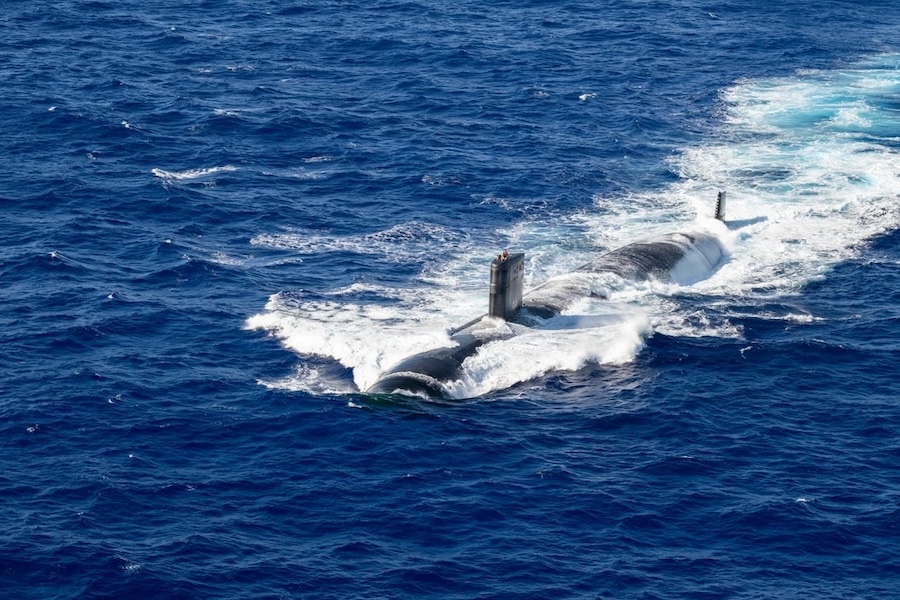
Chief of Naval Operations unveils U.S. Navy ‘Fighting Instructions’ for great power competition era
United States Navy Chief of Naval Operations Adm. Daryl Caudle has released new Fighting Instructions introducing a “Hedge Strategy” aimed at preparing the fleet for an increasingly unpredictable and contested global security environment.
 defence-industry.eu
In my opinion, read in conjunction with hybrid warfare,


German warships ‘sabotaged by workers’
Prosecutors accuse two men from Romania and Greece of tampering with state-of-the-art corvettes in Hamburg
 www.telegraph.co.uk
Two men have been arrested on suspicion of sabotaging several German warships.
The shipworkers, a 37-year-old Romanian and a 54-year-old Greek national, are accused of tampering with the vessels by pouring more than 20kg of steel pellets into an engine block, puncturing freshwater lines, removing fuel tank caps and disabling fuses in the onboard electronics.
Prosecutors said the vessels – two state-of-the-art corvettes – were docked at Hamburg harbour in 2025 when the suspected sabotage occurred.
It was discovered during...
- Kirkhill
- Replies: 117
- Forum: International Defence and Security

and the shadow fleet
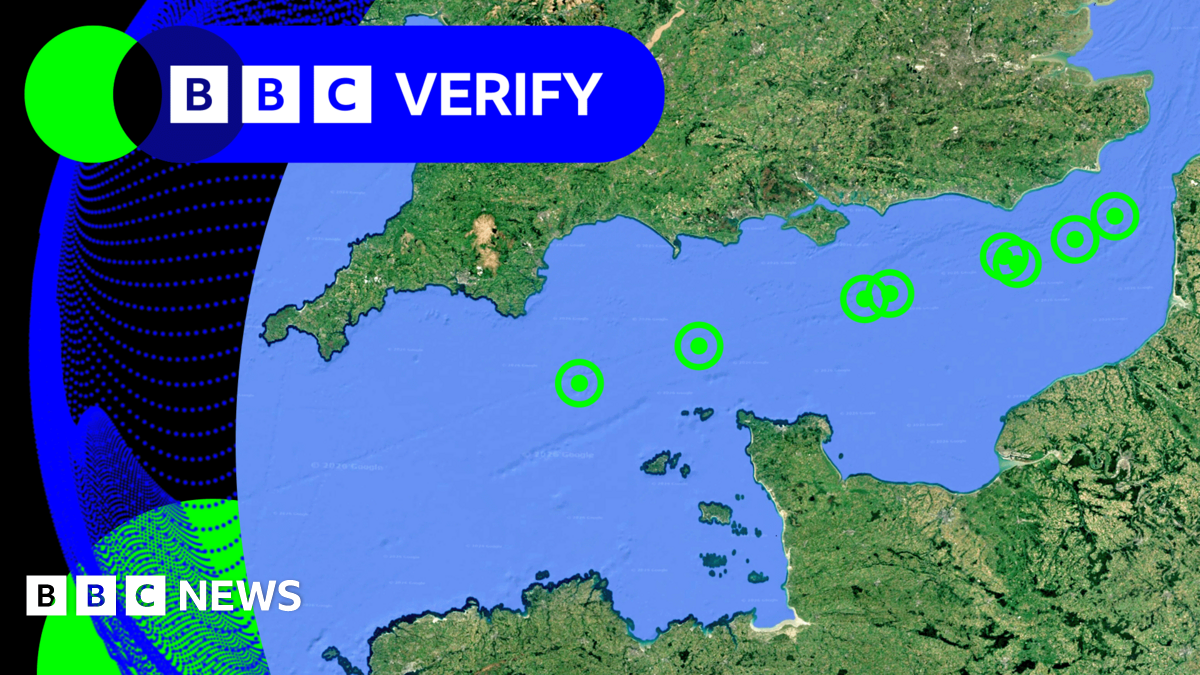
BBC Verify: Tracking shows eight sanctioned Russian tankers currently in English Channel
Latest updates from the BBC's specialists in fact-checking, verifying video and tackling disinformation.
 www.bbc.com
I thought it was wothwhile concentrating Shadow Fleet operations in one place
- Kirkhill
- Replies: 98
- Forum: International Defence and Security

There is a lot of emphasis on peacetime roles in the globasl commons. Supporting law enforcement, maintaining open SLOCs for trade and applying coercion on the Co-Operation, Competition, Conflict spectrum.
While the CNO argues for continuation of that which works, big fleets, nuclear deterrents, some management systems, he also argues for other things.
The gaps he defines, Standard Deviations he calls them include managing:
C-C5ISRT (Counter - C5ISRT or signature management to reduce detection)
RAS (redefined as Robotic and Autonomous Systems)
Artificial Intelligence and Advanced Manufacturing
Directed Energy for Terminal Defence
Building Readiness through
platform maintenance and modernization
refurbishing shore infrastructure
addressing the munitions back log
managing logistics in contested environments
and
managing risk.
The risk management one seems particularly appropriate to me.
The USN, like the USAF, has a reputation as a process driven organization. It is effective buty it can be cumbersome.
The CNO talks about managing SLOCs in an era of hybrid competition by assisting law enforcement and employing coercion. He needs more than half a dozen CVNs at sea to manage that.
He is back echoing Nelson's plaintive call for more frigates.
The CNO calls for a high low mix of ships which likely refers directly to the acquisition of the Legend cutters operated by the Coast Guard. Those ships, "under-armed" in the opinion of some, will likely be used by the USN to do similar law enforcement as the USCG but on the global commons of the high seas rather than in domestic waters. This also echoes the RN when those frigates and sloops that Nelson called for, after his death, were used by the West Africa Squadron for policing the seas in the name of eliminating the slave trade. And if those efforts gave them the opportunity to advance Their Majesties' Governments interests by stopping other ships and, for example, seizing sailors off American flagged ships on the grounds that the sailors used to be British, then so much the better. Thus did Britannia Rule the Waves for a hundred years.
But that British strategy was built on a couple or three pillars.
The world takes about autonomous systems relentlessly these days and the CNO addresses them explicitly.
But first he needs autonomous sailors, or at least autonomous skippers.
They may be hard to find in a process driven institution.
But they will be absolutely necessary.
The advantage of an autonomous system, man or machine, is that it is not affected by broken communications. It acts according to the last order received.
The disadvantage is identical. It acts according to the last order received.
Command needs to be willing to accept risk. Not common in process driven organizations like the USN.
But in the C-C5ISRT battle that autonomy will be critical. Less comms, more mission command, means harder to detect.
The problem will only get worse if the Hedge Strategy results in an ocean full of independent small ship commanders patrolling, enforcing laws and coercing autonomously.
The world's seas could end up looking a lot like those of 1815 to 1915 where skippers scooped up ships and brought them to Admiralty House in London for adjudication and disposal.
The small ship commanders had been raised on three driving concepts:
"General Chase" - the signal to break from the line of battle to swarming tactics
"Advance to the sounds of the guns" - seek out risk
"No captain can do very wrong if he places his ship alongside that of an enemy".
And there was an accompanying admonition
The 1757 execution by firing squad of Admiral Byng for "failing to do his utmost".
With 1400-1600 shadow (pirate?) ships, with tankers being between 900 and 1300, on the high seas, there is a lot of small ship opportunity out there.
....
For the record the 19th century anti-slavery actions that commenced in 1807 were presaged by an earlier effort.
In 1717 the RN, at the direction of HMG, took action against the Brethren of the Coast - the real life version of Jack Sparrow's Pirates of the Caribbean
Blackbeard (Edward Teach)
Black Bart
Anne Bonny and Mary Read
Calico Jack
And
Sir Henry Morgan, sometime Governor, sometime Pirate (Privateer), sometime distiller of rum.

