• Thanks for stopping by. Logging in to a registered account will remove all generic ads. Please reach out with any questions or concerns.

The Arctic

Ratcheting up the pressure next week...

Canada will press NATO allies to focus more on Arctic threats​

Finland, Sweden, Denmark, Norway, Iceland and the United States share Canada’s concerns about the Arctic

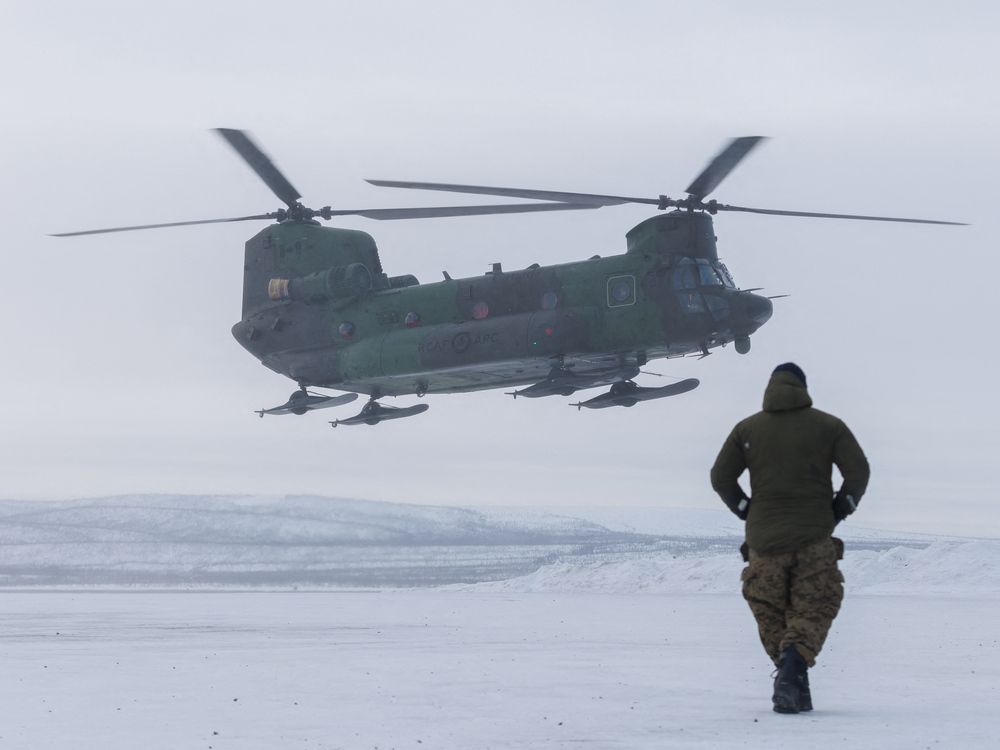
Canada will raise concerns about NATO’s approach to Arctic threats at a meeting in Brussels on Wednesday, Foreign Minister Anita Anand said.

“We see infrastructure moving further and further north and the geopolitical environment becoming more and more challenging,” Anand said in an interview with Bloomberg News. “We will have a further discussion about the way in which NATO will be able to take into account emerging threats, including in the Arctic.”

Once considered a low-tension zone, the Arctic is now at the heart of geopolitical tensions as melting ice reshapes sea routes and Russia and

NATO has also expanded in the Arctic, with Finland joining in 2023 and Sweden in 2024. Seven of eight Arctic countries are now part of the alliance and fall under its Article 5 collective security guarantee.

Anders Fogh Rasmussen, NATO’s former secretary general, previously told Bloomberg that the alliance should take on a stronger role in the Arctic, developing a specific strategy with concrete capability targets.

NATO’s Arctic nations want their regional defence contributions acknowledged in these targets, which outline the troops and equipment each member must offer toward the alliance’s shared goals.

Anand said she has spoken with NATO Secretary General Mark Rutte about how the Arctic features in the alliance’s spending goals and invited him to visit the Canadian far north. She will also discuss the matter when NATO foreign ministers gather on Wednesday.

“It couldn’t be more important at a moment where we’re putting $80 billion into Canadian defence commitments to reach two per cent this year and to reach five per cent by 2035,” she said. “Much of our expenditures is going to take place in the Arctic. And this means ports, this means roads, this means airports.”

At NATO’s last annual summit, allies committed to spending 3.5 per cent of their GDP on defence and an extra 1.5 per cent on defence-adjacent projects like infrastructure and cybersecurity.

Finland, Sweden, Denmark, Norway, Iceland and the United States share Canada’s concerns about the Arctic, Anand said.
 
India looks after India first, always. China is still their biggest threat , bigger in the long run than Pakistan.

What makes you separate China from Pakistan?
NW Frontier, Kashmir, Afghanistan, Pakistan, Islamists, ISI, China.
 
Ratcheting up the pressure next week...

Canada will press NATO allies to focus more on Arctic threats​

Finland, Sweden, Denmark, Norway, Iceland and the United States share Canada’s concerns about the Arctic

Canada will raise concerns about NATO’s approach to Arctic threats at a meeting in Brussels on Wednesday, Foreign Minister Anita Anand said.

“We see infrastructure moving further and further north and the geopolitical environment becoming more and more challenging,” Anand said in an interview with Bloomberg News. “We will have a further discussion about the way in which NATO will be able to take into account emerging threats, including in the Arctic.”

Once considered a low-tension zone, the Arctic is now at the heart of geopolitical tensions as melting ice reshapes sea routes and Russia and

NATO has also expanded in the Arctic, with Finland joining in 2023 and Sweden in 2024. Seven of eight Arctic countries are now part of the alliance and fall under its Article 5 collective security guarantee.

Anders Fogh Rasmussen, NATO’s former secretary general, previously told Bloomberg that the alliance should take on a stronger role in the Arctic, developing a specific strategy with concrete capability targets.

NATO’s Arctic nations want their regional defence contributions acknowledged in these targets, which outline the troops and equipment each member must offer toward the alliance’s shared goals.

Anand said she has spoken with NATO Secretary General Mark Rutte about how the Arctic features in the alliance’s spending goals and invited him to visit the Canadian far north. She will also discuss the matter when NATO foreign ministers gather on Wednesday.

“It couldn’t be more important at a moment where we’re putting $80 billion into Canadian defence commitments to reach two per cent this year and to reach five per cent by 2035,” she said. “Much of our expenditures is going to take place in the Arctic. And this means ports, this means roads, this means airports.”

At NATO’s last annual summit, allies committed to spending 3.5 per cent of their GDP on defence and an extra 1.5 per cent on defence-adjacent projects like infrastructure and cybersecurity.

Finland, Sweden, Denmark, Norway, Iceland and the United States share Canada’s concerns about the Arctic, Anand said.


Bit of cheek there. Trudeau brushed off both NATO and the Scandinavians a year or two ago when they brought it up and invited Canada to the party.
 
Bit of cheek there. Trudeau brushed off both NATO and the Scandinavians a year or two ago when they brought it up and invited Canada to the party.
As time goes on I am beginning to come to the conclusion that JT will be seen even more and treated even more as a Pariah in this country.
I don’t see him being able to continue living here in Canada full time.
 
Anita Anand just convening. Put our money where your mouth is.

Domestic Arctic Mobility Enhancement Project is an example. From at least before 2025 to possible delivery in 2030/32 for 170 vehicles that other Northern NATO countries are using.

Ridiculous.
 
What makes you separate China from Pakistan?
NW Frontier, Kashmir, Afghanistan, Pakistan, Islamists, ISI, China.
China uses Pakistan as a vassal State to keep India busy and divide their attention. India though is also building a substantial navy to counter the PLAN. Originally Pakistan was a separate threat, but now needs China to support it. So it is subservient to them.
 
China uses Pakistan as a vassal State to keep India busy and divide their attention. India though is also building a substantial navy to counter the PLAN. Originally Pakistan was a separate threat, but now needs China to support it. So it is subservient to them.

I still see Pakistan as an Islamist conduit for China to exploit in the west.
 
I see Pakistan as a aging bi-polar whore, that has burned many bridges and having disruptive seeds they have planted creating a harvest that is costing them dearly. Sucking up to China and offering to keep India's attention split is all they have left.
 
I see Pakistan as a aging bi-polar whore, that has burned many bridges and having disruptive seeds they have planted creating a harvest that is costing them dearly. Sucking up to China and offering to keep India's attention split is all they have left.

They may not be getting anything out of it but China is another matter. Britain is identifying its Islamist problem as a Pakistani and Somalian problem.

Both Pakistanis and Somalis are overrepresented in the British prison population relative to their share of the general UK population.
Data from the UK Ministry of Justice (MoJ) and other sources indicates this disproportionate representation, though specific numbers fluctuate annually and vary depending on whether the data counts all people of a given ethnic background or specifically foreign national offenders (FNOs) without British citizenship.

Key Statistics (England and Wales, end of March 2023/2024 data unless specified):
Overall Minority Representation: People from minority ethnic backgrounds constitute about 13% of the general population but make up 27% of the prison population.

Foreign National Offenders (FNOs): FNOs make up about 11.9% of the total prison population. In 2023, there were 306 Pakistani FNOs and 281 Somalian FNOs.

Population Proportions:
British Pakistanis were 2.7% of the population of England and Wales in the 2021 Census.
The total Somali-rooted population in the UK is around 176,000.

Arrest Rates: In an analysis of 2024 arrest data, Somalis were among the top five nationalities with the highest arrest rate per 100,000 of their population compared to British suspects.

Socio-economic Factors: Reports, such as the 2017 Lammy Review, have linked the growth in numbers of certain groups to their age and socio-economic profiles, with crime being correlated with poverty and deprivation. There is ongoing debate about the precise underlying causes, which include factors such as socio-economic status, discrimination within the justice system, and cultural background.

Pakistanis have been particularly singled out with respect to the grooming gangs as at Rotherham.

.....

The effect is starting to be seen.


Bangladesh used to be known as East Pakistan after the partition. And it is heavily engaged with China.
China-Bangladesh relations are a deepening "strategic cooperative partnership" driven by massive Chinese investment in Bangladesh's infrastructure (roads, power, ports) via the Belt and Road Initiative, making China Bangladesh's largest trade partner and military supplier, despite India's regional concerns about growing Chinese influence in South Asia. The relationship, formalized in 1976, has grown from initial support for West Pakistan to strong economic and defense ties, with Beijing now a key ally for Dhaka, balancing relations with India.
 
Ratcheting up the pressure next week...

Canada will press NATO allies to focus more on Arctic threats​

Finland, Sweden, Denmark, Norway, Iceland and the United States share Canada’s concerns about the Arctic

Canada will raise concerns about NATO’s approach to Arctic threats at a meeting in Brussels on Wednesday, Foreign Minister Anita Anand said.

“We see infrastructure moving further and further north and the geopolitical environment becoming more and more challenging,” Anand said in an interview with Bloomberg News. “We will have a further discussion about the way in which NATO will be able to take into account emerging threats, including in the Arctic.”

Once considered a low-tension zone, the Arctic is now at the heart of geopolitical tensions as melting ice reshapes sea routes and Russia and

NATO has also expanded in the Arctic, with Finland joining in 2023 and Sweden in 2024. Seven of eight Arctic countries are now part of the alliance and fall under its Article 5 collective security guarantee.

Anders Fogh Rasmussen, NATO’s former secretary general, previously told Bloomberg that the alliance should take on a stronger role in the Arctic, developing a specific strategy with concrete capability targets.

NATO’s Arctic nations want their regional defence contributions acknowledged in these targets, which outline the troops and equipment each member must offer toward the alliance’s shared goals.

Anand said she has spoken with NATO Secretary General Mark Rutte about how the Arctic features in the alliance’s spending goals and invited him to visit the Canadian far north. She will also discuss the matter when NATO foreign ministers gather on Wednesday.

“It couldn’t be more important at a moment where we’re putting $80 billion into Canadian defence commitments to reach two per cent this year and to reach five per cent by 2035,” she said. “Much of our expenditures is going to take place in the Arctic. And this means ports, this means roads, this means airports.”

At NATO’s last annual summit, allies committed to spending 3.5 per cent of their GDP on defence and an extra 1.5 per cent on defence-adjacent projects like infrastructure and cybersecurity.

Finland, Sweden, Denmark, Norway, Iceland and the United States share Canada’s concerns about the Arctic, Anand said.

The current government keeps urging NATO to “take the Arctic seriously,” but talk only goes so far so why not lead by example and push for real infrastructure north of 60? Expanding the harbour facilities in Iqaluit and establishing a small NATO naval station there would finally anchor a persistent allied presence in the region. During the navigation season, a Standing Naval Force Arctic one ship from each committed nation could rotate through Iqaluit as a forward operating hub. It’s practical, symbolic, and long overdue: if we want NATO to defend the Arctic, we need to give NATO somewhere to stand.
 
The Americans are only half serious at this point. The USN doesn't have surface vessels capability there - it's left to the Coast Guard, and the USCG has access to bases and support facilities in Alaska, including on the North side of it. While the Swedes, Finns, Danish and Norwegians have much more direct access to the Arctic right to their North and from their Island possessions, such as Svalbard and Greenland with support facilities. Why would they want to use a Canadian facility that, from their vantage point is not even on the Arctic ocean, but rather in the middle of the North-West passage?

We, Canadian, look at the Arctic Archipelago as the Arctic, but the actual Arctic is a lot bigger and has many different access and issues. The narrow Canadian/US vision of the Arctic is what makes some people around here think that Russia's large investments in their Arctic coastal facilities means the hordes are coming over the top of the world to invade us. They are not, and even in summer, no one is that stupid to attempt such a thing. Their investments are made to ensure that no one challenges them on their claim of ownership and right to control the use of the Northern Sea Route , located just to the North of their main land mass, when it becomes feasible to safely and consistently use it between Asia and Europe.

Now, this last part is very likely to occur before the North-West Passage is similarly open in Canada, and is likely to attract more traffic anyway. That is because in Russia, the winter Arctic ice recedes away from their coast as it melts and is relatively free of sources of icebergs, whereas in Canada, as the ice recedes, the various current tend to bring the Greenlandic icebergs down our "starboard" side, and the ice breaking up also tends to accumulate in the various bottlenecks of the North West Passage - making it harder than before - not easier - to navigate.

Moreover, if both routes are open, the Northern Sea Route is a significantly shorter and faster short cut to Europe from Asia, and vice versa, than the North West Passage.
 
The current government keeps urging NATO to “take the Arctic seriously,” but talk only goes so far so why not lead by example and push for real infrastructure north of 60? Expanding the harbour facilities in Iqaluit and establishing a small NATO naval station there would finally anchor a persistent allied presence in the region. During the navigation season, a Standing Naval Force Arctic one ship from each committed nation could rotate through Iqaluit as a forward operating hub. It’s practical, symbolic, and long overdue: if we want NATO to defend the Arctic, we need to give NATO somewhere to stand.
Wouldn't that be the waste of a ship? We could surge a ship from a place like St. John's far faster than any opponent could transit from Europe or China. By all means, build a small NATO supply depot or the like where a vessel on patrol could replenish and do minor repairs but positioning a ship there on a regular basis I don't think you would get buy-in. Ships are too expensive and too few in number (especially ice-strengthened ones)
 
Wouldn't that be the waste of a ship? We could surge a ship from a place like St. John's far faster than any opponent could transit from Europe or China. By all means, build a small NATO supply depot or the like where a vessel on patrol could replenish and do minor repairs but positioning a ship there on a regular basis I don't think you would get buy-in. Ships are too expensive and too few in number (especially ice-strengthened ones)
We need to start thinking outside the box. Clinging to a “we’ll surge later” mindset is exactly what emboldens adversaries because it telegraphs that we won’t be there until after they’ve already shaped the battlespace. Forward presence, even rotational, changes that equation and forces them to respect the fact that NATO is already in the Arctic, not arriving days or weeks too late.
 
Wouldn't that be the waste of a ship? We could surge a ship from a place like St. John's far faster than any opponent could transit from Europe or China. By all means, build a small NATO supply depot or the like where a vessel on patrol could replenish and do minor repairs but positioning a ship there on a regular basis I don't think you would get buy-in. Ships are too expensive and too few in number (especially ice-strengthened ones)

Presence, presence and presence. Sure we could surge a ship. The Americans could surge a squadron of C17s.

If we want to lay claim to the place we have to be there.
 
Presence, presence and presence. Sure we could surge a ship. The Americans could surge a squadron of C17s.

If we want to lay claim to the place we have to be there.
Agreed for us but I question the NATO rotational notion. Talking Canada, a combined coast guard and proper base complete with gate house and a commissionaire to show we mean business. Not being sarcastic by the way. If we are going to open up Churchill then a home port for coast guard is a definite necessity and a proper station for the Arctic fleet wouldn't hurt.
 
They may not be getting anything out of it but China is another matter. Britain is identifying its Islamist problem as a Pakistani and Somalian problem.

Both Pakistanis and Somalis are overrepresented in the British prison population relative to their share of the general UK population.
Data from the UK Ministry of Justice (MoJ) and other sources indicates this disproportionate representation, though specific numbers fluctuate annually and vary depending on whether the data counts all people of a given ethnic background or specifically foreign national offenders (FNOs) without British citizenship.

Key Statistics (England and Wales, end of March 2023/2024 data unless specified):
Overall Minority Representation: People from minority ethnic backgrounds constitute about 13% of the general population but make up 27% of the prison population.

Foreign National Offenders (FNOs): FNOs make up about 11.9% of the total prison population. In 2023, there were 306 Pakistani FNOs and 281 Somalian FNOs.

Population Proportions:
British Pakistanis were 2.7% of the population of England and Wales in the 2021 Census.
The total Somali-rooted population in the UK is around 176,000.

Arrest Rates: In an analysis of 2024 arrest data, Somalis were among the top five nationalities with the highest arrest rate per 100,000 of their population compared to British suspects.

Socio-economic Factors: Reports, such as the 2017 Lammy Review, have linked the growth in numbers of certain groups to their age and socio-economic profiles, with crime being correlated with poverty and deprivation. There is ongoing debate about the precise underlying causes, which include factors such as socio-economic status, discrimination within the justice system, and cultural background.

Pakistanis have been particularly singled out with respect to the grooming gangs as at Rotherham.

.....

The effect is starting to be seen.


Bangladesh used to be known as East Pakistan after the partition. And it is heavily engaged with China.
China-Bangladesh relations are a deepening "strategic cooperative partnership" driven by massive Chinese investment in Bangladesh's infrastructure (roads, power, ports) via the Belt and Road Initiative, making China Bangladesh's largest trade partner and military supplier, despite India's regional concerns about growing Chinese influence in South Asia. The relationship, formalized in 1976, has grown from initial support for West Pakistan to strong economic and defense ties, with Beijing now a key ally for Dhaka, balancing relations with India.
To that point I remember reading a story in the London Times of an upcoming visit to Jamaica of then British P.M. Cameron.
Other than the trade focus Cameron was going to cut the ribbon on a 300+ bed extension to a Jamaican prison for British convicted, but Island born Criminals.
 
Courtesy of AI


Inuit in Nunavut are not gaining full sovereignty in 2027, but rather achieving a major step in self-determination through devolution, which will transfer control over the territory's public lands, freshwater, and non-renewable resources from the federal government to the territorial government.
The final transfer of these responsibilities is scheduled to be completed by April 1, 2027.

Key Details of the Devolution Agreement

Agreement Signed: The Nunavut Lands and Resources Devolution Agreement was officially signed on January 18, 2024, by the Government of Canada, the Government of Nunavut, and Nunavut Tunngavik Incorporated (NTI), which is the official representative for Nunavut Inuit.

Transfer Date: A three-year transition period began on April 1, 2024, with the final transfer of responsibilities set for April 1, 2027.

Increased Control: Upon completion, the Government of Nunavut and its residents will have the authority to make decisions regarding the use and development of land and resources within the territory, and to collect royalties from resource extraction, bringing the territory's powers in line with Canada's provinces and its other two territories (Yukon and the Northwest Territories).

Self-Determination: This agreement is widely considered a crucial step toward greater Inuit self-determination and economic development, allowing local priorities to guide resource management and infrastructure projects.

Sovereignty: While often framed as a step toward "sovereignty" in common discussions about Arctic control, the legal term is devolution, which transfers administrative control within the Canadian federation, rather than establishing an independent sovereign state. As noted by NTI President Jeremy Tunraluk, "There is no Canadian sovereignty without Inuit security," emphasizing the central role of Inuit well-being in Canada's claim to the Arctic.
 
Back
Top