

You are using an out of date browser. It may not display this or other websites correctly.
You should upgrade or use an alternative browser.
You should upgrade or use an alternative browser.
CJADC2
- Thread starter Kirkhill
- Start date


- Reaction score
- 13,977
- Points
- 1,160
Canadian Army Today Fall 2025
Land C5ISRT
Command Control Communications Computers Cyber Intelligence Surveillance Reconnaissance Targeting
In other words, the entire OODA-loop without the effectors
Observing (via sensors), Orienting, Deciding, Acting (in the sense of issuing commands to effectors)
Six incorporated projects
1 - Tactical Communications Modernization - > 5000 MCAD
 apps.forces.gc.ca
"modernization of tactical voice and data radios, as well as beyond line of site and high capacity line of site communications systems for CA Bde and below"
Definition started 2025/26
Delivery 2030 to 2037
2 - Tactical Command & Control Information Systems Modernization - 1000 to 4990 MCAD
apps.forces.gc.ca
"improve the following command functions: commander decision-making at all levels, situational awareness, collaborative planning including information/data sharing with other joint partners, electronic transmission of orders and plans, battle tracking and monitoring the operational status of brigade groups, battle groups, combat teams, platoons, sections and detachments."
Definition started 2024/25
Delivery 2030 to 2037
3 - Intelligence Surveillance & Reconnaissance Modernization - 1000 to 4990 MCAD
apps.forces.gc.ca
"integrating, interfacing and consolidating existing sensor information efficiently, making sensor outputs readily available to commanders and staff throughout the battlefield, providing tools for the effective management and control of all battlefield sensors and enabling access to external sensor products from Joint, Interagency, Multinational and Public sources."
Definition in progress
Delivery 2029 to 2033
4 - Joint Deployable Headquarters & Signals Regiment Modernization - 250 to 499 MCAD
apps.forces.gc.ca
"fielding joint fires support tools, small mission deployable command and control suites, joint common operational picture systems, digital liaison team support tools, commanders’ tactical command post and combined, joint, interagency command and control interoperability functions"
Definition started 2025/26
Delivery 2033 to 2036
5 - Combined Joint Intelligence Modernization - 100 to 249 MCAD
apps.forces.gc.ca
"requirements include secure deployable work environments (electronically shielded shelters), a training and storage facility and the required IT systems to enable access to the TS enterprise network."
Definition started 2025/26
Delivery 2029 to 2031
6 - Canadian Forces Land Electronic Warfare Modernization - 500 to 1000 MCAD
apps.forces.gc.ca
"This project will satisfy the following capabilities; Command (electronic warfare planning management and analysis), Sense (electronic warfare support), Act, (counter command and control electronic attack), and Shield (Indications and Warnings)."
Definition started 2024/25
Delivery 2030 to 2033
I will take the opportunity to add a seventh to the mix
7 - Joint Fires Modernization - 250 to 499 MCAD
apps.forces.gc.ca
"Digital Fires Command and Control (C2) and Targeting Software - to facilitate planning and execution of the deliberate and dynamic targeting cycles, exchange digitized information between sensors, deciders, and effectors in a multinational coalition context, and enable the rapid prosecution of targets within the land domain while minimizing the potential for fratricide and collateral damage;"
Definition in progress
Delivery 2025 to 2030
.....
Between now and 2037 there is an intention spend something like 17 BCAD on C5ISRT for the Land components of the Joint effort.
I gather that the RCN, the RCAF and in particular its Space Command have got similar plans in the works.
Compare that to the F35 and RCD projects and it is of a similar budget magnitude.
I don't think the projects will terminate in 2037.
I don't think the spending will terminate in 2037 either.
Given the rate of change, continuous improvement and an constantly evolving enemy I expect that as soon as the money is spent and the systems are delivered theire will be new and better systems on offer and required.
This could almost be considered a continuing, or operating expense.
At the same time I would hope that we would start seeing some targeted benefits from these expenditures before 2030.
....
Which, if any, of these projects, might or is the IBCTs type of system funded?
Land C5ISRT
Command Control Communications Computers Cyber Intelligence Surveillance Reconnaissance Targeting
In other words, the entire OODA-loop without the effectors
Observing (via sensors), Orienting, Deciding, Acting (in the sense of issuing commands to effectors)
Six incorporated projects
1 - Tactical Communications Modernization - > 5000 MCAD
Land Command Support System Tactical Communications Modernization - Defence Capabilities Blueprint
Land Command Support System Tactical Communications Modernization - Defence Capabilities Blueprint
"modernization of tactical voice and data radios, as well as beyond line of site and high capacity line of site communications systems for CA Bde and below"
Definition started 2025/26
Delivery 2030 to 2037
2 - Tactical Command & Control Information Systems Modernization - 1000 to 4990 MCAD
Land Command Support System Tactical Command and Control Information System Modernization - Defence Capabilities Blueprint
Land Command Support System Tactical Command and Control Information System Modernization - Defence Capabilities Blueprint
"improve the following command functions: commander decision-making at all levels, situational awareness, collaborative planning including information/data sharing with other joint partners, electronic transmission of orders and plans, battle tracking and monitoring the operational status of brigade groups, battle groups, combat teams, platoons, sections and detachments."
Definition started 2024/25
Delivery 2030 to 2037
3 - Intelligence Surveillance & Reconnaissance Modernization - 1000 to 4990 MCAD
Land Intelligence Surveillance Reconnaissance Modernization - Defence Capabilities Blueprint
Land Intelligence Surveillance Reconnaissance Modernization - Defence Capabilities Blueprint
"integrating, interfacing and consolidating existing sensor information efficiently, making sensor outputs readily available to commanders and staff throughout the battlefield, providing tools for the effective management and control of all battlefield sensors and enabling access to external sensor products from Joint, Interagency, Multinational and Public sources."
Definition in progress
Delivery 2029 to 2033
4 - Joint Deployable Headquarters & Signals Regiment Modernization - 250 to 499 MCAD
Joint Deployable HQ and Signal Regiment Modernization - Defence Capabilities Blueprint
Joint Deployable HQ and Signal Regiment Modernization - Defence Capabilities Blueprint
"fielding joint fires support tools, small mission deployable command and control suites, joint common operational picture systems, digital liaison team support tools, commanders’ tactical command post and combined, joint, interagency command and control interoperability functions"
Definition started 2025/26
Delivery 2033 to 2036
5 - Combined Joint Intelligence Modernization - 100 to 249 MCAD
Combined/Joint Intelligence Modernization - Defence Capabilities Blueprint
Combined/Joint Intelligence Modernization - Defence Capabilities Blueprint
"requirements include secure deployable work environments (electronically shielded shelters), a training and storage facility and the required IT systems to enable access to the TS enterprise network."
Definition started 2025/26
Delivery 2029 to 2031
6 - Canadian Forces Land Electronic Warfare Modernization - 500 to 1000 MCAD
CF Land Electronic Warfare Modernization - Defence Capabilities Blueprint
CF Land Electronic Warfare Modernization - Defence Capabilities Blueprint
"This project will satisfy the following capabilities; Command (electronic warfare planning management and analysis), Sense (electronic warfare support), Act, (counter command and control electronic attack), and Shield (Indications and Warnings)."
Definition started 2024/25
Delivery 2030 to 2033
I will take the opportunity to add a seventh to the mix
7 - Joint Fires Modernization - 250 to 499 MCAD
Joint Fires Modernization - Defence Capabilities Blueprint
Joint Fires Modernization - Defence Capabilities Blueprint
"Digital Fires Command and Control (C2) and Targeting Software - to facilitate planning and execution of the deliberate and dynamic targeting cycles, exchange digitized information between sensors, deciders, and effectors in a multinational coalition context, and enable the rapid prosecution of targets within the land domain while minimizing the potential for fratricide and collateral damage;"
Definition in progress
Delivery 2025 to 2030
.....
Between now and 2037 there is an intention spend something like 17 BCAD on C5ISRT for the Land components of the Joint effort.
I gather that the RCN, the RCAF and in particular its Space Command have got similar plans in the works.
Compare that to the F35 and RCD projects and it is of a similar budget magnitude.
I don't think the projects will terminate in 2037.
I don't think the spending will terminate in 2037 either.
Given the rate of change, continuous improvement and an constantly evolving enemy I expect that as soon as the money is spent and the systems are delivered theire will be new and better systems on offer and required.
This could almost be considered a continuing, or operating expense.
At the same time I would hope that we would start seeing some targeted benefits from these expenditures before 2030.
....
Which, if any, of these projects, might or is the IBCTs type of system funded?

- Reaction score
- 295
- Points
- 810
I don't understand your question.Which, if any, of these projects, might or is the IBCTs type of system funded?
- Reaction score
- 13,977
- Points
- 1,160
I understand the American IBCT system to be a piece of the American CJADC2 puzzle.
I am gathering that we are engaging with a similar puzzle, whether we call it CJADC2 or not.
Where would IBCTs or its equivalent slot into our current funding structure? Or would it?
....
Related question:
If we buy a NASAMS system it consists of
Effectors - guns, missiles, directed radio frequency weapons and lasers.
The missiles can be from multiple sources, as can the guns but the TEL launchers appear to be critical to th operation of the system
Sensors - Radar, EO/IR sensors and acoustic sensors
And then a bunch of C5ISRT stuff including the operators' HMI station.
....
Which prompts the next thought, where does the C5ISRT budget end and capital project budgets begin.
Is the CIC in the RCD part of the capital plan?
Or is it a C5ISRT/CJADC2 budget that needs to be constantly refreshed?
The gunner's HMI for the RWS on top of his TAPV, is that part of the gun or part of the C5ISRT infrastructure? What if the gun is remotely mounted at the end of a fibre optic cable? Or the cable is replaced by an RF link? Or that one gunner with his singlr HMI is co-ordinating the fires of a battery of guns?
Or, a final case, an Aussie F18 is pulled out of storage, refitted to make it ready for flight, then outfitted with the hardware and software necessary so that it can be put back into storage as a ready to use, flyable UAV. Could that be flown from an existing MQ-9 HMI or an RCD CIC? How much of those costs would be C5ISRT costs and how much would attach to the aircraft and the HMI assuming that both alrady exist in inventory?
I am gathering that we are engaging with a similar puzzle, whether we call it CJADC2 or not.
Where would IBCTs or its equivalent slot into our current funding structure? Or would it?
....
Related question:
If we buy a NASAMS system it consists of
Effectors - guns, missiles, directed radio frequency weapons and lasers.
The missiles can be from multiple sources, as can the guns but the TEL launchers appear to be critical to th operation of the system
Sensors - Radar, EO/IR sensors and acoustic sensors
And then a bunch of C5ISRT stuff including the operators' HMI station.
....
Which prompts the next thought, where does the C5ISRT budget end and capital project budgets begin.
Is the CIC in the RCD part of the capital plan?
Or is it a C5ISRT/CJADC2 budget that needs to be constantly refreshed?
The gunner's HMI for the RWS on top of his TAPV, is that part of the gun or part of the C5ISRT infrastructure? What if the gun is remotely mounted at the end of a fibre optic cable? Or the cable is replaced by an RF link? Or that one gunner with his singlr HMI is co-ordinating the fires of a battery of guns?
Or, a final case, an Aussie F18 is pulled out of storage, refitted to make it ready for flight, then outfitted with the hardware and software necessary so that it can be put back into storage as a ready to use, flyable UAV. Could that be flown from an existing MQ-9 HMI or an RCD CIC? How much of those costs would be C5ISRT costs and how much would attach to the aircraft and the HMI assuming that both alrady exist in inventory?

FJAG
Army.ca Myth
- Reaction score
- 21,089
- Points
- 1,160
I'm not sure if your explanation helped clarify the question.
The only one of these projects I have any insight to is JFM. The project specifies what components are within the scope of the project and which are outside. For example the joint fires command and control software is within scope. A new LAV OPV is out of scope. You need to understand the details of the project very carefully to fully understand what is within its scope and how it fits in with existing capabilities or what new, but out of scope, capabilities it is to be capable of integrating with.

The only one of these projects I have any insight to is JFM. The project specifies what components are within the scope of the project and which are outside. For example the joint fires command and control software is within scope. A new LAV OPV is out of scope. You need to understand the details of the project very carefully to fully understand what is within its scope and how it fits in with existing capabilities or what new, but out of scope, capabilities it is to be capable of integrating with.
- Reaction score
- 13,977
- Points
- 1,160
I'm not sure if your explanation helped clarify the question.
The only one of these projects I have any insight to is JFM. The project specifies what components are within the scope of the project and which are outside. For example the joint fires command and control software is within scope. A new LAV OPV is out of scope. You need to understand the details of the project very carefully to fully understand what is within its scope and how it fits in with existing capabilities or what new, but out of scope, capabilities it is to be capable of integrating with.
I can't clarify. I seek clarification. But I am not sure that clarification is possible.
We are no longer counting cannonballs, cannons and ships in which to mount them. Ships that lasted decades and cannons that lasted generations.
This C5ISRT stuff is replacing parchment and quill. It is the stuff that each one of us wrestle with everyday in the office as it is constantly being renewed, refreshed and replaced. It is the same software and hardware that is connecting the boardroom more directly with the factory floor, the inventory in the warehouse and the truck on the road.
The truck is capital. The transmitter on board that transmits location, speed, driver and cargo is part of the C5 environment, if not the ISRT environment.
That C5 bit is constantly being changed as bits with 2 year life expectancies wear out and break or are rendered obsolescent by new software. Concurrently the connectivity is constantly increasing as are the capabilities of the systems.
As well the operators and maintainers have constantly changing duties and expectations.
Ukraine is merely demonstrating this reality in a military environment with tactics staledated in days and strategies obsolete in months.
....
I understand the need for, and support the investment in, C5ISRT, but I don't think we can look at this as a magical black box that can be put on a shelf and stored for a generation like a rifle.
I think this has to be seen as a continuing expense.
I came up with a number of 17 BCAD to complete delivery of those 7 land projects by 2037.
2037 minus 2025 = 12 years
Call it 18 BCAD over that time or 1.5 BCAD per year.
I think that we should be looking at a continuing expenditure of 2 BCAD per year. t least.
And that will impact on capital purchases.
Take for example the GBAD project and assume that we replicate the Skyshield system but with SkyRanger turrets, NASAMs MML launchers, MRR radars and come form of FCS station.
The guns, launchers and radar are obviously capital expenses. The missiles and bullets are consumables. But should the FCS be seen as capital or should it be seen as something else that operates on its own timeline, something closer to a consumable?
....
And if we stick with SkyRanger for a minute, it can be a self-contained module that can be linked into a battery with a single operator at a single HMI. Or it can be a discrete turret mounted on a Boxer or a truck with all the C5ISRT elements embedded witin the turret and accessed in the hull by a dedicated HMI and an external link.
Separating out the cost of the C5ISRT component from the capital component I suspect would gave a significant impact on the capital costs.
If it is anticipated that the C5ISRT is going to constantly change (continuously improve) then vendors are not going to be on the hook for the risks associated with guarantees for operations 5 and 10 years hence.
FJAG
Army.ca Myth
- Reaction score
- 21,089
- Points
- 1,160
I think that I'll bow out here.
I understand exactly what you are talking about and its an issue I had to address when I went to the JAG CIMP. The way I managed technology in my civilian office - a three-year rolling acquisition program (a slight variation of your 2 BCAD per year concept) - differed completely with the already established JAG CIMP which was a one shot all-or-nothing program to set up a system with no defined life-cycle.
Most DND programs are one shot but often with life cycle maintenance/enhancement built in. I think the trouble with the issue that you are looking at (and I have minimal knowledge or expertise in C5ISRT) is that it is a broad subject which spans many different agencies within DND. That creates massive coordination issues which often last longer than the maturing of the technology being looked at.
If I recall correctly, back at the turn of the century the army had DLR 8 working on creating the solutions for bridging and inter connecting the different components that were to make the army's then new foray into the filed of ISTAR. In testing their theories and components they - luckily for the artillery - has been looking at notional and available radars and UAVs which the artillery's DLR 2 wasn't. It ended up being seminal work that gave a tremendous jump start to DLR 2 being able to field that equipment with UORs in a matter of weeks for Kabul.
There are similar problems with buying vehicles. They usually come in spurts once per a decade or two and need broad consultation across the board with end users as to variants and SEVs. That's then applied to budgets and changing costs to produce something that may or may not satisfy individual end users.
I think C5ISRT is at several higher magnitudes of complexity. I can't tell from the links as to who is managing these projects and particulalry how their interrelationship is being managed or how the systems are to be managed, improved, funded etc into the future. I will say that the IOC/FOC dates are concerning and there is no indication as to the expected life cycle or how enhancements are to be handled.
I'll add a layer on top of that. We currently have a changing vision for the army as a whole. My guess is that there will need to be considerable change in both scope and scale as to the deliverables.
I understand exactly what you are talking about and its an issue I had to address when I went to the JAG CIMP. The way I managed technology in my civilian office - a three-year rolling acquisition program (a slight variation of your 2 BCAD per year concept) - differed completely with the already established JAG CIMP which was a one shot all-or-nothing program to set up a system with no defined life-cycle.
Most DND programs are one shot but often with life cycle maintenance/enhancement built in. I think the trouble with the issue that you are looking at (and I have minimal knowledge or expertise in C5ISRT) is that it is a broad subject which spans many different agencies within DND. That creates massive coordination issues which often last longer than the maturing of the technology being looked at.
If I recall correctly, back at the turn of the century the army had DLR 8 working on creating the solutions for bridging and inter connecting the different components that were to make the army's then new foray into the filed of ISTAR. In testing their theories and components they - luckily for the artillery - has been looking at notional and available radars and UAVs which the artillery's DLR 2 wasn't. It ended up being seminal work that gave a tremendous jump start to DLR 2 being able to field that equipment with UORs in a matter of weeks for Kabul.
There are similar problems with buying vehicles. They usually come in spurts once per a decade or two and need broad consultation across the board with end users as to variants and SEVs. That's then applied to budgets and changing costs to produce something that may or may not satisfy individual end users.
I think C5ISRT is at several higher magnitudes of complexity. I can't tell from the links as to who is managing these projects and particulalry how their interrelationship is being managed or how the systems are to be managed, improved, funded etc into the future. I will say that the IOC/FOC dates are concerning and there is no indication as to the expected life cycle or how enhancements are to be handled.
I'll add a layer on top of that. We currently have a changing vision for the army as a whole. My guess is that there will need to be considerable change in both scope and scale as to the deliverables.
- Reaction score
- 13,977
- Points
- 1,160
W8476-267082 JOINT FIRES MODERNIZATION DJFC2 SSIS - Tender Notice | CanadaBuys
Canada is pursuing a Digital Joint Fire Support Command and Control (DJFSC2) capability that requires interoperability with the Advanced Field Artillery Tactical Data System (AFATDS).
Courtesy of Noah at TNSF
Digital Joint Fires Support Command and Control to mesh with HIMARS and AFATDS.
FJAG
Army.ca Myth
- Reaction score
- 21,089
- Points
- 1,160
W8476-267082 JOINT FIRES MODERNIZATION DJFC2 SSIS - Tender Notice | CanadaBuys
Canada is pursuing a Digital Joint Fire Support Command and Control (DJFSC2) capability that requires interoperability with the Advanced Field Artillery Tactical Data System (AFATDS).canadabuys.canada.ca
Courtesy of Noah at TNSF
Digital Joint Fires Support Command and Control to mesh with HIMARS and AFATDS.
 This was supposed to be in definition in 2022 and entering IOC in 2026.
- Reaction score
- 13,977
- Points
- 1,160
Domani.
- Reaction score
- 13,977
- Points
- 1,160
In the age of algorithmic warfare, victory no longer belongs to those who breach enemy defenses, but to those who control the decision space, shape the adversary’s risk calculus, and impose an irreversible strategic tempo. The decisive battlefield is no longer air, land, or sea, but the invisible layer where data, models, predictive wargaming, and adaptive command architectures converge.
Ultimately, 21st century military power is no longer defined by the capacity to destroy, but by the ability to preempt the adversary’s decision horizon. Those who dominate this layer do not merely win wars; they shape the conditions under which war ceases to be a rational option.
The absence of any visible engagement by Venezuelan air defenses during the US operation cannot be interpreted as an operational accident or a simple capability failure. It represents one of the clearest expressions of a structural transformation in modern conflict, in which military superiority is no longer measured primarily by the destruction of enemy forces, but by the ability to neutralize an adversary’s capacity to decide, coordinate, and manage escalation.
This shift in the center of gravity of warfare—from platforms to decision-making processes—marks a major doctrinal rupture. It reflects the growing integration of C4ISR, multi-domain warfare, and cognitive warfare into unified strategic architectures whose operational culmination is Decision-Centric Warfare. In this paradigm, victory no longer lies in the visible annihilation of enemy capabilities, but in shaping an informational, institutional, and cognitive environment in which any adversary decision becomes impossible, irrational, or strategically prohibitive.
MDTFs as not just enablers of conventional operations but a combat arena of its own
Operation Absolute Resolve appears as a direct operational translation of the principles articulated in the National Security Strategy 2025, which elevates decision primacy, left-of-bang action—understood as intervention upstream of the adversary decision cycle to prevent the formation of the decision itself—and information dominance as central levers of modern conflict. The event therefore reflects neither a conventional regime-change operation nor a mere show of force, but a strategy of systemic deactivation of adversary decision sovereignty.
21st century warfare is increasingly defined less as a clash of forces than as an asymmetric competition between decision architectures

- Reaction score
- 7,053
- Points
- 1,160
or....the Venezuelan air defence systems simply were not operational due to maintenance issues...
MDTFs as not just enablers of conventional operations but a combat arena of its own
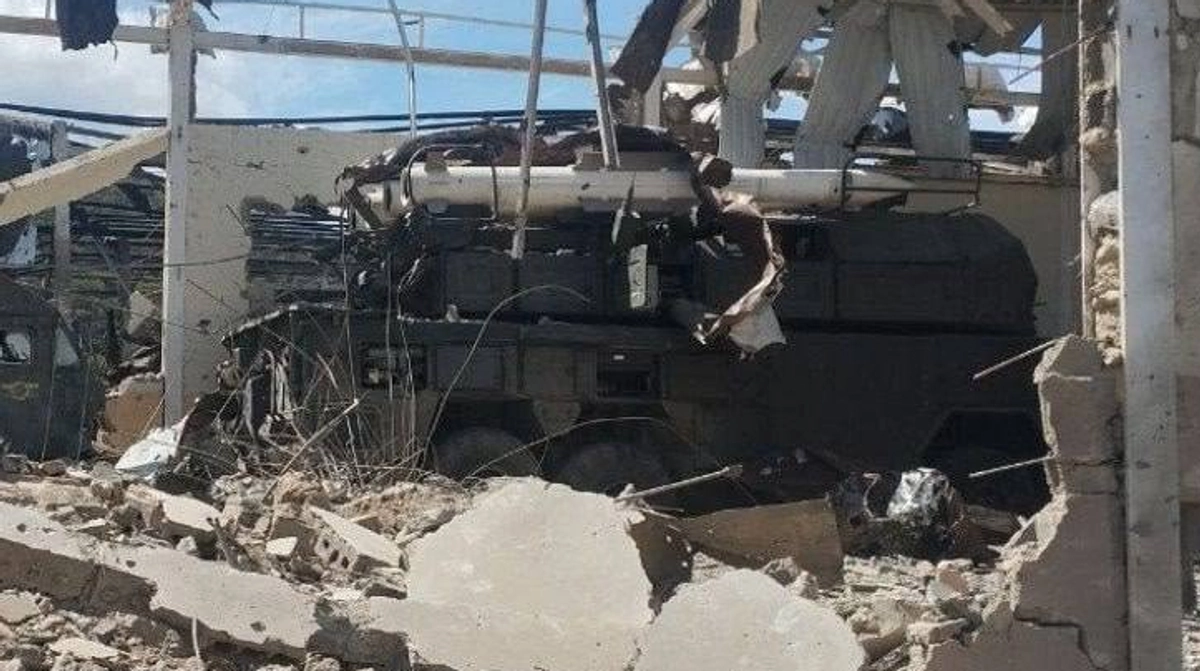
Russian air defence systems in Venezuela were not connected to radars during US operation – NYT
The New York Times has reported that during the US operation in Venezuela, Russian air defence systems were not connected to radar systems and were effectively non-operational. Some of the systems were kept in storage.
 www.pravda.com.ua
It has emerged that some Russian air defence systems, particularly Buk-M2 systems in service with Venezuela, were not connected to radars or were kept in storage at the time of the US operation in the capital, Caracas, in early January 2026.
Source: The New York Times, citing US politicians and its own analysis of videos from Venezuela
The US operation began, among other things, with strikes on locations where Buk systems were stationed. Some were destroyed while still being deployed, as the Venezuelan military was unprepared. Videos from the locations of the strike showed Russian air defence systems in storage facilities, with launchers and a command-and-staff vehicle destroyed.
The Russian systems were not connected to radars at the time of the attack and may not have been operational for years, the NYT reported, citing four current and former US officials.
"Taken together, the evidence suggests that, despite months of warnings, Venezuela was not ready for the American invasion," the newspaper said.
The last portion lends some credence to the suggestions that there may have been some type of agreement between Trump and Putin for Russia to not oppose the US operation against Venezuela in return for concessions of some type on Ukraine.Russia is cited among the reasons for the failure of Venezuela's air defence, as its military personnel and engineers were supposed to maintain the systems. The systems may not have been repaired due to the Russians being "occupied" in Ukraine, or the Kremlin may have deliberately failed to maintain the combat readiness of Venezuela's air defence in order to play along with the Americans, the NYT suggests.
Venezuela tried to maintain the Russian equipment in proper condition on its own, but often lacked both the necessary technical knowledge and spare parts, the NYT reported, citing anonymous US officials.
"If the Venezuelan military had shot down an American aircraft, they said, the blowback on Russia could have been significant," NYT writes.
- Reaction score
- 13,977
- Points
- 1,160
"A mesh network differs from traditional communications architectures by being decentralised, allowing information to pass through multiple routes rather than a single command node. The Royal Navy says this provides greater resilience and reflects lessons observed in ongoing conflicts, particularly in Ukraine, where similar networks have been used extensively."
 ukdefencejournal.org.uk
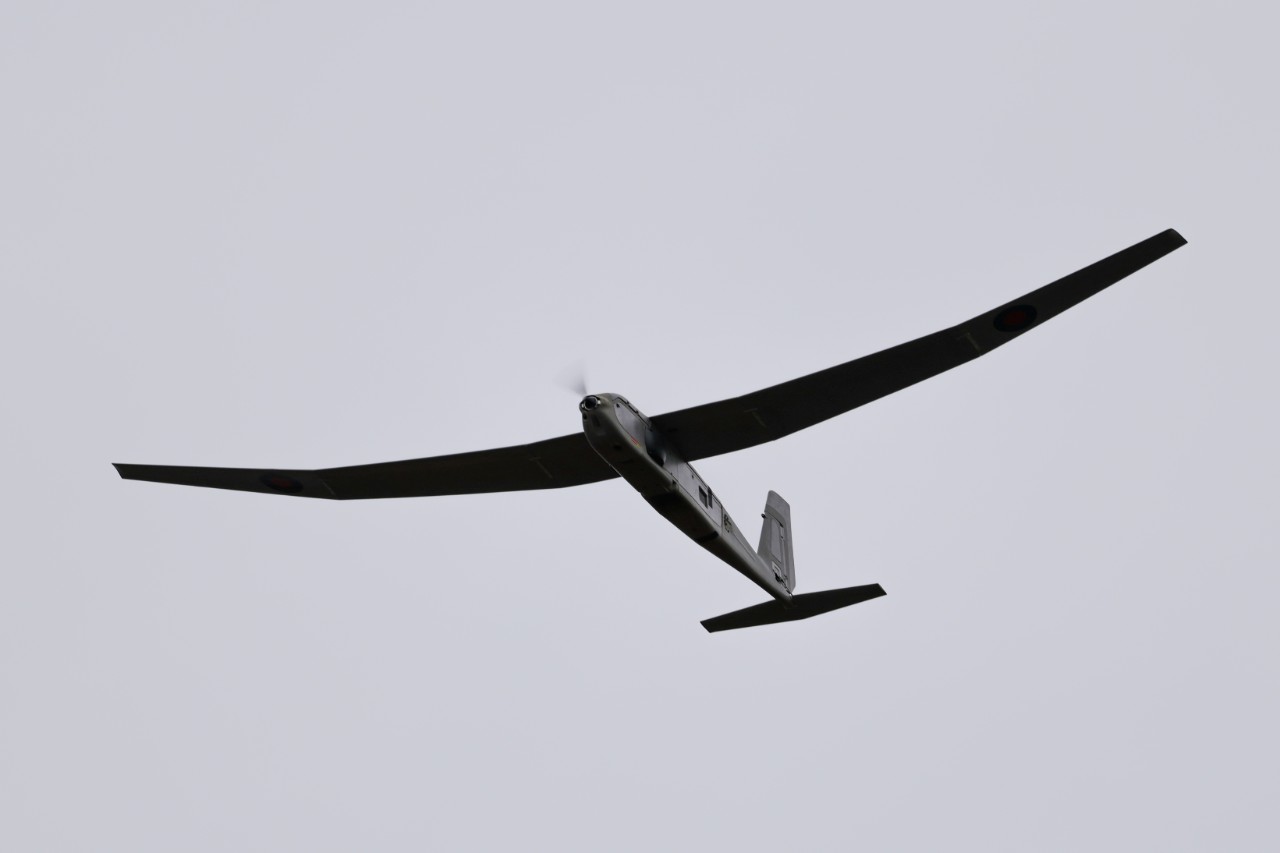
The trials, known as Eagles Eye, were conducted from Predannack airfield on Cornwall’s Lizard Peninsula and focused on integrating crewed aircraft with uncrewed systems using a multi-node mesh communications network. According to the Royal Navy, the approach enables helicopters to receive and share data across a resilient network capable of rerouting information if individual nodes are disrupted.
Royal Navy tests helicopter-led drone targeting in UK first
Royal Navy Wildcat helicopters have for the first time used live data from multiple uncrewed systems to identify and target a moving vehicle during trials in the UK.
ukdefencejournal.org.uk
Royal Navy Wildcat helicopters have for the first time used live data from multiple uncrewed systems to identify and target a moving vehicle during trials in the UK, the UK Defence Journal understands.
The demonstration saw a Wildcat from 815 Naval Air Squadron receive near-instantaneous sensor feeds from two small surveillance drones and additional ground-based sensors, allowing the aircrew to track a mobile target beyond line of sight through a distributed digital network.The trials, known as Eagles Eye, were conducted from Predannack airfield on Cornwall’s Lizard Peninsula and focused on integrating crewed aircraft with uncrewed systems using a multi-node mesh communications network. According to the Royal Navy, the approach enables helicopters to receive and share data across a resilient network capable of rerouting information if individual nodes are disrupted.
- Reaction score
- 13,977
- Points
- 1,160
Platform independent comms
 www.pravda.com.ua
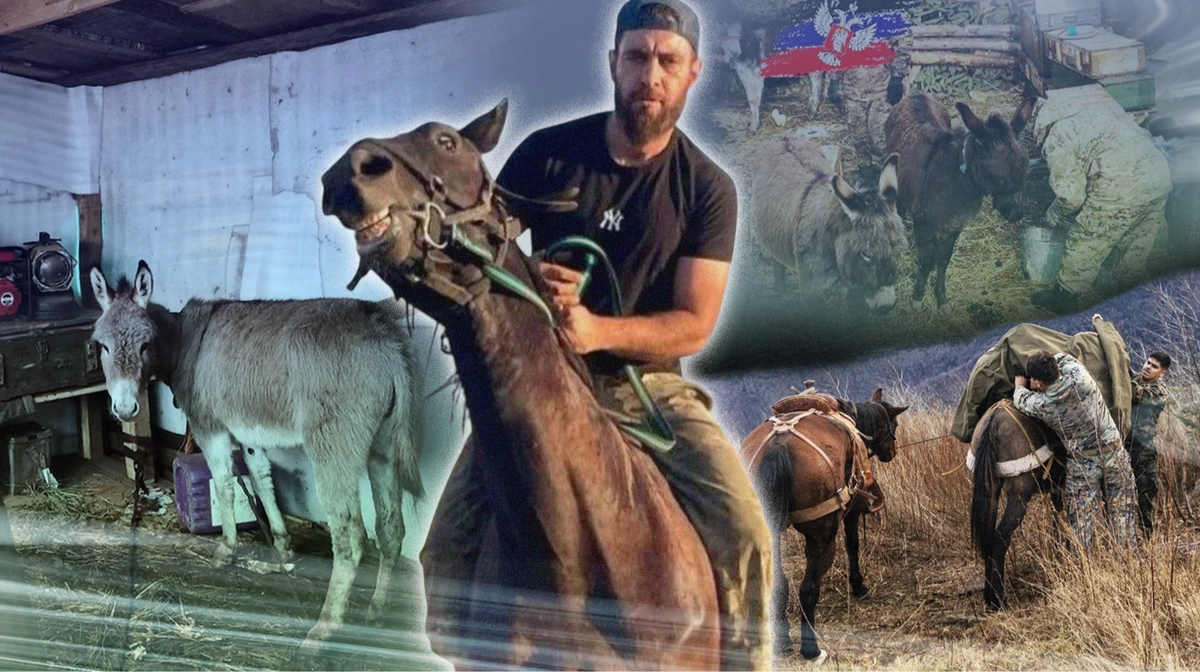
When horses meet Starlink: how horsemen have suddenly reappeared in the age of drones
When the power goes out, people dust off long-forgotten tools: gas burners, manual coffee grinders and anything else that does not rely on power.
www.pravda.com.ua
- Reaction score
- 13,977
- Points
- 1,160
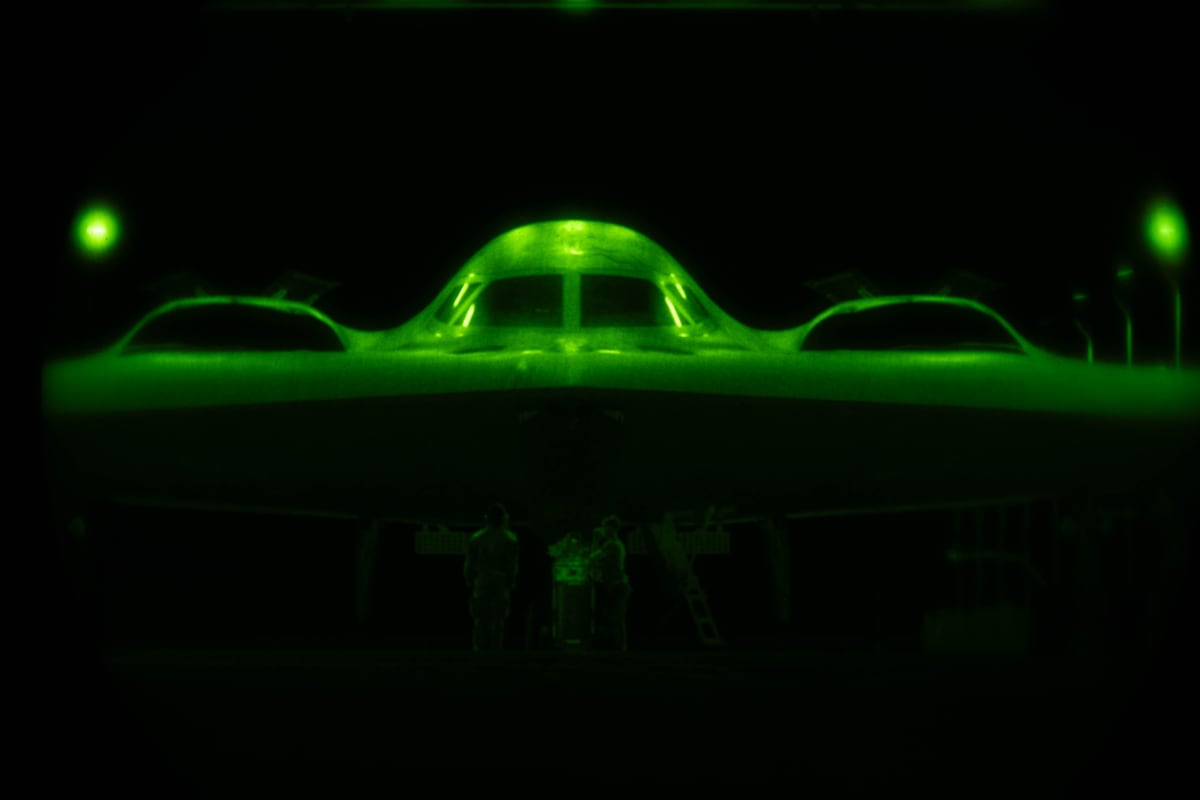
US Air Force eyes improved comms with bombers after Midnight Hammer
If the Air Force doesn't improve communications with bombers during critical operations, Lt. Gen. Armagost said, "that is a foul on all of us."
 www.defensenews.com
if the Air Force is going to maintain that kind of advantage, Armagost said, it has to ensure its command-and-control networks and communications architectures are able to securely transmit critical instructions and status updates to and from bombers and other aircraft.
“If that [strike] package is not able to … communicate the status of their forces and the ‘go’ from the mission commander, then that is a foul on all of us,” Armagost said during a panel about the Midnight Hammer operation and lessons learned.
Where would IBCTs or its equivalent slot into our current funding structure? Or would it?
I assume you mean IBCS. And that's not needed domestically. That's what CADS does for NORAD. And part of it at the CAOC in Winnipeg which has a modernization project as part of NORAD Mod.
- Reaction score
- 13,977
- Points
- 1,160
Brit Forces -
 www.forcesnews.com
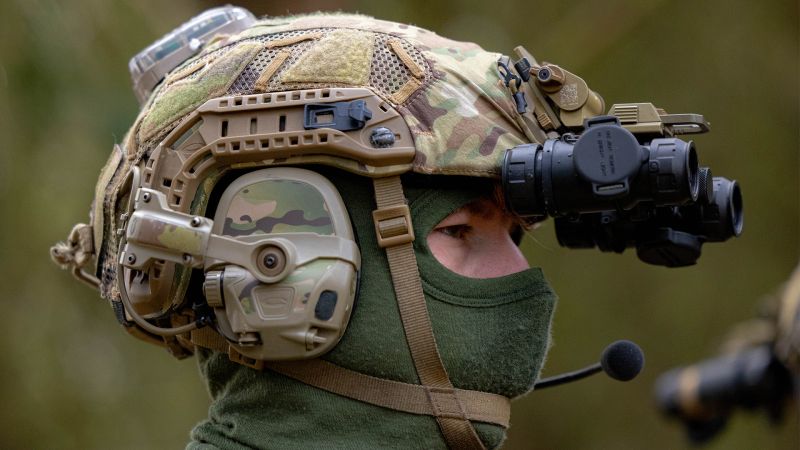
British Army troops are set to receive new "AI-capable" radios, headsets and data tablets from September under a contract worth up to £86 million.
....
The Dismounted Data System (DDS) package, as the MOD calls it, includes radios, headsets and display tablets, alongside supporting equipment such as cables, batteries, pouches and antennas.
The £86m figure is made up of an initial £46m contract with options for a further £40m, with the full roll-out due to be completed in 2027.
...
The systems have already been trialled by troops on deployment in Estonia, with the MOD saying the visual element meant soldiers were less distracted by loud battlefield noise.
....
The DDS is part of Project Asgard, which was first announced by the Defence Secretary in October 2024.
"Asgard helps double our lethality and exponentially reduces the time to see, decide, and strike," Chief of the General Staff, General Sir Roly Walker, said. "What took hours, now takes minutes."
"Today, the UK possesses a similar Recce-Strike system to the one used by Ukraine to maul Russian forces in the Donbas. That system now sits at the heart of our Forward Land Forces in Estonia," Gen Sir Roly continued.
Not only does Project Asgard aim to cut decision-making times, but it is also designed to allow soldiers to locate and hit targets at far greater distances.
Almost all of Ukraine's artillery targeting systems are reliant on AI provided by the US software company Palantir.
Army to roll out AI-capable comms kits to cut decision time from hours to minutes
The dismounted AI radios are tied to Project Asgard's push to shorten decision-making timelines
British Army troops are set to receive new "AI-capable" radios, headsets and data tablets from September under a contract worth up to £86 million.
....
The Dismounted Data System (DDS) package, as the MOD calls it, includes radios, headsets and display tablets, alongside supporting equipment such as cables, batteries, pouches and antennas.
The £86m figure is made up of an initial £46m contract with options for a further £40m, with the full roll-out due to be completed in 2027.
...
The systems have already been trialled by troops on deployment in Estonia, with the MOD saying the visual element meant soldiers were less distracted by loud battlefield noise.
....
The DDS is part of Project Asgard, which was first announced by the Defence Secretary in October 2024.
"Asgard helps double our lethality and exponentially reduces the time to see, decide, and strike," Chief of the General Staff, General Sir Roly Walker, said. "What took hours, now takes minutes."
"Today, the UK possesses a similar Recce-Strike system to the one used by Ukraine to maul Russian forces in the Donbas. That system now sits at the heart of our Forward Land Forces in Estonia," Gen Sir Roly continued.
Not only does Project Asgard aim to cut decision-making times, but it is also designed to allow soldiers to locate and hit targets at far greater distances.
Almost all of Ukraine's artillery targeting systems are reliant on AI provided by the US software company Palantir.
- Reaction score
- 13,977
- Points
- 1,160
A US Army general says new command tech lets him ditch the 'hourlong staff meeting'
A new command-and-control system is expected to make planning and decision-making faster and easier.
 www.businessinsider.com
Once the Yanks sort this stuff out, will they sell it to us?
- Reaction score
- 13,977
- Points
- 1,160
Marines aim to be CJACD2 'fast follower' with Dynamis Series of C2 experiments - Breaking Defense
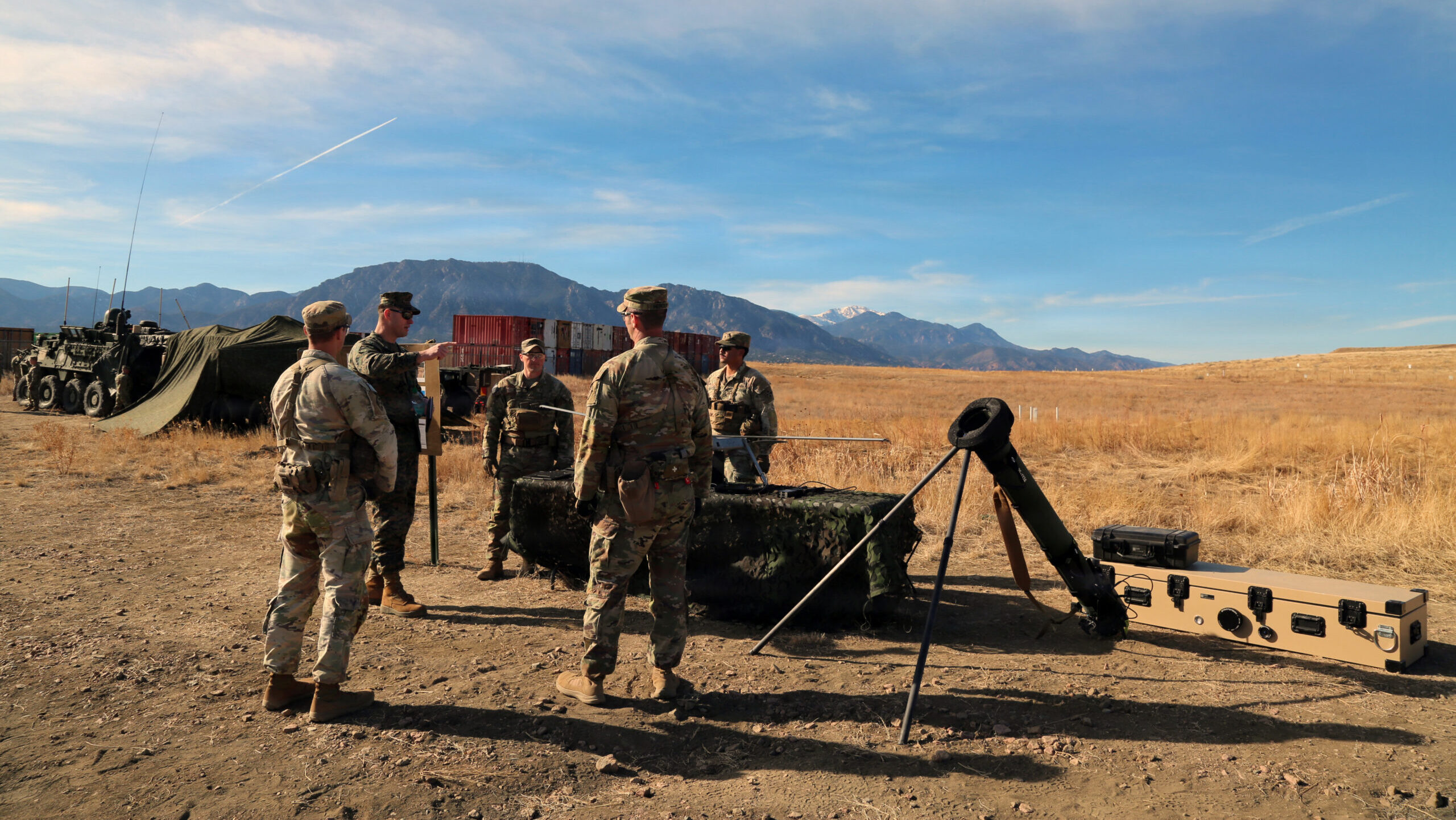
"What we don't want to do is what we've always done in the past: siloed programs, by silo services," Col. Arlon Smith, director of Project Dynamis, told Breaking Defense.
 breakingdefense.com
Lots of expensive, justifiable, play time.
- Reaction score
- 13,977
- Points
- 1,160
Next Generation Command and Control to 11 Divisions in 5 years.
 breakingdefense.com
I presume we will wait to see how it all works out before making any binding decisions.
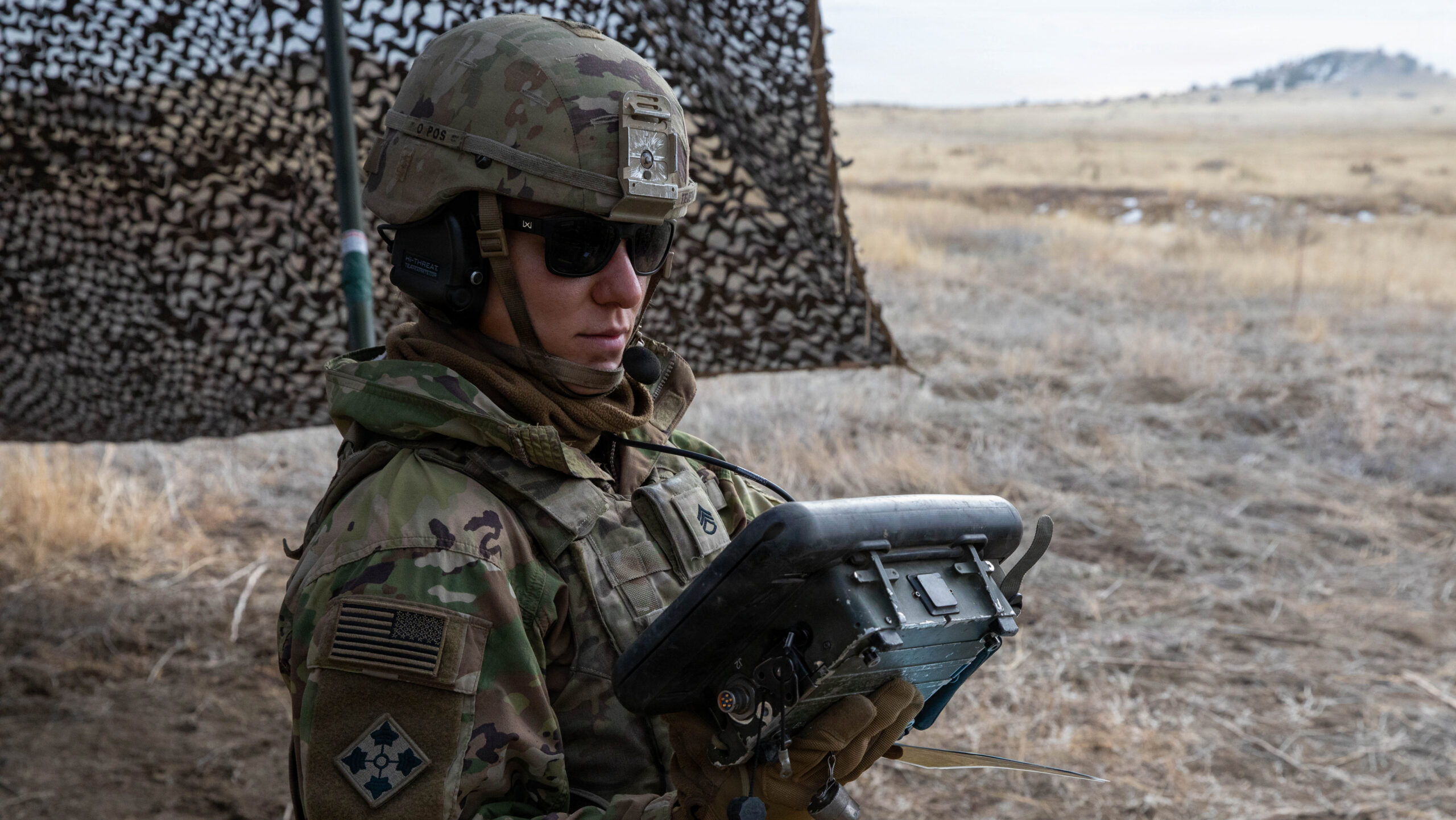
"NGC2, one of the Army’s top priorities, is not a program of record, but a mix of capabilities to modernize how the Army shares battlefield data and communicates."
Army wants to field all 11 divisions NGC2 capabilities in five-year window - Breaking Defense
I Corps, headquartered in the Pacific, will be the next focus for NGC2 next year.
breakingdefense.com
I presume we will wait to see how it all works out before making any binding decisions.
"NGC2, one of the Army’s top priorities, is not a program of record, but a mix of capabilities to modernize how the Army shares battlefield data and communicates."


