• Thanks for stopping by. Logging in to a registered account will remove all generic ads. Please reach out with any questions or concerns.

Pipelines, energy and natural resources

  • Thread starter Thread starter QV
  • Start date Start date
"Reliable".

Low-trust cultures generally fail to meet the requirement. Also affects "abundant" and "inexpensive". Too many palms to grease can simply put projects out of reach.

There was a time when the policies of 'personal rule' mainly applied to places like sub-Sharan Africa, with predictable chaos ensuing.

Lately, as we can see in Russia and with our Yankee neighbours to our south, it's become more of a political fashion statement and is worth understanding a bit more about e.g.,

The rise of personalist rule​


Over the last decade, authoritarians have pushed back against the world’s prevailing democratic order. For the 11th year in a row, Freedom House has announced an overall drop in freedom worldwide. Most countries today (55 percent) are considered not free or partly free according to the civil liberties and political rights citizens enjoy. At the same time, highly personalized regimes are taking control of autocratic and even democratic political systems.

Compared to the Cold War era when powerful Communist and socialist parties presided over most dictatorships, today around 40 percent of autocratic governments are ruled by strongmen. Across regions, consolidated power is settling into the hands of one man or a small group of illiberal individuals, ranging from Russian President Vladimir Putin to Turkish President Recep Tayyip Erdoğan, the Philippines’ Rodrigo Duterte and leaders in Ecuador, Venezuela, Hungary, and Poland.

There are four primary reasons that personalist systems can lead to more aggressive foreign policies. First, the inherent characteristics of the kinds of individuals who become personalist rulers—ambitious, cut-throat and divisive—drive them to pursue more adventurist international goals than leaders of other kinds of regimes. Second, personalist leaders perceive lower costs of fighting than leaders of democracies or more constrained autocratic systems because they have fewer normative aversions to force, do not internalize the costs of fighting, and view force as more effective than other tools of statecraft. Third, personalist leaders do not fear defeat to the extent that other leaders do because of the lack of strong institutions able to punish the leader for his mistakes. Fourth, subordinates to personalist leaders are typically unwilling to challenge a leader’s personal biases, leading to profound “groupthink” and overestimation of the likelihood of victory.

 
"So, here’s the reality: oil and gas remain the dominant source of energy, with even coal, a dirtier fuel than natural gas, making a comeback. Despite billions spent by governments — taxpayers — to subsidize renewables, global hydrocarbon use, notes energy expert Robert Bryce, is not only thirty times larger than wind and solar combined, but is also growing faster. In the last decade, the world added 9,000 terawatt-hours per year of energy consumption from wind and solar but 13,000 from fossil fuels."


Coal's waste is ash that contains many substances some of which are valuable and some of which can be harvested. Gathering and transporting ash is easier than transporting the coal initially. It can be transported dry or slurried in which case dust problems are resolved and pumping is possible.
 
"So, here’s the reality: oil and gas remain the dominant source of energy, with even coal, a dirtier fuel than natural gas, making a comeback. Despite billions spent by governments — taxpayers — to subsidize renewables, global hydrocarbon use, notes energy expert Robert Bryce, is not only thirty times larger than wind and solar combined, but is also growing faster. In the last decade, the world added 9,000 terawatt-hours per year of energy consumption from wind and solar but 13,000 from fossil fuels."


Coal's waste is ash that contains many substances some of which are valuable and some of which can be harvested. Gathering and transporting ash is easier than transporting the coal initially. It can be transported dry or slurried in which case dust problems are resolved and pumping is possible.
But Carney doesn't believe it, he is more or less riding the fence. Until he follows Trump with his drill baby drill order no industrial leader is going to put a dime into it. They have to be assured that they will get their dime back with interest at the end of the day and so far, there is no assurance of that.


The Soo? Hamilton? The Saguenay? What regions would support Canadian smelters?
 
That would be fine because BC has enough money coming in these days... right? Right? ;)


Danielle Smith says she's open to shipping oil to Pacific via U.S. Northwest​

Smith's comments come just weeks after Saskatchewan-based potash giant Nutrien announced plans to build a $1-billion export terminal at Washington State's Port of Longview

OTTAWA — Alberta Premier Danielle Smith says she’s keeping in mind that there’s more than one way to get Alberta oil to the Pacific Coast.

Smith said in a year-end interview with National Post that, while her “first preference” would be to build a new West Coast pipeline through northern British Columbia, she’s willing to look across the border if progress stalls.

One possible route to the Pacific Ocean could be through the northwestern U.S. states of Montana, Idaho and either Washington or Oregon.

“Anytime you can get to the West Coast, it opens up markets to get to Asia,” said Smith.

Smith has said that there’s enough demand for Alberta oil in the booming Indo-Pacific region to sustain a new million-barrel-per-day pipeline.

Her comments come just weeks after Saskatchewan-based potash giant Nutrien announced plans to build a $1-billion export terminal at Washington State’s Port of Longview, spurning suitors in B.C.

The Nutrien announcement has been criticized by both B.C. Premier David Eby and federal Transport Minister Steve MacKinnon as a betrayal of the national interest.

Smith stressed, however, that moving heavy oil is different than moving fertilizer.

“Presumably, the potash is going to be transported by rail on existing infrastructure. Building brand new pipeline infrastructure is always complicated,” said Smith.

Smith said that her current focus was on advocating for pipelines to be built along “existing rights of way,” such as the shelved Northern Gateway project to northwestern B.C.

The Alberta premier signed a memorandum of understanding on energy issues with Prime Minister Mark Carney last month that opens the door to a new pipeline and a carve-out of the federal oil tanker ban off the B.C. coast.

 
That would be fine because BC has enough money coming in these days... right? Right? ;)


Danielle Smith says she's open to shipping oil to Pacific via U.S. Northwest​

Smith's comments come just weeks after Saskatchewan-based potash giant Nutrien announced plans to build a $1-billion export terminal at Washington State's Port of Longview

OTTAWA — Alberta Premier Danielle Smith says she’s keeping in mind that there’s more than one way to get Alberta oil to the Pacific Coast.

Smith said in a year-end interview with National Post that, while her “first preference” would be to build a new West Coast pipeline through northern British Columbia, she’s willing to look across the border if progress stalls.

One possible route to the Pacific Ocean could be through the northwestern U.S. states of Montana, Idaho and either Washington or Oregon.

“Anytime you can get to the West Coast, it opens up markets to get to Asia,” said Smith.

Smith has said that there’s enough demand for Alberta oil in the booming Indo-Pacific region to sustain a new million-barrel-per-day pipeline.

Her comments come just weeks after Saskatchewan-based potash giant Nutrien announced plans to build a $1-billion export terminal at Washington State’s Port of Longview, spurning suitors in B.C.

The Nutrien announcement has been criticized by both B.C. Premier David Eby and federal Transport Minister Steve MacKinnon as a betrayal of the national interest.

Smith stressed, however, that moving heavy oil is different than moving fertilizer.

“Presumably, the potash is going to be transported by rail on existing infrastructure. Building brand new pipeline infrastructure is always complicated,” said Smith.

Smith said that her current focus was on advocating for pipelines to be built along “existing rights of way,” such as the shelved Northern Gateway project to northwestern B.C.

The Alberta premier signed a memorandum of understanding on energy issues with Prime Minister Mark Carney last month that opens the door to a new pipeline and a carve-out of the federal oil tanker ban off the B.C. coast.

Starting to get a vibe that Alberta is Ethiopia and BC is starting to play the role of Eritrea.
 

I keep saying: We, the West, retired in our green paradise while we shipped our pollution, our coal, our factories .... and our kids' jobs, to China.

And they have made out like bandits and lack the grace to thank us, or our kids.
Not for a lack of trying, look at AB where a citizens petition is trying to ban new coal mines.
 

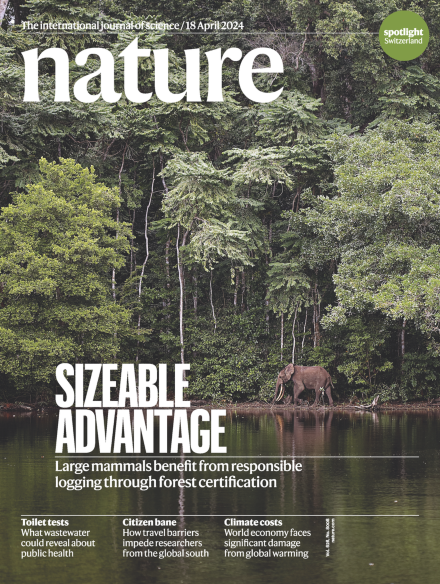
AI Generated response to inquiry linking Mark Carney and the banks criticized for offering advice based on flawed Nature study that was retracted.

"Mark Carney, a key figure in green finance, championed the Network for Greening the Financial System (NGFS) by advocating for central banks and supervisors to integrate climate risks, stemming from his "Tragedy of the Horizon" speech, leading to initiatives like the NGFS and the Glasgow Financial Alliance for Net Zero (GFANZ) to shift finance towards a low-carbon economy.

Carney's Role & Vision:
Pioneering Speech (2015): As Governor of the Bank of England, Carney warned that climate change posed systemic financial risks, a concept he termed the "Tragedy of the Horizon".

Founding the NGFS (2017): He joined forces with other central bankers (like François Villeroy de Galhau) to create the NGFS, a network of central banks and supervisors working to align financial systems with climate goals.

UN Special Envoy: Later, as the UN Special Envoy for Climate Action and Finance, he drove further initiatives, notably the Glasgow Financial Alliance for Net Zero (GFANZ) (GFANZ), to mobilize private finance for net-zero transitions.

Green Finance: Using financial tools (like green bonds, risk disclosures) to fund climate action and manage climate-related risks.
NGFS Goal: To develop frameworks for financial markets to manage climate risks and support the transition to a sustainable economy.

Impact:
Carney's work established frameworks for assessing climate risk, promoting sustainable finance, and creating global alliances (like GFANZ) to integrate climate considerations into mainstream finance, influencing policy and investment decisions worldwide.

Green finance was supposed to contribute solutions to climate ...
Nov 9, 2025 — Green finance was supposed to contribute solutions to climate change. So far, it's fallen well short. ... A decade ago, a seminal speech by Mark Carn...


....

I guess he has moved on to defence and energy funds.
 
Back
Top