• Thanks for stopping by. Logging in to a registered account will remove all generic ads. Please reach out with any questions or concerns.

New Canadian Shipbuilding Strategy

  • Thread starter Thread starter GAP
  • Start date Start date
… or, hypothetically, would a mix of 60Rs and 60Ss, replacing the Cyclone with a larger number, accomplish the same goals.

I bought the MH-60 for Microsoft Flight Sim today, and started on the Queen Elizabeth in the Halifax harbour approaches. Does that make me qualified on type?
Not sure what the final size on the River-class hanger is compared to the Type 26, but from what I've read the Type 26 can fit 1 x AW101 or 2 x AW159. If the River-class hanger is the same size then would the ability to embark 2 x MH make up for the difference in the capability between the AW159 and the Cyclone?
 
Not sure what the final size on the River-class hanger is compared to the Type 26, but from what I've read the Type 26 can fit 1 x AW101 or 2 x AW159. If the River-class hanger is the same size then would the ability to embark 2 x MH make up for the difference in the capability between the AW159 and the Cyclone?
I pray God we are not designing the hanger for the Rivers based on the Cycline solely.
 
ROROs require a port and docks, none of which exist up there. Therefore the references to amphibious capability comes clearly into focus.

Not quite. In waters, like the Arctic, where there are numerous locations and days with little to no sea or swell, they can also carry mexeflotes that they can then lower the ramp to and load as a ship to shore connector.
 
Not sure what the final size on the River-class hanger is compared to the Type 26, but from what I've read the Type 26 can fit 1 x AW101 or 2 x AW159. If the River-class hanger is the same size then would the ability to embark 2 x MH make up for the difference in the capability between the AW159 and the Cyclone?
It depends… if you want to keep the current CONOPs, no. It’s half the weight, and half the crew. Something has to give.

If you de use to back up and re-think how we use MH, maybe. But don’t forget, trying to operate two helicopters off a single spot brings it’s own complexities.

Have the ability to pick and choose is the best case. We’re currently not big enough for that.
 
ROROs require a port and docks, none of which exist up there. Therefore the references to amphibious capability comes clearly into focus.

Qikiqtarjuak is a deep water harbour seeking docks for ships like RoRos.

Ramps don't have to be the only way off a RoRo.
 
I would argue a true JSS is a mobile base. In this case it also needs to be ice strengthened. Someplace to operate helos and boats safely and securely.

It does not have to be huge or through deck, just get as big a flight deck as you can. Maybe put the hangar below with an elevator?

Also agree don’t want it huge. Maybe two medium (Cyclone) spots or 3-4 smaller spots aft?

I’m not sure were disagreeing here…
Just an observation from a great lakes recreational sailor. This notion is perhaps going to result in a ship that is good for nothing: it seems like it is neither fish nor fowl. You can build a ice-strengthened tanker or container ship but they are not ice breakers and they are not be able to go everywhere. If they are designed as ice breakers they will probably be too slow to be effective and would always require escort. wouldn't it be better to spend the money on doubling the heavy ice breaker order, paint two of them grey and use them to clear the path for a Mistral style vessel with an ice-strengthened hull order or just double the number of JSS.
 
A year ago Navy Lookout did show two Wildcats side by side at The Type 26 Frigate – more than just a submarine hunter, but I have no idea if that’s been OBE.

Interesting. Still a lot of "take one on deck, unfold it, start it, send it somewhere to do something, land it back, cool it, fold it, take the second one out, unfold it, start it, send it somewhere, land it back, cool it, fold it, take it in" rinse-and-repeat type of ops. Or do one after the other while the first one is away, but still have to watch deck availability for emergencies or early returns.

Also, is the Wildcat a type of air asset/capability that either the RCN or the RCAF are looking at for the RCD's? Or even in general?
 
Interesting. Still a lot of "take one on deck, unfold it, start it, send it somewhere to do something, land it back, cool it, fold it, take the second one out, unfold it, start it, send it somewhere, land it back, cool it, fold it, take it in" rinse-and-repeat type of ops. Or do one after the other while the first one is away, but still have to watch deck availability for emergencies or early returns.

Also, is the Wildcat a type of air asset/capability that either the RCN or the RCAF are looking at for the RCD's? Or even in general?
The whole deck cycle on the 289s was designed to launch one, then pull out the other, to put two in the screen. On the later deployments, when we did manage to take two, they were rarely flown that way. It was more having two meant it was easier to keep one serviceable.

To answer your second para, as I’ve said in other contexts, the RCN and RCAF need to sit down and actually figure out What embarked aviation effects they need and how they want to operate them… ie rewrite the embarked aviation CONOPs. I’m not sure they have the institutional capacity to do that.

Certainly if the government is serious about making the RCN larger than they’re going to need a larger embarked aviation force, and at the point it probably does not make sense to have them all “Big Dippers” (ie Merlin or Cyclone like). Once you know that, and how much of the effects requirements can be met with unmanned, then you can determine whether any remaining gaps are best filled with something like the Wildcat.

Add to that whether there is an emergent need for littoral lift (he junglie EH-101 / USMC UH-1 like)?

And all of this is best decided before the future of Cyclone is.

The RN FAA is a good model for what an enlarged embarked aviation might need, but obviously bigger than all but outr grandest aspirations… the also gave to support the carriers and true amphibious capabilities (if they ever sort out where they’re going). An embarked AEW kit for Cyclone isn’t even that much of a stretch.

So, might we need a Wildcat like capability in the fullness of time if we are serious in becoming a high end middle power…

Edited: niit to beat a dead horse, but it also means a mix of Romeo’s and Sierras are a lot more attractive. Meets many of the discussed needs in a mostly common airframe, in the middle ground between Merlin/Cyclone and Wildcat. It is also very close in size to the NH-90, which the Svalbard was originally intended to operate, and is being replaced in Norwegian service by 60Rs.
 
Last edited:
There are ROROs that dock in Halifax (Darmouth side) all the time to offload cars from Europe (and take other cars back). Just commandeer one of them and escort it.

Precious time and money should not be spent in building ships that you can't just commandeer or hire.

That being said there is a discussion on what the next bunch of JSS would look like. And that might be more support to forces ashore etc... though there is a strong argument for just building more of the same.

GLAM is a nice thought experiment and drawing, but it's an imagination ship for stimulating discussion like we are having.
RO/RO need docks to load and unload. There are precious few docks in the arctic that would allow that. Having proper amphibious capability in the arctic means you can quickly establish a base of operations in a significant part of the region and you land and prep areas for aircraft and habitation.
 
Frankly I aim for PC 4 bow and PC 5 Hull at the very best. Likely it will have either a CCG breaker or AOP's escorting it anyways. Ice rating is more than hull form and plate thickness, stuff like frame spacing, seachests, insulation to name a bit. Stern ramp/well deck should be doable, but it means it can only effectively break forward to it's rating. Landing craft will be important and more useful outside of the arctic than motorized floating dock sections. Hanger for helo's is a must, being able to operate a Chinook off of the flightdeck I think would be highly useful as well.

Landing craft will only be able to operate in open water with light ice anyways. Keep in mind the DEW line was built with WWII LST escorted by a few icebreakers. Introduction

Something like this:

BMT-announce-Ellida-Strike-concept-for-Royal-Navys-MRSS-requirement.webp


We could start with foreign build of one of these to get into operation and work out what we want long term.

Landing-Ship-Transport-LST-100
 
The whole deck cycle on the 289s was designed to launch one, then pull out the other, to put two in the screen. On the later deployments, when we did manage to take two, they were rarely flown that way. It was more having two meant it was easier to keep one serviceable.

To answer your second para, as I’ve said in other contexts, the RCN and RCAF need to sit down and actually figure out What embarked aviation effects they need and how they want to operate them… ie rewrite the embarked aviation CONOPs. I’m not sure they have the institutional capacity to do that.

Certainly if the government is serious about making the RCN larger than they’re going to need a larger embarked aviation force, and at the point it probably does not make sense to have them all “Big Dippers” (ie Merlin or Cyclone like). Once you know that, and how much of the effects requirements can be met with unmanned, then you can determine whether any remaining gaps are best filled with something like the Wildcat.

Add to that whether there is an emergent need for littoral lift (he junglie EH-101 / USMC UH-1 like)?

And all of this is best decided before the future of Cyclone is.

The RN FAA is a good model for what an enlarged embarked aviation might need, but obviously bigger than all but outr grandest aspirations… the also gave to support the carriers and true amphibious capabilities (if they ever sort out where they’re going). An embarked AEW kit for Cyclone isn’t even that much of a stretch.

So, might we need a Wildcat like capability in the fullness of time if we are serious in becoming a high end middle power…

Edited: niit to beat a dead horse, but it also means a mix of Romeo’s and Sierras are a lot more attractive. Meets many of the discussed needs in a mostly common airframe, in the middle ground between Merlin/Cyclone and Wildcat. It is also very close in size to the NH-90, which the Svalbard was originally intended to operate, and is being replaced in Norwegian service by 60Rs.
There certainly seem to be a lot of big picture questions that should be answered very soon as we have a lot of balls in the air that depend on the answers....Cyclone replacement, AOPS and CDC aviation plans, Griffon replacement, a possible BHS etc.

One concern I have when people talk about UAV options as replacements (as opposed to adjuncts) for crewed helicopters is the fact that many current options are electric systems. For example the T-600 which recently showed off the ability to drop the Stingray light torpedo in NATO exercises is electric powered. With the significant reorientation of CAF operations toward the Arctic I question the performance of these battery-powered UAV systems in the cold weather conditions of the Arctic (or North Atlantic for that matter).

I think it makes sense that if we are looking at replacement for the Cyclones we should seriously look at an option that not only works for the River-class but also works for AOPS, the CDC, JSS, a potential BHS and hopefully even a portion of the Griffon replacement in order to simplify training and support.

 

1766946466944.jpeg


1766946565857.jpeg

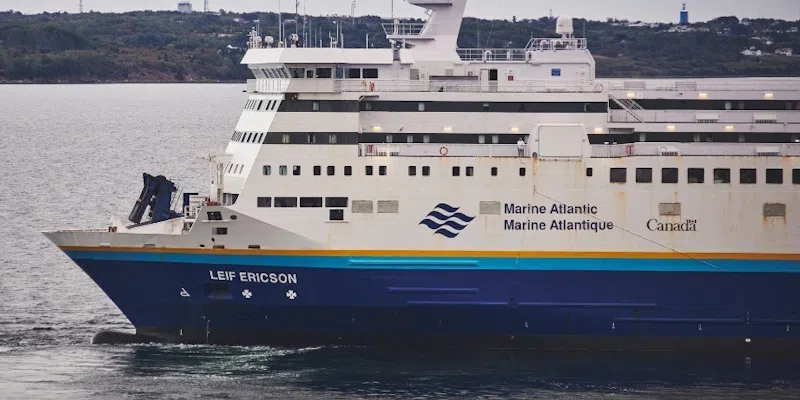
There is some near-term real money being spent on related capabilities that could be dual-use investments. Get with Transport Canada and Marine Atlantic and make sure that the vessels are fitted-for and maybe even with to suit your needs in the North. Cover the cost differential between the civvy vessel and the plussed-up vessel you need.
 
There certainly seem to be a lot of big picture questions that should be answered very soon as we have a lot of balls in the air that depend on the answers....Cyclone replacement, AOPS and CDC aviation plans, Griffon replacement, a possible BHS etc.

One concern I have when people talk about UAV options as replacements (as opposed to adjuncts) for crewed helicopters is the fact that many current options are electric systems. For example the T-600 which recently showed off the ability to drop the Stingray light torpedo in NATO exercises is electric powered. With the significant reorientation of CAF operations toward the Arctic I question the performance of these battery-powered UAV systems in the cold weather conditions of the Arctic (or North Atlantic for that matter).

I think it makes sense that if we are looking at replacement for the Cyclones we should seriously look at an option that not only works for the River-class but also works for AOPS, the CDC, JSS, a potential BHS and hopefully even a portion of the Griffon replacement in order to simplify training and support.

the Hawks fit the bill I think especially if LM-Sikorsky is looking for a way out of the Cyclone mess
I think the Polar icebreakers were supposed to get something better than a Bell 412 on them as well
 
the Hawks fit the bill I think especially if LM-Sikorsky is looking for a way out of the Cyclone mess
I think the Polar icebreakers were supposed to get something better than a Bell 412 on them as well
I think there are multiple potential options available.

AW101 to replace the Cyclone on the River-class and MH-60R/MH-60S or AW159 for AOPS and CDC
MH-60R/MH-60S for the River-class, AOPS and CDC
MH-60R/MH-60S for the River-class and AW159 for AOPS and CDC
2 x AW159 for the River-class and singles for AOPS and CDC

...or any combination of the above.

Hopefully any decision on the MH portion would also consider the options for the Griffon replacement....with AW159 being an option on the light, crewed portion of the project and either the AW101 or UH-60 being options for the medium, crewed portion.

And what about the uncrewed portion of both the MH and Griffon replacements? Are there options that work for both? That will work in a cold weather Arctic/North Atlantic environment?

But as @Baz had pointed out there needs to be a serious review of what we want/need from our MH and TacHel communities.
 
Back
Top