• Thanks for stopping by. Logging in to a registered account will remove all generic ads. Please reach out with any questions or concerns.

Continental Defence Corvette

He did and that's the capability we should be advocating for along with other options such as the CLD's which are complimentary to the type of MCM we do now and as a stand alone capability. I would like to see purpose built COTS MCM ships with a greater capability than the Kingston Class. for domestic and overseas work. I also think we should get back in the mining business for the storm that is coming.

So Heddle should be pitching OSVs and not corvettes?
 
So Heddle should be pitching OSVs and not corvettes?
No, they can peddle what they want. When the RFI is actually dropped and I suspect that won't be soon, there will plenty of designs to be peddled. I see no issue with a Corvette and I see no issue with a separate class of MCM specific vessels. I won't bring available crewing into it because even with the actual recapitalization of the fleet we will come up short on sailors anyways, unless we enact a major shift on how we recruit and train sailors.
 
No, they can peddle what they want. When the RFI is actually dropped and I suspect that won't be soon, there will plenty of designs to be peddled. I see no issue with a Corvette and I see no issue with a separate class of MCM specific vessels. I won't bring available crewing into it because even with the actual recapitalization of the fleet we will come up short on sailors anyways, unless we enact a major shift on how we recruit and train sailors.

At what point do we decide to do the other thing? Even the RN and the USN have bitten the bullet and come up with plans to reduce the ratio of sailors to hulls. I appreciate that there will be new risks but are the risks greater than not having hulls in position in the first place?
 
At what point do we decide to do the other thing? Even the RN and the USN have bitten the bullet and come up with plans to reduce the ratio of sailors to hulls. I appreciate that there will be new risks but are the risks greater than not having hulls in position in the first place?
Is a USN reduction strategy likely to be of any real interest, beyond curiosity, to the RCN, given how generous their starting point is?
 
Is a USN reduction strategy likely to be of any real interest, beyond curiosity, to the RCN, given how generous their starting point is?

I don't the starting point is germane to anything. The sense that I am getting is that everybody is having difficulty recruiting people to go to sea, and that includes merchant fleets and Coast Guards.
 

Hanwha's 61 meter (200 ft) uncrewed Missile Boat, water jet propelled.

Sensor package includes AESA radar, EO/IR, EOTS

Effects include

2x MASS decoy launchers
1x 20mm RCWS
1x 70mm launcher with 4x APKWS II
4x NSM/JSM/Harpoon type missiles
12x 130mm missiles
OWUAV launcher with something like 8x Hero 120

1768029993936.jpeg


Korean answer to the recruiting deficit.
 

Hanwha's 61 meter (200 ft) uncrewed Missile Boat, water jet propelled.

Sensor package includes AESA radar, EO/IR, EOTS

Effects include

2x MASS decoy launchers
1x 20mm RCWS
1x 70mm launcher with 4x APKWS II
4x NSM/JSM/Harpoon type missiles
12x 130mm missiles
OWUAV launcher with something like 8x Hero 120

View attachment 97694


Korean answer to the recruiting deficit.
Korean answer to the silliness of pretending USVs will replace combatants.

It's at best a technology demonstrator, because no serious nation is putting modern AESA radars and all of those weapons on a ship that some random fishermen can board.

I don't the starting point is germane to anything.
That's because you don't understand the differences in USN and other NATO navies crewing.... When a CPF conducts a RAS, line handling winches take the brunt of the work. When a USN AB conducts a RAS, they bring up all the off-watch crew to handle the lines, because line handling winches are not part of how they operate.

When the USN talks about introducing automation, they are talking about getting to where we were in the 90s.
 
Korean answer to the silliness of pretending USVs will replace combatants.

It's at best a technology demonstrator, because no serious nation is putting modern AESA radars and all of those weapons on a ship that some random fishermen can board.


That's because you don't understand the differences in USN and other NATO navies crewing.... When a CPF conducts a RAS, line handling winches take the brunt of the work. When a USN AB conducts a RAS, they bring up all the off-watch crew to handle the lines, because line handling winches are not part of how they operate.

When the USN talks about introducing automation, they are talking about getting to where we were in the 90s.

So you would pack a target full of line handlers that you can't recruit, pack them into bunks you don't have, supply them with water you have to make, galleys, messes and cooks who need more of the above, and sanitary systems rather than floatng a pump jockey across occasionally to fill 'er up, check the levels and wipe the windshield?

Glaikit.

Put half a dozen of those in the water along with a pair of Command and Support Ships and you have a functional force that supply mutual support and overwatch. And a lot more targets with a lot fewer crew.

As to the risk of technology transfer, given the rate at which both sides have been throwing technology at each other I doubt if there are many secrets left among those systems shown on that image.

It is not even as if the skipper is fighting her own ship these days. With Co-Operative Engagement it seems she is just as likely to be notified she needs to clear the decks because some of her missiles are about to be launched.

....

You are having trouble recruiting sailors.
So are the Yanks.
So are the Brits.
And, I suspect, so are the South Koreans.
And so is Maersk.
Which has driven them to build ships that can handle increasing loads with reducing crews.
They are building ships that can accommodate 30, but are crewed by 24 and can be handled by 13.
This has two knock on effects. You are competing with them for a diminishing pool of sailors and they are training fewer sailors that would historically have been available for naval reserves and auxiliaries.

....
 
And the UK and Norway arranging a swap. Clydeside Type 26s for Norwegian OSVs in the 100 to 130m range.

 
The necessary adjunct to the autonomous fleet.

Easy to use personal flight to get the pump-jockey on board.


A gallon of gas per minute?

How about 20 minutes on battery, $148,000, and partnered with Polish Mountain Rescue.

 
A gallon of gas per minute?

How about 20 minutes on battery, $148,000, and partnered with Polish Mountain Rescue.


I like the hoverboard for its very small footprint. It looks like you could land on the bridge wings.

I had been thinking that the personal transport sweet spot was somewhere between Frankie's Flyboard and this, the VBAT.


But that Jetson is a runner.
 
So you would pack a target full of line handlers that you can't recruit, pack them into bunks you don't have, supply them with water you have to make, galleys, messes and cooks who need more of the above, and sanitary systems rather than floatng a pump jockey across occasionally to fill 'er up, check the levels and wipe the windshield?
Umm... It sems you missed the point, so I'll make it clearer.

The RCN and other NATO navies are far more automated and operate with far fewer crew than the USN to do the same tasks. When the USN makes an announcement about reducing crew, it means they are getting to where the rest of us were 30+ years ago. That's why I don't take USN news of automation seriously.

Put half a dozen of those in the water along with a pair of Command and Support Ships and you have a functional force that supply mutual support and overwatch. And a lot more targets with a lot fewer crew.
Yes and no... In a total war like WWII, maybe. In the real world, short of WWIII kicking-off, that's not how navies work. Navies are about far more than just weapons, they are diplomacy and personal interactions. There is a reason every navy conducts cocktail parties when they visit foreign ports. Good luck doing that with an uncrewed system...

As to the risk of technology transfer, given the rate at which both sides have been throwing technology at each other I doubt if there are many secrets left among those systems shown on that image.
Your lack of understanding is showing... There is a massive difference between a cheap UAS being "captured" vs. a radar, crypto, targeting systems, etc...

t is not even as if the skipper is fighting her own ship these days. With Co-Operative Engagement it seems she is just as likely to be notified she needs to clear the decks because some of her missiles are about to be launched.
That is a gross misunderstand of what co-operative engagement is. While it is possible that a unit may be tasked to launch a weapon with no prior knowledge, that is not the "normal" operating state.

ou are having trouble recruiting sailors.
So are the Yanks.
So are the Brits.
And, I suspect, so are the South Koreans.
And so is Maersk.
Which has driven them to build ships that can handle increasing loads with reducing crews.
They are building ships that can accommodate 30, but are crewed by 24 and can be handled by 13.
This has two knock on effects. You are competing with them for a diminishing pool of sailors and they are training fewer sailors that would historically have been available for naval reserves and auxiliaries.
Reduced crews is not zero crews. Increasing automation in the areas you can get away with, while still having enough crew to do basic DC and physical security isn't new and it isn't earth shattering.

The AOPVs could steam with just two people on the bridge on watch. The level of automation in the engendering plant is impressive, and the bridge systems are very capable. Automation reduces crewing, it doesn't replace sailors.
 
You are having trouble recruiting sailors.
So are the Yanks.
So are the Brits.
And, I suspect, so are the South Koreans.
And so is Maersk.
Which has driven them to build ships that can handle increasing loads with reducing crews.
They are building ships that can accommodate 30, but are crewed by 24 and can be handled by 13.
This has two knock on effects. You are competing with them for a diminishing pool of sailors and they are training fewer sailors that would historically have been available for naval reserves and auxiliaries.

....
Which is why we should be building a connection with the Philippines to provide X number of sailors every year. Hell part of their training can be done at home and then shipped here after they passed basic and got a security clearance.
 
Sorry guys but if the autonomous track is so far off course why are the Brits, Aussies and Yanks running at such a pace to get there?

They are going to fight with what they can secure. They can secure remote/autonomous systems. The Ukrainians are fighting with them to effect. What they can't secure are ships in a timely fashion, and sailors.

2029 is not 2040.
 
Sorry guys but if the autonomous track is so far off course why are the Brits, Aussies and Yanks running at such a pace to get there?

They are going to fight with what they can secure. They can secure remote/autonomous systems. The Ukrainians are fighting with them to effect. What they can't secure are ships in a timely fashion, and sailors.

2029 is not 2040.
The Ukrainians are fighting with small, remotely operated systems that are effectively one-way attack munitions. They may have strapped-on defensive systems to help them complete their missions but they are not really anything you can compare to the type of large, complex, autonomous, multi-role platforms that are being discussed.

I have serious doubts about the type of large, autonomous USV's being discussed which have AESA radars, VLS systems, NSM's, deploy their own, smaller USVs, AUVs and helicopters/UAV's. I foresee a lot of time, effort and money being put into these overly complex systems that could be more effectively be put into larger quantities of smaller, simpler, attritable systems to augment traditional crewed systems.

For example the above Offshore Support Vessel platform being looked at by the UK calls for only 5-6 ships. How much of a difference does that really make in the grand scheme of things when it comes to covering the GIUK gap and UK territorial waters (never mind overseas territories).

I see some of the autonomous hype at the upper end of the scale being similar to the current AI hype.
 
The Ukrainians are fighting with small, remotely operated systems that are effectively one-way attack munitions. They may have strapped-on defensive systems to help them complete their missions but they are not really anything you can compare to the type of large, complex, autonomous, multi-role platforms that are being discussed.

I have serious doubts about the type of large, autonomous USV's being discussed which have AESA radars, VLS systems, NSM's, deploy their own, smaller USVs, AUVs and helicopters/UAV's. I foresee a lot of time, effort and money being put into these overly complex systems that could be more effectively be put into larger quantities of smaller, simpler, attritable systems to augment traditional crewed systems.

For example the above Offshore Support Vessel platform being looked at by the UK calls for only 5-6 ships. How much of a difference does that really make in the grand scheme of things when it comes to covering the GIUK gap and UK territorial waters (never mind overseas territories).

I see some of the autonomous hype at the upper end of the scale being similar to the current AI hype.

No. They are not talking about 5 or 6 ships. They are talking about the majority of the platforms in the North Atlantic as being remote/autonomous.

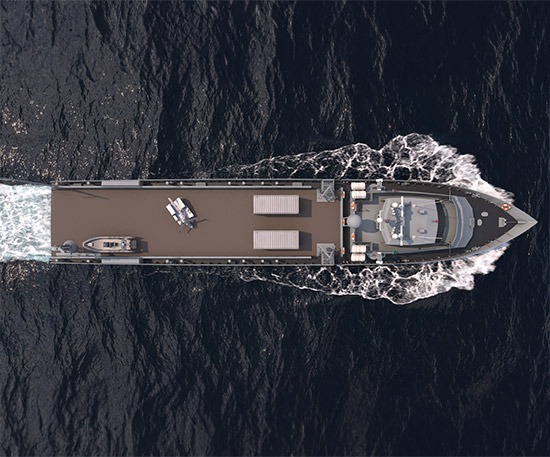
The 5 or 6 OSVs are motherships to support the XLUUVs and the Rattler USVs. Most of the sensors defining the maritime picture are to be supplied by civilian companies.

"Phase 1 – ATLANTIC NET

Delivering “ASW as a service” through a Contractor Owned, Contractor Operated, Naval Oversight (COCONO) model. “Lean crewed, remotely operated or autonomous uncrewed systems, delivered by an industry mission partner,” will gather “acoustic data, triaged by AI/ML algorithms,” then transmit it to a “secure Remote Operations Centre (ROC) for analysis by RN staff.” This setup aims to “significantly increase mass and persistence at sea whilst releasing traditional RN platforms for other tasking.”"

This is the 2029 stuff. To work with what is already available. Our AOPSs can easily slot into that role. The Danes are buying another 4 or 5 similarly roled vessels.


Type 83 - an outgrowth of the Type 26 to replace the Type 45s, a manned C2/AAW ship of 10,000 tonnes

Type 91 - an autonomous/semi-autonomous "missile barge" similar in concept to the Dutch barges which displace 500 tonnes
- up to 6 Type 91s for each Type 83, with crews of 6 to 12 normally and 32 strike length missiles plus sensors.
- 2 year build time in any commercial yard.

The Dutch are supposed to be launching their optionally/minimally manned missile barges this year to accompany their AAW ships.


Type 92 - an autonomous ASW "sloop" that takes its inspiration from the Flowers, another simple to construct civilian hull that can be built in many small yards
- it will also act as a comms link with the Type 93s

Type 93 - an autonomous XLUUV similar in concept to the Ghost Sharks being supplied to the RAN and USN by Anduril from a new factory that will be procured in their dozens.
- they will carry, tow and deploy sensors as well as mines and torpedos.

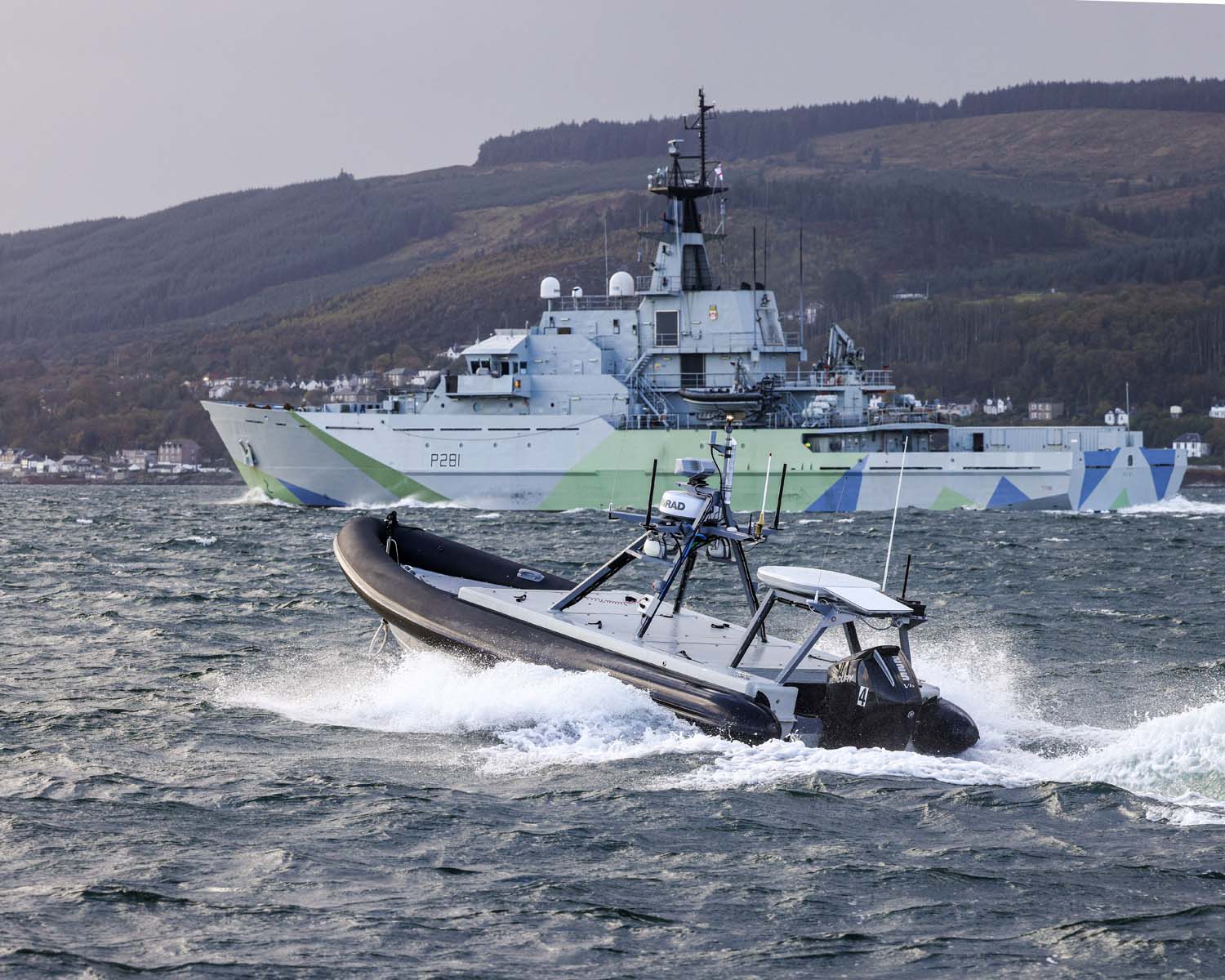
In addition the RN is deploying the Rattler USVs, autonomous 7m RIBs for both domestic coastal work and expeditionary work. They will be controlled from both motherships and from land. 10 million UKP is to buy 20 of them initially for operational development. Domestically they can be used to shadow vessels transiting UK waters.


....

That is the RN

The USN

"On 28th July, the US Navy issued an urgent requirement to industry for a new class of modular, medium to large-sized Uncrewed Surface Vessels. This is not another experimental project but a funded, credible and determined drive to add mass and lethality to an over-stretched fleet."

...

"The new request for proposals to industry was issued this week by US government outlines a plan to field prototype ‘mass producible’ USVs within a dramatically compressed timeline.

"Rather than spending years refining bespoke ship concepts, the Navy wants platforms that prioritise rapid delivery, commercial adaptability and modularity. The vessels must be able to operate without crews, carry significant payloads in standardised container form, and perform military missions in demanding open-ocean conditions. In short, the Navy is no longer experimenting, it’s buying.

"The MASC programme represents a significant departure from business as usual for the USN, aiming to avoid the ‘exquisite platform’ mindset, heavily engineered ships developed over a 10-15 period at high cost and often tied to fragile specialist supply chains. These vessels are still the vital core of the fleet but in the two decades, the USN has struggled to design and deliver conventional warships, with the Zumwalt-class destroyers, Littoral Combat Ships and Constellation-class frigate programme all having serious issues. Instead, the new USVs will be developed under Other Transaction Authority (OTA), a mechanism that allows for rapid, flexible contracting outside traditional acquisition processes.

"This model is designed to attract non-traditional suppliers, encourage creative prototyping, and deliver usable platforms quickly. The programme is being viewed as a test case not just for uncrewed systems, but for broader reform across the US defence procurement. Importantly, the Navy is not asking for a demonstrator but a scalable, production-ready prototype that can lead directly into quantity procurement. The emphasis is on repeatable manufacturing, not one-off custom builds."


  • The Navy’s program of record LUSV. The Navy envisions these LUSVs as being 200 feet to 300 feet in length and having full load displacements of 1,000 tons to 2,000 tons, which would make them the size of a corvette.
  • Unmanned Surface Vessel Division One (USVDIV-1) has stewardship for two surrogates for LUSVs, the Ranger and Mariner, as well as two MUSV prototypes, Sea Hunter and Seahawk. The Navy was sufficiently confident in the operation of its LUSV and MUSV prototypes to deploy them to the international Rim of the Pacific (RIMPAC) 2022 exercise.

....

Unmanned technology packets are being deployed. Without security. A lot of the technology is being provided by commercial suppliers because the open market has better technology and is faster to adapt to changes. And it is available to anybody.

AESA was a big selling point with the F35. it was the first that many of us had heard about the technology. It was novel.
When Jean Chretien signed up for the JSF project.
In 1996.
30 years ago.

AESA panels are now being mass produced and stuck on ground vehicles ranging from Razors to tanks, as well as UGVs. They are also being mounted on RWS systems like the Aussie Slinger from EOS.

As for weaponry, everybody and her brother is building new flying bombs these days.

Anything that actually makes it to the water is likely to be obsolete by the time it gets there in any case.

....

Final thought - old oil tankers are acting as motherships for drones. How many drones could be supervised from a single workstation in a Halifax CIC? An AOPS?

 
At what point do we decide to do the other thing? Even the RN and the USN have bitten the bullet and come up with plans to reduce the ratio of sailors to hulls. I appreciate that there will be new risks but are the risks greater than not having hulls in position in the first place?
The USN and RN are generally pulling back on that for large ships. It really only makes sense on smaller drones that are effectively mobile sensor suites.

USN crewing model is generally not a good comparison anyway, as they are far more bloated by comparison to everyone else with 'one job per sailor', where everyone one else trains their crews for multiple roles. The flip side is the USN has people that are outstanding at that one thing they do, but they can afford to have another 50% crew for the same kind of capability.
 
Back
Top