Col. Hamish de Bretton-Gordon - late of the Royal Tank Regiment and Challenger veteran, also Telegraph defence correspondent
WRT to the AJAX
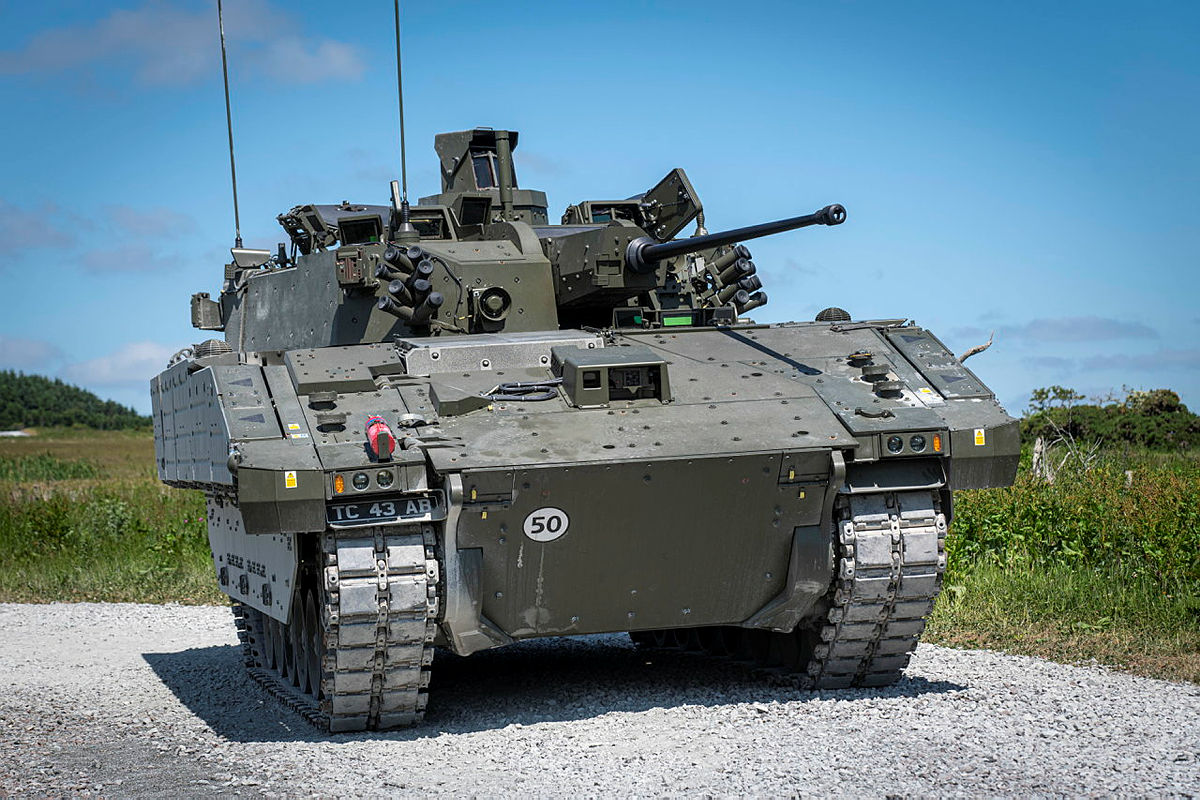
....That’s why I spent most of last Friday driving and personally operating the systems of an Ajax tank lent to me by the makers, to find out the truth – which I set out below.
....
I did not test a pristine, “gold-plated” demonstrator as Jeremy Clarkson might. The vehicle I was lent was a Drop 3 model, uncleaned, unpolished and representative of the most mature variant now in service, not the early versions that dominate much of the online criticism.
My conclusion is straightforward. In its current form, Ajax broadly delivers what it says on the tin. It is not perfect, but it is credible, lethal and essential. Combined with Challenger 3, air power, drones and modern gunnery, it restores a genuine all-arms capability. On my personal “Top Tanks” board, it sits firmly at number one: not bad for a judgement formed over twenty-five years of commanding armour in war and peace.
Our writer spends a day at the track with the British Army’s trouble-prone light tank

www.telegraph.co.uk
....
The issue that cannot be avoided is noise and vibration, highlighted most starkly following Exercise Titan Storm in late 2025. I spent approximately six hours driving Ajax hard around the test track, reaching 70 km/h and still accelerating into turns. Powered by the proven MTU V8, the ride and
noise levels seemed comparable to my old Challenger 2. Communications were clear, even with my own long-standing tinnitus which I acquired as an armour commander in former times. Claims that crew drills by today’s soldiers are at fault I reject entirely. The real issue here, in my view, is training continuity and training time.
Modern crews are transitioning from wheeled platforms and counter-insurgency mindsets into a high-end warfighting system, without the time historically required to master it. When I commanded my first tank, appropriately named “Dinosaur” – a Chieftain – I had the same tank for two and a half years, training across Europe and North America with 12 months in the field. That depth of familiarity is now unaffordable. Modern Whole Fleet Management and short exercise cycles mean that crews rotate constantly. Under those conditions, problems, medical and operational, are unsurprising.