• Thanks for stopping by. Logging in to a registered account will remove all generic ads. Please reach out with any questions or concerns.

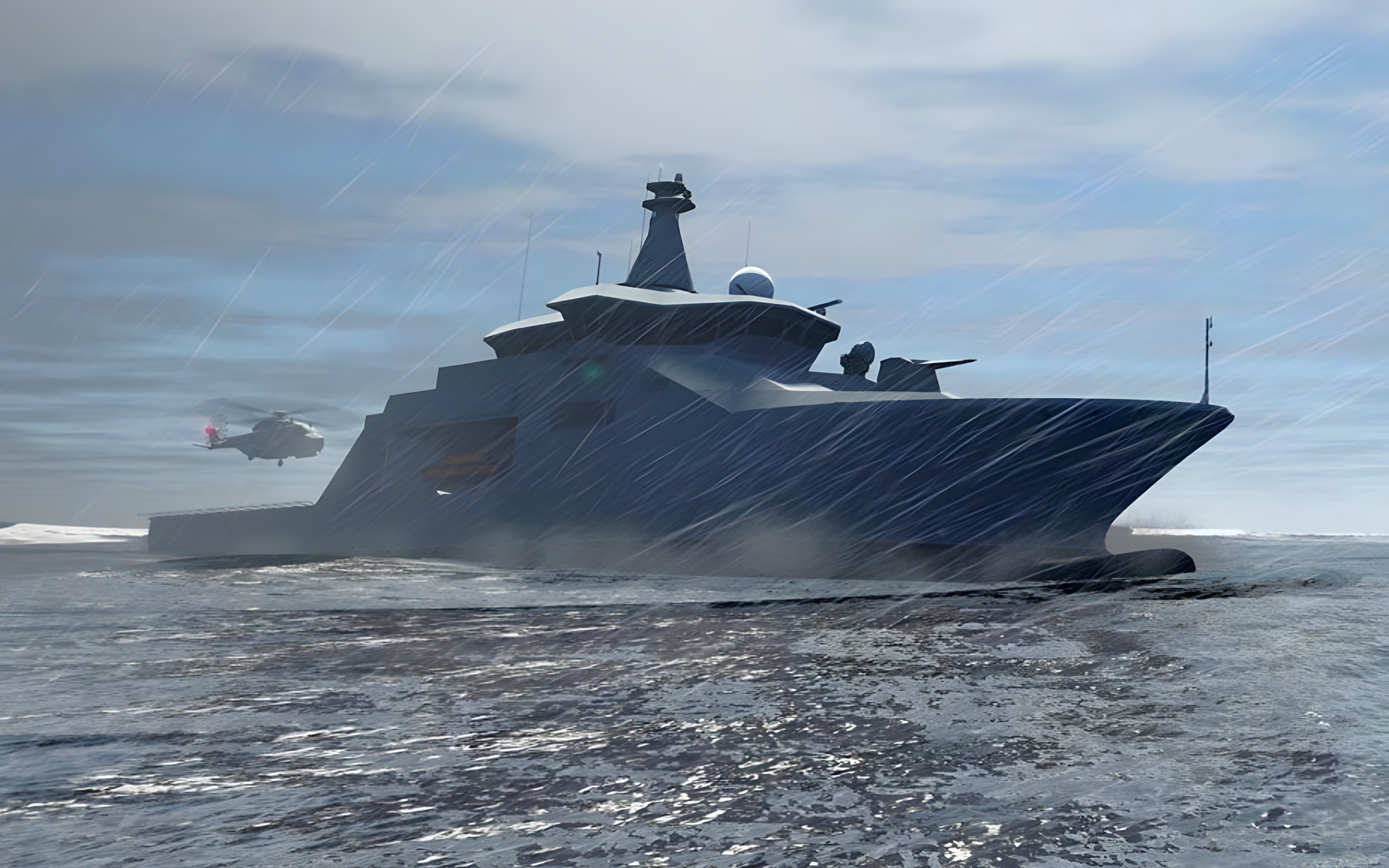
Continental Defence Corvette

The USN and RN are generally pulling back on that for large ships. It really only makes sense on smaller drones that are effectively mobile sensor suites.

USN crewing model is generally not a good comparison anyway, as they are far more bloated by comparison to everyone else with 'one job per sailor', where everyone one else trains their crews for multiple roles. The flip side is the USN has people that are outstanding at that one thing they do, but they can afford to have another 50% crew for the same kind of capability.

You are right on them pulling back on large ships. They are, instead, producing lots of small vessels for high seas work. Before a vessel needed to be big enough to supply a comfortable ride if a crew was to be at sea a long time. Even if it eas only going to carry one system like a sonar array. Now they aim to attach an electric tug that will follow a route and come to the surface every couple of weeks to be refuelled from a mothership/tender.

I am assuming that communications across the air/water membrane are via all those very small usv sensors. They supply a multi-nodal parallel comms system with lots of redundancy.

As I noted above even old oil tankers are being employed as drone motherships. Lots of workboats, both commercial and Coast Guard, would be available to support those types of operations.

The next question is: Do you need big targets/ships?

You need large vessels to transport goods and materiels but why would you risk hundreds or thousands of lives if you didn't have to? Fly passengers and keep crews to a minimum. If you want to use a hull as FUP/FARP then fly the passengers out to the ship and launch them as soon as possible so that they are at risk for the shortest possible time.
 

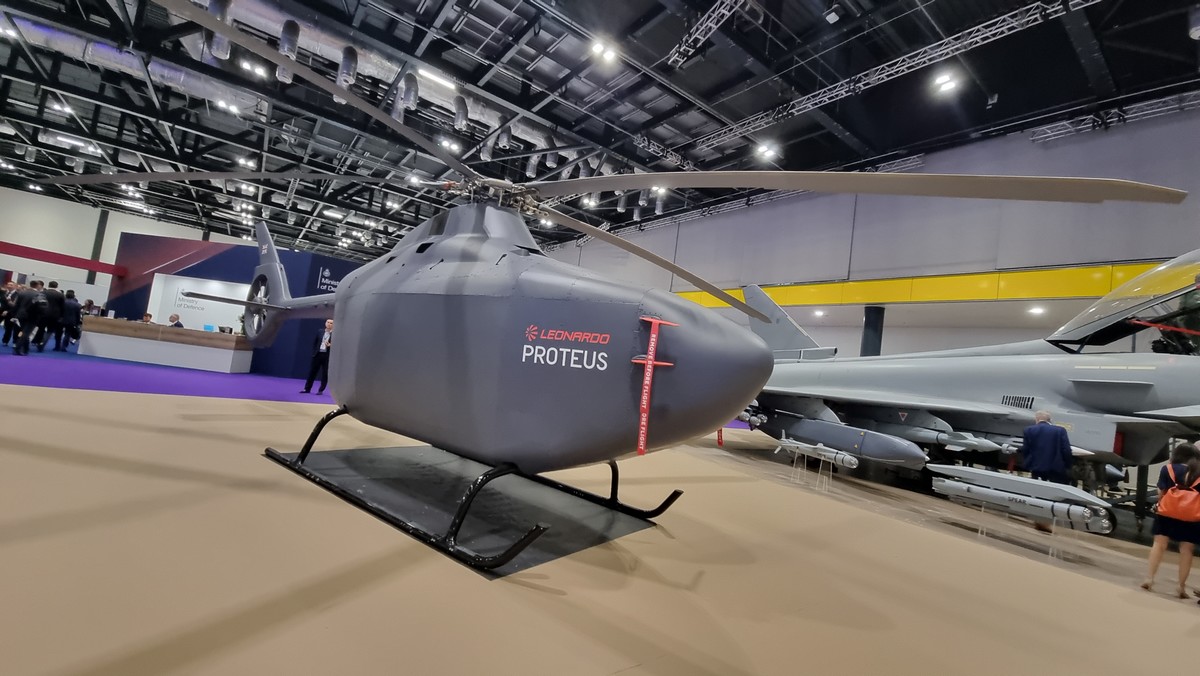
Proteus is seen as a key component of the Bastion strategy and an alternative to crewed rotary wing support to smaller combatants like the corvettes.
 
No. They are not talking about 5 or 6 ships. They are talking about the majority of the platforms in the North Atlantic as being remote/autonomous.

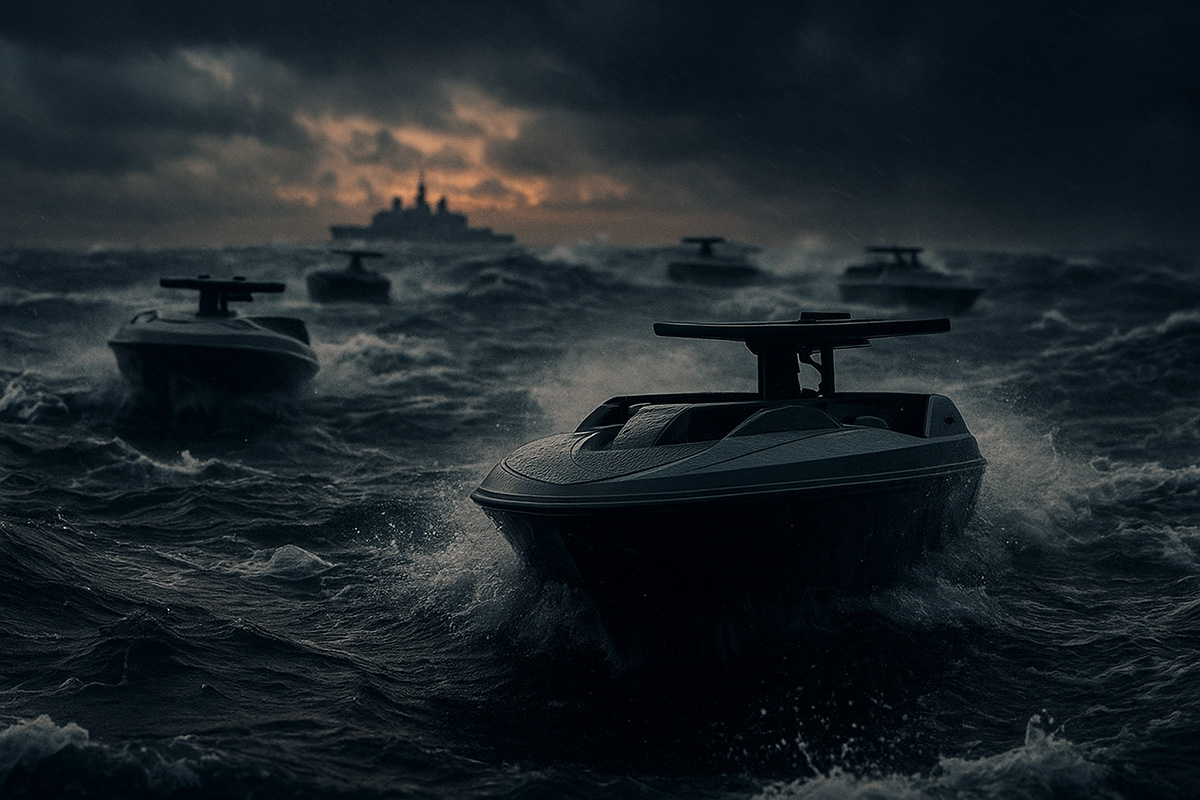
The 5 or 6 OSVs are motherships to support the XLUUVs and the Rattler USVs. Most of the sensors defining the maritime picture are to be supplied by civilian companies.

"Phase 1 – ATLANTIC NET

Delivering “ASW as a service” through a Contractor Owned, Contractor Operated, Naval Oversight (COCONO) model. “Lean crewed, remotely operated or autonomous uncrewed systems, delivered by an industry mission partner,” will gather “acoustic data, triaged by AI/ML algorithms,” then transmit it to a “secure Remote Operations Centre (ROC) for analysis by RN staff.” This setup aims to “significantly increase mass and persistence at sea whilst releasing traditional RN platforms for other tasking.”"

This is the 2029 stuff. To work with what is already available. Our AOPSs can easily slot into that role. The Danes are buying another 4 or 5 similarly roled vessels.


Type 83 - an outgrowth of the Type 26 to replace the Type 45s, a manned C2/AAW ship of 10,000 tonnes

Type 91 - an autonomous/semi-autonomous "missile barge" similar in concept to the Dutch barges which displace 500 tonnes
- up to 6 Type 91s for each Type 83, with crews of 6 to 12 normally and 32 strike length missiles plus sensors.
- 2 year build time in any commercial yard.

The Dutch are supposed to be launching their optionally/minimally manned missile barges this year to accompany their AAW ships.


Type 92 - an autonomous ASW "sloop" that takes its inspiration from the Flowers, another simple to construct civilian hull that can be built in many small yards
- it will also act as a comms link with the Type 93s

Type 93 - an autonomous XLUUV similar in concept to the Ghost Sharks being supplied to the RAN and USN by Anduril from a new factory that will be procured in their dozens.
- they will carry, tow and deploy sensors as well as mines and torpedos.

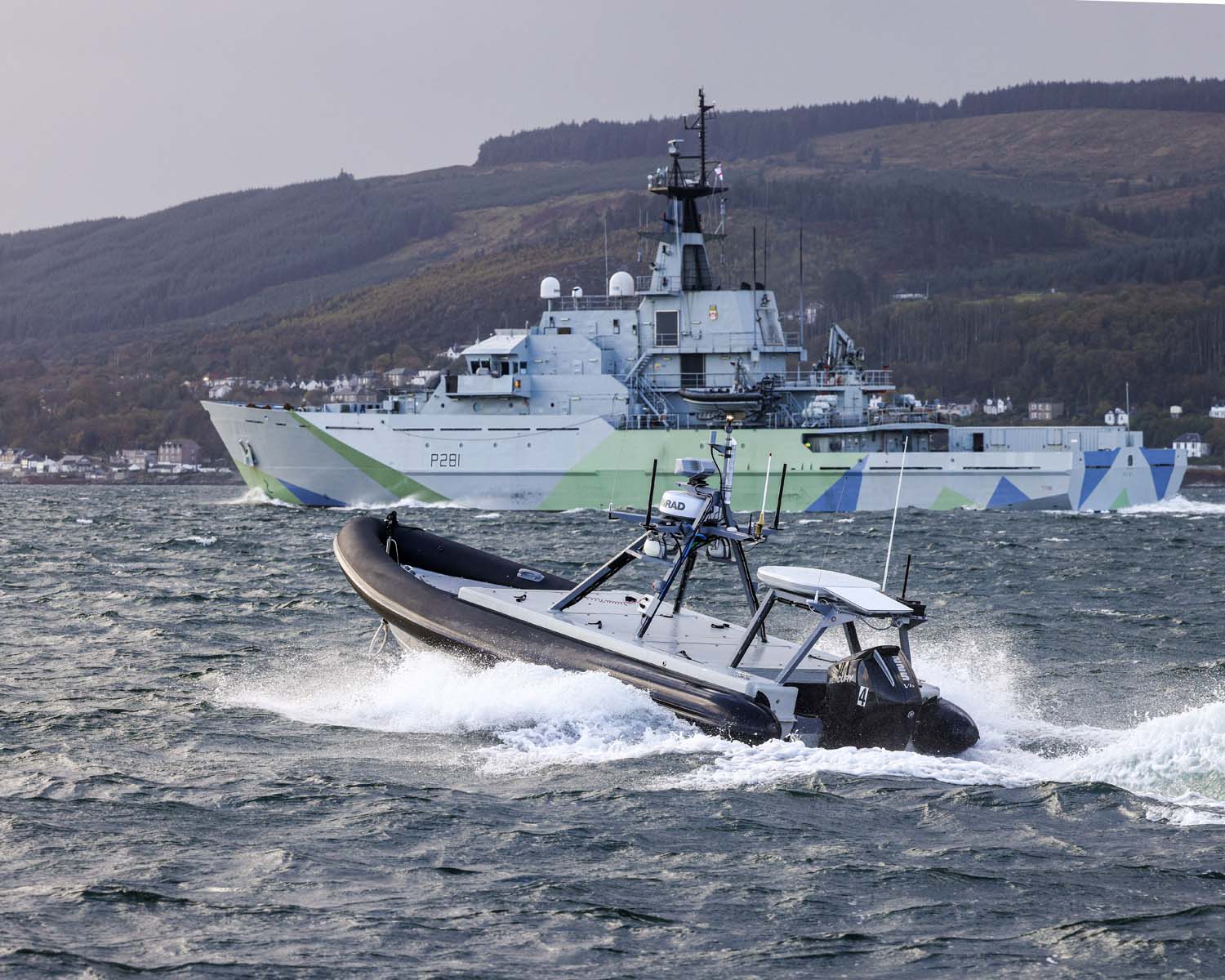
In addition the RN is deploying the Rattler USVs, autonomous 7m RIBs for both domestic coastal work and expeditionary work. They will be controlled from both motherships and from land. 10 million UKP is to buy 20 of them initially for operational development. Domestically they can be used to shadow vessels transiting UK waters.


....

That is the RN

The USN

"On 28th July, the US Navy issued an urgent requirement to industry for a new class of modular, medium to large-sized Uncrewed Surface Vessels. This is not another experimental project but a funded, credible and determined drive to add mass and lethality to an over-stretched fleet."

...

"The new request for proposals to industry was issued this week by US government outlines a plan to field prototype ‘mass producible’ USVs within a dramatically compressed timeline.

"Rather than spending years refining bespoke ship concepts, the Navy wants platforms that prioritise rapid delivery, commercial adaptability and modularity. The vessels must be able to operate without crews, carry significant payloads in standardised container form, and perform military missions in demanding open-ocean conditions. In short, the Navy is no longer experimenting, it’s buying.

"The MASC programme represents a significant departure from business as usual for the USN, aiming to avoid the ‘exquisite platform’ mindset, heavily engineered ships developed over a 10-15 period at high cost and often tied to fragile specialist supply chains. These vessels are still the vital core of the fleet but in the two decades, the USN has struggled to design and deliver conventional warships, with the Zumwalt-class destroyers, Littoral Combat Ships and Constellation-class frigate programme all having serious issues. Instead, the new USVs will be developed under Other Transaction Authority (OTA), a mechanism that allows for rapid, flexible contracting outside traditional acquisition processes.

"This model is designed to attract non-traditional suppliers, encourage creative prototyping, and deliver usable platforms quickly. The programme is being viewed as a test case not just for uncrewed systems, but for broader reform across the US defence procurement. Importantly, the Navy is not asking for a demonstrator but a scalable, production-ready prototype that can lead directly into quantity procurement. The emphasis is on repeatable manufacturing, not one-off custom builds."


  • The Navy’s program of record LUSV. The Navy envisions these LUSVs as being 200 feet to 300 feet in length and having full load displacements of 1,000 tons to 2,000 tons, which would make them the size of a corvette.
  • Unmanned Surface Vessel Division One (USVDIV-1) has stewardship for two surrogates for LUSVs, the Ranger and Mariner, as well as two MUSV prototypes, Sea Hunter and Seahawk. The Navy was sufficiently confident in the operation of its LUSV and MUSV prototypes to deploy them to the international Rim of the Pacific (RIMPAC) 2022 exercise.

....

Unmanned technology packets are being deployed. Without security. A lot of the technology is being provided by commercial suppliers because the open market has better technology and is faster to adapt to changes. And it is available to anybody.

AESA was a big selling point with the F35. it was the first that many of us had heard about the technology. It was novel.
When Jean Chretien signed up for the JSF project.
In 1996.
30 years ago.

AESA panels are now being mass produced and stuck on ground vehicles ranging from Razors to tanks, as well as UGVs. They are also being mounted on RWS systems like the Aussie Slinger from EOS.

As for weaponry, everybody and her brother is building new flying bombs these days.

Anything that actually makes it to the water is likely to be obsolete by the time it gets there in any case.

....

Final thought - old oil tankers are acting as motherships for drones. How many drones could be supervised from a single workstation in a Halifax CIC? An AOPS?

The Offshore Support Vessel is the only one of these that is a multi-purpose vessel with AESA radar, anti-ship missiles, embarked UAVs/helicopter capability, etc. This is the level of autonomy that I'm saying is overreach.

The Type 91 is a single purpose arsenal ship that will accompany the Type 83 not perform independent operations. The Type 92 Sloop is a sensor node only (I have my doubts about the mention of ASW torpedoes...how likely are they to get close enough to an enemy sub without being targeted themselves. Even crewed warships are not prioritising these as a key weapon system). The type 93 as a AUV is a different class all together as sub-surface systems are nowhere as easy to intercept by an enemy.

To my mind the primary maritime threat to Canada is enemy submarines. The River-class are good ASW platforms. I continue to push for the CDC's to have an ASW capability. I'd also love to see the AOPS have the ability to embark some sort of ASW weapon to complement a containerized towed-array system. We have the P-8's and MQ-9Bs. Finally we have the Canadian Patrol Submarines coming.

What I'd personally like to see to complement all of the above is some XL-AUV's along the lines of the Orca/Ghost Shark to supplement our submarines. The AOPS could deploy medium-sized AUV's like the Cellula Guardian and finally we could have these manned by the Reserves to deploy quantities of smaller gliders in areas of concern when required:

1768173900614.png
With the massive maritime domain we have to protect I'd get as many aerial ASW assets as possible to prosecute the targets these sensors detect as they can cover much more space than surface or sub-surface systems.

After all of the above I'd look at minimally-manned arsenal vessels to supplement the AD capability of the River-class destroyers if/when required.
 
You are right on them pulling back on large ships. They are, instead, producing lots of small vessels for high seas work. Before a vessel needed to be big enough to supply a comfortable ride if a crew was to be at sea a long time. Even if it eas only going to carry one system like a sonar array. Now they aim to attach an electric tug that will follow a route and come to the surface every couple of weeks to be refuelled from a mothership/tender.

I am assuming that communications across the air/water membrane are via all those very small usv sensors. They supply a multi-nodal parallel comms system with lots of redundancy.

As I noted above even old oil tankers are being employed as drone motherships. Lots of workboats, both commercial and Coast Guard, would be available to support those types of operations.

The next question is: Do you need big targets/ships?

You need large vessels to transport goods and materiels but why would you risk hundreds or thousands of lives if you didn't have to? Fly passengers and keep crews to a minimum. If you want to use a hull as FUP/FARP then fly the passengers out to the ship and launch them as soon as possible so that they are at risk for the shortest possible time.
Probably for the same reason carrier strike groups have large screening groups around them for active defence. You could have drones augment it, but hard to do away with it.

Automation past a certain point also costs an absolute fortune to build and maintain, so actual combat recoverability still needs a lot of people. There are a lot of people needed as soon as you have anyone onboard, so very difficult to realisitically do.

Drones work much better as planes/subs because you can't board them and take them over, and at a certain point people should be in the loop.
 

Long article about the decision to go with the Legend design.

Overall, the Navy has made no secret that its main goal with FF(X) is to get hulls in the water as quickly as possible to start helping make up for shortfalls now in its surface fleets.


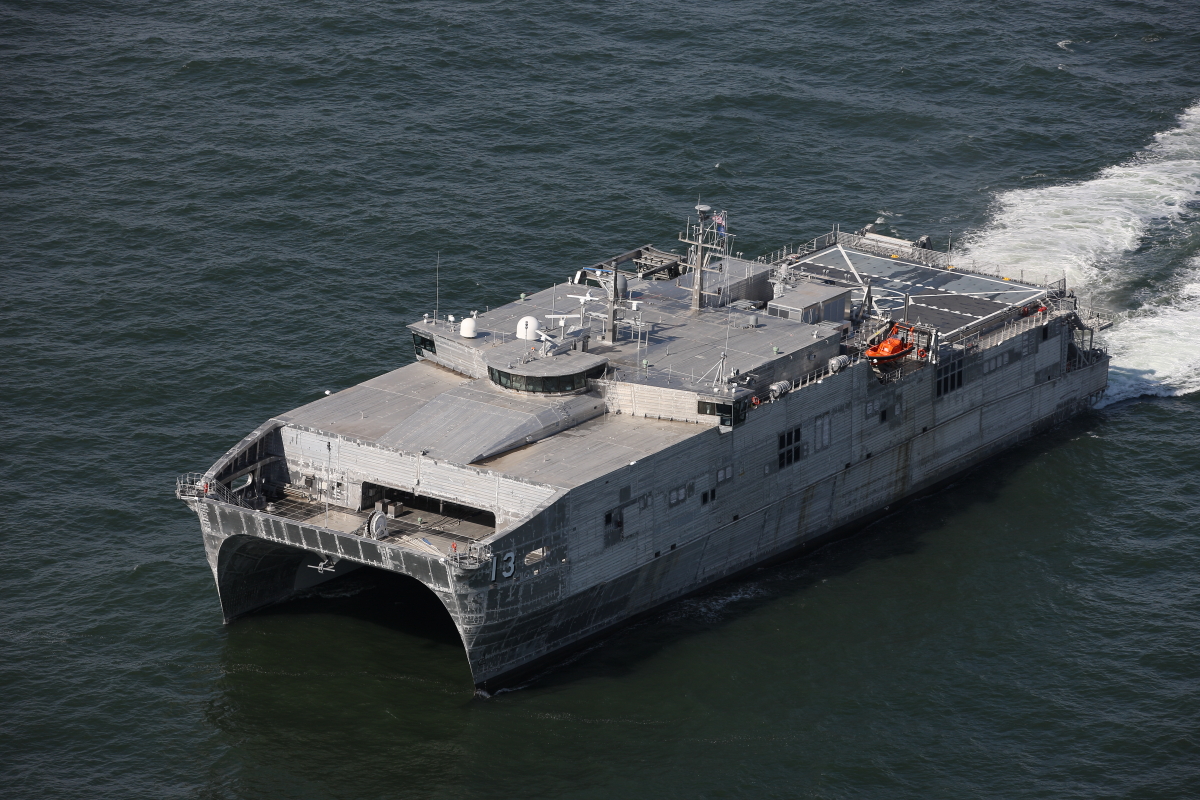
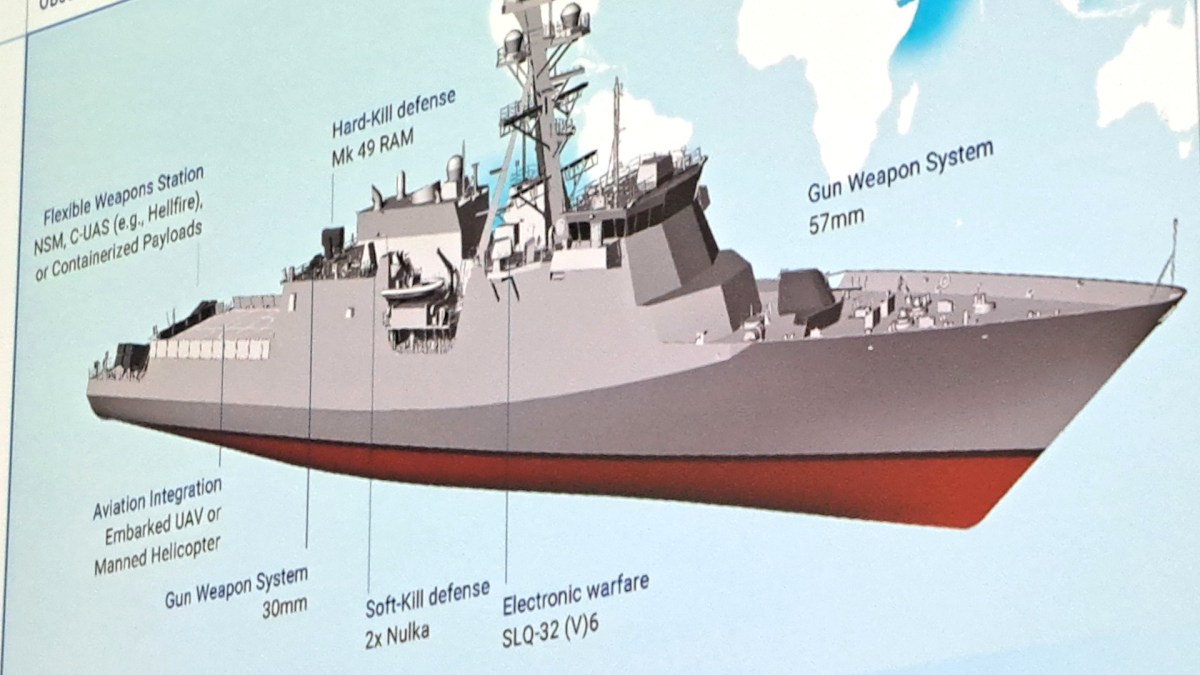
The biggest difference between the NSC and the FF(X) is the Navy’s plans to use the fantails on the latter ships as a space for containerized weapon systems and other modular payloads.

“We are going to evolve it over time. Everybody keeps asking me, what about this? What about that?” NAVSEA’s Miller said. “You know, my answer back is, I care about getting this ship into production, [and then] learning, adapting, and figuring out what this ship needs to grow into.”

“The vision here is we will have capability in a box,” he added. “I think you all will agree that we have come a long ways in our ability to use shipping containers, and I am excited.”

“There was a lot of desire to put an awful lot of expensive capability into these ships. And that would have been cool, except that wasn’t really what we needed, because we have in the Flight III [Arleigh Burke class] destroyers coming down the ways right now, the large surface combatants that are appropriate for today.”

“I want to distinguish between LCS mission modules and containerized payloads. One of the challenges with LCS mission modules was we were taking systems that did not yet exist and marrying them with a ship that we were just starting to build,” Rear Adm. Trinque explained. For FF(X), “we are going to take existing systems and to all intents and purposes, put them in a box with an interface to the ship’s combat system. That will make this work, and it will allow [for] rapid switch out of capability, [and] rapid addition of capability.”

NAVSEA’s Miller also stressed the benefits containerized payloads would offer in terms of being able to “burn down risk.” A system that does not prove itself or is otherwise found not to meet the Navy’s needs could simply be unloaded from the ship and readily replaced with something else.
 
NAVSEA’s Miller also stressed the benefits containerized payloads would offer in terms of being able to “burn down risk.” A system that does not prove itself or is otherwise found not to meet the Navy’s needs could simply be unloaded from the ship and readily replaced with something else.
This is one of the discussions in the RCN regarding drone warfare and why the mission bay on the RCD's is so important (and why the RCN is extremely resistant to removing it in favour of more VLS). If something doesn't work unload it and replace it with something that does. You can iterate technology faster, in smaller amounts to get what you what sooner than later, with less cost and thus less risk.

I think that article was an excellent primer on where the CDC will probably go. We already have "sea container" towed array, habitation modules, dive support etc... Good idea to keep expanding the options, and its a good opportunity for small/med sized Canadian businesses to get involved (Kraken robotics for example).
 
This is one of the discussions in the RCN regarding drone warfare and why the mission bay on the RCD's is so important (and why the RCN is extremely resistant to removing it in favour of more VLS). If something doesn't work unload it and replace it with something that does. You can iterate technology faster, in smaller amounts to get what you what sooner than later, with less cost and thus less risk.

I think that article was an excellent primer on where the CDC will probably go. We already have "sea container" towed array, habitation modules, dive support etc... Good idea to keep expanding the options, and its a good opportunity for small/med sized Canadian businesses to get involved (Kraken robotics for example).

One thing that strikes me is that the mission bay in the RCD is in the middle of the ship, it is covered and it is accessible through the hangar.

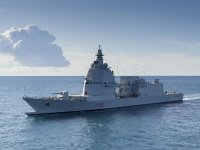
All of that makes it harder to place those Mk70 PDS launchers. They need access to the sky. That is where the Legend's open fantail offers advantages. Or the Italian PPA which just has a weather deck where the mission bay might be.

1768836813864.jpeg
The other thing that intrigues me is the differentiation between the hangar and the mission bay on the RCD and the passage between the two spaces. Why not just turn the boat bays, mission bay and hangar into one common warehouse eith a gantry crane?

And final thought - that flight deck, if you only embark UAVs then you don't need all that deck area and can park containers forward on the sides and still leave a landing area.


1768837831056.jpeg

1768837994554.jpeg

Create a hollow square by moving those containers outboard and forwards and you might get 4 containers with 16 cells (16x Tomahawks or 64x ESSMs) and still leave room for VBAT or Proteus operations.

It might even work with the AOPS flight deck. As I recall the original spec called for ISO locking points and power outlets on tbe flight deck.

..

On the other hand, are the loaded PDS containers light enough to be placed on top of the mission bay?
 
One thing that strikes me is that the mission bay in the RCD is in the middle of the ship, it is covered and it is accessible through the hangar.

All of that makes it harder to place those Mk70 PDS launchers. They need access to the sky. That is where the Legend's open fantail offers advantages. Or the Italian PPA which just has a weather deck where the mission bay might be.
Because the mission bay aboard the RCD is not designed to be a missile launching platform, there is substantial benefit to protecting the internals of the mission bay and allowing direct access through the hanger. An open mission bay amidships is not ideal for a vessel designed to operate in the North Atlantic, and also worsens the vessels radar cross section. Much less of a concern for the far cheaper PPA and less demanding seastate of the Mediterranean.

The other thing that intrigues me is the differentiation between the hangar and the mission bay on the RCD and the passage between the two spaces. Why not just turn the boat bays, mission bay and hangar into one common warehouse eith a gantry crane?
Very likely compartmentalization as large, open spaces internally on warships are substantial liabilities, hence why the Danish Absalon-class frigate is basically a floating damage control nightmare. For the missions required and given how the spaces are laid out, it doesn't really make sense to open everything up and make an even more complex gantry crane system aboard.
 
Because the mission bay aboard the RCD is not designed to be a missile launching platform, there is substantial benefit to protecting the internals of the mission bay and allowing direct access through the hanger. An open mission bay amidships is not ideal for a vessel designed to operate in the North Atlantic, and also worsens the vessels radar cross section. Much less of a concern for the far cheaper PPA and less demanding seastate of the Mediterranean.


Very likely compartmentalization as large, open spaces internally on warships are substantial liabilities, hence why the Danish Absalon-class frigate is basically a floating damage control nightmare. For the missions required and given how the spaces are laid out, it doesn't really make sense to open everything up and make an even more complex gantry crane system aboard.
Having a barrier between the work of boatswains and helicopter maintainers seems useful , too.
 

Long article about the decision to go with the Legend design.

Complementary article extolling the virtues of modular construction.

If I understand correctly this approach is now common in Western yards, including Seaspan and Irving.
 
1769391232640.jpeg

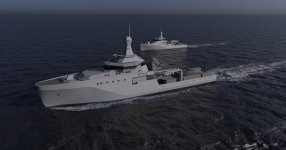
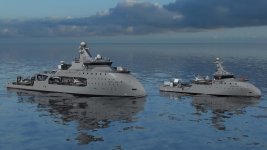
1769391381721.jpegThese are renderings of vessels being offered for the Norwegian Navy's New Standardized Vessel project P1118. The reguirement is for one common design in two sizes. The Norwegians are planning on 28 hulls that will serve the needs of both their Coast Guard and Navy, both of which are part of the Navy. As you can see the vessels are essentially armed OSVs. The top pair are offered by Kongsberg Maritime and the lower pair by Ulstein - with Ulstein's distinctive bow. The larger vessel is 96m and the smaller one 57m.


The intention is that they will handle everything from infrastructure monitoring and mine clearance to ISR and environmental response with suitable containers on board.

These are over and above the 133m Offshore Support Vessel project that is joint with the RN to produce 5 motherships for deepsea infrastructure and mine warfare.


What is the defensive combat maneuverability of these vessels. I see they are depicted with an ability to fling missiles and drones, but are they able to defensively maneuver and fight an inbound attack?
 
What is the defensive combat maneuverability of these vessels. I see they are depicted with an ability to fling missiles and drones, but are they able to defensively maneuver and fight an inbound attack?

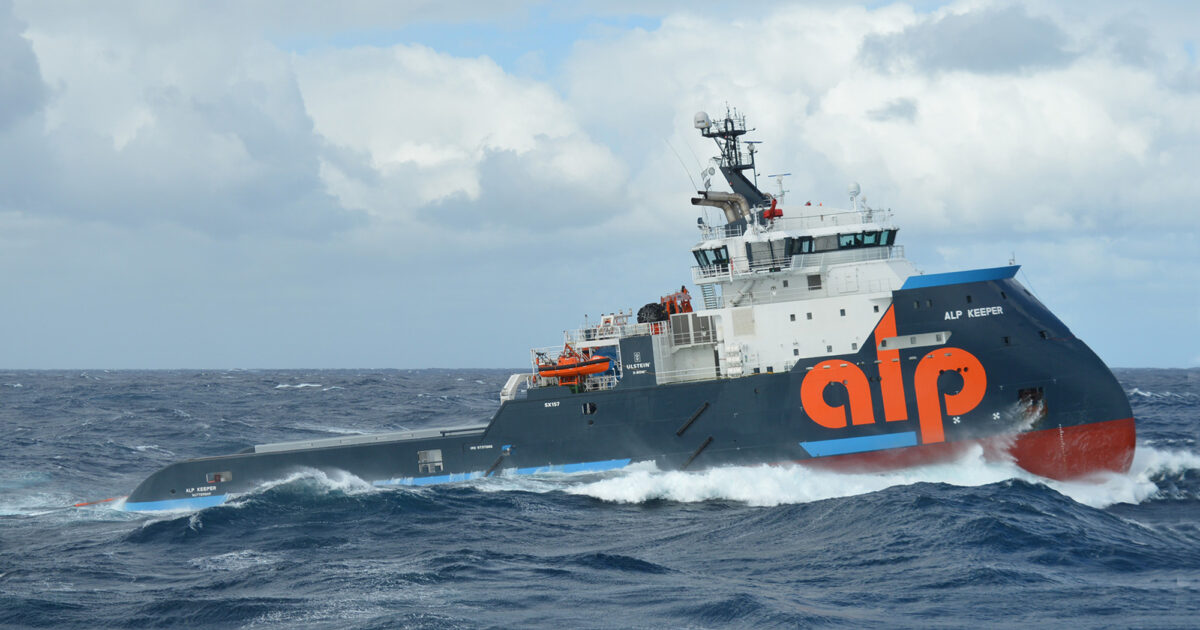
Well, those workboats are designed for working around rigs and wind farms, towing and anchor-handling as well as environmental clean-up and holding position. If they don't have Azipod propulsion then they are usually equipped with bow thrusters. I believe they are quite manoeuverable. At least as manoeuverable as the AOPS but perhaps not quite so as the Kingstons.
 
Bow thrusters not to be used for combat conning. Slow speed manouver only.

Those ships do look cool, the bow design really reduces their upper deck surface area. Not really designed for high speeds in big seas.
 
Bow thrusters not to be used for combat conning. Slow speed manouver only.

Those ships do look cool, the bow design really reduces their upper deck surface area. Not really designed for high speeds in big seas.

A bit from Ulstein about their X-Bow

A couple of videos included.


This is one I wouldn't mind getting a lift on.

 
What is the defensive combat maneuverability of these vessels. I see they are depicted with an ability to fling missiles and drones, but are they able to defensively maneuver and fight an inbound attack?
I don't they envision these things for front line combat. Worst case I think would be to have to go up against FAC/FIAC/USV, in which case a coupe of 25/30mm remote guns would do the trick. Speed is less of an issue because no warship out there is actually outrunning a FAC/FIAC/USV. Their manoeuvrability, however, is probably far tighter than a frigate, even without an azipod.
 
A couple of questions for you nautical types

A-"VLS" vs. VLS
Reading up on this project there's a lot of discussion of whether it's VLS equipped, but it seems like pretty close to a done deal that it will have local area air defense capability via ESSM. My interpretation is that having ESSM in the 2020's and beyond implies near certainty to have "VLS" via MK56 or Self Defense Length Mk 41. So am correct in the interpretation, and that the VLS debate isn't whether or not it will have VLS is some form, but whether or not it will have strike length VLS and the ability to launch force tier missiles?

B - VLS Rules- above deck vs below. So you've got the Mk 56 approx 2.7m above deck and 1.9 below. You've got the SD length MK41 at 5.3m, essentially all below deck. Then the strike length Mk 41 at 7.7m, again below deck.
7.7 - 5.3 = 2.4 AND 2.4 < 2.7
Between the Mk56 and deck mounted Harpoon/NSM 4 cannisters that having the weight and launch point above the deck isn't a hard "No". My question is- if a ship could mount a self defense length Mk 41 but draught is the constraint limiting away from strike length, could you make up the difference by having the box protrude upward through the deck?

C- Tradeoffs- assuming a 57mm and SeaRAM as constant- given the choice between an 8 cell strike length 41 and a 12 cell 56 + 8x NSM in quads, what do you choose and why?

D- Tom Clancy University gives me the impression that standard ship mounted ASW torpedoes are a weapon of last resort and that if a sub has closed to the range they're useful you've pretty much lost, and that you'd preferably not deliberately close with a sub contact to get into range to use them. Is this correct? And if so, and if this ship doesn't have a helo, how important is it to have either UXV droppable torpedoes or ASROC?
 
A-"VLS" vs. VLS
Reading up on this project there's a lot of discussion of whether it's VLS equipped, but it seems like pretty close to a done deal that it will have local area air defense capability via ESSM. My interpretation is that having ESSM in the 2020's and beyond implies near certainty to have "VLS" via MK56 or Self Defense Length Mk 41. So am correct in the interpretation, and that the VLS debate isn't whether or not it will have VLS is some form, but whether or not it will have strike length VLS and the ability to launch force tier missiles?
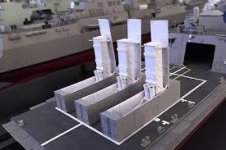
Self Defence length Mark 41 was never actually produced for a customer, and seems to have been entirely discontinued by 2026. Mark 56 VLS is also a legacy Cold War system that specializes in placement aboard very small vessels/ships without space, it is a sub-optimal system and likely will not be fitted aboard a larger and bespoke design like CDC. I think tactical length Mark 41 is a likely choice however, fitting a limited bank of strike length missiles could be done on a sufficiently large design, which CDC seems to be moving to. You could also circumvent this concern by carrying Mark 70 containerized launchers in addition to the already present VLS on either the flight deck or the mission deck, which many CDC concept designs seem to incorporate.

B - VLS Rules- above deck vs below. So you've got the Mk 56 approx 2.7m above deck and 1.9 below. You've got the SD length MK41 at 5.3m, essentially all below deck. Then the strike length Mk 41 at 7.7m, again below deck.
7.7 - 5.3 = 2.4 AND 2.4 < 2.7
Between the Mk56 and deck mounted Harpoon/NSM 4 cannisters that having the weight and launch point above the deck isn't a hard "No". My question is- if a ship could mount a self defense length Mk 41 but draught is the constraint limiting away from strike length, could you make up the difference by having the box protrude upward through the deck?
The Australian Adelaide-class frigates in their last refit were outfitted with tactical length Mark 41 VLS cells which jutted out of the deck a fair bit, although this is relatively uncommon and sub-optimal for many reasons.

FFG-05-Melbourne-photo-019.jpg


C- Tradeoffs- assuming a 57mm and SeaRAM as constant- given the choice between an 8 cell strike length 41 and a 12 cell 56 + 8x NSM in quads, what do you choose and why?
It doesn't seem like recent renderings of concepts require that tradeoff, and fit basically everything. We're seemingly out of an MCDV sized vessel and looking at a real combatant.

D- Tom Clancy University gives me the impression that standard ship mounted ASW torpedoes are a weapon of last resort and that if a sub has closed to the range they're useful you've pretty much lost, and that you'd preferably not deliberately close with a sub contact to get into range to use them. Is this correct? And if so, and if this ship doesn't have a helo, how important is it to have either UXV droppable torpedoes or ASROC?
ASROC takes up valuable VLS slots for a system which is dated and has questionable range, foreign models of similar systems are superior but its still not ideal compared to a helicopter. We don't really know what ASW capabilities will look like in the future with unmanned systems, so it's a bit hard to say at this point. You could perhaps fit torpedoes to unmanned aviation assets and fit them aboard.
 
A couple of questions for you nautical types
I'll take a crack though @Rainbow1910 has done a great job already.
A-"VLS" vs. VLS
Reading up on this project there's a lot of discussion of whether it's VLS equipped, but it seems like pretty close to a done deal that it will have local area air defense capability via ESSM. My interpretation is that having ESSM in the 2020's and beyond implies near certainty to have "VLS" via MK56 or Self Defense Length Mk 41. So am correct in the interpretation, and that the VLS debate isn't whether or not it will have VLS is some form, but whether or not it will have strike length VLS and the ability to launch force tier missiles?
There isn't really a debate at this point, its more of a discussion on what capability you want in the ship. Earlier in the thread it looked like the CDC was going to part of NORAD BMD or somesuch, which would mean a requirement for strike length Mk 41. The other idea was augmentation with the rest of the fleet for Cooperative Engagement Capability etc... So cells that could add more Tomahawks or SM2's etc... to a task groups defensive bubble.

What it looks like now is the ship needs to be able to defend itself against attack. That's it. Which points to a VLS arrangement for some sort of self defence missile. That is likely an ESSM2, but could be Sea Ceptor (other options are unlikely) because these two have already been integrated in the CMS 330 versions for Canada, Chile and NZ. ESSM2 could be tactical length Mk41, Mk56's and Sea Ceptor could be their mushroom farm VLS or the ExLS system.

B - VLS Rules- above deck vs below. So you've got the Mk 56 approx 2.7m above deck and 1.9 below. You've got the SD length MK41 at 5.3m, essentially all below deck. Then the strike length Mk 41 at 7.7m, again below deck.
7.7 - 5.3 = 2.4 AND 2.4 < 2.7
Between the Mk56 and deck mounted Harpoon/NSM 4 cannisters that having the weight and launch point above the deck isn't a hard "No". My question is- if a ship could mount a self defense length Mk 41 but draught is the constraint limiting away from strike length, could you make up the difference by having the box protrude upward through the deck?
The box could protrude yes. Not ideal but both the Danes, Aussies have done similar things. CPF's have the entire Mk 56 arrangement out in the open air.
C- Tradeoffs- assuming a 57mm and SeaRAM as constant- given the choice between an 8 cell strike length 41 and a 12 cell 56 + 8x NSM in quads, what do you choose and why?
Your assumption is a big one, but... I take the strike length. Meets the requirement for self defence. (24 self defense missiles vs 12, and the flexibility to add other options to the VLS system).
D- Tom Clancy University gives me the impression that standard ship mounted ASW torpedoes are a weapon of last resort and that if a sub has closed to the range they're useful you've pretty much lost, and that you'd preferably not deliberately close with a sub contact to get into range to use them. Is this correct? And if so, and if this ship doesn't have a helo, how important is it to have either UXV droppable torpedoes or ASROC?
TCU love it!

Yes SLTT (surface launch torp tubes) are a weapon that you use when the submarine is almost on top of you. I don't expect CDC to carry them. I expect CDC to be operating under friendly continental air cover and be able to call up a P-8 to deal with a submarine if it finds one with its sonar. I think that UXV droppable torps will be better than ASROC in the near future should the ship need a torp launching platform.
 
Back
Top