• Thanks for stopping by. Logging in to a registered account will remove all generic ads. Please reach out with any questions or concerns.

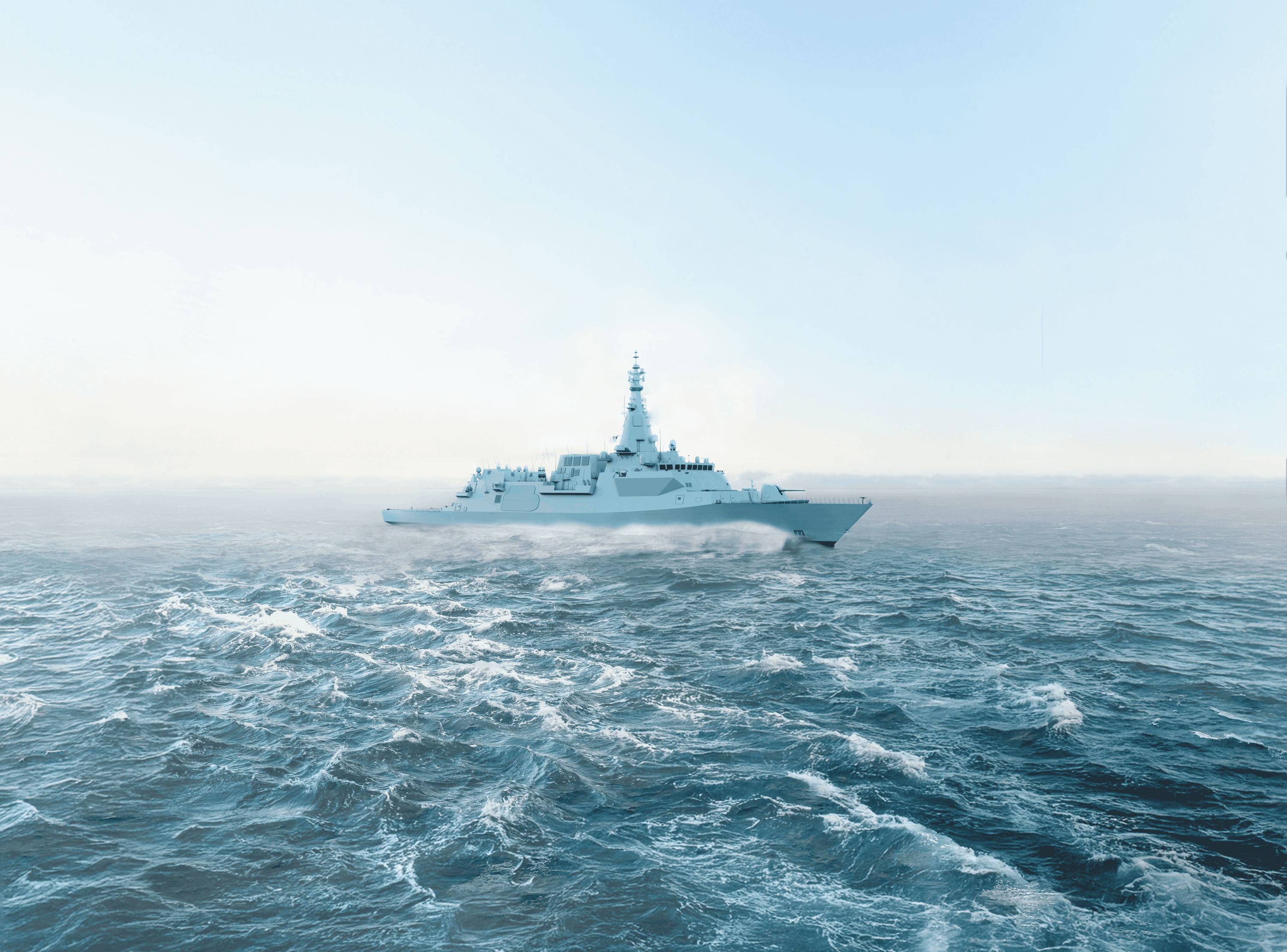
Continental Defence Corvette

Quite right DP. But someone mentioned the US forces in Alaska earlier. Did you know that their posting to Fort Wainwright is considered a "foreign posting" in their system, with all the extra perks that come with it?

Maybe we need to do the same for our forces North of 60.

Would that be an advantage to re-activating Bermuda? It is a relatively short sail from there to both Labrador and Europe

I don't know about the US forces but one of the Alaskan perks is Hawaii. Alaskans regularly stage through Hawaii going to and from the lower 48.

Bermudans wear shorts

1770071400113.jpeg
 
I am not a naval architect, and my seagoing time was on Carnival Cruise Line, but I find it odd that there would be a single line to the controller; I'd have thought there would be some redundancy.
Depends on the piece of kit, but in a lot of cases you get redundancy by having duplicate pieces of equipment with separate controllers, that are separated on the ship, with things like all the power and control cables running on opposite sides, with switches to provide power from either switchboard and similar things like that.

In practical terms, the kind of events we're talking about take out everything in the vicinity, so just having redundant cabling doesn't really give you much, and at the micro level lot of single point of failure things.

They do the same kind of thing on commercial ships as well by doing things like physically separating generators in different compartment and doing the same kind of thing with other critical systems.

Some things you can't practically duplicate (like a rudder), but that's the kind of thing where your control system will have port/starboard control cables, with different places to control it from, but at a certain point you can't do much other than call a tug, and those open ocean salvage companies make a mint.
 
Something we learned about the old CCS 330 (the original Combat System, not the current CMS330 suite) was that the 4x Data Bus lines were run on separate decks, on opposite sides of the ship.

That way if there was a hit on the port side, and you lost both channels, you might still have both the channels on the Stbd side online.

Then, as you did your trouble-shooting, you could re-terminate the BAS (Bus Access Set) to shorten the data bus and get some additional redundancy back online.

It was a very well shielded Tri-Axial cable that was used.

It was something that we figured out relatively late in the life of CCS.

That sort of planned redundancy was built into the Halifax Class.

With systems that have been retrofitted, or modified, or added, there may not have been that same level of engineering acumen applied. The original CIWS was definitely configured differently from the version on the ship which had a big fire that may be the one I'm thinking of impacted in this discussion.

I think back in the 70's and 80's when the CPFs were designed, the RCN had a much better depth of field in terms of naval architects than we do now, and perhaps some of the things we've rushed into operations that have become 'standard' should have had more engineering applied.

I ponder the 'engineering' that we applied as we sat on the Bridge-top of HMCS Montreal in 2005 in a foreign port in the Med trying to figure out how to install an AIS receiver. We may have been hungover. We definitely didn't have a useful instruction manual, but between 2 Comm Techs and me the Sonar Tech, we got it installed, we connected it to a GPS signal, we tied it into the Kelvin Hughes for an AIS Overlay, and we managed to get good ranges by not putting it too close to any of the emitters on the bridge-top. A few ports later, I happened to bump into an OSL guy at an airport, and he told me how to tie the AIS into SHINNADS as well - so we became the first ship in the fleet to have AIS info showing up on our SDM.

There was no redundancy....but we got it working anyhow.

(There may also have been no formal approval from anyone by the CO to the CSEO....but....)
 
The actual CIWS is the easist part of the install as well; the control station, interface to the CMS, and all the power/cable runs takes up the vast majority of the install time (even if it's stanalone).

They had to replace the fiber op line from the CIWS to the controller a few years ago after a fire, and because of the number of penetrations it had to go through was somehting like a 3 week job at around $200k just for the fiber run.
Yah cause it had to run all the way to OPS! On JSS the CIWS LCS is two spaces away from the gun. So close that if there was an issue the Tech on the LCS could run out to the gun in about 30 seconds. The Remote Control Station is in the Ops room, so the forward CIWS will be a 200m or longer run, but the house CIWS is about 20m with only three penetrations (if they run the cable cleverly). So partial lesson learned here, were the LCS is basically safely co-located with the gun.
 
(There may also have been no formal approval from anyone by the CO to the CSEO....but....)
As a CSEO I would have briefed the CO that FER will rip my arms off and beat me with them for allowing that. Then probably allowed it anyways, because in those days those systems didn't talk to secret systems. Now a-day with all the systems talking to each other, would have probably tried to rig a stand alone in the sort term because network security is important (see VDQ and Freddie IPMS issues in the last Mar Eng Journal for an example).

My biggest pet peeve right now is cell phones on the bridge.
 
As I recall, we had no idea what AIS was when we got to the Med...then the Norwegian ship was reporting beyond the radar horizon targets by "AIS" and we were confused. Our OPSO went over on a cross-pol to see it, came back, talked with the CO, and upon arrival in our next port, the SYO received the little SLR-200 black-box receiver from the FLS guys, it was presented to the CSEO and he was directed to 'get it up' and we had our marching orders.

Took a bit to figure it all out, but yeah, pretty neat little receiver.


Interesting to see that they're still available.

Wiring my own DB9 connectors and running it into Com ports at 4800 8 N 1....I doubt you'll find many tech nowadays that know that term.

NS
 
Yah cause it had to run all the way to OPS! On JSS the CIWS LCS is two spaces away from the gun. So close that if there was an issue the Tech on the LCS could run out to the gun in about 30 seconds. The Remote Control Station is in the Ops room, so the forward CIWS will be a 200m or longer run, but the house CIWS is about 20m with only three penetrations (if they run the cable cleverly). So partial lesson learned here, were the LCS is basically safely co-located with the gun.
It was in one of the FCERs, so maybe took out the cable mid transit, and for whatever reason couldn't have splices, so ended up being an expensive one.

Bolting things onto non combatants like the JSS will be generally cheaper from the cable run side of things, regardless of where you put it, just because you have far less compartmentalization and watertight bulkheads, but locating them a bit closer does make sense.

@NavyShooter with the 3D modeling of the ships now, down to cabling runs, cooling lines etc they can now run all kinds of damage scenarios using real munitions hitting pretty much anywhere on the ship from every angle, and actually giving a probabilistic damage report, so you can actually map out what kind of things you will lose. Pretty neat, and lets you find vulnerabilities and reroute things, but also gives you a good idea what is a realistic kind of damage to expect.

Would be nice if sea training could use those for real, and not pretend the ship would survive a torpedo hit (and that everyone below the waterline wouldn't be pulped, while most of the crew above would be badly mangled), but I guess it's more fun to make up damage and spread the love around to the different sections for training objectives..
 
Back
Top