
- Reaction score
- 7,001
- Points
- 1,160
Country-wives were an essential part of that HBC system in the early stages, not sure how well that concept would go over these days......



Country-wives were an essential part of that HBC system in the early stages, not sure how well that concept would go over these days......

Part of the new Arctic strategy is the development of Northern Operational Support Hubs/Nodes (NOSH/NOSN).
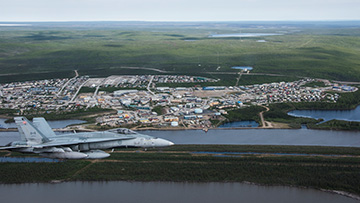
Northern Operational Support Hubs enables the projection and sustainment of military forces in the Arctic
The defence of Canada and assertion of sovereignty are high priorities of the Government of Canada, and the Arctic and northern regions are seen as being vital to both.www.canada.ca
Minister Blair announces First Northern Operational Support Hub locations - Canada.ca
Today, the Honourable Bill Blair, Minister of National Defence, announced Iqaluit, Inuvik, and Yellowknife as Northern Operational Support Hub locations.
I can't help but see echos of the old Hudson Bay Company network in this plan. The NOSH sites being analogous to the HBC Forts/Factories and the NOSN sites being similar to the Posts/Depots. It worked then so I can't see why it shouldn't work now.
For the Node sites I wonder if rather than rotational postings to these austere locations you might instead adapt an all volunteer system for those that might enjoy this type of opportunity. The old HBC posts sometimes were staffed with only 1-3 men who acted not only as traders but as liaisons with the local communities, a source of emergency shelter/supplies, etc. Personnel could fill a similar role, not only maintaining the pre-positioned equipment and supplies but coordination with the local Ranger Patrol and other Government agencies, provide facilities for fly-in services (e.g. vaccinations, etc.) and emergencies, SAR assistance, etc.
Are these still happening?
Raised it again because the initiative was mentioned in the Defence Industrial Strategy that was just releasedThis was announced by Bungalow Bill Blair a year ago... that's like ancient history.
Are these still happening? I have no idea of course...

Country-wives were an essential part of that HBC system in the early stages, not sure how well that concept would go over these days......

In India they sent the Scots first, who worked their way into the power structure and married into powerful families. The Indians and the Scots got along. Then came the stuffy Brits who banned interracial marriage and made life miserable for those women. That laid the foundations for the mutiny.The whole character of the British Empire changed when the Honourable East India Company started taking their wives with them.
Fortunately there no wives were interested in going to the Arctic. The lads had to forage.
In India they sent the Scots first, who worked their way into the power structure and married into powerful families. The Indians and the Scots got along. Then came the stuffy Brits who banned interracial marriage and made life miserable for those women. That laid the foundations for the mutiny.

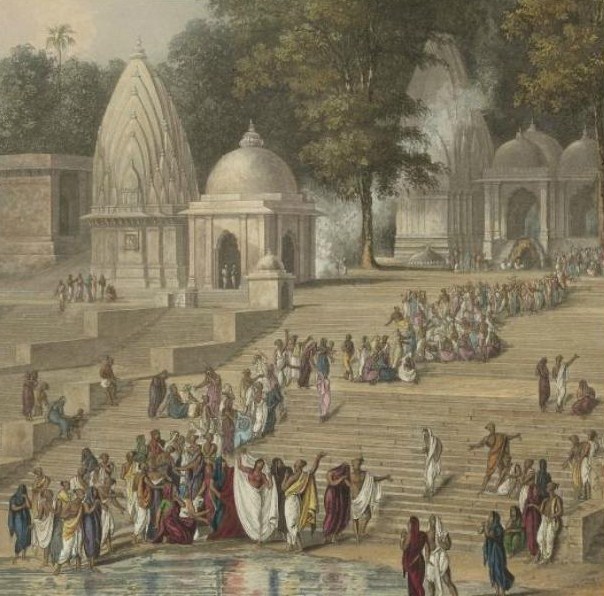

In India they sent the Scots first, who worked their way into the power structure and married into powerful families. The Indians and the Scots got along. Then came the stuffyBritsmissionaries who banned interracial marriage and made life miserable for those women. That laid the foundations for the mutiny.
. There were plenty of English, Irish and Welsh men in the East India Company who weren’t clamouring for bring home to India. That all changed when the public back home learned of their boys going native, so pressured the government to send missionaries to India.
TFTFY.
But point taken, there is a reason why in India, they refer to the colonial period as the “Scottish Empire”. I would argue that the British Empire was a largely Scottish venture. The English were just along for the ride and kicked in some coinage.
 www.facebook.com
Interesting fun fact... many Innuit dances, and other customs, that are well known today were passed on by Scottish Whalers... and there is an 'Arctic Bar' in Dundee that has long connected with the whaling Captains and their crew.
.... the things you can learn from an Inuit tour guide in a museum on Baffin Island, eh?

 snr.org.uk


 dennstedt.wordpress.com

 yukon-news.com

 www.defensenews.com

 defence-blog.com
There's a LOT of people named McKay or MacKay in remote FNs in northern Ontario who speak English as a second language, so the legacy continuesScots wha hae, eh?
Canadian Arctic
Canadian Prairies
American Appalachians
The tune used in the Canadian prairies is one the my Uncle arranged - Stan Hamilton - Late of the Flying Scotsmen and The Clansmen.


A bit like Claude Ryan of Quebec a number of years ago…There's a LOT of people named McKay or MacKay in remote FNs in northern Ontario who speak English as a second language, so the legacy continues
There's a LOT of people named McKay or MacKay in remote FNs in northern Ontario who speak English as a second language, so the legacy continues

QC also has a lot of Irish names about for the same reasonA bit like Claude Ryan of Quebec a number of years ago…


