• Thanks for stopping by. Logging in to a registered account will remove all generic ads. Please reach out with any questions or concerns.

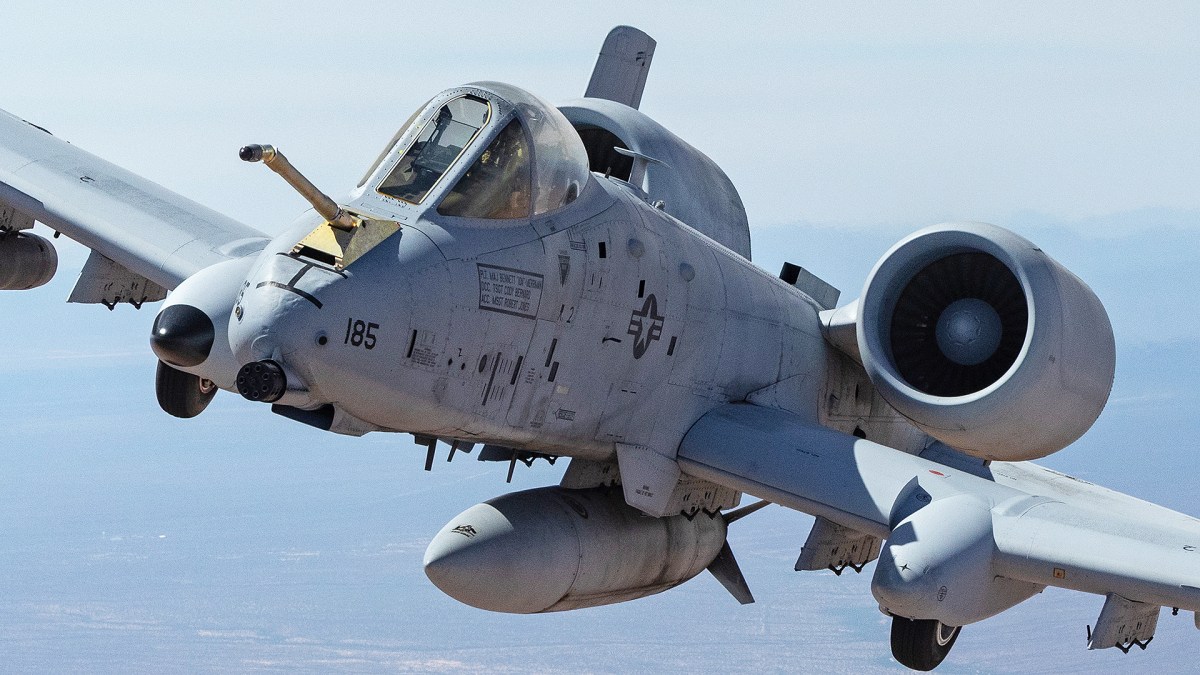
A-10 Warthog

That's what modern rotorcraft are for. An MV-75 has a 280 kt cruise, substantially longer endurance and about 70% of the payload. It's doing what an Apache would do at double the cruise speed.

If we he have a high enough threat environment to worry about the A10s being shot out of the sky for lack of countermeasures i sincerely doubt a rotor is going to stay flying for very long on the FLOT. Since no gunship MV-75 is in development, US Army wants two distinct platforms, thats a non starter. Per your payload comment.... sure ill believe in when I see a helicopter with 500 lb class bombs and AGMs. Rotary wing air craft vulnerabilities have been displayed in Ukraine.

An aircraft that can't contribute to the biggest threat scenario should probably not be such a large part of the fixed wing combat fleet. At least the F-15EX can contribute to a Taiwan fight.

Thats strictly based on geographic realities. A10s dont have the legs to make it to that fight from Korea and contribute meaningfully.
 
If we he have a high enough threat environment to worry about the A10s being shot out of the sky for lack of countermeasures i sincerely doubt a rotor is going to stay flying for very long on the FLOT. Since no gunship MV-75 is in development, US Army wants two distinct platforms, thats a non starter. Per your payload comment.... sure ill believe in when I see a helicopter with 500 lb class bombs and AGMs. Rotary wing air craft vulnerabilities have been displayed in Ukraine.

Thats strictly based on geographic realities. A10s dont have the legs to make it to that fight from Korea and contribute meaningfully.

Reality is that the A-10 replacement is some combination of F-35 for a high threat environment and F-15EX for lower threat environments where heavy payload can be brought to bear. Beyond that, if we're looking at places where an A-10 can operate, it's going to some kind of gunship supporting SOF or eventually whatever happens in the rotary wing space. Building a dedicated CAS aircraft that is optimized to operate in low threat environments that governments largely eschew (Iran excepted) is substantially a waste of resources and manpower. Outside of COIN they are sitting around not doing much. And other than SOF most of the regular military is out of the COIN business.
 
The A-10 and AH (and medium drones) are all part of a discussion that has been going on for a long time.

Air forces want to control how the Army’s and Navy’s aviation effects are delivered, using the reasoning they are the air experts. What the really want to control is the air requirements and especially the budgets.

They often don’t seem to understand the actual effect requirements of the Army or Navy, or indeed the distinctive air operating environments.
 
So far 1, but they were the most shot down aircraft in the Gulf War.
The safest aircraft could be the one most shot down if it's routinely flying the riskiest mission profiles disproportionately frequently compared to other aircraft.

Of all essentially similar ground support missions (eg. payloads, altitudes, loiter times, ground fire, etc) flow by various aircraft including the A-10, what were the comparative shoot-down rates?

It's a rhetorical question, and doesn't need an answer. If the A-10 (or any pure ground attack platform) is overwhelmingly used for the riskiest ground attack missions precisely because it is thought to be the toughest platform with the greatest effect on the types of targets those missions entail, then, sure, comparatively more of them are likely to be lost.
 
Building a dedicated CAS aircraft that is optimized to operate in low threat environments
The A-10 was optimized to fight over Soviet ground formations. First time I've read them characterized as a low-threat environment.
 
Back
Top