• Thanks for stopping by. Logging in to a registered account will remove all generic ads. Please reach out with any questions or concerns.

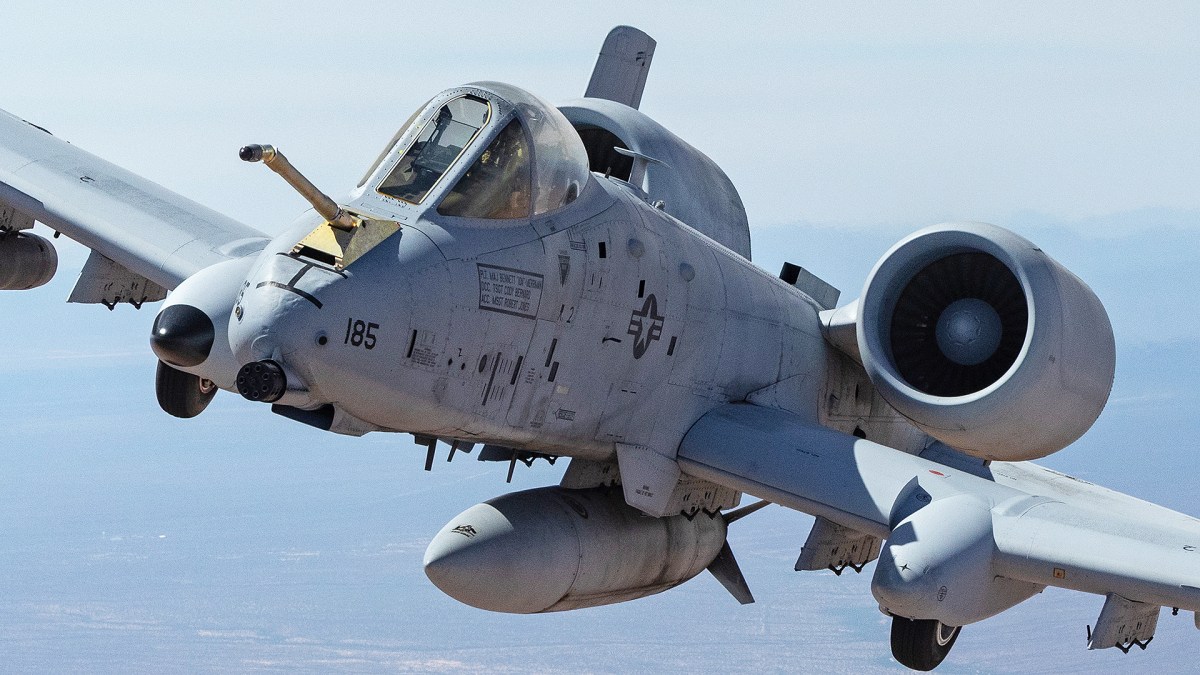
A-10 Warthog

That's what modern rotorcraft are for. An MV-75 has a 280 kt cruise, substantially longer endurance and about 70% of the payload. It's doing what an Apache would do at double the cruise speed.

If we he have a high enough threat environment to worry about the A10s being shot out of the sky for lack of countermeasures i sincerely doubt a rotor is going to stay flying for very long on the FLOT. Since no gunship MV-75 is in development, US Army wants two distinct platforms, thats a non starter. Per your payload comment.... sure ill believe in when I see a helicopter with 500 lb class bombs and AGMs. Rotary wing air craft vulnerabilities have been displayed in Ukraine.

An aircraft that can't contribute to the biggest threat scenario should probably not be such a large part of the fixed wing combat fleet. At least the F-15EX can contribute to a Taiwan fight.

Thats strictly based on geographic realities. A10s dont have the legs to make it to that fight from Korea and contribute meaningfully.
 
If we he have a high enough threat environment to worry about the A10s being shot out of the sky for lack of countermeasures i sincerely doubt a rotor is going to stay flying for very long on the FLOT. Since no gunship MV-75 is in development, US Army wants two distinct platforms, thats a non starter. Per your payload comment.... sure ill believe in when I see a helicopter with 500 lb class bombs and AGMs. Rotary wing air craft vulnerabilities have been displayed in Ukraine.

Thats strictly based on geographic realities. A10s dont have the legs to make it to that fight from Korea and contribute meaningfully.

Reality is that the A-10 replacement is some combination of F-35 for a high threat environment and F-15EX for lower threat environments where heavy payload can be brought to bear. Beyond that, if we're looking at places where an A-10 can operate, it's going to some kind of gunship supporting SOF or eventually whatever happens in the rotary wing space. Building a dedicated CAS aircraft that is optimized to operate in low threat environments that governments largely eschew (Iran excepted) is substantially a waste of resources and manpower. Outside of COIN they are sitting around not doing much. And other than SOF most of the regular military is out of the COIN business.
 
The A-10 and AH (and medium drones) are all part of a discussion that has been going on for a long time.

Air forces want to control how the Army’s and Navy’s aviation effects are delivered, using the reasoning they are the air experts. What the really want to control is the air requirements and especially the budgets.

They often don’t seem to understand the actual effect requirements of the Army or Navy, or indeed the distinctive air operating environments.
 
So far 1, but they were the most shot down aircraft in the Gulf War.
The safest aircraft could be the one most shot down if it's routinely flying the riskiest mission profiles disproportionately frequently compared to other aircraft.

Of all essentially similar ground support missions (eg. payloads, altitudes, loiter times, ground fire, etc) flow by various aircraft including the A-10, what were the comparative shoot-down rates?

It's a rhetorical question, and doesn't need an answer. If the A-10 (or any pure ground attack platform) is overwhelmingly used for the riskiest ground attack missions precisely because it is thought to be the toughest platform with the greatest effect on the types of targets those missions entail, then, sure, comparatively more of them are likely to be lost.
 
Building a dedicated CAS aircraft that is optimized to operate in low threat environments
The A-10 was optimized to fight over Soviet ground formations. First time I've read them characterized as a low-threat environment.
 
Considering a potential scrap over Taiwan

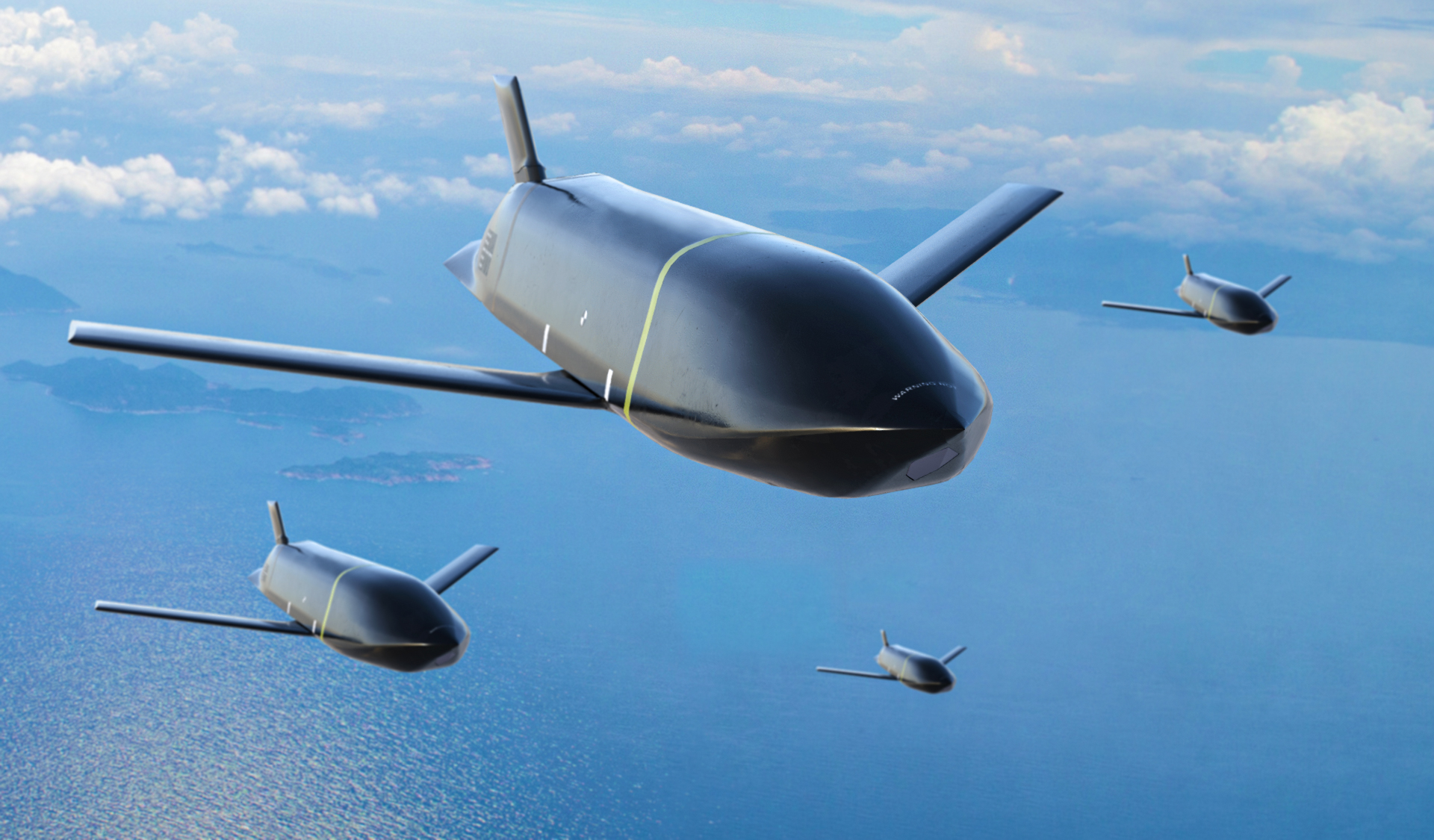
I see the USAF has budgeted about a Billion for CCA aircraft in 2027 and another 1.25 or so for CCA development.

Put the two together and you have 2.25 BUSD to invest in CCAs, some of which could be applied to the CAS role. Potentially escorting F35s, A-10s or CH-47s and C-130s.

Playing with numbers as is my wont

Assume half of the project funds go to airframes and half goes to sensors, systems and development.

Call it 1.1 BUSD for airframes.

If all of that is spent on 30 MUSD USAF CCAs then it will buy 35 to 40 aircraft.

If all of it were spent on 3 MUSD USMC CCAs then it will buy 350 to 400 aircraft.

Buying 18 USAF aircraft will leave enough for something like 150 USMC type CCAs.

The USMC is generally reputed to be more focused on the ground game so I am doing to assume a focus to operate in support of their Stand In Forces of the Littoral Marine Regiments.

I am also going to assume a critical need for the Human In The Loop.

Now for an infantry question.

How far forward should your commander be?

On point? One bound behind? Two or three? In the rear?

And what does the commander need to effectively move and survive in the field?

An AH-64 or AH-1? An A-10? An F-35? Or an MV of some indeterminate characteristics?

And how much time has to be devoted to flying the aircraft and dodging incoming rather than keeping the "19 yr old with a rifle" supported?
 
The A-10 and AH (and medium drones) are all part of a discussion that has been going on for a long time.

Air forces want to control how the Army’s and Navy’s aviation effects are delivered, using the reasoning they are the air experts. What the really want to control is the air requirements and especially the budgets.

They often don’t seem to understand the actual effect requirements of the Army or Navy, or indeed the distinctive air operating environments.

I would have agreed with this years ago. Trying to kill the A-10 during GWOT was flat out dumb. But as everybody moves to near-peer and GWOT style on-demand unopposed CAS becomes less possible, I think it's a valid question to ask if this platform and mission type should be 9.5% of the Fast jet fleet for the USAF. That's not a small proportion. It's a ~170 frames that could be more 15EXs and 35s.

You mention the Navy. Notice how the USN is going to a Panther/Super Hornet/Rhino mix and how the USMC is slowly transitioning to all Panthers? Presumably, they understand the support they need. And they aren't keeping around slow and unstealthy aircraft either.
 
The A-10 was optimized to fight over Soviet ground formations. First time I've read them characterized as a low-threat environment.

And in that environment their life expectancy was something like 2 weeks:

if the A-10s went into action, seven percent of the jets would be lost per 100 sorties. Since each pilot was expected to fly at most four missions per day, each base would in theory generate more than 250 sorties daily. At this pace, a seven-percent loss rate per 100 flights equaled at least 10 A-10s shot down at each FOL every 24 hours — and that’s being conservative.

At that rate, in less than two weeks the entire A-10 force at the time — around 700 jets — would have been destroyed and the pilots killed, injured, captured or, at the very least, very shook up.

They basically planned a suicide mission in the event of WWIII. And it totally made sense to really stop Soviet armour. But even back then they understood that they'd get shredded with even moderate air defences. Today, we're at the point that their WWIII air defence threats are proliferating everywhere and third world countries field S-300s and S-400s and loads of more recent generation MANPADs. So unless you have substantial air superiority you won't be able to use an A-10 anyway. At which point you can use anything that flies anyway and other platforms bring more advantages. F-15s bring more payload and/or more endurance. AC-130Js bring an insane loiter time and direct fire weapons. Rotorcraft can be closer and quicker to respond. Etc.
 
I would have agreed with this years ago. Trying to kill the A-10 during GWOT was flat out dumb. But as everybody moves to near-peer and GWOT style on-demand unopposed CAS becomes less possible, I think it's a valid question to ask if this platform and mission type should be 9.5% of the Fast jet fleet for the USAF. That's not a small proportion. It's a ~170 frames that could be more 15EXs and 35s.

You mention the Navy. Notice how the USN is going to a Panther/Super Hornet/Rhino mix and how the USMC is slowly transitioning to all Panthers? Presumably, they understand the support they need. And they aren't keeping around slow and unstealthy aircraft either.
I’m not CAS expert, so I’m admit I don’t know.

I’m just not convinced the RCAF, or the USAF for that matter, can make those decisions themselves.

Doesn’t change the fact both of these organizations would cut of support in a heartbeat to maintain what they consider their core roles.

J-STARS, which I have more than a passing exposure to, is similar. Not only is the USAF perfectly happy to be rid of it, but so is the ISR community.
 
I've read plenty of "the life expectancy of a [X] in [Y] is [Z]" stories. The only ones with any value are the ones calculated after the fact. Otherwise, we just don't know. And there were/are plenty of combat roles with short life expectancies once battle is joined.

Certainly some jobs are riskier than others. But ignoring relative risks when comparing different jobs is pointless.
 
Back
Top