
is there a point where the feds can step in and say enough?And it all gets funner and funner...

Group of B.C. First Nations wants recent treaties paused, says they weren’t consulted | Globalnews.ca
The Nations say that the K'omoks treaty claims approximately 80 per cent of WWK territory, and the Kitselas treaty would affect more than 90 per cent of NAT and LKB.globalnews.ca
.... meanwhile the BC Liberal MPs might be convinced to support another TMX line, possibly even with taxpayer money

Carney government looks at new pipeline along Trans Mountain corridor: sources
A new Alberta oil pipeline following the existing Trans Mountain corridor through B.C. has been discussed inside the federal government, sources have confirmed to the Star, but it could comewww.thestar.com
because everybody knows there is no native support for a northern pipeline nor for lifting the tanker moratorium....
See the first article.

You are using an out of date browser. It may not display this or other websites correctly.
You should upgrade or use an alternative browser.
You should upgrade or use an alternative browser.
Pipelines, energy and natural resources
- Thread starter QV
- Start date

- Reaction score
- 25,099
- Points
- 1,010
No. You are talking about “debates” that have gone on for thousands of years (I am using the word debate charitably here, because, up to 100 years or so ago, the debates were settled with war clubs and spears. Notwithstanding the current narrative that everything was hugs and kisses before Europeans showed up…)is there a point where the feds can step in and say enough?
You aren’t settling that by Federal fiat.

daftandbarmy
Army.ca Fossil
- Reaction score
- 48,510
- Points
- 1,160
But (oh, please) this BC government might fall because of the mess they've made, which would be a relief...
- Reaction score
- 25,099
- Points
- 1,010
The whole place is effectively ungovernable.But (oh, please) this BC government might fall because of the mess they've made, which would be a relief...

MilEME09
Army.ca Fixture
- Reaction score
- 8,525
- Points
- 1,210
Then a more forcefully arguement needs to be made. S35 is a duty to consult, not obtain consent. Get our ducks in a row, properly and thoroughly consult. Then start building, with heavy security.The whole place is effectively ungovernable.

- Reaction score
- 13,964
- Points
- 1,160
is there a point where the feds can step in and say enough?
The Mounties don't seem to want that job and neither does the Army. And no politicians seem willing to go there.
daftandbarmy
Army.ca Fossil
- Reaction score
- 48,510
- Points
- 1,160
The whole place is effectively ungovernable.
As per this guy …
I can't even begin to imagine the international screaming if the army even dispatched an Iltis in there (and yes, I know that they are but a memory)The Mounties don't seem to want that job and neither does the Army. And no politicians seem willing to go there.

- Reaction score
- 12,264
- Points
- 1,040
Didn't know they had a say.The Mounties don't seem to want that job and neither does the Army.
- Reaction score
- 13,964
- Points
- 1,160
Didn't know they had a say.
If the Generals can ignore an order from the PM to sort out their HQ I suspect they can figure out how to make themselves unavailable for another Oka or BC Miner's Strike.
- Reaction score
- 13,964
- Points
- 1,160
So natives have inherent property rights but the majority does not?
The RCMP in B.C. have the CIRG unit that deals with public order matters and some security aspects around some of the contentious resource projects. Notably it’s a provincial unit stood up as part of the provincial policing role RCMP have in B.C.; it’s not a federal policing unit.The Mounties don't seem to want that job and neither does the Army. And no politicians seem willing to go there.
Didn't know they had a say.
You know better than that. Police enjoy considerable operational independence within the scope of any particular unit or detachment’s funded mandate. So for instance if a pipeline is being installed through the Fort Moose’s Armpit detachment area, the FMA detachment and corresponding district will have a responsibility to investigate offences and detect and deter crime in that area- but it will be mixed in with all other priorities as well and will be subject to triage. And in a particular security event, the critical incident commander will still make his or her own operational decisions regarding posture, enforcement etc. But we’ve been all over that stuff a few times in past threads. Suffice to say there’s little scope for government to tell senior police leadership ‘thou shalt’ send specific forces and engage in specific enforcement.
Now with that said, what can be done is by government to focus efforts is to separately and specifically fund a unit with a narrow mandate and dedicated personnel, so that they default to a particular type of work in a particular area. It’s not direct operational control, but dedicating resources at least focuses efforts.
- Reaction score
- 12,264
- Points
- 1,040
No, I actually believed that if the PM ordered the RCMP to do something about civil disobedience or disorder, it would get done. I didn't, however, believe that any other government on whose behalf the RCMP policed had that authority.You know better than that.
- Reaction score
- 13,964
- Points
- 1,160
I can't even begin to imagine the international screaming if the army even dispatched an Iltis in there (and yes, I know that they are but a memory)

Gustafsen Lake standoff - Wikipedia
And that was before the Summit of the Americas riots in Quebec in 2001 and the 2010 G8 and G20 summits.
As demonstrated by trucks in Ottawa and pro-Palestinians everywhere "force" is no longer in the Canadian Government's vocabulary.

- Reaction score
- 3,259
- Points
- 1,140
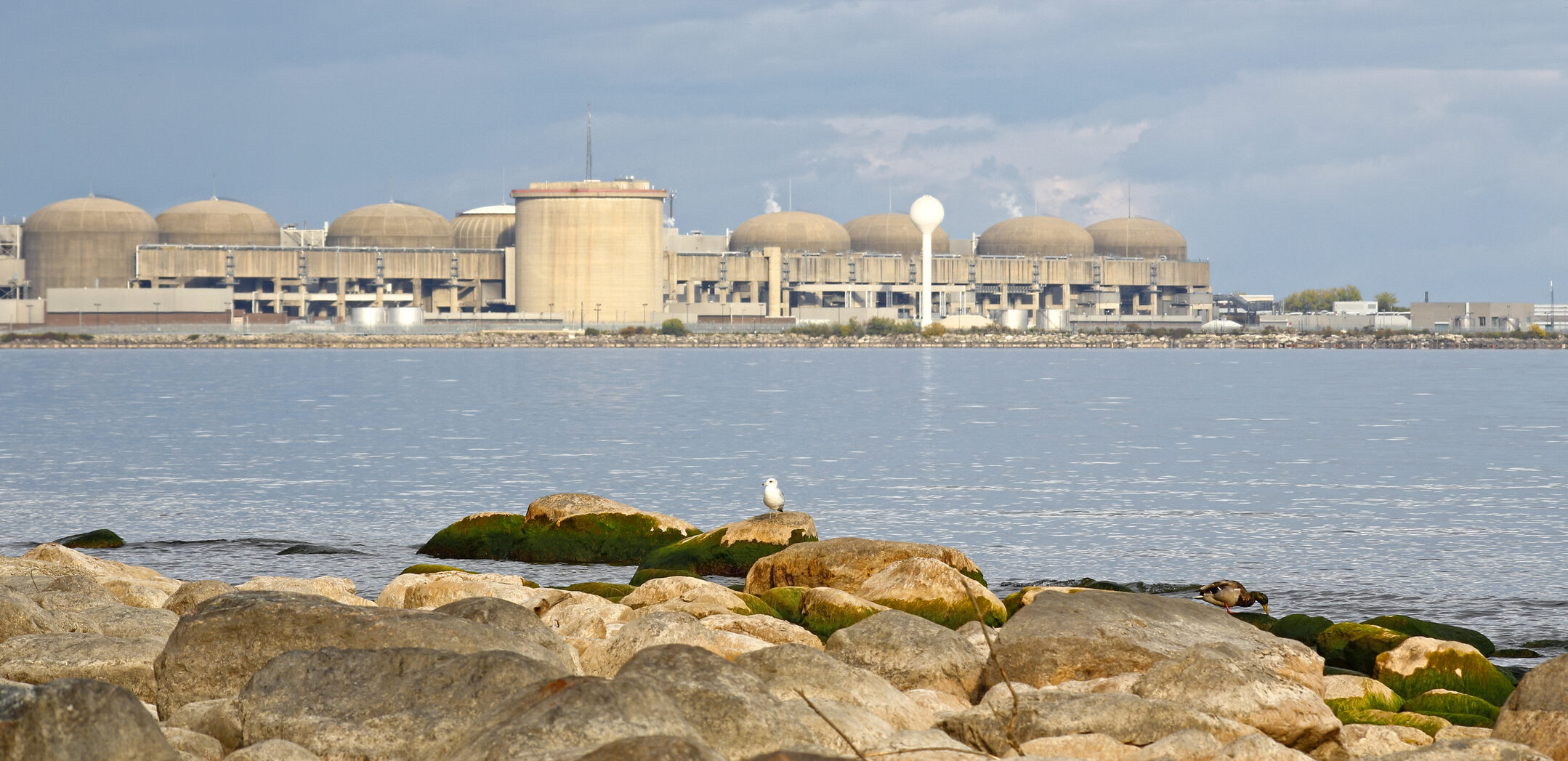
To enrich or not to enrich nuclear fuel: Canada's dilemma
Canada’s nuclear sector is growing, but without enrichment capacity it faces strategic risks as global supply chains tighten.
 policyoptions.irpp.org
I don't know where else to put this since the other thread has been "temporarily" locked since January, but it seems like our push for SMR might have some knock on effects.
Canada is one of the world’s leading nuclear power nations.
It supplied 24 per cent of global uranium in 2024, making it the world’s second-largest producer. It is an $800-million-a-year industry that directly employs more than 2,000 Canadians at mine sites, more than half of whom are residents of northern Saskatchewan.
With Ontario Power Generation leading the way, Canada is also a leader in the development of small modular reactors (SMRs), which have attracted interest and development plans in other provinces, such as Nova Scotia.
Yet one crucial step in the nuclear industry is missing here – enrichment, which is the process of increasing the percentage of the uranium-235 isotope in natural uranium for use as reactor fuel.
Controversially, this fuel can be used to make nuclear weapons when enriched beyond the levels required for civilian energy production. Current global geopolitical conflicts make the politics of enrichment more visible and raise proliferation concerns as the distance from civilian-fuel grade to a more sensitive fuel cycle becomes shorter
Today, uranium mined and processed in Canada must be exported to the United States for enrichment before being returned for use as reactor fuel.
But as a new generation of SMRs – most of which require enriched uranium as fuel – are being prioritized, this raises a strategic question: should Canada complete the nuclear fuel cycle at home?

HavokFour
Army.ca Veteran
- Reaction score
- 4,391
- Points
- 1,040
To enrich or not to enrich nuclear fuel: Canada's dilemma
Canada’s nuclear sector is growing, but without enrichment capacity it faces strategic risks as global supply chains tighten.
I don't know where else to put this since the other thread has been "temporarily" locked since January, but it seems like our push for SMR might have some knock on effects.
Uranium being one of our big natural resources, I've been posting nuclear energy related news over here.

Pressure is mounting to start enriching for Darlington's 4 new reactors (and other Provinces looking at nuclear) and for export abroad due to Russia having almost half of the total global enriching capacity, and the only commercial supplier of High-Assay Low-Enriched Uranium (HALEU).

 www.theglobeandmail.com
Archive
www.theglobeandmail.com
Archive
The federal government faces calls to begin enriching uranium. Should it?
Move would have significant implications for Saskatchewan’s uranium industry, power producers and Canada’s international standing
www.theglobeandmail.com
MilEME09
Army.ca Fixture
- Reaction score
- 8,525
- Points
- 1,210
Three different routes AB is looking at, either way we have no company yet saying yes lets build that. Tanker ban is the easiest thing to get around, there is already an exemption rule built into the legislation, now one hand blanket eliminating the ban would help increase traffic however. I suggest we auction the exclusive tanker rights to a Prince Rupert terminal, generating income for the Goc, and allowing control over the amount of traffic. which may or may not keep FN happy
We should absolutely be enriching for civil fuel use.To enrich or not to enrich nuclear fuel: Canada's dilemma
Canada’s nuclear sector is growing, but without enrichment capacity it faces strategic risks as global supply chains tighten.
I don't know where else to put this since the other thread has been "temporarily" locked since January, but it seems like our push for SMR might have some knock on effects.

- Reaction score
- 8,670
- Points
- 1,360
So moved - thx!Uranium being one of our big natural resources, I've been posting nuclear energy related news over here.
Pressure is mounting to start enriching for Darlington's 4 new reactors (and other Provinces looking at nuclear) and for export abroad due to Russia having almost half of the total global enriching capacity, and the only commercial supplier of High-Assay Low-Enriched Uranium (HALEU).
ArchiveThe federal government faces calls to begin enriching uranium. Should it?
Move would have significant implications for Saskatchewan’s uranium industry, power producers and Canada’s international standing
Army.ca Staff
- Reaction score
- 3,259
- Points
- 1,140

Similar threads


- Replies
- 31
- Views
- 47K

- Replies
- 5
- Views
- 13K


- Replies
- 559
- Views
- 321K