• Thanks for stopping by. Logging in to a registered account will remove all generic ads. Please reach out with any questions or concerns.

The Arctic

Shipping from the ice - yes
Shipping to the ice - if necessary
Shipping through the ice - no
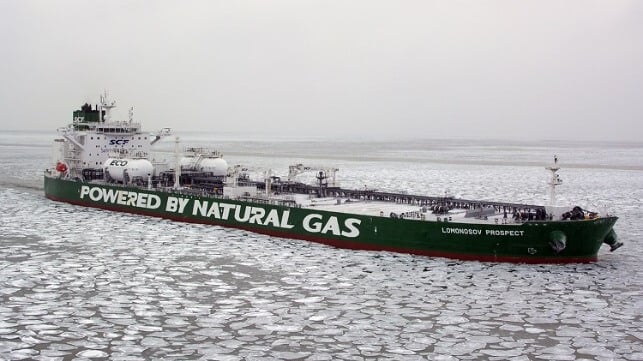
So, shipping liquid cargo and bulk cargo are a yes for Arctic shipping but not so much for container shipping. Remind me again what types of things we're thinking of shipping from /through the Arctic? Liquid and bulk cargo or containerized goods?
 
So, shipping liquid cargo and bulk cargo are a yes for Arctic shipping but not so much for container shipping. Remind me again what types of things we're thinking of shipping from /through the Arctic? Liquid and bulk cargo or containerized goods?

Liquid and bulk cargo from the ice.
A few containers to the ice.
No third party stuff of any sort going through the ice.
 
You can not compare what can happen for something this is currently not happening. If Churchill gets the actual go ahead and actual funding and actual support to maintain the seaways/ roads/ pipeline/rail line. Then I would suspect shipping traffic will increase in the artic zone significantly from what it is currently.
If we had one or two oil tankers a day, two LNG ships a day, three or four bulk cargo and two or three container ships leaving the port that would increase traffic a fair bit on our side of the equation. Not to mention the support boats.
We will have to see if the support from the federal, provincial and business community comes through.
 
You can not compare what can happen for something this is currently not happening. If Churchill gets the actual go ahead and actual funding and actual support to maintain the seaways/ roads/ pipeline/rail line. Then I would suspect shipping traffic will increase in the artic zone significantly from what it is currently.
If we had one or two oil tankers a day, two LNG ships a day, three or four bulk cargo and two or three container ships leaving the port that would increase traffic a fair bit on our side of the equation. Not to mention the support boats.
We will have to see if the support from the federal, provincial and business community comes through.
I'm not sure anybody is envisioning roughly a dozen ships per day in and out of Churchill, let alone a port that could handle bulk dry, LNG, petroleum and containers, all supplied by one rail line.
 
I'm not sure anybody is envisioning roughly a dozen ships per day in and out of Churchill, let alone a port that could handle bulk dry, LNG, petroleum and containers, all supplied by one rail line.
There are talks about building a pipeline to the area. If they built one LNG and one Oil pipeline. Then build the storage facilities to load those products.
Then fix up the rail line and road. You would have a great shipping setup. Similar to what they Do in Prince Rupert. You need a little more planning due to ice up.
 
There are talks about building a pipeline to the area. If they built one LNG and one Oil pipeline. Then build the storage facilities to load those products.
Then fix up the rail line and road. You would have a great shipping setup. Similar to what they Do in Prince Rupert. You need a little more planning due to ice up.
There is no road. It currently ends just North of Gilliam near the hydro dam. Theyd have to push a new road a couple hundred kilometres through the swamp.
 
There are talks about building a pipeline to the area. If they built one LNG and one Oil pipeline. Then build the storage facilities to load those products.
Then fix up the rail line and road. You would have a great shipping setup. Similar to what they Do in Prince Rupert. You need a little more planning due to ice up.
No kidding. Storage facilities for roughly 2/3 of a year of product, or divert product from other ports on a seasonal basis.

Another seaport is always a good thing, but I don't see it moving the dial as much as some proponents are saying.
 
There is no road. It currently ends just North of Gilliam near the hydro dam. Theyd have to push a new road a couple hundred kilometres through the swamp.
200km of road through the north make it happen. It is about time for action and not just words. They have been talking about this since I was a little kid and have done little to nothing to make it happen.
Nor to upgrade the rail line going north.
No kidding. Storage facilities for roughly 2/3 of a year of product, or divert product from other ports on a seasonal basis.
Oil and gas can ramp up and down production for peak demands. That aspect should not be a problem. Plus a large storage facility would not be a bad thing to do up there for both dry bulk and liquid material.
Another seaport is always a good thing, but I don't see it moving the dial as much as some proponents are saying.
No it wont move the dial like building a port on the east or west coast. But it adds another strategic asset where we currently do not have one of any scale.

Personally I would rather they build a few more pipelines east and west for both oil and gas to be shipped directly to our clients. But according to the current and recent government there was no business case for either. Yet we have clients knocking on the door for the past 10 or so years asking for our products.
 
Building a road and a pipeline ROW to Churchill will make sense in the long term and open the area up for more development. The route should be near the railway, but not necessarily exactly following it all the way, as the road can meander a bit to use favourably terrain. I would start from Bird and Churchill and slowly work towards each other. Large crossings near the railway can be done using the railway to bring in equipment and build some sidings to support that. There is the remains of a junction heading east, seems abandoned.
 
You can not compare what can happen for something this is currently not happening. If Churchill gets the actual go ahead and actual funding and actual support to maintain the seaways/ roads/ pipeline/rail line. Then I would suspect shipping traffic will increase in the artic zone significantly from what it is currently.
If we had one or two oil tankers a day, two LNG ships a day, three or four bulk cargo and two or three container ships leaving the port that would increase traffic a fair bit on our side of the equation. Not to mention the support boats.
We will have to see if the support from the federal, provincial and business community comes through.

The Arctic Gateway Group, indigenously owned, largely Cree I believe, is working with FedNav on figuring out what might be necessary to achieve year round navigation to and from Churchill.

This draws on FedNav's existing operations moving iron and nickel from the Ungava and Baffin areas.

I presume that the Inuit will be involved since they "own" all the northern islands, the northern shores of Hudson Bay, including the Nunavik shores of Quebec and all the islands in Hudson and James Bay, as well as having existing shipping interests in the area.


One reason I can think why the Cree might want to handle navigation themselves: Jobs.

It also justifies them charging an additional fee for using their port.


The web grows.


The web grows.
Reliance on the ME, like Russia has been Europe's Achilles heel. Poland moved away from Russia re LNG, but increased it's risk with the ME. If Canada can pull it's thumb out of it's ass, we can be well positioned to help Europe. There are people on both sides of the pond that are becoming aware of this.
 
Ellis Ross
UNDRIP, DRIPA, POLITICS
As Haisla Chief Councillor, I didn’t support UNDRIP.
We were already on a good path that had it’s foundation in Section 35 of the Constitution and pursuant jurisprudence (jurisprudence is another word for caselaw).
The caselaw I’m referring to are the court rulings that determined what Aboriginal Rights and Title is and what it isn’t.
The most important case was the Haida ruling of 2004.
For us it brought peace in the woods and LNG.
This ruling finally leveled the playing field between governments and First Nations while balancing society’s needs.
UNDRIP is a good document for countries just getting started in dealing with Indigenous issues.
Canada is not in that situation. Canada has been making progress for 46 years.
What i feared was UNDRIP would bring us back to 1982 with court cases, roadblocks, fear, anger and uncertainty.
The warnings i gave fell on deaf ears.
The business community believed government rhetoric that UNDRIP would solve everything.
The non-natives wanting to address the past and not knowing caselaw believed the political announcements as well.
And of course the politicians got what they wanted, standing ovations and votes.
Being ignored didn’t bother me. Neither did the slurs of being a “sellout” or “traitor”, mainly because i stuck to saying what I believed was right based on my experiences and knowledge.
Ultimately, I didn’t want what we’re seeing today.
I wanted to
Keep lifting people out of poverty
Build strong communities and societys
And don’t divide Canadians to the point where we all fail
I can’t help but think that i failed in communicating these points effectively
 
Ellis Ross
UNDRIP, DRIPA, POLITICS
As Haisla Chief Councillor, I didn’t support UNDRIP.
We were already on a good path that had it’s foundation in Section 35 of the Constitution and pursuant jurisprudence (jurisprudence is another word for caselaw).
The caselaw I’m referring to are the court rulings that determined what Aboriginal Rights and Title is and what it isn’t.
The most important case was the Haida ruling of 2004.
For us it brought peace in the woods and LNG.
This ruling finally leveled the playing field between governments and First Nations while balancing society’s needs.
UNDRIP is a good document for countries just getting started in dealing with Indigenous issues.
Canada is not in that situation. Canada has been making progress for 46 years.
What i feared was UNDRIP would bring us back to 1982 with court cases, roadblocks, fear, anger and uncertainty.
The warnings i gave fell on deaf ears.
The business community believed government rhetoric that UNDRIP would solve everything.
The non-natives wanting to address the past and not knowing caselaw believed the political announcements as well.
And of course the politicians got what they wanted, standing ovations and votes.
Being ignored didn’t bother me. Neither did the slurs of being a “sellout” or “traitor”, mainly because i stuck to saying what I believed was right based on my experiences and knowledge.
Ultimately, I didn’t want what we’re seeing today.
I wanted to
Keep lifting people out of poverty
Build strong communities and societys
And don’t divide Canadians to the point where we all fail
I can’t help but think that i failed in communicating these points effectively

There is a silent majority in the FN communities in BC who agree with him, but IIRC they're afraid to speak out for fear of censure (and revenge) ...
 
There is the remains of a junction heading east, seems abandoned.
You're probably talking about the right-of-way to the mouth of the Nelson. That was the intended tidewater terminus until it was determined to be unfeasible due to silting. They even built a bridge to an island that was to be used as the terminal and is still visible on satellite images. The right-of-way was cleared in the 1910s, which goes to show how slowly vegetation grows up there.

The Arctic Gateway Group, indigenously owned, largely Cree I believe, is working with FedNav on figuring out what might be necessary to achieve year round navigation to and from Churchill.

This draws on FedNav's existing operations moving iron and nickel from the Ungava and Baffin areas.

I presume that the Inuit will be involved since they "own" all the northern islands, the northern shores of Hudson Bay, including the Nunavik shores of Quebec and all the islands in Hudson and James Bay, as well as having existing shipping interests in the area.


One reason I can think why the Cree might want to handle navigation themselves: Jobs.

It also justifies them charging an additional fee for using their port.
They have their work cut out for them. Neither Nain nor Baffinland are year-round ports.
 
You're probably talking about the right-of-way to the mouth of the Nelson. That was the intended tidewater terminus until it was determined to be unfeasible due to silting. They even built a bridge to an island that was to be used as the terminal and is still visible on satellite images. The right-of-way was cleared in the 1910s, which goes to show how slowly vegetation grows up there.

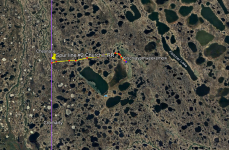
No, you can see the old ROW to Port Nelson and it goes all the way, this one is much further North and is only about 11.8km long. Might have been to access material from a quarry/borrow pit?

1777438828510.png
 
Back
Top