
- Reaction score
- 10,527
- Points
- 1,260
The US, and other countries, has no equivalent cadet program to ours and yet they seem to do OK with recruiting.
Just sayin'
You'd free up a lot of NIS's time if you stood down the Cadet program.


The US, and other countries, has no equivalent cadet program to ours and yet they seem to do OK with recruiting.
Just sayin'

The Cadet program probably ties up more resources then most people are aware of.You'd free up a lot of NIS's time if you stood down the Cadet program.


 theconversation.com

Just got this in my mailboxThe Cadet program probably ties up more resources then most people are aware of.
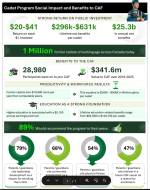
I saw this. I have a few questions about how they are measuring these things. So based on these numbers as I understand them, 2.8% of Cadets end up joining the CAF.

This an official document they emailed out. I saw something about deloittle on the bottomWhere did these numbers come from? The seem very made up/misinterpreted by AI.
Still better than the general populationI saw this. I have a few questions about how they are measuring these things. So based on these numbers as I understand them, 2.8% of Cadets end up joining the CAF.

There is a cohort of people who despise the cadet programme, and look for any way to justify ending it. Nothing short of 100% of all cadets becoming JTF assaulters will convicne them that the programme is worth the cost.Still better than the general population
In fiscal year 2025/26, the Canadian Armed Forces (CAF) enrolled 7,310 new Regular Force members, a 10-year high. While the CAF is growing, the percentage of the overall population (roughly 41 million) that joins annually is very small, representing less than \(0.02\%\) of the total population in recent recruiting years.
Yeah, but 2.8% fall way short of what some people would have you believe. Those numbers are kind of disappointing considering how much is put into the Cadet program. The other number I would like to know is how many of those former Cadets join the CIC as opposed to other areas. The CIC are needed to support the Cadet program, but that isn't creating recruits for the rest of the CAF.There is a cohort of people who despise the cadet programme, and look for any way to justify ending it. Nothing short of 100% of all cadets becoming JTF assaulters will convicne them that the programme is worth the cost.
That is because there is a level of leadership that appears to be determined to separate Cadets from all things CAF, except the money and support. That needs a top down correction. At the Cadet level I would have a program within the existing program that would see Cadets at 15/16 who have expressed interest in the CAF, get loaded onto deployments and courses that will help them understand and prepare for the career they are looking at. We used to interact much closers with the Cadets before and many became fine CAF members.Yeah, but 2.8% fall way short of what some people would have you believe. Those numbers are kind of disappointing considering how much is put into the Cadet program. The other number I would like to know is how many of those former Cadets join the CIC as opposed to other areas. The CIC are needed to support the Cadet program, but that isn't creating recruits for the rest of the CAF.
This an official document they emailed out. I saw something about deloittle on the bottom
Through the Cadet Training Review (CTR), CJCR Gp took a close look at how training is delivered and how effectively it supports cadets as they develop. The findings confirmed that participants continue to value how cadet training builds strong foundations in leadership, teamwork, responsibility, and essential life skills. It also revealed opportunities to make the program even better by modernizing training delivery, clarifying curriculum guidance, enhancing instructor readiness, and increasing emphasis on skills like digital literacy, adaptability, and systems thinking. These insights are now guiding a phased approach to improvement, with planning underway and early changes expected to begin in late 2026.If you can send me a photo of that I might be able to find out who produced it at Deloitte...
2.8% directly join an element of the CAF, and the rest walk away with an appreciation for the CAF and an bit of an understanding of what the CAF does.Yeah, but 2.8% fall way short of what some people would have you believe. Those numbers are kind of disappointing considering how much is put into the Cadet program. The other number I would like to know is how many of those former Cadets join the CIC as opposed to other areas. The CIC are needed to support the Cadet program, but that isn't creating recruits for the rest of the CAF.
Through the Cadet Training Review (CTR), CJCR Gp took a close look at how training is delivered and how effectively it supports cadets as they develop. The findings confirmed that participants continue to value how cadet training builds strong foundations in leadership, teamwork, responsibility, and essential life skills. It also revealed opportunities to make the program even better by modernizing training delivery, clarifying curriculum guidance, enhancing instructor readiness, and increasing emphasis on skills like digital literacy, adaptability, and systems thinking. These insights are now guiding a phased approach to improvement, with planning underway and early changes expected to begin in late 2026.
At the same time, CJCR Gp partnered with Deloitte Canada to better understand the long-term impact of the Cadet and JCR Programs. The Social Return on Investment (SROI) study tells a powerful story: participation here is linked to higher educational attainment, increased productivity and earnings, and lasting leadership and civic engagement. Together, these outcomes highlight the program’s enduring contribution to communities, the workforce, and to Canada’s future. The final SROI report and supporting communication products are expected later this Spring/Summer.

Some bean counters deserve a good flogging.Nothing short of 100% of all cadets becoming JTF assaulters will convicne them that the programme is worth the cost.

There is currently a massive empire building movement afoot in Ottawa. With plans for expansion, everybody is pushing for more, and at the same time looking to undercut the ones they see as superfluous or easy pickings.However, others are looking for very major PY increases in establishments so my guess is that the tribal infighting in the CAF will continue to ensure that funding for the soft social engineering needed to create a friendly environment for the military in the nation at large - such as the PRes and cadet movement is - will continue to be resource starved.
I'm not saying that we should get rid of the Cadet Program, but I am saying that it should be re-amped to have more applicability to the CAF or at least more exposure to it. At present there are no qualifications that carry over that the average cadet will have. It causes me to ask questions if someone spends seven years in the Cadet program and then is told to hide the fact that they were a cadet when they join the CAF.2.8% directly join an element of the CAF, and the rest walk away with an appreciation for the CAF and an bit of an understanding of what the CAF does.
In a world where 0.02% of the population is in the CAF, anything we can do to increase awareness, and support is important. Particularly if it's targeted at young Canadians, and teaching them virtues like service, and discipline.
If the goal is to myopically reduce costs, why not reduce the PRes to GS units for augmentation, and just train people as we need them for specific tasks? This tasking Cpl Bloggins is an ambulance driver, next tasking they are a cook's assistant, or weather observer on an airfield.
It would save more money, and still likely result in the same level of interest and participation in operations as the current PRes model. I bet half your jr troops who want a deployment would take one as a weather observer in Latvia just as fast as being Rifleman #2 in a section there.


