• Thanks for stopping by. Logging in to a registered account will remove all generic ads. Please reach out with any questions or concerns.

Continental Defence Corvette


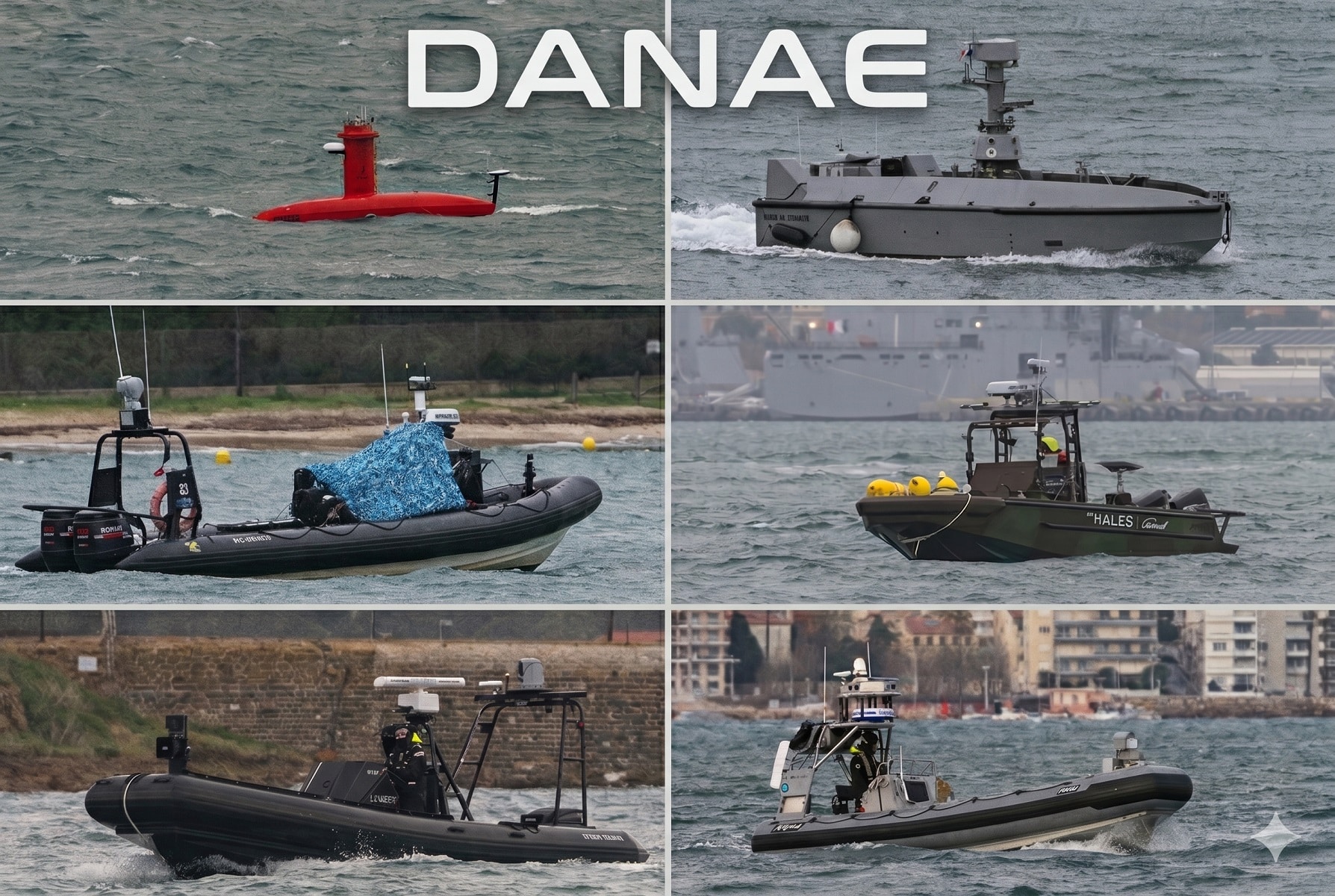
French navy drone efforts.

Ukraine turned to drones because they had no ships.
The Brits are turning to drones because they don't have enough ships.
In neither case could new ships be brought on line quick enough,

Drones allowed the Ukrainians to reach out from their shores.
British drones are intended to let the available ships reach farther and cover more sea area.
They are not a replacement for ships.
They are a complement to the existing capabilities.

They can be deployed from the existing fleet. They can be controlled from the existing fleet and directly from shore or circling aircraft.

And these are a key part of the new ecosystem. They can sail for months with no attendance, transmit what they sea and hear above, on and under the water...... and critcally, they enable communications between aircraft, satellites and ships with submerged submarines and drones.
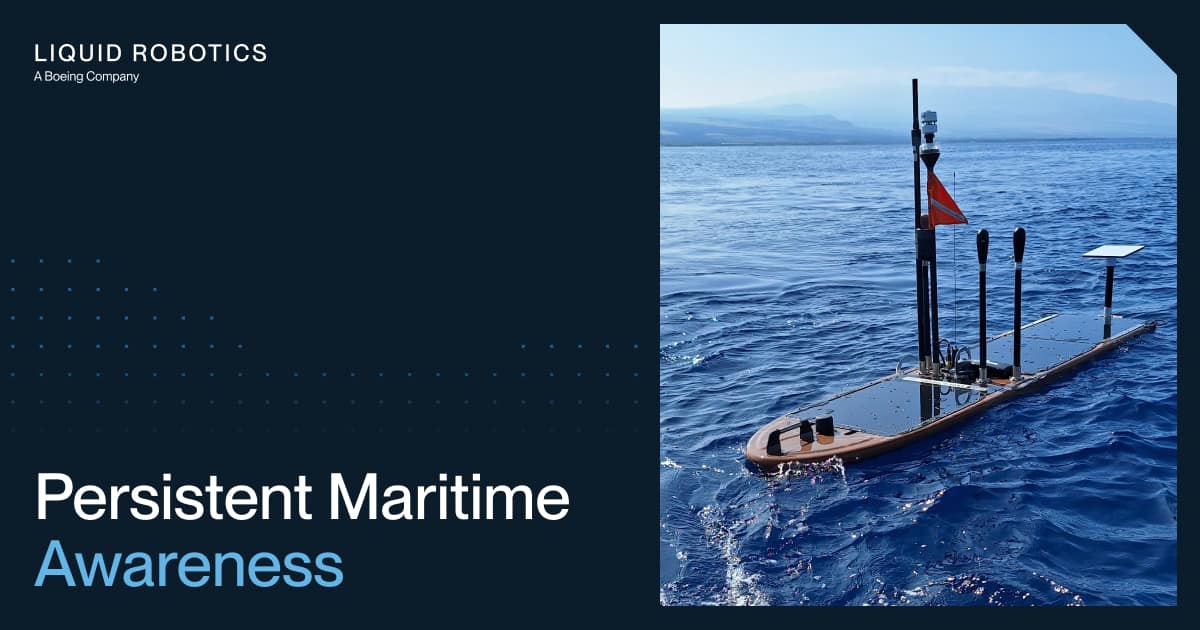


Do wave gliders allow communications between aircraft and submarines +8

Yes, Wave Gliders act as a critical,, long-endurance communication gateway between submerged submarines (or underwater drones) and aircraft, satellites, or shore stations. They function as a "bridge" over the air-water interface to overcome the limitations of acoustic (underwater) and radio (air) communication systems

Key Aspects of Wave Glider Communication:

How it Works: Wave Gliders use a two-part system—a surface float and a submerged glider connected by a tether—to maintain communication via acoustic modems with submarines, then transmit that data via radio/satellite to aircraft or command centers.

Covert Operations: They enable submarines to receive information and send data without surfacing, which reduces the risk of detection.

Anti-Submarine Warfare (ASW): Wave Gliders are used to form mobile, distributed sensor networks to detect, track, and provide communication for manned and unmanned submarines.

Real-time Data Transfer: They offer a faster and cheaper method for transferring data from the seafloor or deep-sea vehicles to personnel in the air or on land.

While researchers at MIT have developed a, separate, specialized system called "translational acoustic-RF communication" (TARF) that allows aircraft to directly detect, ,underwater acoustic signals via surface ripples, the Wave Glider is the established industry-standard autonomous surface vehicle platform that actively acts as a, relay node between undersea and air assets.
 
These large long range drones are 'all the rage' in various news articles, but in truth, they are very untested.

Anyone who has been to sea knows equipment breaks down, either due to pounding/rolling of the sea, or due to the salty air, or simply due to manufacturing of some random part that was not up to spec, or due to some salt water leak impacting equipment. With warships being manned with maintainers, the equipment can be diagnosed and repaired. But for a large unmanned drone? Nope. No one onboard. The drone potentially simply drifts away potentially as a navigation hazard or until it runs aground somewhere, or until the navy is fortunately able to relocate, recover, and fix.

The jury is still out as to their effectiveness.

Do I hope these drones will work? Yes. I do.

But I am still from Missouri here on this. Again, command and control is a key weakness. If at any time they are required to up-link a signal as part of their command and control , they give away their position to an astute enemy. Further other factors can affect the command and control.

This is not as simple as these articles make it out to be.
 
The Navy’s new 30-year shipbuilding plan outlines an effort to buy 15 battleships by 2055, and reveals details about the 80-plus robot boats it aims to add within five years.


1 "Battleship" every two years
16 "Robot Boats" a year.

That is the arithmetic that is adjusting the thinking.

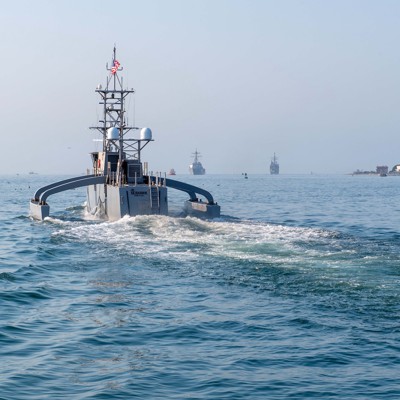
While 1 ship is being built and its sailors trained 32 uncrewed vessels are hitting the water. And these are in the 500 tonne class.

Not the 11m launches, Saildrones, Wave Gliders and Hernes.

...

What is driving the experiment is the same impetus that drove the rise of the corvettes and MTBs. Speed and cost and necessity.
 
This is a thread about the Canadian Continental Corvette (last I looked) and not about battleships.

Still, in response to this so-called plan, I think it important to note that the history of U.S. Navy (USN) procurement is marked by several ambitious "next-generation" programs that were curtailed due to the end of the Cold War, spiraling costs, or shifting technical requirements.

Some examples for you, of major USN ship procurement programs that were canceled or drastically reduced after only a few hulls were completed:

  • Zumwalt-class Destroyer (DDG-1000). Original plan: 32 ships. Actual build: 3 ships
  • Seawolf-class Submarine (SSN-21). Original plan: 29 boats. Actual build: 3 boats
  • CG(X) Next-Generation Cruiser (to replace the Ticonderoga-class cruisers). Original plan: 18-19 ships. Actual build: 0. (cancelled in 2010)
  • Sea Control Ship (SCS) (proposed early 1970s). Original plan: 8 ships. Actual build: 0 (cancelled 1974)
  • Freedom-class Littoral Combat Ship (LCS). Original plan: 52 ships. 16 (Freedom-variant) / 19 (Independence-variant). Further, the USN is retiring them far earlier than originally planned.

A deeper pattern behind all these programs is this:

The USN repeatedly tries to make large technological leaps in a single class:
  • new hull form,
  • new combat system,
  • new propulsion,
  • new weapons,
  • reduced crew,
  • new doctrine,
  • and often new industrial arrangements,
all at once. This has lead to problems.

Other examples:
  • Virginia-class cruiser — on 4 of 11 planned actually built.
  • DD-21 (Land Attack Destroyer) — predecessor that evolved into the 'failed' DD(X)/Zumwalt.
  • Arsenal Ship — canceled concept
 
Someone snorting good stuff for this article:

As part of that high-end mix, the Navy also wants to buy 15 new Trump-class battleships by 2055, including three in the next five years.

The report spends 876 words laying out the Navy’s rationale for the battleship, including its potential to launch nuclear weapons and to “reduce reliance on high-cost single-use munitions” through electronic warfare and high-energy lasers.

“The nuclear-powered battleship is designed to provide the fleet with a significant increase in combat power by longer endurance, higher speed, and accommodating advanced weapon systems required for modern warfare,” the report states. “Adding capability at the highest end of the high-low mix, the battleship’s primary role is to deliver high-volume, long-range offensive fires and serve as a robust, survivable forward command and control platform; it is not a destroyer replacement.”

Eric Labs, a senior naval analyst at the Congressional Budget Office, noted the shipbuilding plan eschews a next-generation destroyer, DDG(X), seemingly in favor of the battleship, and would continue building about two Arleigh Burke destroyers per year. The three Zumwalt-class destroyers are described as the “bridge between existing DDG technologies and the battleship,” the plan says.


Good luck on taking a napkin level design and turning it into a real 10,000+ DWT ship in 5 years, when they can't even build a existing frigate design in that period.
 
This is a thread about the Canadian Continental Corvette (last I looked) and not about battleships.

Still, in response to this so-called plan, I think it important to note that the history of U.S. Navy (USN) procurement is marked by several ambitious "next-generation" programs that were curtailed due to the end of the Cold War, spiraling costs, or shifting technical requirements.

Some examples for you, of major USN ship procurement programs that were canceled or drastically reduced after only a few hulls were completed:

  • Zumwalt-class Destroyer (DDG-1000). Original plan: 32 ships. Actual build: 3 ships
  • Seawolf-class Submarine (SSN-21). Original plan: 29 boats. Actual build: 3 boats
  • CG(X) Next-Generation Cruiser (to replace the Ticonderoga-class cruisers). Original plan: 18-19 ships. Actual build: 0. (cancelled in 2010)
  • Sea Control Ship (SCS) (proposed early 1970s). Original plan: 8 ships. Actual build: 0 (cancelled 1974)
  • Freedom-class Littoral Combat Ship (LCS). Original plan: 52 ships. 16 (Freedom-variant) / 19 (Independence-variant). Further, the USN is retiring them far earlier than originally planned.

A deeper pattern behind all these programs is this:

The USN repeatedly tries to make large technological leaps in a single class:
  • new hull form,
  • new combat system,
  • new propulsion,
  • new weapons,
  • reduced crew,
  • new doctrine,
  • and often new industrial arrangements,
all at once. This has lead to problems.

Other examples:
  • Virginia-class cruiser — on 4 of 11 planned actually built.
  • DD-21 (Land Attack Destroyer) — predecessor that evolved into the 'failed' DD(X)/Zumwalt.
  • Arsenal Ship — canceled concept

This is a thread about a corvette for Canada. Something that is still in the definition stage with an indeterminate time line.
 
Someone snorting good stuff for this article:

As part of that high-end mix, the Navy also wants to buy 15 new Trump-class battleships by 2055, including three in the next five years.

The report spends 876 words laying out the Navy’s rationale for the battleship, including its potential to launch nuclear weapons and to “reduce reliance on high-cost single-use munitions” through electronic warfare and high-energy lasers.

“The nuclear-powered battleship is designed to provide the fleet with a significant increase in combat power by longer endurance, higher speed, and accommodating advanced weapon systems required for modern warfare,” the report states. “Adding capability at the highest end of the high-low mix, the battleship’s primary role is to deliver high-volume, long-range offensive fires and serve as a robust, survivable forward command and control platform; it is not a destroyer replacement.”

Eric Labs, a senior naval analyst at the Congressional Budget Office, noted the shipbuilding plan eschews a next-generation destroyer, DDG(X), seemingly in favor of the battleship, and would continue building about two Arleigh Burke destroyers per year. The three Zumwalt-class destroyers are described as the “bridge between existing DDG technologies and the battleship,” the plan says.


Good luck on taking a napkin level design and turning it into a real 10,000+ DWT ship in 5 years, when they can't even build a existing frigate design in that period.


All of which, in my view, drives development away from future complexity towards near term simplicity, What can be done today with the tools at hand versus what might be done tomorrow with tools that have to be developed.
 
Not to mention the fact that, the US is basically going back to the nuclear propelled aircraft carriers dilemma: Any "Trump" class battleship will need to be escorted - by regular, non-nuclear, escort vessels that require fuel and can't get to those high speeds, not even in short bursts, let alone in sustained ways, without running out of gas. US nuclear carriers can get to speeds in excess of 35 Kts, but none of the escorts can follow, so they never use that speed. The "Trump" class would do exactly the same, thus negating the advantage of sustained high speed they allegedly possess.
 
Every day, George Orwell is proven more and more a visionary:

In George Orwell's 1984, a "floating fortress" is a massive, nearly unsinkable, and heavily armed military sea base used by the superstates (Oceania, Eurasia, or Eastasia) to protect strategic sea lanes. They represent the wasteful, perpetual war economy, consuming immense labor and resources to prevent improvement in the general standard of living. [1, 2, 3, 4]
Key Aspects of the Floating Fortress:
  • Function: These vessels dominate the world's oceans, guarding vital maritime routes and acting as mobile bases for military power.
  • Symbol of Waste: According to The Theory and Practice of Oligarchical Collectivism in the novel, these fortresses are designed to lock up industrial labor and resources. They function to destroy surplus goods without creating consumer wealth, thus maintaining the impoverished state of the populace.
  • Design: They are described as "skeleton ships" or massive, interconnected structures that have replaced the fragile, conventional battleships of earlier eras.
  • Strategic Stagnation: While they make the superstates appear powerful, none of the nations ever gain a decisive advantage, as the war is designed to be permanent rather than won.
  • Real-World Context: While not directly created, some commentators link them to the concept of massive artificial islands or aircraft carriers. [1, 2, 3, 4, 5]
 
Back
Top