• Thanks for stopping by. Logging in to a registered account will remove all generic ads. Please reach out with any questions or concerns.

Continental Defence Corvette

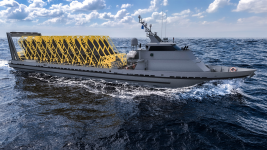
Get the licence to build these, or perkaps a 70 m version, in Canadian yards and build a couple of dozen.


The NATO standard solutions come from NATO standard yards and supply chains that are already fully engaged.

Swiftships has the advantage that their solutions have already been vetted and taken into USN service.
 
The problem for the RCN has never really been convincing sailors. Sailors already know why ships matter. The problem is convincing a Canadian public that largely never sees the Navy unless there is a disaster, a war, or a Fleet Week once every few years. Out of sight means out of mind, and out of mind means politically expendable. That is the real danger. Programs like the River Class Destroyers, CPS, CDC, and AOPS are not just shipbuilding projects. They are generational national infrastructure projects tied directly to sovereignty, Arctic presence, NATO credibility, continental defence, and tens of thousands of industrial jobs across the country. The moment Canadians start seeing them that way instead of “military spending,” the political calculus changes dramatically.

The irony is the RCN actually has one of the best stories to tell in the CAF. Canadian ships deploy constantly. They intercept narcotics in the Caribbean, enforce sanctions in Asia, reassure allies in Europe, patrol the Arctic, respond to disasters, evacuate civilians, and represent Canada abroad. HMCS Harry DeWolf sailing the Northwest Passage matters. HMCS Charlottetown visiting Vietnam matters. Canadian submariners embarking in allied submarines matters. But too often the RCN communicates like a bureaucracy instead of telling those stories like a nation building institution. Every new ship launched should be treated like a national event. Every keel laid, float out, deployment, and capability milestone should be shoved directly into public view. Canadians support what they can see and understand.

And frankly, the shipbuilding strategy itself may become its own political shield. Once billions are invested, once thousands of workers are employed, once provinces become economically tied to these programs, cancellation becomes politically toxic. That is exactly why batch builds matter. It is harder to kill a program when steel is already being cut, trades are already employed, supply chains already exist, and communities are economically dependent on the work. The best protection for the future fleet is not just military necessity. It is making the programs so visible, so economically integrated, and so publicly understood that no government wants to wear the consequences of gutting them.


Spot on - our own Canadianized version of the Military-Industrial Complex that has been talked about for decades in the US.
 
The problem for the RCN has never really been convincing sailors. Sailors already know why ships matter. The problem is convincing a Canadian public that largely never sees the Navy unless there is a disaster, a war, or a Fleet Week once every few years. Out of sight means out of mind, and out of mind means politically expendable. That is the real danger. Programs like the River Class Destroyers, CPS, CDC, and AOPS are not just shipbuilding projects. They are generational national infrastructure projects tied directly to sovereignty, Arctic presence, NATO credibility, continental defence, and tens of thousands of industrial jobs across the country. The moment Canadians start seeing them that way instead of “military spending,” the political calculus changes dramatically.

The irony is the RCN actually has one of the best stories to tell in the CAF. Canadian ships deploy constantly. They intercept narcotics in the Caribbean, enforce sanctions in Asia, reassure allies in Europe, patrol the Arctic, respond to disasters, evacuate civilians, and represent Canada abroad. HMCS Harry DeWolf sailing the Northwest Passage matters. HMCS Charlottetown visiting Vietnam matters. Canadian submariners embarking in allied submarines matters. But too often the RCN communicates like a bureaucracy instead of telling those stories like a nation building institution. Every new ship launched should be treated like a national event. Every keel laid, float out, deployment, and capability milestone should be shoved directly into public view. Canadians support what they can see and understand.

And frankly, the shipbuilding strategy itself may become its own political shield. Once billions are invested, once thousands of workers are employed, once provinces become economically tied to these programs, cancellation becomes politically toxic. That is exactly why batch builds matter. It is harder to kill a program when steel is already being cut, trades are already employed, supply chains already exist, and communities are economically dependent on the work. The best protection for the future fleet is not just military necessity. It is making the programs so visible, so economically integrated, and so publicly understood that no government wants to wear the consequences of gutting them.

Just thinking.

The 16 Multipurpose Vessels Seaspan is to build look a lot like the AOPS.

I we want more arctic precence maybe we just bring the last two AOPS back to the RCN and arm a few of those MPVs.
 
And if not the Swiftship solution then the Dutch solution.

....

And PS, I really like the Newfoudland solution referenced

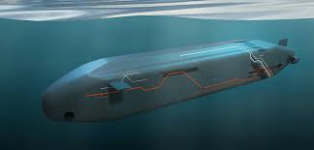
The BAE Cellula Robotics XLUUV the Herne.
 
Get the licence to build these, or perkaps a 70 m version, in Canadian yards and build a couple of dozen.


The NATO standard solutions come from NATO standard yards and supply chains that are already fully engaged.

Swiftships has the advantage that their solutions have already been vetted and taken into USN service.
Here is a clipping from their promo add that you attached. If they can't spell Machinery correctly I have no faith that they can get everything else right and do we really need a high speed boat capable of outrunning and outgunning smugglers or a ship that can fill in for the Destroyers on less demanding tasks?

Mechinary​

 
A Canadian company - Cellula Robotics - already has autonomous systems we could quickly bring on board to expand our domain awareness quickly while our crewed fleet is rebuilt.

They are partnered with BAE in developing the Herne XLUUV for the RN's Type-93 "Chariot" platform at the top end of the UUV platform scale.
1778950507019.png

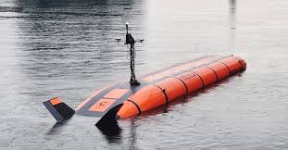
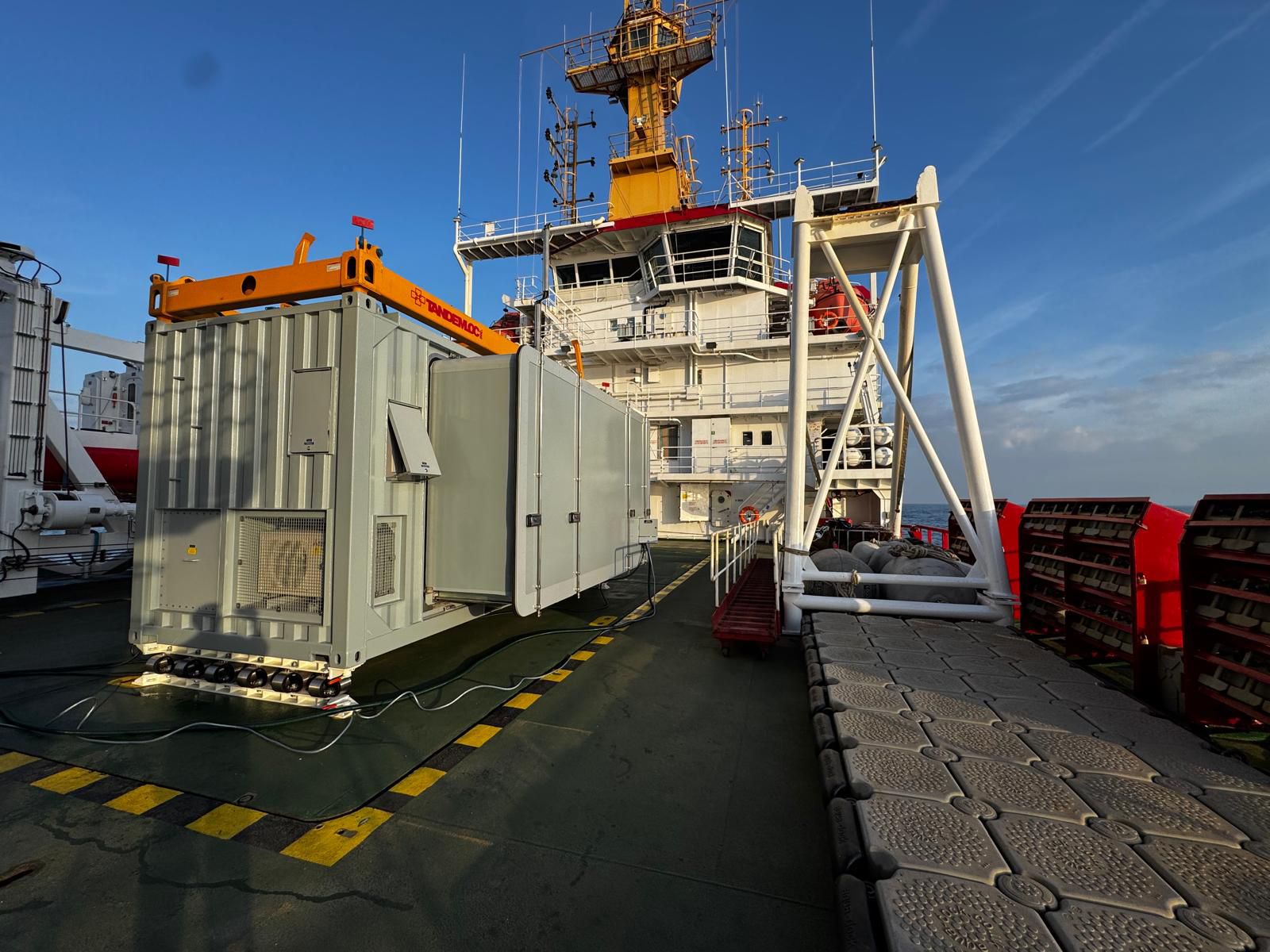
Then there is the Guardian AUV (formerly the SOLUS-XR) which can fit in a 40' ISO container so presumably could be deployed by an AOPS or a River-Class from the mission bay. Depending on the size of the CDC's mission bay/flight deck it could deploy them as well.
1778950973704.png

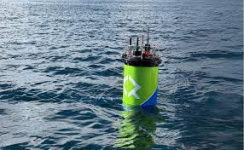
Cellula also has the Subsea Sentinel seabed sensor which has an endurance of one year.
1778951137706.png

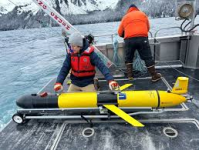
If there is a particular area where we need to focus additional sensors we could use something like the Slocum Glider which could be deployed from any of our crewed surface vessels
1778951306737.png

Potentially we could also quickly get a couple of these (crewed by Reserves?) to deploy and recover the gliders:
1778951550138.png
 
Here is a clipping from their promo add that you attached. If they can't spell Machinery correctly I have no faith that they can get everything else right and do we really need a high speed boat capable of outrunning and outgunning smugglers or a ship that can fill in for the Destroyers on less demanding tasks?

Mechinary​

Its has an aluminum hull, should stay away from aluminum all together.
 
The idea that a 4,000 tonne CDC could somehow replace a 10,000+ tonne River class destroyer ignores what those ships are actually built to do. A smaller combatant can carry serious weapons today, missiles, drones, modern sensors and even limited air defence, but you cannot shrink command capability, endurance, survivability, power generation, aviation support and fleet level air defence into a much smaller hull without major compromises. The River class is not just a ship with missiles bolted on. It is designed to command and defend an entire task group during sustained blue water operations. That capability still requires size.

The CDC exists because the RCN also needs numbers, presence and flexibility. You do not send a billion dollar Aegis destroyer to every sovereignty patrol, NATO presence mission, sanctions operation or Arctic deployment. Smaller combatants allow the RCDs to focus on high end warfighting while the CDCs handle the huge range of day to day missions Canada actually conducts. That is not duplication or competition. That is a layered fleet structure, which is exactly where most serious navies are heading.
I was there for PET and still in the Feds when JT came in, both were and going far left and saw the military as a hinderance to their plans. I have also watched how both left and right governments have slashed the RN at different times. A lot of politicians just don't give a sh*t about which vessel can do what, that is a reality and getting stuck with a lesser item to save money for something else is always a reality.
 
Here is a clipping from their promo add that you attached. If they can't spell Machinery correctly I have no faith that they can get everything else right and do we really need a high speed boat capable of outrunning and outgunning smugglers or a ship that can fill in for the Destroyers on less demanding tasks?

Mechinary​


If you could make do with a dozen 15 knot, 55m OSVs for 30 years what could you do with a couple of dozen 40 knot versions of the same vessel. And one that only needs the crew of an Orca.

And, as I said, if the Yanks don't appeal to you there are Dutch, Danish and Norwegian designs for the same craft.

The Dutch MSS is the Damen FCS 5009 (53m, 27 knots, 0-14 crew, pax in seacans). It is related to the RN's USV, the XV Patrick Blackett (40 m).

....

I would recommend turning them over faster than once every 30 years and don't replace them en masse.

Light Utility Vehicles for the Navy.
 
If you could make do with a dozen 15 knot, 55m OSVs for 30 years what could you do with a couple of dozen 40 knot versions of the same vessel. And one that only needs the crew of an Orca.

And, as I said, if the Yanks don't appeal to you there are Dutch, Danish and Norwegian designs for the same craft.

The Dutch MSS is the Damen FCS 5009 (53m, 27 knots, 0-14 crew, pax in seacans). It is related to the RN's USV, the XV Patrick Blackett (40 m).

....

I would recommend turning them over faster than once every 30 years and don't replace them en masse.

Light Utility Vehicles for the Navy.
With the increase in personnel required wouldn't you be better off replacing the Orca with a training vessel? The air force has a training aircraft for every phase of flight training and every type of operational equipment would be nice if the navy could get something other than the Oriole
 
With the increase in personnel required wouldn't you be better off replacing the Orca with a training vessel? The air force has a training aircraft for every phase of flight training and every type of operational equipment would be nice if the navy could get something other than the Oriole


I believe the old plan for the navy was OJT on vessels of ever increasing size tasked ever further from the shore.

So the layered navy started with small crews on small vessels operating inshore on routine tasks like harbour patrols and then fisheries patrols.

A larger patrol vessel with a small crew an an ability to load on board an variety of cargo/pax/weapons/sensors/comms could usefully find a home in that fleet. .... I would think.
 
I believe the old plan for the navy was OJT on vessels of ever increasing size tasked ever further from the shore.

So the layered navy started with small crews on small vessels operating inshore on routine tasks like harbour patrols and then fisheries patrols.

A larger patrol vessel with a small crew an an ability to load on board an variety of cargo/pax/weapons/sensors/comms could usefully find a home in that fleet. .... I would think.
leaving out the subs for a minute, with even 12 each of the destroyers and corvettes we will need close to 400 crew members. That is a lot of 5 or 10 trainees per small ship to get through and we don't really have the ships for those larger patrol vessel assignments yet. Acquisition and training are going to be a large part of the next few years imho for all areas of the forces. Is following the old plan going to cut it?
 
Back
Top