• Thanks for stopping by. Logging in to a registered account will remove all generic ads. Please reach out with any questions or concerns.

Canada moves to 2% GDP end of FY25/26 - PMMC

I initially agreed with this but in hindsight, no, that's bullshit. Clearly, not literally everyone needs it, but basic load carriage and sleeping gear should be available to most/all members if for nothing else than dom ops, or being tasked out last minute for something where you may not be staying in proper accommodations. These are such cheap and durable items it's easy to ensure everyone has it available.

I've also experienced nothing but stock shortages for 20 years. I did my basic in 2005 with my pockets stuffed full of magazines, canteen, odds and sods, bayonet part of the time (partway through course, after the bayonet scabbard ate through a couple cargo pockets I was permitted to leave my bayonet in the barracks box). Other members on that course were likewise missing load carriage kit (webbing or tac vest), rucksacks, sleeping bags, boots even though they did some issues shortly after.

We were running courses with temp issue sleeping gear and load carriage ten years ago consistently, it's only gotten worse. While members holding kit they shouldn't is doubtless part of the problem, it's one that we've had a decade to address. We've disposed of enough old equipment that half the time the solution has been members buying surplus rucksacks for themselves or more senior members loaning out theirs, which is fine for one off situations but not as a matter of routine. This is some of the lowest hanging fruit, and we've consistently dropped the ball on it both from an equipment management standpoint (why is kit not being collected upon transfer out of field units if that's what we're doing, it's not like we haven't had shortages forever) and never buying/retaining enough. During COVID we had most of two courses worth of DP1 candidates given 13 broken 82 pattern rucks to share, we cannibalized like 5 working ones and a sixth that was kinda dangerous due to metal pokey bits but a staff member taped it up and rolled with it. Probably half? the troops didn't have sleeping kit, for the nights the temps dropped they slept in rain or ICE gear. Interesting intro to the infantry but I don't think it's unreasonable to expect a sleeping bag for the garrison portion.

Either just buy a bunch for right now until we sort out the permanent solution, or make some funding available for members or units to make some purchases to patch things over.

I’ll assume we could adopt more modern resource management processes where the people who don’t n ed ‘stuff’ right now don’t get it until they do.

E.g., Right before I retired ‘they’ made me get a fitted out ballistic vest. I never wore it and handed it back within 6 months of issue.
 
We cancelled the Avro Arrow, signed up for Bomarc, American fighters and radar lines and got access to the US market, protection from invaders and an Autopact.
That’s a take. You’re welcome to keep it.

My dad was in aerospace engineering. There was an unquestionable American presence throughout Canadian aerospace academic and production, surveying/reconnoitering (American astronaut Gus Grissom attended several of my dad’s PhD classes at UofT as an example), influencing and pressuring Canadian talent towards an America nexus. Colleagues of my dad moved to the U.S. in droves following Arrow’s cancellation. Friends at Orenda working on the Iroquois becoming senior engineers at Pratt on the J58 program (for the SR-71). Other friends emigrating and working on Gemini, Mercury and Apollo, Other leaving Avro and off to McDonnell, North American, Convair. Your view is that Canada chose to hobble its own aerospace capacity and America was its saviour with Bomarcs, Voodoos and the like. Some, quite reasonably informed, know it was a deliberate act of interference and deliberate action by America to debilitate another nation’s capability and capture the stranded talent to its own benefit. Sorry, you won’t change my mind.
 
Pay raises and new barracks increase the budget. Taking on responsibility for veterans pensions likewise.

Those funds, as the article title says, don't stop missiles.

Nor do they put bullets in rifles or rifles in hands. In those areas we are slow off the mark.
True, but they keep experienced people around so they can train new people, and they keep the staff in uniform long enough to get projects rolling so we can stop missiles and put rifles in the new troops hands.
 
That’s a take. You’re welcome to keep it.

My dad was in aerospace engineering. There was an unquestionable American presence throughout Canadian aerospace academic and production, surveying/reconnoitering (American astronaut Gus Grissom attended several of my dad’s PhD classes at UofT as an example), influencing and pressuring Canadian talent towards an America nexus. Colleagues of my dad moved to the U.S. in droves following Arrow’s cancellation. Friends at Orenda working on the Iroquois becoming senior engineers at Pratt on the J58 program (for the SR-71). Other friends emigrating and working on Gemini, Mercury and Apollo, Other leaving Avro and off to McDonnell, North American, Convair. Your view is that Canada chose to hobble its own aerospace capacity and America was its saviour with Bomarcs, Voodoos and the like. Some, quite reasonably informed, know it was a deliberate act of interference and deliberate action by America to debilitate another nation’s capability and capture the stranded talent to its own benefit. Sorry, you won’t change my mind.

Not a saviour. Unless you see the Corleones as saviours.

Strictly business. The Yanks came out of the Depression and decided that war was good business. It wasn't just Avro Canada they targeted. The TSR2 was another casualty.

I like Americans and America but they epitomise the observation that nations have no friends, just interests.

Too many Canadians forgot that and failed to rely on themselves.
 
Not a saviour. Unless you see the Corleones as saviours.

Strictly business. The Yanks came out of the Depression and decided that war was good business. It wasn't just Avro Canada they targeted. The TSR2 was another casualty.

I like Americans and America but they epitomise the observation that nations have no friends, just interests.

Too many Canadians forgot that and failed to rely on themselves.
This is a totally different time than your previous post. If Canada should be blamed for anything, it is trusting America, or at least believing they wouldn’t be ‘America’s interests’ed again in the free trade era after the ‘neighborly technological and human skills’ pillaging of the 50s/60s. That Canada is now appreciating a GWesque awakening about America looking out only for America, is not something that should be held against it now…
1779534079970.gif
 
True, but they keep experienced people around so they can train new people, and they keep the staff in uniform long enough to get projects rolling so we can stop missiles and put rifles in the new troops hands.
Sorry I'm old. How's the govt dealing with Vets and associated pensions?
 
This is a totally different time than your previous post. If Canada should be blamed for anything, it is trusting America, or at least believing they wouldn’t be ‘America’s interests’ed again in the free trade era after the ‘neighborly technological and human skills’ pillaging of the 50s/60s. That Canada is now appreciating a GWesque awakening about America looking out only for America, is not something that should be held against it now…
View attachment 100421

And I am not holding anything against Canada or Canadians. I do think we have got it wrong for a long time. And I am hoping this awakening lasts.
 
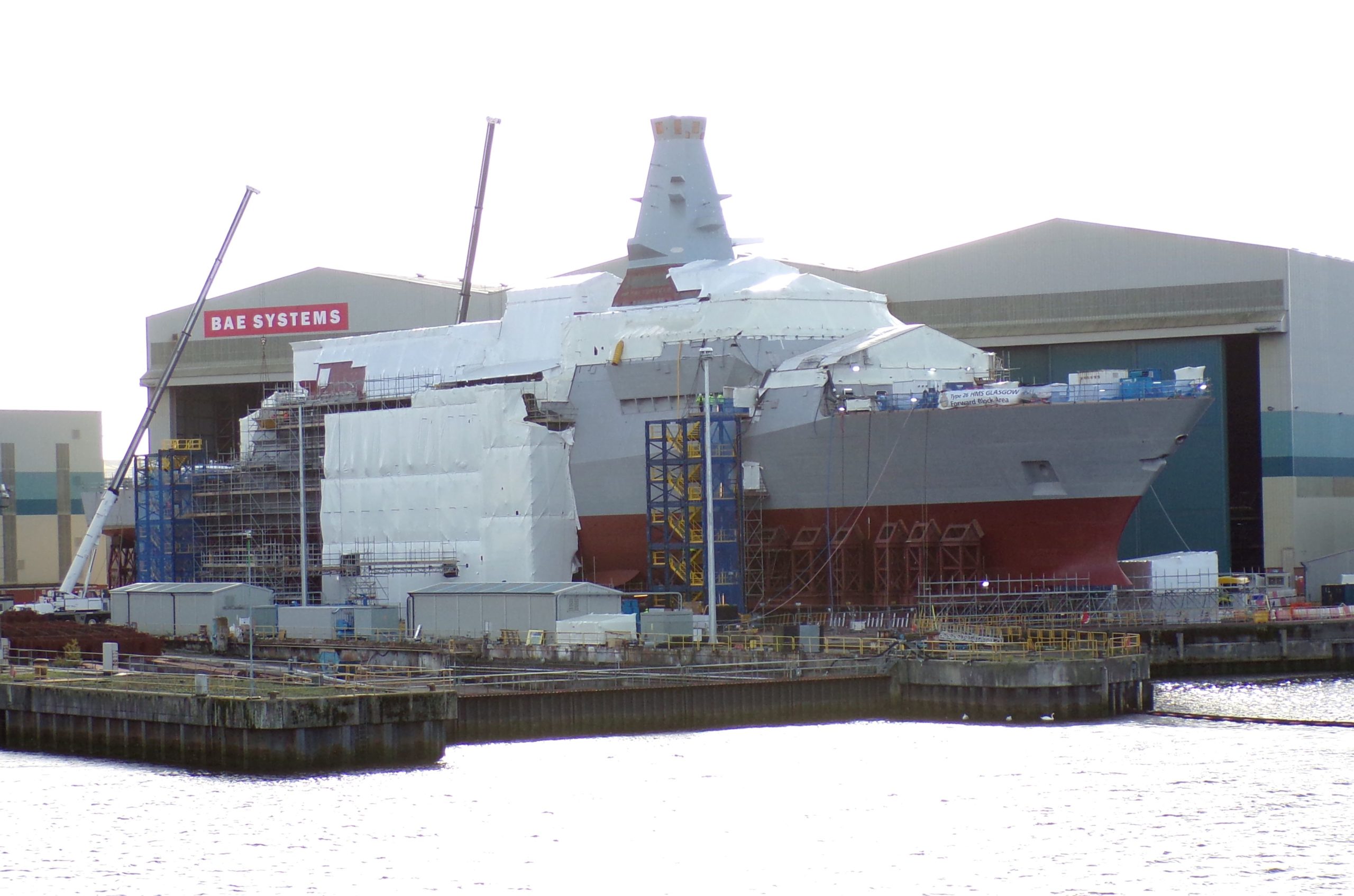
"the supply chain challenge ... the pace of change in defence procurement was accelerating. “The expectations are changing rapidly. We need to deliver faster, we need to deliver better, and we need to deliver more cost-effectively, all while maintaining the same uncompromising standards of quality. Lead times that were once measured in months or even years need to be measured in weeks.”


"a real opportunity for SMEs able to move at pace."

"specific areas where BAE Systems Naval Ships was actively seeking SME support, including marine autonomy, modularity, DevOps, complement platform evaluation, process and analysis, commodities, and advanced tools and coatings. “These are the areas that we’re asking for assistance for now and today. If you have any interest or expertise in these areas, I’d be great to speak to you after this.”"

But, if you want to get onboard....

"the baseline compliance requirements any supplier needed to meet. ISO 9001 quality accreditation was non-negotiable, flowing down from BAE Systems’ own customer requirements. Public and product liability insurance of £10 million was the standard expectation, though lower levels could be considered on a case by case basis for smaller companies that struggled to obtain cover above £5 million. Counterfeit avoidance, cyber security to DEFSTAN 05-138, a robust business continuity plan, and full compliance with the Health and Safety at Work Act were all cited as requirements. Export control compliance was also flagged as essential given the nature of defence work."

....

"The first step for any company wanting to work with BAE Systems, Justice said, was to use the company’s SME supplier landing page rather than attempting to contact individuals directly. “If you’re not an approved supplier, we cannot contract you. It’s as simple as that. I might love your product, I might go, I want that — if you’re not an approved supplier, I cannot release a contract.” He said he received at least two or three unsolicited calls a week from companies trying to reach him directly, and that going through the proper route gave companies the best chance of being seen and assessed properly.

"The quality of the initial approach mattered significantly, he said. “Be specific, avoid generic statements. Try and understand what we do. Don’t just tell us you want to work with BAE Systems, tell us which part of the business. More importantly, why? Take time to understand where your capabilities genuinely align, where you fit within the supply chain, what value you can bring.” He added that opportunities existed at every level, from nuts and bolts through to gas turbines and gearboxes, and that companies should be clear about where they sat in that ecosystem."

....

I presume a lot of Canadian companies are trying to figure their way through similar, if not the same systems, and not just in navy oriented solutions. Especially given that BAE strides all domains on both sides of the Atlantic. Rheinmetall, LockMart and General Dynamics, and Hanwha will all be looking at the same situation.
 
"the supply chain challenge ... the pace of change in defence procurement was accelerating. “The expectations are changing rapidly. We need to deliver faster, we need to deliver better, and we need to deliver more cost-effectively, all while maintaining the same uncompromising standards of quality. Lead times that were once measured in months or even years need to be measured in weeks.”


[
Funny you should mention this. A little historical note: it took the British 6 years to construct, launch, and fit out HMS Victory. The shipyards in Kingston using local carpenters, smiths and labourers finished HMS. St. Lawrence in 10 months and she was larger in every aspect. The Americans built the first liberty ship in just 150 days whilst a ship yard in Oregon built one in under 5 days using farmers, housewives and secretaries as a labour force. Granted there is no comparison between ships then and now but it is that kind of emphasis on product we need if we are ever going to finish playing catch-up. We are decades behind.
 
They assembled the ship in five days.

Do not underestimate the supply chain necessary to get the machinery and tooling in place needed to let the Lego blocks be assembled in five days.
 
This is precisely the reason for the interest in simple vessels with modular cargoes/weapons. With or without autonomy.

I believe that part of the reason the MCDVs were so popular with the Admirals was that they had higher readiness and that came from having less stuff on board to break down.

Looking at our fleet and our allies fleets it strikes me that Patrol Boats have higher readiness ratings than Destroyers. There is less to go wrong. The same thing applies to OPVs vs Frigates.

So how do you build a simple OPV and make it fighting ship like a Frigate and maintain high readiness. One method is to take all the stuff that is constantly breaking and put it into a module that can be swayed on to the dock like a malfunctioning RHIB and bring another on board. The Kingtons used Seacans. The Brits are using PODS. The Danes used Stanflex modules.

Concurrently you can aspire to make driving a boat as simple as driving a car. Most drivers haven't a clue about their magic carpet. They just get in, turn it on and use it to get it where they want to be. I would like to see autonomy bring that level of ease to piloting an OSV onto which Seacans with cargoes, sensors, weapons, and when necessary, additional qualified crew can be loaded.

...

Ships need to be able to go to sea safely with 80% solutions if the 100% isn't available.
 
Sorry I'm old. How's the govt dealing with Vets and associated pensions?
I have had way better service from Veteran Affairs, than the ClusterF*ck that is ESDC and OAS. I elected not to get OAS till 70 and after a year of badgering them to stop it, they still can't and now we got CRA involved and soon a letter to two Ministers and a MP to tell them to unf*ck themselves. Just to add my wife as someone who can deal with my file will take them 180 days upon receipt of the official form.
 
That’s a take. You’re welcome to keep it.

My dad was in aerospace engineering. There was an unquestionable American presence throughout Canadian aerospace academic and production, surveying/reconnoitering (American astronaut Gus Grissom attended several of my dad’s PhD classes at UofT as an example), influencing and pressuring Canadian talent towards an America nexus. Colleagues of my dad moved to the U.S. in droves following Arrow’s cancellation. Friends at Orenda working on the Iroquois becoming senior engineers at Pratt on the J58 program (for the SR-71). Other friends emigrating and working on Gemini, Mercury and Apollo, Other leaving Avro and off to McDonnell, North American, Convair. Your view is that Canada chose to hobble its own aerospace capacity and America was its saviour with Bomarcs, Voodoos and the like. Some, quite reasonably informed, know it was a deliberate act of interference and deliberate action by America to debilitate another nation’s capability and capture the stranded talent to its own benefit. Sorry, you won’t change my mind.
Grandparents used to talk about the day the Avro was cancelled. They couldn't pick up the Canadian radio stations due to the American stations overpowering them all and a large majority of it was job ads offering immediate starts for any of the American aerospace companies.
 
Back
Top