
I’ll admit NASAMS did not really enter my reckoning when you asked how often the Canadian army has seized ground. But you’ve set up a straw man; nobody here is arguing the comparative bubbles in which the air, sea, and land domains tend to influence and break shit. I think @PuckChaser was being a bit generous when he said you were comparing apples to watermelons. It’s not clear what point you’re trying to make. Obviously the nature and scale of battlespaces are manifestly different.By contrast, even a single NASAMS battery, armed with AIM-120 AMRAAMs would influence a bubble with a 50 km radius (750 to 800 km2). The NASAMS battery in Washington DC is manned by a few dozen soldiers. It is not a complete defence but it is a noteworthy, and likely welcome, addition to local defences.
It moves the capabillities of a frigate inland.

You are using an out of date browser. It may not display this or other websites correctly.
You should upgrade or use an alternative browser.
You should upgrade or use an alternative browser.
Canada to Spend $5.0Bil on AEW Aircraft (Saab Globaleye)
- Thread starter calculus
- Start date

- Reaction score
- 13,974
- Points
- 1,160
Afghanistan, Bosnia, Cyprus, Golan Heights, like 5 different African UN missions, Latvia, Europe (UNIFIER), a bunch of SOF missions and probably a few more I dont have off the top of my head.
Anytime a land force is on the ground it holds terrain. Naval and Air power have great influence but only for fleeting (no pun intended) moments of time. Different tools for different jobs and there shouldn't be a bun fight over what's more important. Theres plenty of money to go around.
There may be lots of money to go around, but there aren't lots of people. And an Army is people first and foremost. The argument is always given that the issue is boots on the ground. Fair enough. But I can only get two boots on a single person.
If that person is there to confront another person great. That means that in a city of 100,000 locals I need 100,000 pairs of boots to achieve parity
Alternately I can put two women in a LAV with an RCH-155 and influence the actions of all 100,000 locals. Even if fleetingly.
The influence lasts as long as that LAV and its cannon are in the area. Just as the influence of a frigate or flight of F18s lasts as long as it can remain in the area.

FJAG
Army.ca Myth
- Reaction score
- 21,084
- Points
- 1,160
That spanned closer to 40 years from the 1950s to the 1990.That is true.
How many times has the Canadian Government seen fit to commit the Canadian Army to seizing (as opposed to holding) land in the last 160 years? And how long have they employed an active territorial defence? In my view they have committed a few thousand for 20 years or so in Germany with 4 CMBG (the longest engagement)
We had a fairly robust air defence in the 1950s and 60s until the "bomber threat" was eclipsed by ICBMs where a cost-effective technological defence was unavailable.and hundreds of thousands for 4 or 5 years twice (at great political cost and never doing that again).
Other countries have armies designed to secure their home turf from their neighbours. We have been clear that we have no such need, at least since 1940.
I'm not sure what the point is here other than some governments commitment to a domestic defence industry caved in to cheaper solutions.Meanwhile, we have been able to show the flag with ships and squadrons and offer to launch American bombs and missiles from them if necessary. We didn't even need munitions of our own.
The basic strategy behind counter-insurgency operations is still relatively sound where military forces take terrain and civilian or paramilitary police forces and a government judiciary hold and administer it. We did, often repeatedly, successfully seize and control terrain. Unfortunately, that last element never became workable in the environment for a variety of reasons.A few ops over a couple years in Kandahar. Small areas barely larger than points on a map, with bubbles of control fading to contestability fading further to influence as you radiate out. But I wouldn’t say any of the offensive ops resulted in ‘control’ larger than say a single village around a fob, and the roads between those FOBs were still a contested nuisance.
Do you not see the futility of comparing a weapon system that has an effect in only one domain (here air) with those that operate in a totally different one (here land) and yet a third that operates in two (sea and air albeit transiently)? War - or national security - is not an either or game.By contrast, even a single NASAMS battery, armed with AIM-120 AMRAAMs would influence a bubble with a 50 km radius (750 to 800 km2). The NASAMS battery in Washington DC is manned by a few dozen soldiers. It is not a complete defence but it is a noteworthy, and likely welcome, addition to local defences.
It moves the capabillities of a frigate inland.
I didn't even want to address this one but I just can't leave well enough alone.There may be lots of money to go around, but there aren't lots of people. And an Army is people first and foremost. The argument is always given that the issue is boots on the ground. Fair enough. But I can only get two boots on a single person.
If that person is there to confront another person great. That means that in a city of 100,000 locals I need 100,000 pairs of boots to achieve parity
Alternately I can put two women in a LAV with an RCH-155 and influence the actions of all 100,000 locals. Even if fleetingly.
The influence lasts as long as that LAV and its cannon are in the area. Just as the influence of a frigate or flight of F18s lasts as long as it can remain in the area.
Your math sucks and shows nothing. At its most basic you fail to even remotely address the sustainment chain from economy through factory through recruiting and training system to deployment. People litter this chain in ever varying numbers so your attempt to reduce things to numbers of people, rather than the potential of a given threat or set of threats versus a nation's ability and commitment to target and successfully resist or defeat that threat, has zero value.

- Reaction score
- 13,974
- Points
- 1,160
I’ll admit NASAMS did not really enter my reckoning when you asked how often the Canadian army has seized ground. But you’ve set up a straw man; nobody here is arguing the comparative bubbles in which the air, sea, and land domains tend to influence and break shit. I think @PuckChaser was being a bit generous when he said you were comparing apples to watermelons. It’s not clear what point you’re trying to make. Obviously the nature and scale of battlespaces are manifestly different.
From the politician's standpoint influence takes many shapes and forms. Often it is enough to show up and show willing. From the stand point of the person being assisted, any assistance is gratefully received but some forms of assistance are more useful than others.
In my view most of our potential allies are not short of boots on the ground. We, as Canadians, do lack boots on the ground, both currently serving and potential. On they other hand our allies, a lot of them, are short of the ready cash necessary to supply the technical instruments that reduce the need for boots on the ground and allow them to continue to contribute to their local national economies with civilian employment.
We, on the other hand, Canadians, do not lack for wealth. We are stingy, not poor. Two different things. We have the means to buy the technical tools that can buy influence without having to push people overseas.
And as the current evolution/revolution progresses it is not just boots that are being impacted.
Aircraft carriers.
Aircraft carriers exist to move aircraft to the enemy.
Aircraft exist to carry bombs to the enemy.
The most common weight of bomb carried is the 500 lb Mk82.
Large bombs were prized because precision was poor.
Now small warheads are flying through windows under their own power after being launched from transcontinental distances with nary a pilot in sight, let alone squadrons of pilots and mechanics, thousands of crew in carriers and escorts (there solely to defend the thousands in the carrier).
Ukraine is influencing events in Moscow with 2000 km flying machines with payloads of 20 to 50 kg (50 to 100 lb). Hamas, Hezbollah and the Houthis have achieved similar effects with home made stovepipe rockets and radioshack planes.
....
Influence comes in many forms.
And I can cite many instances where boots landed on the ground and the survivors were forced to limp away.

- Reaction score
- 7,053
- Points
- 1,160
When you're talking in terms of fires in place of boots you're argument fails in all cases. Fires don't win wars. Fires can degrade an enemy's capabilities but it cannot defeat them.I will freely admit that all my arguments fail when we stop talking about expeditions and cabinet wars and start considering national defence of our homeland.
But we have no enemies.
So I am told.
Warsaw:
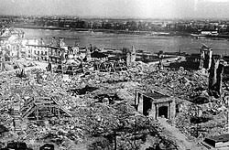
Stalingrad:
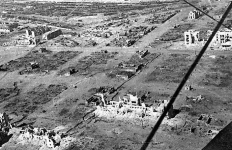
Manila:
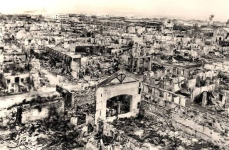
Berlin:
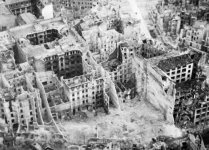
Mosul:
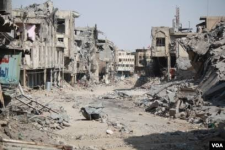
Short of unleashing nuclear Armageddon, no matter how much devastation you unleash with fires you'll always still need boots on the ground to win a war.
As other have said, when you reduce you're arguments to an either/or proposition or you suggest replacing one capability with another one your arguments fall short.
That being said, when you look at Canada as a specific and unique case as opposed to discussing military capabilities in a more general sense then I would agree there is room for discussion on how various capabilities could best be weighted.
FJAG
Army.ca Myth
- Reaction score
- 21,084
- Points
- 1,160
I agree with what you've said. I even agree with this part.
If you look back at the preparations for Gulf War II, you'll see that Rumsfeld kept cutting back the conventional "Boots on the ground" estimates for the land contingent for the war and, in particular, belittled Shinseki's estimates that it would take several hundreds of thousands of troops to secure the country post-war. That did not turn out well and resulted in years of conflict.
The delusion that fires alone can win a war is great. Most people believe that the atomic bombs on Hiroshima and Nagasaki ended Japanese resistance. They tend to gloss over the fact that after Hiroshima on August 6th, the Japanese did not immediately surrender. But Russia declared war on Japan on August 9th and their assault in Manchuria had immediately sliced through the Japanese army there. It was at this time that the second bomb was dropped on Nagasaki. It was the combination of the uncertainty as to how many more atomic bombs the US had and the unstoppable ground invasion by countless Soviet troops released from their war with Germany, that resulted in the Japanese surrender. Even then, some key officers were prepared to continue the war and did initiate an attempt at a coup d'etat to stop the surrender.
At the end of the day, countries exist on land. Naval and air forces can do much to degrade a country's ability to fight and even its will to fight, but at the end of the day it is only the occupation of that land with boots which can force an ultimate surrender. The current situation in Iran is a perfect example of a command team that deluded themselves into thinking that they could achieve their war aims in a bloodless (to them) air assault and naval blockade. For some reason, it's an object lesson, on both the micro and macro scale, which Western nations need to learn over and over again.
When the discussion gets to "boots on the ground" vs "fires" the advocates of "fires" are usually trying to convince themselves, and others, that they can bring about victory with only minor casualties to their own forces. Often this is because casualties to their own forces are a deal breaker for their own populations who may or may not have a vested interest in the particular war.That being said, when you look at Canada as a specific and unique case as opposed to discussing military capabilities in a more general sense then I would agree there is room for discussion on how various capabilities could best be weighted.
If you look back at the preparations for Gulf War II, you'll see that Rumsfeld kept cutting back the conventional "Boots on the ground" estimates for the land contingent for the war and, in particular, belittled Shinseki's estimates that it would take several hundreds of thousands of troops to secure the country post-war. That did not turn out well and resulted in years of conflict.
The delusion that fires alone can win a war is great. Most people believe that the atomic bombs on Hiroshima and Nagasaki ended Japanese resistance. They tend to gloss over the fact that after Hiroshima on August 6th, the Japanese did not immediately surrender. But Russia declared war on Japan on August 9th and their assault in Manchuria had immediately sliced through the Japanese army there. It was at this time that the second bomb was dropped on Nagasaki. It was the combination of the uncertainty as to how many more atomic bombs the US had and the unstoppable ground invasion by countless Soviet troops released from their war with Germany, that resulted in the Japanese surrender. Even then, some key officers were prepared to continue the war and did initiate an attempt at a coup d'etat to stop the surrender.
At the end of the day, countries exist on land. Naval and air forces can do much to degrade a country's ability to fight and even its will to fight, but at the end of the day it is only the occupation of that land with boots which can force an ultimate surrender. The current situation in Iran is a perfect example of a command team that deluded themselves into thinking that they could achieve their war aims in a bloodless (to them) air assault and naval blockade. For some reason, it's an object lesson, on both the micro and macro scale, which Western nations need to learn over and over again.
- Reaction score
- 13,974
- Points
- 1,160
It gets me in the feels.
....
I used the word influence. Influence, like deterrence, ia a matter of emotions and not facts on the ground. It relies on emotions, most notably fear. Its counter is hope.
People change their behaviour when they are fearful. When they perceive they are under threat and their city is at risk of looking like the pictures @GR66 posted then their fear influences their behaviour and the behaviour of their government.
Hope also influences behaviour. Hope can be generated by having friends show up. Hope can also be generated if it is felt that there are the means to reduce the likelihood of thse dire images occuring.
I believe this is a driving force behind the present interest in the IAMD/GBAD/C-RAM/CUAS battle. Governments fear the reactions of fearful populations who want to believe their cities will be spared that devastation.
....
I don't contest the validity of the value of the conventional army on the battlefield and its utility in taking and holding ground.
I don't even contest that fear and influence alone don't win wars. I do contend that influence, fear and hope are key to deterrence and managing the risk of war in the first place.
....
I believe that we can supply influence, hope to our friends and fear to our enemies, through technology, a lot more effectively than through boots on the ground. Boots tat they already have in numbers greater than us and more proximate to their battles. Boots that are readily filled by their citizens in their reserves because they maintain limited numbers of full time soldiers because those soldiers, in peacetime are more useful to society in productive labour.
A nation with a large peacetime army has an unemployment problem. The army as an alternative to welfare.
....
I used the word influence. Influence, like deterrence, ia a matter of emotions and not facts on the ground. It relies on emotions, most notably fear. Its counter is hope.
People change their behaviour when they are fearful. When they perceive they are under threat and their city is at risk of looking like the pictures @GR66 posted then their fear influences their behaviour and the behaviour of their government.
Hope also influences behaviour. Hope can be generated by having friends show up. Hope can also be generated if it is felt that there are the means to reduce the likelihood of thse dire images occuring.
I believe this is a driving force behind the present interest in the IAMD/GBAD/C-RAM/CUAS battle. Governments fear the reactions of fearful populations who want to believe their cities will be spared that devastation.
....
I don't contest the validity of the value of the conventional army on the battlefield and its utility in taking and holding ground.
I don't even contest that fear and influence alone don't win wars. I do contend that influence, fear and hope are key to deterrence and managing the risk of war in the first place.
....
I believe that we can supply influence, hope to our friends and fear to our enemies, through technology, a lot more effectively than through boots on the ground. Boots tat they already have in numbers greater than us and more proximate to their battles. Boots that are readily filled by their citizens in their reserves because they maintain limited numbers of full time soldiers because those soldiers, in peacetime are more useful to society in productive labour.
A nation with a large peacetime army has an unemployment problem. The army as an alternative to welfare.
- Reaction score
- 13,974
- Points
- 1,160
I agree with what you've said. I even agree with this part.
When the discussion gets to "boots on the ground" vs "fires" the advocates of "fires" are usually trying to convince themselves, and others, that they can bring about victory with only minor casualties to their own forces. Often this is because casualties to their own forces are a deal breaker for their own populations who may or may not have a vested interest in the particular war.
If you look back at the preparations for Gulf War II, you'll see that Rumsfeld kept cutting back the conventional "Boots on the ground" estimates for the land contingent for the war and, in particular, belittled Shinseki's estimates that it would take several hundreds of thousands of troops to secure the country post-war. That did not turn out well and resulted in years of conflict.
The delusion that fires alone can win a war is great. Most people believe that the atomic bombs on Hiroshima and Nagasaki ended Japanese resistance. They tend to gloss over the fact that after Hiroshima on August 6th, the Japanese did not immediately surrender. But Russia declared war on Japan on August 9th and their assault in Manchuria had immediately sliced through the Japanese army there. It was at this time that the second bomb was dropped on Nagasaki. It was the combination of the uncertainty as to how many more atomic bombs the US had and the unstoppable ground invasion by countless Soviet troops released from their war with Germany, that resulted in the Japanese surrender. Even then, some key officers were prepared to continue the war and did initiate an attempt at a coup d'etat to stop the surrender.
At the end of the day, countries exist on land. Naval and air forces can do much to degrade a country's ability to fight and even its will to fight, but at the end of the day it is only the occupation of that land with boots which can force an ultimate surrender. The current situation in Iran is a perfect example of a command team that deluded themselves into thinking that they could achieve their war aims in a bloodless (to them) air assault and naval blockade. For some reason, it's an object lesson, on both the micro and macro scale, which Western nations need to learn over and over again.
I don't think fires alone can win wars.
I do think that you cant win wars without fires.
I also think that fear of the consequences of fires can deter wars.
I further think that it is relatively easy to give citizens the tools to feel as if they are in control of their own destinies by teaching them how to crew the artillery - both defensive (GBAD) and offensive (LRPF).
‘Influence’ can also mean tangibly impacting the adversary’s options through tangible impacts on their capabilities or constraints imposed on their options that aren’t necessarily a game changer, but will still factor into their overall calculus on their military efforts. Sure, ‘fear’ - or perception of the potential tangible impact of an enemy’s capabilities - is part of this… Just don’t think that ‘influence’ solely means psychological. Killing people and breaking their stuff can influence larger ops without achieving outright neutralization.It gets me in the feels.
....
I used the word influence. Influence, like deterrence, ia a matter of emotions and not facts on the ground. It relies on emotions, most notably fear. Its counter is hope.
People change their behaviour when they are fearful. When they perceive they are under threat and their city is at risk of looking like the pictures @GR66 posted then their fear influences their behaviour and the behaviour of their government.
Hope also influences behaviour. Hope can be generated by having friends show up. Hope can also be generated if it is felt that there are the means to reduce the likelihood of thse dire images occuring.
I believe this is a driving force behind the present interest in the IAMD/GBAD/C-RAM/CUAS battle. Governments fear the reactions of fearful populations who want to believe their cities will be spared that devastation.
....
I don't contest the validity of the value of the conventional army on the battlefield and its utility in taking and holding ground.
I don't even contest that fear and influence alone don't win wars. I do contend that influence, fear and hope are key to deterrence and managing the risk of war in the first place.
....
I believe that we can supply influence, hope to our friends and fear to our enemies, through technology, a lot more effectively than through boots on the ground. Boots tat they already have in numbers greater than us and more proximate to their battles. Boots that are readily filled by their citizens in their reserves because they maintain limited numbers of full time soldiers because those soldiers, in peacetime are more useful to society in productive labour.
A nation with a large peacetime army has an unemployment problem. The army as an alternative to welfare.
- Reaction score
- 13,974
- Points
- 1,160
‘Influence’ can also mean tangibly impacting the adversary’s options through tangible impacts on their capabilities or constraints imposed on their options that aren’t necessarily a game changer, but will still factor into their overall calculus on their military efforts. Sure, ‘fear’ - or perception of the potential tangible impact of an enemy’s capabilities - is part of this… Just don’t think that ‘influence’ solely means psychological. Killing people and breaking their stuff can influence larger ops without achieving outright neutralization.
I agree that breaking stuff and killing people creates influence. But depriving a man of his gun and his son and forcing him to accept terms does not erase hatred.
War is a psychological enterprise.
I can't control what other people feel or do. I can influence their emotions and actions.
And I can take steps to neutralize their effects on me.
If war were strictly a matter of boots and tanks and guns then Putin's Special Military Operation would have been over 4 years ago, the Third Reich would still be standing and Sun Tzu wouldn't have been havering on about the greatest victory being the war never fought.
FJAG
Army.ca Myth
- Reaction score
- 21,084
- Points
- 1,160
That's fundamentally wrong as a statement of absolutes. Just look at Germany and Japan vis a vis the allies - or France and Poland vis a vis Germany. Each was involved in total war with its adversaries and yet now they are allies across the broad parts of their population. Given the right post-war conditions and time the adage "time heals all wounds" can be made true.I agree that breaking stuff and killing people creates influence. But depriving a man of his gun and his son and forcing him to accept terms does not erase hatred.
And that takes time and effort over periods of decades of continuous personal contact.War is a psychological enterprise.
I can't control what other people feel or do. I can influence their emotions and actions.
And I can take steps to neutralize their effects on me.
The point is that Putin only got boots on the ground in limited territories. It's his inability to get them on the vital ground that made the difference.If war were strictly a matter of boots and tanks and guns then Putin's Special Military Operation would have been over 4 years ago,
No. The Third Reich fell when Russian boots hammered the streets of Berlin. Up until the very moment that happened all of the fires, delivered by Russian artillery and American, British and Canadian Bombers had not stopped the German's will to fight back.the Third Reich would still be standing
And yet, the Cold War would not have been won without hundreds of thousands of boots towing the line on the Inter-German border and elsewhere. Sometimes boots on the ground with an accompanying threat of fires will do the job.and Sun Tzu wouldn't have been havering on about the greatest victory being the war never fought.
Ah! A Canadian version of the Volkssturm and Dad's Army. Always a real go-to solution - the former never won a battle and the latter never fought one.I further think that it is relatively easy to give citizens the tools to feel as if they are in control of their own destinies by teaching them how to crew the artillery - both defensive (GBAD) and offensive (LRPF).
Incidentally, as an aside, there is a quote from Hitler in 1944 which is particularly relevant when it comes to the use of such home guard units during conventional war.
Experience in the East has shown that Volkssturm, emergency and reserve units have little fighting value when left to themselves, and can be quickly destroyed. The fighting value of these units, which are for the most part strong in numbers, but weak in the armaments required for modern battle, is immeasurably higher when they go into action with troops of the regular army in the field. I, therefore, order: where Volkssturm, emergency, and reserve units are available, together with regular units, in any battle sector, mixed battle-groups (brigades) will be formed under unified command, so as to give the Volkssturm, emergency, and reserve units stiffening and support.
Something to remember and consider if and when we build our own.
The Air Force and Navy deal with platforms that give Majors and Lt Commanders the ability to influence events thousands of kilometers away with handfuls of people.
The army struggles to influence events beyond a cannon's throw with thousands of people.
Not sure what this has to do with the staff work to get procurements done. That's mostly an HQ level activity. Sure sometimes the unit level gets involved in SOCDs. But that's about it.

- Reaction score
- 19,174
- Points
- 1,160
Still it forced the opposition to commit forces and most of their resources to contest our presence, I suspect it was much harder on them than we will ever know. Their real advantage is neither gave a crap about the people or their own foot soldiers.A few ops over a couple years in Kandahar. Small areas barely larger than points on a map, with bubbles of control fading to contestability fading further to influence as you radiate out. But I wouldn’t say any of the offensive ops resulted in ‘control’ larger than say a single village around a fob, and the roads between those FOBs were still a contested nuisance.

- Reaction score
- 31,519
- Points
- 1,260
The "Battle of the Black Sea” 3-4 October 1993 cost 18 American lives, 80+ wounded, 1 Malaysian serviceman dead, and 7 wounded, and 2 WIA Pakistani Army, and at least 700 Somali’s dead - and some classified reports exponentially higher.Still it forced the opposition to commit forces and most of their resources to contest our presence, I suspect it was much harder on them than we will ever know. Their real advantage is neither gave a crap about the people or their own foot soldiers.
It gave the West a fear of Africa, and no significant actions have been taken since.
Clashes in Afghanistan that resulted in thousands of Afghani/Pakistani/dead occurred multiple times, it really didn’t slow the flow through the Tribal areas - generally there is a massive difference in the value of a human life between the West and the “East”, more for the downtrodden, poor, famished, who also have a religion that is weaponized to glorify martyring oneself for the cause.
- Reaction score
- 13,974
- Points
- 1,160
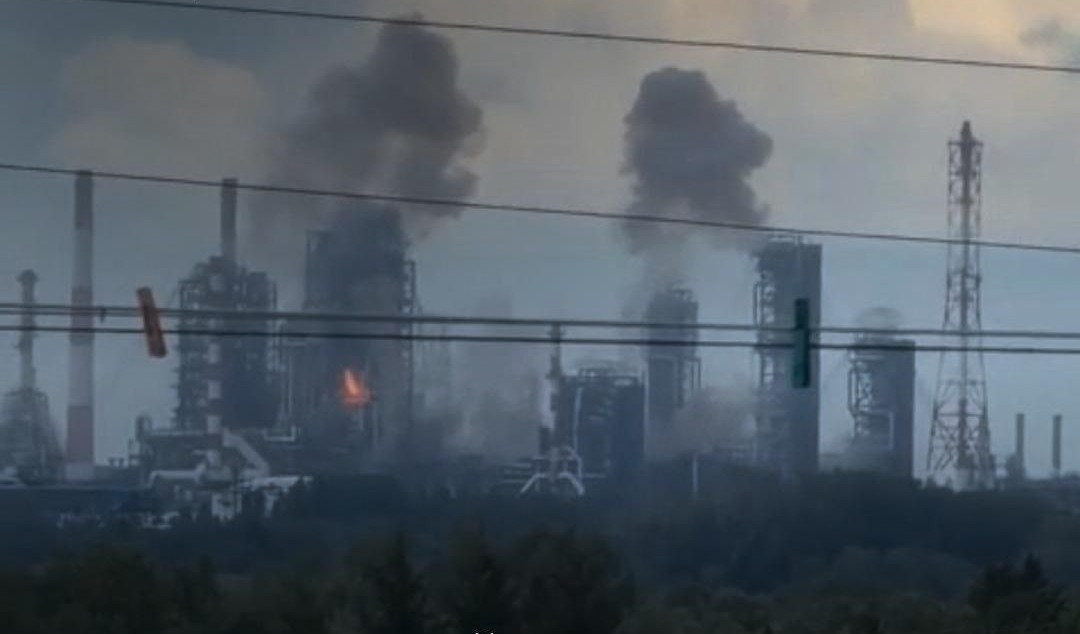
3000 km influence
 www.kyivpost.com
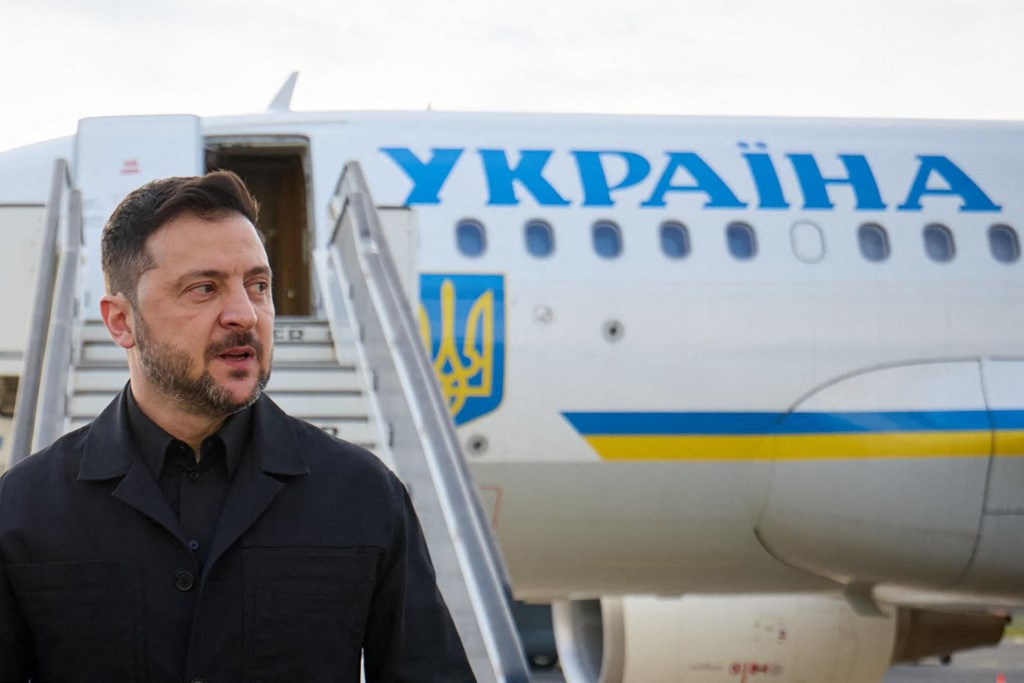
“I approved a 40-day influence operation for the Service against the aggressor state aimed at compelling it to end the war,” Zelensky wrote.
 www.kyivpost.com
 www.kyivpost.com
Ukraine’s New Drones Hit Russia’s Largest Oil Refinery in Record 3,000 Km Strike Into Siberia
Ukraine’s new long-range drones reportedly struck Russia’s largest refinery for the first time after flying 3,000 kilometers into Omsk.
www.kyivpost.com
“I approved a 40-day influence operation for the Service against the aggressor state aimed at compelling it to end the war,” Zelensky wrote.
Zelensky Orders 40-Day SBU Campaign to Pressure Russia
Ukraine’s security service is stepping up pressure on Russia as its Alpha unit reports leading drone warfare results at the front.
www.kyivpost.com
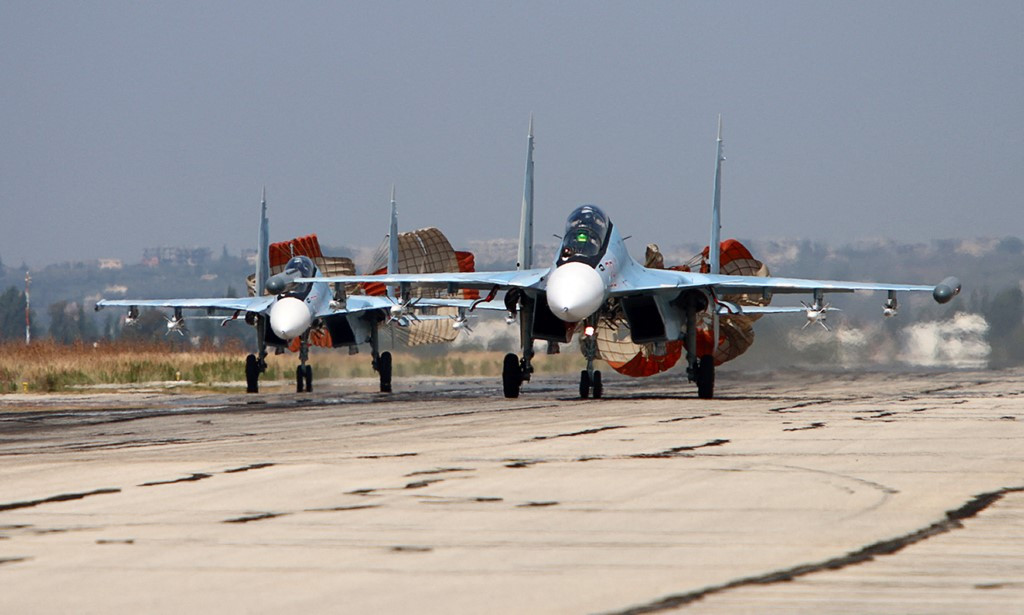
Ukraine’s SBU Hits Warplanes in Hangars at Crimea’s Saky Air Base
Ukraine’s SBU said it hit fighter aircraft stored in unprotected hangars at Crimean military airbase as part of 40-day “influence operation” campaign.
www.kyivpost.com


Troopasaurus
Member
- Reaction score
- 20
- Points
- 230
Interesting, that now makes the following fleets according to wiki:
Globaleye: 5 Operational (UAE), 21 on order (France, Swe, Can, and Nato) total 26.
Wedgetail: 15 Operational (Aus, Turk, SK, UK) with 5 on order (UK, US) total 20.
Would not be surprised to see more Euro orders for Globaleye now that it is the NATO choice.
Globaleye: 5 Operational (UAE), 21 on order (France, Swe, Can, and Nato) total 26.
Wedgetail: 15 Operational (Aus, Turk, SK, UK) with 5 on order (UK, US) total 20.
Would not be surprised to see more Euro orders for Globaleye now that it is the NATO choice.

HavokFour
Army.ca Veteran
- Reaction score
- 4,424
- Points
- 1,040
Interesting, that now makes the following fleets according to wiki:
Globaleye: 5 Operational (UAE), 21 on order (France, Swe, Can, and Nato) total 26.
Wedgetail: 15 Operational (Aus, Turk, SK, UK) with 5 on order (UK, US) total 20.
Would not be surprised to see more Euro orders for Globaleye now that it is the NATO choice.
Oh yeah, there several potential orders on the horizon.

- Reaction score
- 25,092
- Points
- 1,010
I guess we are going to get that AAR plumbing engineering on the 6500 paid for, after all…
Similar threads


- Replies
- 3
- Views
- 5K

