- Reaction score
- 43,743
- Points
- 1,210
Long term, reduce carbon emissions?What do you propose to do about the forest fires that is actually within current human technology?


Long term, reduce carbon emissions?What do you propose to do about the forest fires that is actually within current human technology?

Canadians lack insight in to how precarious our hold over the periphery of our Country is. As someone who works along the periphery, I know exactly how precarious it is. Now the counter to that is "nobody wants it, so why spend the $$$?".100% correct.
I hope Canadians are hoisting in what is being pointed out as actually important and what is not if we want to remain a sovereign country.
Double the size of the water bomber fleet, increased provincial funding for Fire Rangers. Stop using summer students to fight forest fires and actually establish a professional Cadre of professional fire brigades that are paid appropriately for the risks assumed?What do you propose to do about the forest fires that is actually within current human technology?


Canadians lack insight in to how precarious our hold over the periphery of our Country is. As someone who works along the periphery, I know exactly how precarious it is. Now the counter to that is "nobody wants it, so why spend the $$$?".
I think comments from POTUS should awaken everyone to the fact there are those who do in fact want it and they will spend the $$$ to acquire it.
Now, I have advocated in the past for working more closely with the Americans and further integration but that doesn't seem to be of interest to the average Canadian. But what also doesn't seem to be of any interest is footing the bill to pay for the infrastructure to exert our own influence over our own domain.
We have been here before:
The creation of the NWMP and the building of the Canadian Pacific Railway was a direct result of the requirement to exercise sovereignty over our domain. We were under immense pressure a 150 years ago from the Americans, just like we are right now and we have been riding on the coat tails of that legacy infrastructure for 150 years.
Time to dust off the playbook again.

Double the size of the water bomber fleet, increased provincial funding for Fire Rangers. Stop using summer students to fight forest fires and actually establish a professional Cadre of professional fire brigades that are paid appropriately for the risks assumed?
Oh, revitalize the forestry industry, which is in the doldrums across the Country.
So…no.Double the size of the water bomber fleet, increased provincial funding for Fire Rangers. Stop using summer students to fight forest fires and actually establish a professional Cadre of professional fire brigades that are paid appropriately for the risks assumed?
Oh, revitalize the forestry industry, which is in the doldrums across the Country.
Disagree. The reason the fires grow so large is because they are able to feed off a large amount of fuel due to lack of development. Activities like logging, road building, mining, development, etc all act to create barriers against the growth of an out of control fire.I completely agree with putting resources into developing our North (which most Canadians view as “anything north of the Trans-Canada Hwy”), but that has got nothing to do with fight forest fires that are 100x200km and create their own weather. That is like us going to the Americans and telling them to get a grip on the hurricanes that hit the Atlantic Provinces.
If you can make money, as with the Fur Trade and (later) the Gold Rushes in the Yukon and BC, the infrastructure will turn up along with some other 'social enablers'.
If you have to borrow money to run your country, and treat the money makers (business) like crap, then you'll have to be satisfied with your bike lanes ... in a few of the bigger cities.
Bingo, Govt interference has crushed the Forestry sector in this Country. There have been dozens of mills that have closed in Northern Ontario in the past decade, the consequence is that forests that used to be harvested are now being left untouched.Or, like they used to do for beetle kill trees, cut stumpage rates (taxes) for forest companies so they can more economically build roads into the boreal forest and extract the fibre to make a profit.
Instead of driving them out of the country with the tax rates and making them set up shop (there are dozens of Canadian mills etc down there) in the south east USA.

What do you propose to do about the forest fires that is actually within current human technology?
So cut stumpage fees. Have our largest customer complain that that's an unfair subsidy to the industry, and raise tariffs on Canadian lumber exports?Or, like they used to do for beetle kill trees, cut stumpage rates (taxes) for forest companies so they can more economically build roads into the boreal forest and extract the fibre to make a profit.
Instead of driving them out of the country with the tax rates and making them set up shop (there are dozens of Canadian mills etc down there) in the south east USA.
Since I know where you live, your province’s problem is relatively small. More water bombers and cleaning up the forest immediately around towns would probably help.Speaking for my little corner of country, forest clean up/managment and water bombers.
Bingo, Govt interference has crushed the Forestry sector in this Country. There have been dozens of mills that have closed in Northern Ontario in the past decade, the consequence is that forests that used to be harvested are now being left untouched.
Since I know where you live, your province’s problem is relatively small. More water bombers and cleaning up the forest immediately around towns would probably help.
The Americans will buy the product at a premium... trust me on this. A lot of the lumber we make is specialty product for home building that can't be made elsewhere. 99% of the lumber I ship heads South. An emerging market is also biomass, there is a lot of untapped money to be made there.So cut stumpage fees. Have our largest customer complain that that's an unfair subsidy to the industry, and raise tariffs on Canadian lumber exports?
That is actually a big part of the problem: US tariffs.So cut stumpage fees. Have our largest customer complain that that's an unfair subsidy to the industry, and raise tariffs on Canadian lumber exports?
So…no.
Look, we could have 1000 water bombers. They are useless when the fire is so hot that the water evaporates before even hitting the fire. If you can even get close enough to make a drop count. Water bombers work on relatively small fires and to protect values. But, as a fire officer told me on a large fire complex in 2018, in most cases you might as well just drop dollar bills from water bombers. You are really waiting until it rains before you can make much headway.
So let’s manage the boreal forest you say. It is 1.2-1.5 billion acres (for comparision Europe is 2.5 billion acres). Lots of it not commercially viable. It is designed to burn every 30-50 years. Suppressing the fires just kicks the can down the road to an even bigger fire.
I mean- sure, let us economically develop the north. But we are not ever going to have a nice manicured european (or even southern US forest) across the boreal.
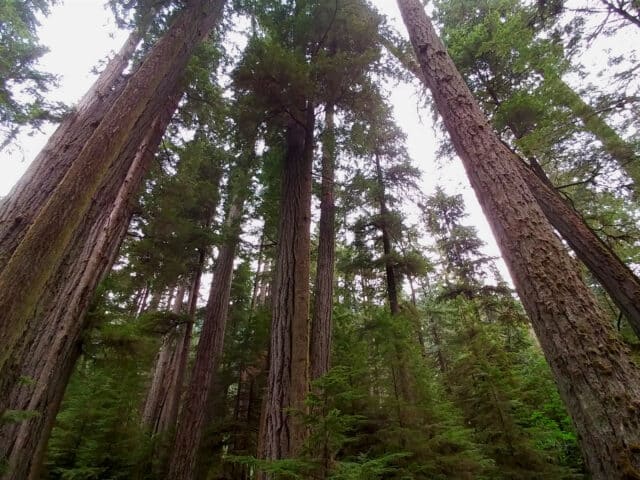
 davidsuzuki.org

... cut stumpage rates (taxes) for forest companies ...
Bang on - and this has been the case (and exactly that rationale) no matter who's been in the Whitehouse and at Parliament Hill since The Falklands War. That also explains a lot of this:So cut stumpage fees. Have our largest customer complain that that's an unfair subsidy to the industry, and raise tariffs on Canadian lumber exports?
After watching the CAN-USA softwood lumber fight, and mills closing, for +40 years....... There have been dozens of mills that have closed in Northern Ontario in the past decade ...
... in spite of what you're validly seeing, my mileage varies quite a bit across the sector.The Americans will buy the product at a premium...
That is actually a big part of the problem: US tariffs.
The US will get Canadian forest products, either as wood fibre or as smoke. Their choice.

Lack of innovation is also a huge issue. It's back to the old productivity issue. Canadians aren't very productive..Bang on - and this has been the case (and exactly that rationale) no matter who's been in the Whitehouse and at Parliament Hill since The Falklands War. That also explains a lot of this:
After watching the CAN-USA softwood lumber fight, and mills closing, for +40 years....
... in spite of what you're validly seeing, my mileage varies quite a bit across the sector.


