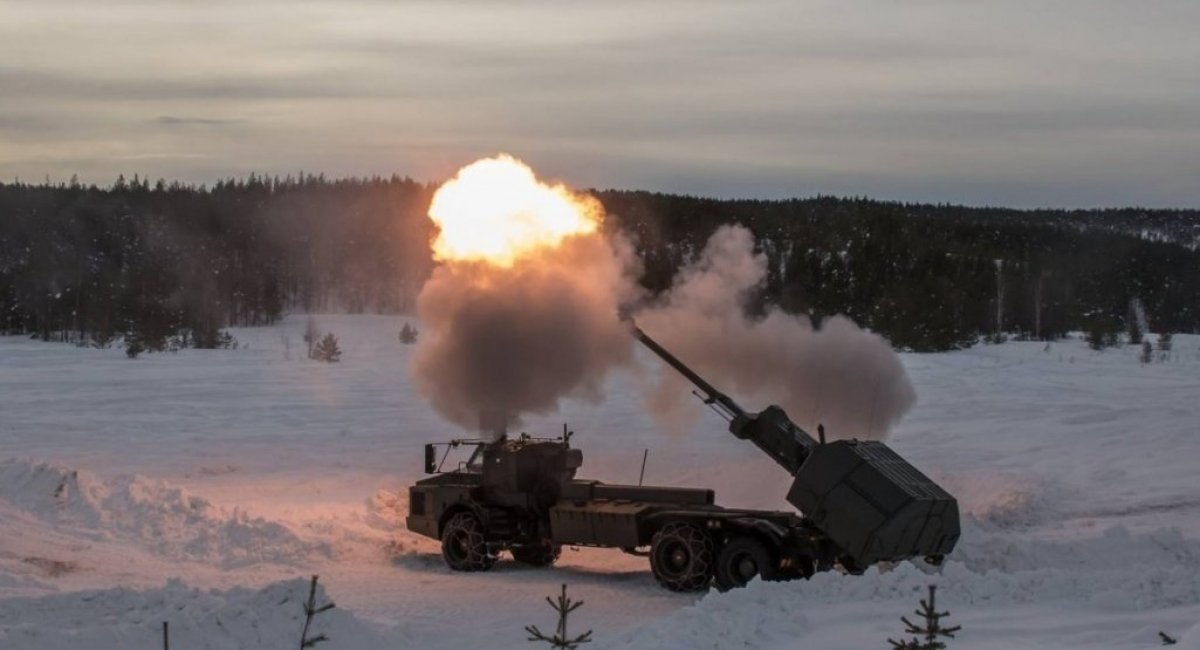
We need to start producing something like this at the federal level. 40mm carrier. Anyone who can commercialize this will stand beside Maxim, Colt, and Garand as a weapons designer.
High-Strain-Rate Kinetic Fouling Matrix
40mm-deployable, Counter-UAS (C-UAS) payload utilizing a Non-Newtonian Shear-Thickening Fluid (STF) nanocomposite. Formulation must remain a low-viscosity fluid during ballistic transit and spatial dispersal, yet undergo an instantaneous, reversible phase transition into a high-tensile, macroscopic entangling solid upon high-velocity mechanical impact with drone rotors.
1. Rheological Design & Nanocomposite Architecture
To maximize the critical shear rate differential between aerodynamic dispersal xxx and rotor impact xxx, a highly concentrated colloid must be engineered near its maximum packing fraction.
- Continuous Dispersant Phase: Low-molecular-weight Polyethylene Glycol. The ether oxygen backbone provides excellent chemical stability, wide operational temperature windows and optimal Newtonian baselines to prevent premature thickening during low-shear gas deployment.
- Dispersed Nanoparticle Phase: Monodisperse, hydrophilic fumed silica (xxx nominal diameter) or surface-functionalized poly(methyl methacrylate) (PMMA) spheres. Spherical morphologies are critical to ensure predictable, isotropic hydrocluster formation.
- High-Tensile Interlocking Fillers: Surface-modified Single-Walled Carbon Nanotubes (SWCNTs) or aramid pulps functionalized with silane coupling agents.
2. Microstructural Thickening Mechanism
At rest and during sub-critical flight dispersal, steric or electrostatic repulsive forces dominate, allowing the nanoparticles to flow smoothly around one another.
Upon propeller blade contact, the applied hydrodynamic stress overcomes these repulsive barriers. The particles are driven out of their equilibrium positions into localized, tightly packed aggregates.
The nano-filament strands become mechanically entrapped and squeezed within hydroclusters. This induces a catastrophic, mass-dilatant spike in viscosity. The continuous spinning motion of the rotor acts as a mechanical spool, pulling the localized high-viscosity mass into macroscopic, fibrillar ropes.
This transfers rotational kinetic energy into tensile strain, wrapping and binding the motor shaft to cause an instantaneous mechanical stall.
3. Critical Thermodynamic and Physical Constraints
- Solvation & Particle Volume Fraction: The operational window must sit precisely between xxx and xxx. Exceeding this threshold risks premature jamming inside the 40mm canister during launch acceleration. Falling below it prevents the formation of continuous hydroclusters, causing the material to merely splash off the rotor.
- Viscoelastic Relaxation Dynamics: The relaxation time of the fluid must be synthetically tuned via chemical crosslinking density to prevent immediate reversion to a liquid state once the propeller slows, ensuring permanent rotor immobilization.
Existing tech. Existing platforms. Existing supply chains.




 - Calian, CAE, Norcada, Lockheed Martin Canada
 - Dell Technologies, General Dynamics Mission Systems, Data Dynamics