• Thanks for stopping by. Logging in to a registered account will remove all generic ads. Please reach out with any questions or concerns.

Canada moves to 2% GDP end of FY25/26 - PMMC

Hey! I was a 16-year old and they pretty quickly gave me a 21/2 to truck to drive and to fire a big gun. What more could a kid bored with high school want. It worked - I did 44 years all told.

Sure, but you weren't driving 2.5t trucks and firing big guns before you put on a uniform. You walked in and signed up so you could do those things. Kirkhill's suggestion is that the CAF broadly subsidize a bunch of hobbies and hope that some of these folks will sign up. I question the return on such a plan. Like I said earlier, I see it as being a racket that will largely subsidize hobbies and not actually attract the recruits we want.

Also, for the most part these days, we're actually doing a better job than years past in getting people like that in the door. Go on any recruiting thread and you'll see a bunch of operator and combat arms trades closed cause they are full. The issues are usually getting them trained and then actually employing them successfully. We're talking about giving people a monthly range day when a good chunk of the CAF is struggling to get an annual range day.

The question of the MobF is different. It's someone who doesn't want to be PRes or RegF. It's basically asking someone to sign up for and stay on a standby/emergency list. The requirements for that, by design, should be different.
 
I'm guessing that you've never been a reservist.

There are a multitude of people who don't have money for snowmobiles or kayaks or tenting gear or guns and unlimited ammo but who enjoy doing that once in a while and getting paid for it to boot.

You just need to find your target audience, attract them with the right adds and then fulfill their adventurous spirit with meaningful activities. Hey! I was a 16-year old and they pretty quickly gave me a 21/2 to truck to drive and to fire a big gun. What more could a kid bored with high school want. It worked - I did 44 years all told.

🍻
Fair, but the point I was questioning is the assertion about people who have those 'skills', and assuming the money to enjoy them, wanting to also do them on behalf of the CAF. Clearly, they do exist. I am told the US Air National Guard is full of commercial pilots, and when I took a ride in a vintage aircraft, my pilot was an airline pilot on his days off. I just not sure the same desire exists for all the 'soft skills' mentioned, or in sufficient numbers.
 
Fair, but the point I was questioning is the assertion about people who have those 'skills', and assuming the money to enjoy them, wanting to also do them on behalf of the CAF. Clearly, they do exist. I am told the US Air National Guard is full of commercial pilots, and when I took a ride in a vintage aircraft, my pilot was an airline pilot on his days off. I just not sure the same desire exists for all the 'soft skills' mentioned, or in sufficient numbers.

It's also not as easy to manage as people imagine. This forum is obviously army centric so they focus on just getting people to a range. But we need a lot more skills than just people who can shoot. And those can be difficult to integrate. For example, there's huge issues with reserve pilots because total flight time restrictions mean they have to split available hours between their day job and reserve service. Or we can various security and liability conflicts with cyber operators with what they learn transferring to their day jobs. Etc.
 
The question of the MobF is different.

I just not sure the same desire exists for all the 'soft skills' mentioned, or in sufficient numbers.

Fair points. And @Kirkhill and I disagree on oh so many things but I tend to agree with him on some sociological issues. IMHO, its one thing to recruit for full-time peacetime jobs with a hefty starting salary, and quite another to create a culture which will let you fill a large military in a time of crisis when you can't rely on conscriptions. The current CAF model of recruiting tends to gravitate to what I consider the mercenary end of the scale. @Kirkhill and I tend to lean towards a willing and civic minded populace. Volunteers need to be nurtured before you get them volunteering. That's worth spending time, effort and treasure on.

🍻
 
Fair, but the point I was questioning is the assertion about people who have those 'skills', and assuming the money to enjoy them, wanting to also do them on behalf of the CAF. Clearly, they do exist. I am told the US Air National Guard is full of commercial pilots, and when I took a ride in a vintage aircraft, my pilot was an airline pilot on his days off. I just not sure the same desire exists for all the 'soft skills' mentioned, or in sufficient numbers.
back when the DHC2 was based out of ZD for the reserves the vast majority of the pilots were air canada line pilots. I don't know if all of them were retired military or not; I never asked.
 
- Canadian volunteer pilots donate their aircraft, time, and skills to provide unpaid services for medical transport, search and rescue, and community outreach. Major organizations relying on these aviators include Hope Air (Volunteer Pilot Program), regional groups like Angel Flight Alberta and Angel Flight of British Columbia, Canadian Wings of Rescue, and CASARA (Civil Air Search and Rescue Association).

- Around 10,000 unpaid volunteers serve across roughly 300 ground search and rescue (GSAR) and marine rescue teams in Canada. They donate thousands of uncompensated hours, handle local tracking and rescue operations coordinated by police or the coast guard, and frequently assist during regional disasters like floods and wildfires.

- Approximately 71% of firefighters in Canada are volunteers or paid-on-call personnel. According to data from the Canadian Association of Fire Chiefs, roughly 90,000 out of 126,000 total firefighters across the country serve in a volunteer capacity, though these numbers have faced recent downward trends.

- Canadian medical professionals—including doctors, nurses, and paramedics—frequently provide unpaid, volunteer humanitarian work through registered charities, disaster relief groups, and international medical missions. While major international field deployments (such as with Doctors Without Borders) often pay professional field salaries, numerous organizations rely strictly on donated time, skills, and supplies.

- Canadian construction professionals—including contractors, tradespeople, project managers, and engineers—frequently donate their time, labour, and technical expertise to non-profits, disaster relief, and community building. Popular avenues for pro bono and unpaid construction work include Habitat for Humanity Canada, which builds affordable homes, and Engineering Ministries International Canada, which deploys design and building experts for charity infrastructure.Major Avenues for Unpaid Construction ServiceHabitat for Humanity Canada: Local chapters rely on licensed trades and general contractors to supervise builds, train unskilled helpers, and execute structural work.Disaster Relief Networks: Groups like Samaritan's Purse Canada mobilize skilled trade volunteers for emergency home rebuilding and flood recovery.Pro Bono Design & Engineering: Organizations match structural engineers and architects with community groups needing free project planning or facility assessments.Industry Associations: Groups like the Canadian Construction Association offer programs where professionals volunteer advisory or mentorship services.

- Canadian hobbyists often turn their personal skills and pastimes into unpaid volunteer work, supporting community museums, search and rescue, digital archiving, animal rescue, and local sports. These volunteers give their time freely without pay, turning specialized knowledge into public service.Common Areas for Hobbyist VolunteersHistory and Heritage: Restoring vintage aircraft, maintaining artifacts at local military or cold war museums, and running historical re-enactments.Emergency Services: Participating in ground search and rescue, amateur radio (RAC/ARES) emergency communication networks, and civil air search teams.Tech and Digital: Managing community web infrastructure, open-source software localization, and digital historical archives.Environment and Nature: Contributing to citizen science projects like bird banding, water quality testing, and trail maintenance.

.....

There is no lack of willing amateurs, volunteers.

There is a lack of co-ordination.

.....

There seems to be a lack of understanding by our current professionals that during both WW1 and WW2 the professional military regularly reached out to civilians for skills that served the military but were not provided within the military structure.

This extended from railway management and construction battalions, through hiring men skilled in digging tunnels and canals and forming them into tunneling companies, to ham radio operators, to all manner of Special Forces like the LRDG, SBS and SAS where civilians and reservists with skills were brought into the military fold and became enduring parts of the establishment.

......

The 300,000 will not all be SAS in waiting. There will a fair share of Walter Mittys. But they will supply a resource that will help in covering Rumsfeld's "unkown unknowns".

 
Until one augered in just shy of a school yard inthe Winnipeg neighborhood of St. James. There were more then a few reserve pilots quietly hoping that the at least one or two squadrons could be stood up with the CF 5.
At the the there were more then a few who had jet experience both commercial and military.
Problem was there was never the political support for that both in and outside of the CAF.
 
Last edited:
There seems to be a lack of understanding by our current professionals that during both WW1 and WW2 the professional military regularly reached out to civilians for skills that served the military but were not provided within the military structure.

Why do we always go back to WW1 and WW2 here?

Modern conflicts are just not the same. For example, we can't do anything like what we did in the WWs with pilots or airplanes.

I am reminded of the adage of fighting the last war.
 
Why do we always go back to WW1 and WW2 here?

Modern conflicts are just not the same. For example, we can't do anything like what we did in the WWs with pilots or airplanes.

I am reminded of the adage of fighting the last war.

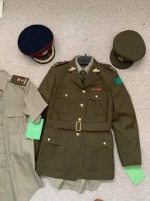
Why not?

After all, they're reissuing the WW2 uniforms. ;)


1786976829375.png
 
Why do we always go back to WW1 and WW2 here?

Modern conflicts are just not the same. For example, we can't do anything like what we did in the WWs with pilots or airplanes.

I am reminded of the adage of fighting the last war.
on the other hand, Ukraine would love to have a couple of squadrons of Spitfires or Mosquitoes to launch against those drones. They are using WW2 anti-air systems. We go back to WW2 because that is the last war we really know about. We know what worked and we know what failed. You don't copy you take lessons learned and build from there. For old adages how about those who don't learn from the past are doomed to repeat it.
 
Fair points. And @Kirkhill and I disagree on oh so many things but I tend to agree with him on some sociological issues. IMHO, its one thing to recruit for full-time peacetime jobs with a hefty starting salary, and quite another to create a culture which will let you fill a large military in a time of crisis when you can't rely on conscriptions. The current CAF model of recruiting tends to gravitate to what I consider the mercenary end of the scale. @Kirkhill and I tend to lean towards a willing and civic minded populace. Volunteers need to be nurtured before you get them volunteering. That's worth spending time, effort and treasure on.

🍻
Even the Boy Scouts were started to prepare youth for military service and ensure they had some basic fieldcraft.
 
Why do we always go back to WW1 and WW2 here?

Modern conflicts are just not the same. For example, we can't do anything like what we did in the WWs with pilots or airplanes.

I am reminded of the adage of fighting the last war.
One needs to separate some of the fundamental aspects of war in general with the doctrine, tactics and TTPs of modern war. Since conscription is generally a tool of last resort in Canada one needs to look to volunteerism of a degree where the modern populace is prepared to put their own lives at risk for the benefit of the nation. That needs reaching back to concepts that predate the mass's fetish with peacekeeping vs warfighting. From enlisting to training to industrialization. Those include having a large enough force of people who were inexpensive enough to train during peacetime but yet capable of the basic aspects of their trade.

We're a big country and have to think big again. If you look at modern war as is being fought in Ukraine, you see that mass matters once again. Looking back at both WW1 and WW2 shows us - in very general terms - how to prepare for a war of mass. Yes. It clearly requires different organizations, different equipment and different doctrine, but it requires the ability to raise a competent fighting force with staying power rather quickly. Canada has wrapped itself in the fiction that a few professionals are good enough. They won't be if they only last the first two days of war.

The problem that some of us see is that the CAF can't get its head into the game. It's been warned over and over again and is at least a decade behind in transforming itself into what is needed for modern war. You say you are reminded of the adage about fighting the last war. You are absolutely correct. The Canadian military as a whole is still configured to fight in Afghanistan. A small, completely discretionary conflict in a small country with significant allied support with a constipated combat service support system and very little depth to reach into when disaster strikes the deployed expeditionary component.

🍻
 
As noted we don't have many modern examples for mobilizing the entire nation. WW1 and 2 are explicitly two Canadian examples and the National Defence Act was written based on those experiences, even as nuclear war encouraged the development of a civil defence capability within that structure.

In Vietnam the average age of an American soldier was, famously, 19.
In WW2 the average age of a frontline Canadian soldier was 22.
In Ukraine the average age of a frontline soldier is 43 to 45 years old.

The age difference is explicitly a function of national political decisions associated with mobilization.

The Ukrainians are keeping youngsters out of the line because they want them to have more kids.
The old folks already have their kids and are surplus to child-bearing capacity.
And physical fitness and mobility is less critical when you are stuck in hole for three months playing video games and dodging drones.

Meanwhile the same politicians are putting the rest of the population to work building drones and other weapons while securing the rear and keeping the rest of the economy moving.

Mobilization is not just about delivering more riflemen to the meatgrinder a la Putin and Kitchener.

It is about rapidly converting the life of a nation to a war footing.
 
Ukraine also knows it has a demographic problem in that group of 18-35, so they are as you mentioned trying to protect that group for the future. Russia has the same issue, but is ignoring their demographic gap in the 15-34 year old band and throwing away their future for the present. The graph below is for Russia and is the age bands. I wonder if Russia in 2040 will be the Slavic version of the island of Lesbo?

1280px-Russia_population_pyramid_2026.png
 
Honestly I like @ytz ’s training center concepts.
One gets a entire facility for local training in a one stop shop.

Having spend some time in Singapore supporting their M110 Sniper Rifle Acquisition - they have a lot of issues with training.
1) Outside of their top SOF unit, they cannot move weapons around without them being escorted by armed security (think like Brinks).
2) Personal Firearm ownership is impossible, even having a casing on ones person off the ranges is a significant criminal issue.
3) They do not have a lot of land to conduct training.
4) Everyone there is basically a reservist.

Obviously Canada has land, but the population is clustered with the majority being down near the border.

Most of us here agree is some shape that in order for the CAF to meet the requirements laid out to it there needs to be a much larger Reserve Force, and better integration of the Reserves.
That requires obviously some job protection legislation - but it also requires modern facilities to house Reservists -- which based on the urban population means that a large portion of these Reserve units (or even Hybrid units) need to be based in the larger cities.

I am a big fan of reg force units being housed on training areas -- mainly as it allows for a lot more training during the year.
I do understand however the issues with spousal employment and how very few people like living in the middle of nowhere.

The Local Training Center that ytz shows, has the ability to both house Res units, and training of recruits into portions of their initial trade training.


Then larger Regional Training Centers would be the sites for Field Firing Ranges, Artillery, Tank Gunnery etc - as well as the location that the majority of equipment for these units be stored and maintained.
A subway/train system from the local training centers to the regional centers would allow for easy personnel movement.
 
Re the 300,000 and organization.

I. Recruit the 300,000 willing.
2. Organize them after they have been recruited and their skills and availability evaluated.
 
Back
Top