• Thanks for stopping by. Logging in to a registered account will remove all generic ads. Please reach out with any questions or concerns.

Canada moves to 2% GDP end of FY25/26 - PMMC

Hey! I was a 16-year old and they pretty quickly gave me a 21/2 to truck to drive and to fire a big gun. What more could a kid bored with high school want. It worked - I did 44 years all told.

Sure, but you weren't driving 2.5t trucks and firing big guns before you put on a uniform. You walked in and signed up so you could do those things. Kirkhill's suggestion is that the CAF broadly subsidize a bunch of hobbies and hope that some of these folks will sign up. I question the return on such a plan. Like I said earlier, I see it as being a racket that will largely subsidize hobbies and not actually attract the recruits we want.

Also, for the most part these days, we're actually doing a better job than years past in getting people like that in the door. Go on any recruiting thread and you'll see a bunch of operator and combat arms trades closed cause they are full. The issues are usually getting them trained and then actually employing them successfully. We're talking about giving people a monthly range day when a good chunk of the CAF is struggling to get an annual range day.

The question of the MobF is different. It's someone who doesn't want to be PRes or RegF. It's basically asking someone to sign up for and stay on a standby/emergency list. The requirements for that, by design, should be different.
 
I'm guessing that you've never been a reservist.

There are a multitude of people who don't have money for snowmobiles or kayaks or tenting gear or guns and unlimited ammo but who enjoy doing that once in a while and getting paid for it to boot.

You just need to find your target audience, attract them with the right adds and then fulfill their adventurous spirit with meaningful activities. Hey! I was a 16-year old and they pretty quickly gave me a 21/2 to truck to drive and to fire a big gun. What more could a kid bored with high school want. It worked - I did 44 years all told.

🍻
Fair, but the point I was questioning is the assertion about people who have those 'skills', and assuming the money to enjoy them, wanting to also do them on behalf of the CAF. Clearly, they do exist. I am told the US Air National Guard is full of commercial pilots, and when I took a ride in a vintage aircraft, my pilot was an airline pilot on his days off. I just not sure the same desire exists for all the 'soft skills' mentioned, or in sufficient numbers.
 
Fair, but the point I was questioning is the assertion about people who have those 'skills', and assuming the money to enjoy them, wanting to also do them on behalf of the CAF. Clearly, they do exist. I am told the US Air National Guard is full of commercial pilots, and when I took a ride in a vintage aircraft, my pilot was an airline pilot on his days off. I just not sure the same desire exists for all the 'soft skills' mentioned, or in sufficient numbers.

It's also not as easy to manage as people imagine. This forum is obviously army centric so they focus on just getting people to a range. But we need a lot more skills than just people who can shoot. And those can be difficult to integrate. For example, there's huge issues with reserve pilots because total flight time restrictions mean they have to split available hours between their day job and reserve service. Or we can various security and liability conflicts with cyber operators with what they learn transferring to their day jobs. Etc.
 
The question of the MobF is different.

I just not sure the same desire exists for all the 'soft skills' mentioned, or in sufficient numbers.

Fair points. And @Kirkhill and I disagree on oh so many things but I tend to agree with him on some sociological issues. IMHO, its one thing to recruit for full-time peacetime jobs with a hefty starting salary, and quite another to create a culture which will let you fill a large military in a time of crisis when you can't rely on conscriptions. The current CAF model of recruiting tends to gravitate to what I consider the mercenary end of the scale. @Kirkhill and I tend to lean towards a willing and civic minded populace. Volunteers need to be nurtured before you get them volunteering. That's worth spending time, effort and treasure on.

🍻
 
Fair, but the point I was questioning is the assertion about people who have those 'skills', and assuming the money to enjoy them, wanting to also do them on behalf of the CAF. Clearly, they do exist. I am told the US Air National Guard is full of commercial pilots, and when I took a ride in a vintage aircraft, my pilot was an airline pilot on his days off. I just not sure the same desire exists for all the 'soft skills' mentioned, or in sufficient numbers.
back when the DHC2 was based out of ZD for the reserves the vast majority of the pilots were air canada line pilots. I don't know if all of them were retired military or not; I never asked.
 
- Canadian volunteer pilots donate their aircraft, time, and skills to provide unpaid services for medical transport, search and rescue, and community outreach. Major organizations relying on these aviators include Hope Air (Volunteer Pilot Program), regional groups like Angel Flight Alberta and Angel Flight of British Columbia, Canadian Wings of Rescue, and CASARA (Civil Air Search and Rescue Association).

- Around 10,000 unpaid volunteers serve across roughly 300 ground search and rescue (GSAR) and marine rescue teams in Canada. They donate thousands of uncompensated hours, handle local tracking and rescue operations coordinated by police or the coast guard, and frequently assist during regional disasters like floods and wildfires.

- Approximately 71% of firefighters in Canada are volunteers or paid-on-call personnel. According to data from the Canadian Association of Fire Chiefs, roughly 90,000 out of 126,000 total firefighters across the country serve in a volunteer capacity, though these numbers have faced recent downward trends.

- Canadian medical professionals—including doctors, nurses, and paramedics—frequently provide unpaid, volunteer humanitarian work through registered charities, disaster relief groups, and international medical missions. While major international field deployments (such as with Doctors Without Borders) often pay professional field salaries, numerous organizations rely strictly on donated time, skills, and supplies.

- Canadian construction professionals—including contractors, tradespeople, project managers, and engineers—frequently donate their time, labour, and technical expertise to non-profits, disaster relief, and community building. Popular avenues for pro bono and unpaid construction work include Habitat for Humanity Canada, which builds affordable homes, and Engineering Ministries International Canada, which deploys design and building experts for charity infrastructure.Major Avenues for Unpaid Construction ServiceHabitat for Humanity Canada: Local chapters rely on licensed trades and general contractors to supervise builds, train unskilled helpers, and execute structural work.Disaster Relief Networks: Groups like Samaritan's Purse Canada mobilize skilled trade volunteers for emergency home rebuilding and flood recovery.Pro Bono Design & Engineering: Organizations match structural engineers and architects with community groups needing free project planning or facility assessments.Industry Associations: Groups like the Canadian Construction Association offer programs where professionals volunteer advisory or mentorship services.

- Canadian hobbyists often turn their personal skills and pastimes into unpaid volunteer work, supporting community museums, search and rescue, digital archiving, animal rescue, and local sports. These volunteers give their time freely without pay, turning specialized knowledge into public service.Common Areas for Hobbyist VolunteersHistory and Heritage: Restoring vintage aircraft, maintaining artifacts at local military or cold war museums, and running historical re-enactments.Emergency Services: Participating in ground search and rescue, amateur radio (RAC/ARES) emergency communication networks, and civil air search teams.Tech and Digital: Managing community web infrastructure, open-source software localization, and digital historical archives.Environment and Nature: Contributing to citizen science projects like bird banding, water quality testing, and trail maintenance.

.....

There is no lack of willing amateurs, volunteers.

There is a lack of co-ordination.

.....

There seems to be a lack of understanding by our current professionals that during both WW1 and WW2 the professional military regularly reached out to civilians for skills that served the military but were not provided within the military structure.

This extended from railway management and construction battalions, through hiring men skilled in digging tunnels and canals and forming them into tunneling companies, to ham radio operators, to all manner of Special Forces like the LRDG, SBS and SAS where civilians and reservists with skills were brought into the military fold and became enduring parts of the establishment.

......

The 300,000 will not all be SAS in waiting. There will a fair share of Walter Mittys. But they will supply a resource that will help in covering Rumsfeld's "unkown unknowns".

 
Until one augered in just shy of a school yard inthe Winnipeg neighborhood of St. James. There were more then a few reserve pilots quietly hoping that the at least one or two squadrons could be stood up with the CF 5.
At the the there were more then a few who had jet experience both commercial and military.
Problem was there was never the political support for that both in and outside of the CAF.
 
Last edited:
There seems to be a lack of understanding by our current professionals that during both WW1 and WW2 the professional military regularly reached out to civilians for skills that served the military but were not provided within the military structure.

Why do we always go back to WW1 and WW2 here?

Modern conflicts are just not the same. For example, we can't do anything like what we did in the WWs with pilots or airplanes.

I am reminded of the adage of fighting the last war.
 
Why do we always go back to WW1 and WW2 here?

Modern conflicts are just not the same. For example, we can't do anything like what we did in the WWs with pilots or airplanes.

I am reminded of the adage of fighting the last war.

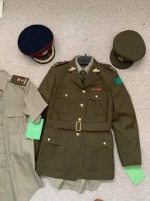
Why not?

After all, they're reissuing the WW2 uniforms. ;)


1786976829375.png
 
Why do we always go back to WW1 and WW2 here?

Modern conflicts are just not the same. For example, we can't do anything like what we did in the WWs with pilots or airplanes.

I am reminded of the adage of fighting the last war.
on the other hand, Ukraine would love to have a couple of squadrons of Spitfires or Mosquitoes to launch against those drones. They are using WW2 anti-air systems. We go back to WW2 because that is the last war we really know about. We know what worked and we know what failed. You don't copy you take lessons learned and build from there. For old adages how about those who don't learn from the past are doomed to repeat it.
 
Back
Top